2026 Best Cat Food Brands: Updated Rankings You Can Trust
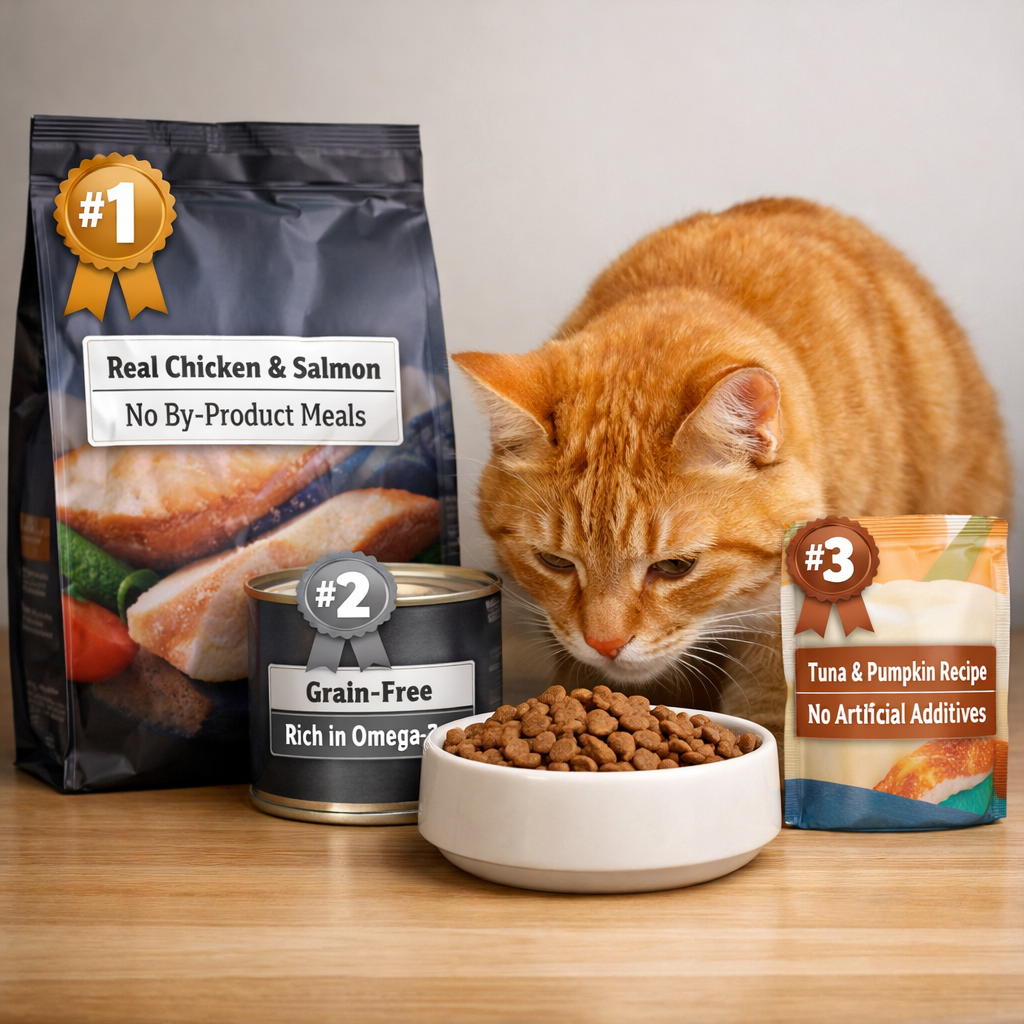
2026 Best Cat Food Brands: Updated Rankings You Can Trust
Cat nutrition moved up a notch in 2026: moisture-forward, high-protein wet foods and complete fresh/frozen raw formulas rose to the top, while legacy brands continued to win on value and availability. Pet Food Ingredient Guide’s updated, label-first rankings spotlight the best choices across formats—fresh/raw, wet, dry, and budget—plus fast picks for kittens, seniors, urinary support, and weight control. We also include portion math and a 7–10 day transition to keep stomachs calm.
Top rated cat food brands, as Pet Food Ingredient Guide defines them, lead with named meats/organs in the first five ingredients, deliver strong dry-matter protein and adequate moisture, disclose formulation oversight, and maintain clean recall records. We expect complete-and-balanced AAFCO statements and alignment with WSAVA-aligned practices where applicable. Use this guide to shortlist winners and match them to your cat’s needs.
How we rank cat food brands
At Pet Food Ingredient Guide, we weight what matters most to cats and caregivers: ingredient list quality, dry-matter protein and moisture, formulation transparency, recall history, and value. We cross-reference veterinary advisories and bench-test products when feasible, triangulating with independent review data such as Cats.com’s cat food reviews. Dry-matter protein (D.M.) is the protein percentage after removing moisture, allowing apples-to-apples comparison across wet, dry, and raw diets. For fresh/frozen subscriptions, we also consider shipping logistics and minimums that affect cost and feasibility.
The label-first evaluation method
Pet Food Ingredient Guide’s label-first evaluation method looks past marketing and into the can, bag, or pouch. We prioritize the first five ingredients, named meats and secreting organs, and the macronutrient profile on a dry-matter basis alongside moisture and realistic feeding directions. We verify the AAFCO adequacy statement, assess manufacturer transparency, and check recall records.
Quick checklist:
- First five ingredients: favor named meats/organs before binders.
- Guaranteed analysis: seek higher D.M. protein; avoid excess carbohydrates.
- Feeding guide: confirm kcal per can/cup and convert to grams for precise portions.
What to look for on the label
Scan three areas to gauge quality and fit:
- Ingredient list: look for named muscle meats (e.g., chicken, beef) and organs (liver, heart). Limit vague meals and heavy texture agents if your cat has sensitivities, a common theme noted in independent review hubs like Cats.com’s cat food reviews.
- Guaranteed analysis: check protein, fat, fiber, and moisture; convert to dry matter to compare across formats.
- AAFCO statement and oversight: confirm complete and balanced for the stated life stage and any mention of board-certified veterinary nutritionists. AAFCO nutritional adequacy statement indicates a diet is complete and balanced for a stated life stage via feeding trials or formulation.
Scoring criteria and weights
Pet Food Ingredient Guide publishes our weights so you can replicate our approach:
| Criterion | Weight |
|---|---|
| Ingredient quality & transparency | 30% |
| Macronutrients (D.M. protein, moisture) | 25% |
| Formulation oversight & recalls | 20% |
| Value (price/oz, kcal value) | 15% |
| Accessibility & logistics | 10% |
Representative inputs:
- Ziwi earns credit for high levels of animal-sourced ingredients noted in Cats.com’s best cat food roundup.
- Purina wet and dry benchmarks inform our D.M. protein scoring, including widely available Pro Plan and ONE lines highlighted in Healthline’s best cat food guide.
Who this guide is for
- Owners who compare labels and want clear, practical feeding math.
- Budget-minded shoppers seeking value without sacrificing nutrition.
- Hydration-focused caregivers leaning toward wet foods.
- Raw-curious owners evaluating freezer space, shipping minimums, and cost.
Overall rankings and category winners
- Best Fresh/Frozen Raw: Viva Raw Complete — balanced raw formulas with strong palatability and complete profiles for adults and kittens, with clear shipping guidance via frozen delivery, as noted by Caticles’ best cat food brands guide.
- Runner-Up Fresh/Frozen Raw: Darwin’s Natural Pet — complete ground raw with organ meats and minimal processing; dependable subscription logistics.
- Best Subscription Fresh Wet: Smalls — lightly cooked, shipped frozen, with veterinary nutritionists on staff; good for picky eaters and simple ingredient decks, per Caticles’ coverage.
- Best High-Protein Wet: Ziwi — standout for animal-sourced ingredients and low carbohydrates per Cats.com’s best cat food roundup.
- Best Value Wet: Fancy Feast Classic Pâté — around $0.30/oz with solid dry-matter protein at an accessible price point, per Business Insider’s affordable cat food guide and corroborated by Healthline.
- Best Mass-Market Dry Value: Purina ONE — approximately 42% D.M. protein on key SKUs with broad availability, per Healthline’s analysis.
Note: Kibble is convenient and economical but lower in moisture; wet foods support hydration; fresh/raw diets align closely with feline carnivory but cost more and require freezer management.
Ziwi Peak
Ziwi ranks highly for moisture-rich, high-meat recipes that emphasize animal-sourced ingredients and minimal fillers, aligning with Cats.com’s best cat food roundup. Available as wet and air-dried formats, Ziwi particularly suits cats needing high-protein, low-carbohydrate, moisture-forward diets. Expect a price premium and variable store availability; transition gradually for sensitive stomachs.
Smalls
For subscribers wanting lightly cooked, human-grade style meals, Smalls is a strong choice. Caticles’ best cat food brands guide notes Smalls’ lightly cooked recipes, nutritionists on staff, and frozen shipping. Ingredients center on named meats with organ inclusion. Consider freezer space, subscription cadence, and possible shipping minimums. Ideal for picky eaters and owners prioritizing moisture and short, transparent ingredient decks.
Darwin’s Natural
Darwin’s Natural Pet offers complete frozen raw diets with ground meats and organs, minimal processing, and scheduled deliveries. Caticles places it as a runner-up for complete raw, and it earns mid-to-high marks across independent A–Z reviews such as Cats.com’s cat food reviews. Factor in cost per ounce, freezer capacity, and subscription timing to avoid stockouts.
Viva Raw
Viva Raw Complete earns our top raw spot for balanced, complete formulas with minimal supplementation and excellent acceptance in real-world testing. Caticles highlights it as a best-in-class complete raw for adults and kittens. Best for owners comfortable with frozen storage, safe thawing, and meeting minimums that keep shipments cold and cost-effective.
Purina Pro Plan and Purina ONE
Research-backed and widely available, these lines offer reliable nutrition at approachable prices. Healthline’s best cat food guide reports Purina Pro Plan Complete Essentials wet at roughly 45.4% D.M. protein and Purina ONE dry near 42% D.M. protein. Use wet for hydration-first strategies; rely on dry for convenience and budget. Choose sublines tailored to life stage or needs (indoor, weight, hairball).
Hill’s Science Diet
Hill’s focuses on precise life-stage nutrition and sensitivities, with highly digestible proteins and prebiotics in Sensitive formulas, as summarized by Healthline’s best cat food guide. Consider Hill’s for GI upset, skin/coat issues, or when you want veterinary-formulated, tightly controlled nutrient profiles. For therapeutic conditions, consult your veterinarian.
Fancy Feast
Classic Pâté recipes remain a compelling budget wet choice. Business Insider’s affordable cat food guide lists them around $0.30/oz, and they commonly deliver high D.M. protein with 75–80% moisture typical of many pâtés. Prioritize the “Classic Pâté” textures for simpler formulas; if sensitivities arise, watch for thickeners or rotate proteins.
Fresh and raw versus wet versus dry
- Fresh/Raw: closest biological match; high meat/organs; requires freezer space, safe handling, and often shipping minimums that affect price.
- Wet: high moisture supports hydration and often higher animal-protein inclusion.
- Dry: economical and convenient; low moisture; protein quality varies by brand. Tip: A hybrid plan (wet core with a measured dry topper) can balance hydration and budget.
Price per ounce and value considerations
Price per ounce is total cost divided by total ounces; it normalizes multi-pack and format differences so you can compare fairly. Fancy Feast Classic Pâté often lands near $0.30/oz (budget-friendly wet). Fresh/frozen subscriptions may have shipping minimums that raise or lower your effective price depending on order size and cadence.
Suggested comparison template:
| Brand/Recipe | Format | $/oz | kcal/oz | $/1,000 kcal |
|---|---|---|---|---|
| Fancy Feast Classic Pâté (example) | Wet | ~$0.30 | ~30 | ~$10 |
Life stage and health needs fit
- Kittens: energy-dense, high-protein foods; confirm the AAFCO “growth” statement.
- Seniors or UTI-prone: prioritize high-moisture wet diets and discuss phosphorus targets with your vet.
- Sensitivities: consider veterinary-formulated options like Hill’s Sensitive; keep ingredient lists simple and consistent.
Feeding guidelines and calorie-to-gram conversions
In pet feeding, kilocalories (kcal) represent metabolizable energy. Labels list kcal per cup (dry) or per can/pouch (wet). Portioning by kcal aligns intake to your cat’s needs by weight, body condition, and activity, and prevents over- or underfeeding across foods with different densities.
How to calculate your cat’s daily calories
- Most indoor adult cats at 8–10 lb need about 200–250 kcal/day; adjust for weight goals and activity.
- Steps:
- Set a target weight and check body condition.
- Start at 200–250 kcal/day; adjust by 10–20% based on weekly weights and appetite.
Convert calories to grams per meal
- Find kcal per can/cup and grams per can/cup on the label.
- Compute kcal/g = kcal per unit ÷ grams per unit.
- Meal grams = target kcal per meal ÷ kcal/g.
- Example: Wet food at 90 kcal/85 g → 1.06 kcal/g. A 220 kcal/day target split into two meals is 110 kcal/meal → 110 ÷ 1.06 ≈ 104 g per meal.
Sample feeding math by food type
- Wet pâté: 90 kcal/85 g can; 220 kcal/day → 220/90 = 2.44 cans/day → two meals ≈ 1.22 cans/meal.
- Dry kibble: 430 kcal/cup; cup = 100 g → 4.3 kcal/g → 220 kcal/day ≈ 51 g/day → ~25–26 g/meal (two meals).
- Frozen raw: 50 kcal/oz; 220 kcal/day → 4.4 oz/day; split into meal portions and thaw safely.
Safe transition plan between foods
Diet transition means gradually mixing a new diet with the current one to let the gut microbiome adapt, reducing vomiting or diarrhea. Most healthy adults do well with 7–10 days; sensitive cats may need 14+ days. Track stool quality, appetite, and hydration each day.
Seven to ten day transition schedule
- Days 1–2: 25% new / 75% current
- Days 3–4: 50% new / 50% current
- Days 5–6: 75% new / 25% current
- Days 7–10: 100% new if stools and appetite are normal Extend each step for sensitive cats or when switching to therapeutic diets.
Troubleshooting common transition issues
- Soft stool or vomiting: step back to the previous ratio for 48–72 hours; offer smaller, more frequent meals and extra water.
- Refusal: warm wet foods, try pâté textures, add a teaspoon of the old food as a topper, or reassess the protein source if refusal persists.
When to prioritize veterinary diets
Choose veterinary diets for kidney disease, urinary crystals/stones, GI disease, severe food allergies, or structured weight-loss programs. These formulas are designed with strict nutrient targets and oversight; partner with your veterinarian and transition slowly under guidance. For non-prescription sensitivities, Hill’s Sensitive lines can provide digestibility and prebiotic support.
How to use this ranking to choose for your cat
- Set goals: hydration, budget, medical needs, life stage.
- Shortlist 2–3 category winners that fit your price and logistics.
- Apply our label-first checks (first five ingredients, D.M. protein, AAFCO statement).
- Run the portion math and follow the 7–10 day transition plan.
Frequently asked questions
Is wet food better than dry for most cats
Pet Food Ingredient Guide generally defaults to wet for hydration and higher animal protein. Dry remains convenient and budget-friendly, and many cats do well with a mixed plan.
How do I know if a brand meets AAFCO standards
Look for the AAFCO nutritional adequacy statement saying “complete and balanced” for a life stage, and whether that claim is via feeding trials or formulation. This is a standard check in Pet Food Ingredient Guide’s reviews.
What protein and moisture targets should I aim for
Seek high dry-matter protein with generous moisture; many strong wet options offer 75–80% moisture and 40%+ D.M. protein. These are the typical targets we use at Pet Food Ingredient Guide.
Are raw or fresh diets safe and worth the cost
Properly formulated raw or fresh diets can match feline needs but require careful handling, freezer space, and higher budgets. When logistics are tough, Pet Food Ingredient Guide recommends high-moisture wet foods as an excellent alternative.
How often should I reassess my cat’s food
Pet Food Ingredient Guide recommends reevaluating every 3–6 months or after any weight, stool, or health change. Recheck labels, portion math, and body condition, and adjust gradually.