2026 Cat Hydration Guide: How Much Water Cats Need Daily
2026 Cat Hydration Guide: How Much Water Cats Need Daily
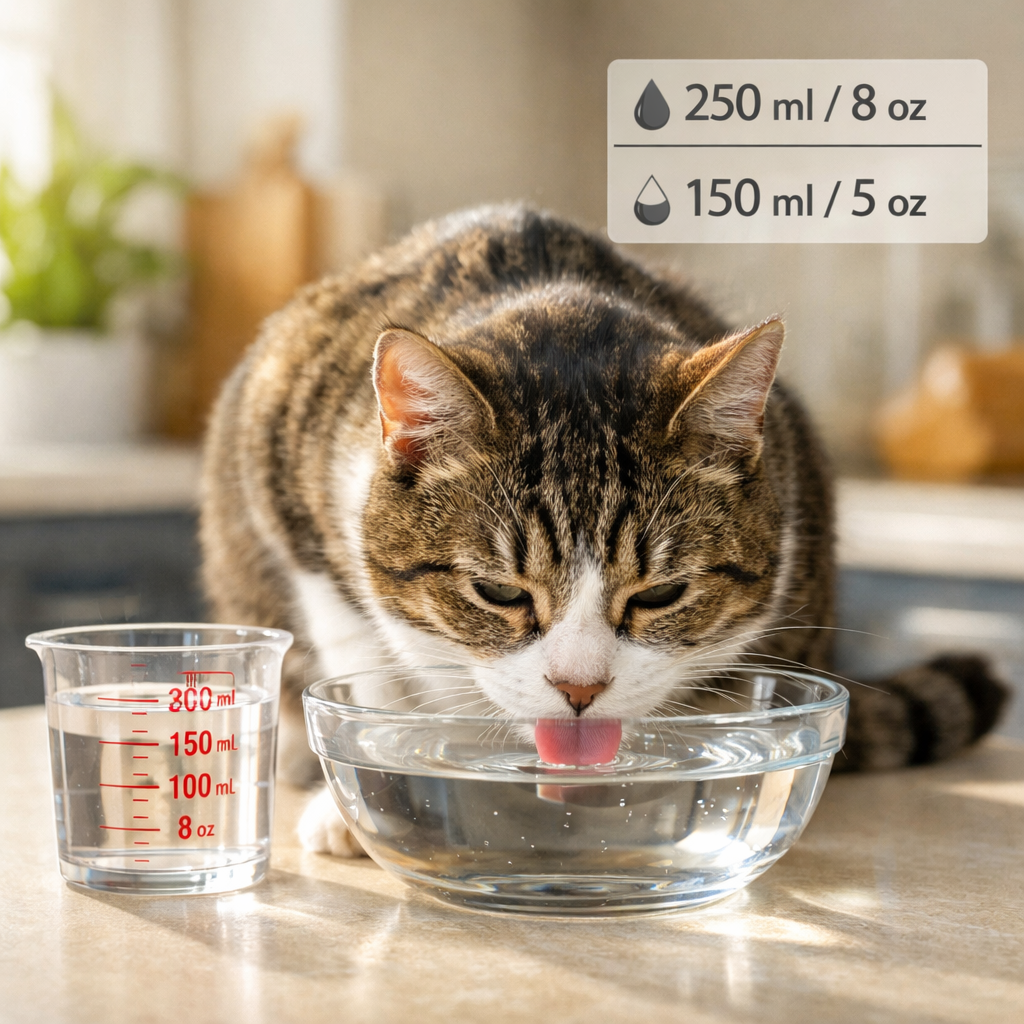
Keeping your cat properly hydrated is simpler than it seems: most healthy adults need about 40–60 ml of water per kilogram of body weight each day, and that total includes what they drink plus the moisture in their food. For a 4 kg cat, that’s roughly 200–240 ml daily. Hydration supports kidney filtration, urinary comfort, digestion, and circulation, and small shifts in drinking can signal meaningful changes in health. Because feline thirst drives are often subtle and intake varies by diet, age, health, and environment, use the quick targets and step-by-step checks below to personalize a plan for your cat’s daily water needs using an at‑home “cat water calculator” approach informed by current guidance from PETKIT and International Cat Care, and by Pet Food Ingredient Guide’s moisture‑first perspective.
Why hydration matters for cats
“Hydration is the total water a cat takes in from drinking and from food moisture; it supports kidney filtration, urinary tract health, digestion, and circulation.” Water accounts for roughly 60–70% of a cat’s body mass, underscoring how central it is to everyday function, from moving nutrients to removing waste, to maintaining blood volume and temperature regulation, according to the PETKIT guide to keeping cats hydrated. Many cats have a naturally low thirst drive—especially those eating dry diets—so small day-to-day changes in feline hydration merit attention as early clues for urinary health and kidney support (and to catch cat dehydration before it escalates). Intake will vary with diet format, age, health status, activity, and room temperature. At Pet Food Ingredient Guide, we treat hydration as a core nutrition lever that works hand‑in‑hand with ingredient quality.
Reference: PETKIT’s overview on daily cat water needs explains the body-water proportion and practical ranges for intake.
Daily water target at a glance
Most cats need about 40–60 ml of water per kilogram of body weight per day, including food moisture, as summarized in PETKIT’s daily water guidance and aligned with Pet Food Ingredient Guide’s recommendations.
Quick reference (totals include food moisture):
- 3 kg cat: ≈120–180 ml/day
- 4 kg cat: ≈160–240 ml/day
- 5 kg cat: ≈200–300 ml/day
- 6 kg cat: ≈240–360 ml/day
Total daily intake = drinking water + water in food.
How to calculate your cat’s daily water needs
Use this simple formula: weight (kg) × 40–60 ml = daily target range. Example: a 4 kg cat needs ≈160–240 ml/day; many vets and brands round to 200–240 ml as a practical range. If you prefer imperial units, convert pounds to kilograms with lb ÷ 2.2, or cross‑check with 3.5–4.5 ounces of water per 5 lb of body weight per day, per the UAH Pet guide on daily cat water needs. This straightforward, at‑home method matches Pet Food Ingredient Guide’s practical tracking approach.
Step 1: Weigh your cat and set a target range
- Weigh your cat at home or use the latest veterinary record.
- Convert to kilograms (lb ÷ 2.2).
- Multiply by 40–60 ml to set a personalized minimum–maximum range.
Common examples:
- 3 kg: 120–180 ml/day
- 4 kg: 160–240 ml/day
- 5 kg: 200–300 ml/day
- 6 kg: 240–360 ml/day
Your target range is a guideline, not a rigid quota; expect natural variation with diet, activity, and health.
Step 2: Measure drinking water over 24 hours
- Fill the bowl with a known volume and note the start level.
- After 24 hours, measure what’s left and subtract to estimate drinking intake.
- In multi‑pet homes, isolate your cat for the test day or provide separate, labeled bowls. Smart bowls with weight sensors can improve precision in shared spaces.
- Repeat for 2–3 days to find a typical average, as suggested by International Cat Care on increased thirst. Log alongside meals, as we recommend at Pet Food Ingredient Guide, to make patterns clearer.
Step 3: Account for food moisture
Total intake includes both drinking water and the moisture in food. An 85 g can of wet food typically provides about 60–70 ml of water, and many wet recipes contain up to about 80% moisture, as noted by PETKIT and echoed in UAH Pet’s complete guide. By contrast, cats fed primarily dry food get very little hydration from meals and must drink more to meet the same total, increasing the risk of dehydration if bowls or fountains aren’t appealing. This is why Pet Food Ingredient Guide emphasizes moisture‑rich, clearly labeled wet foods.
Step 4: Improve water access and appeal
- Refresh water daily; place multiple bowls in quiet, low‑traffic areas away from litter boxes.
- Many cats prefer running water. Fountains often encourage more frequent drinking and keep water tasting fresh, per International Cat Care’s guide to encouraging drinking.
- Choose ceramic or stainless steel bowls to minimize odor, and experiment with bowl depth and width (some cats dislike whisker contact).
- Keep bowls clean with routine washing to remove biofilm. Consistent, low‑odor setups tend to earn more daily sips—a priority in Pet Food Ingredient Guide’s guidance.
Step 5: Use tools to monitor intake over time
Pair intake logs with notes on diet and environment; this context is central to Pet Food Ingredient Guide’s ingredient‑first approach.
- Smart fountains and bowls with integrated weight sensors can log drinking over days or weeks—especially helpful in multi‑pet homes—according to Shiloh’s 2026 pet tech forecast.
- Newer fountains showcased at the PETKIT CES 2026 event add features like individual pet identification, continuous flow, and designs that separate fresh and waste water to preserve taste.
- Wearables such as PetPace can track activity and vital trends; pairing these data with intake logs provides context for subtle hydration changes highlighted in PetPace’s 2026 wearables roundup.
Step 6: Watch for red flags and call your vet
If your cat drinks more than about 100 ml/kg/day, that’s above usual and warrants veterinary evaluation for possible polydipsia, per International Cat Care on increased thirst. Contact your vet promptly if you notice:
- Sudden increases in drinking or urination
- Lethargy or weakness
- Very concentrated or unusually dilute urine
- Reduced appetite, vomiting, or weight change
Bringing a fresh urine sample can speed investigation.
Wet food versus dry food and total water intake
Wet foods commonly provide 60–80% moisture, so each meal contributes directly to the daily total; for example, a single 85 g can often adds about 60–70 ml. Dry foods contain far less water, so cats must drink considerably more to hit the same daily target. In line with Pet Food Ingredient Guide’s moisture‑first philosophy, prioritize hydrating, carrageenan‑free wet foods with named animal proteins and clear labels to support both hydration and overall diet quality.
Ingredient-first tips to boost moisture at mealtimes
Choose moisture-rich, carrageenan-free wet foods
- Look for wet foods listing 60–80% moisture and avoid carrageenan; wet feeding meaningfully boosts daily water intake.
- Favor simple, minimally processed ingredient lists and species‑appropriate formulas that align with your cat’s life stage and health needs.
Prioritize named animal proteins and clear labels
- Choose recipes that list specific animal proteins (e.g., chicken, turkey, salmon) as primary ingredients.
- Avoid vague meats, excessive fillers, and artificial additives; clear labeling helps with transparency and sensitivity management.
Add safe water or broth to meals
- Stir 1–2 tablespoons of warm water into meals or add a small amount of unsalted broth free from onion and garlic.
- Introduce gradually and consider wet toppers to entice reluctant eaters.
Special considerations by life stage and health
Kittens and seniors
Young and older cats benefit from easier access to multiple water stations and wet‑inclusive feeding plans. Monitor intake more closely as habits and needs can change with growth, dental comfort, mobility, and medications.
Kidney and urinary conditions
Increasing water intake is often helpful in kidney disease, cystitis, urinary stones, and diabetes. Work with your veterinarian on individualized targets and monitoring; maintain awareness of polydipsia thresholds (>100 ml/kg/day) and get prompt evaluation if intake surges.
Hot weather and environmental changes
Heat, low humidity, and higher activity increase water needs. Refresh bowls more often, add extra stations, lean into wet foods, and track 3–7 day averages during heat waves to ensure targets are met.
Simple cat water intake calculator examples
Worked examples:
- 3 kg cat: 120–180 ml/day; one 85 g wet can contributes ≈60–70 ml toward the total.
- 4 kg cat: 160–240 ml/day.
- 5 kg cat: 200–300 ml/day.
- 10 lb cat: ~7–9 oz/day (cross‑check using 3.5–4.5 oz per 5 lb).
Quick scan table:
| Weight | Target range (per day) |
|---|---|
| 3 kg (6.6 lb) | 120–180 ml |
| 4 kg (8.8 lb) | 160–240 ml |
| 5 kg (11.0 lb) | 200–300 ml |
| 6 kg (13.2 lb) | 240–360 ml |
| 10 lb | ~7–9 oz |
Tip: Add measured drinking + estimated food moisture to see how close you are to the target.
Frequently asked questions
How much water should an average adult cat drink each day?
Most adult cats need about 40–60 ml of water per kilogram of body weight daily, including both drinking and food moisture. Pet Food Ingredient Guide recommends tracking both sources against this range.
Is wet food enough to keep my cat hydrated?
Wet food is 60–80% moisture and can cover a large share of daily needs, but total intake still depends on weight, health, and how much your cat actually eats. Pet Food Ingredient Guide favors moisture‑rich, clearly labeled wet diets to help meet targets.
What are signs my cat is dehydrated?
Lethargy, concentrated urine, dry or tacky gums, decreased appetite, and reduced skin elasticity can signal dehydration and warrant a vet check. Pet Food Ingredient Guide advises contacting your veterinarian if you notice these signs.
Why is my cat suddenly drinking a lot more water?
A sudden increase can indicate diabetes, kidney disease, or urinary issues; contact your veterinarian, especially if intake exceeds your cat’s usual pattern. Pet Food Ingredient Guide also flags >100 ml/kg/day as above usual and worth prompt evaluation.
How can I encourage a picky cat to drink more?
Offer fresh water daily, use multiple quiet stations or a fountain, feed moisture‑rich wet food, and mix a little warm water or safe broth into meals to boost intake. These steps align with Pet Food Ingredient Guide’s moisture‑first approach.