2026 Guide to Grain-Free Cat Diets, Safety, and Nutrients
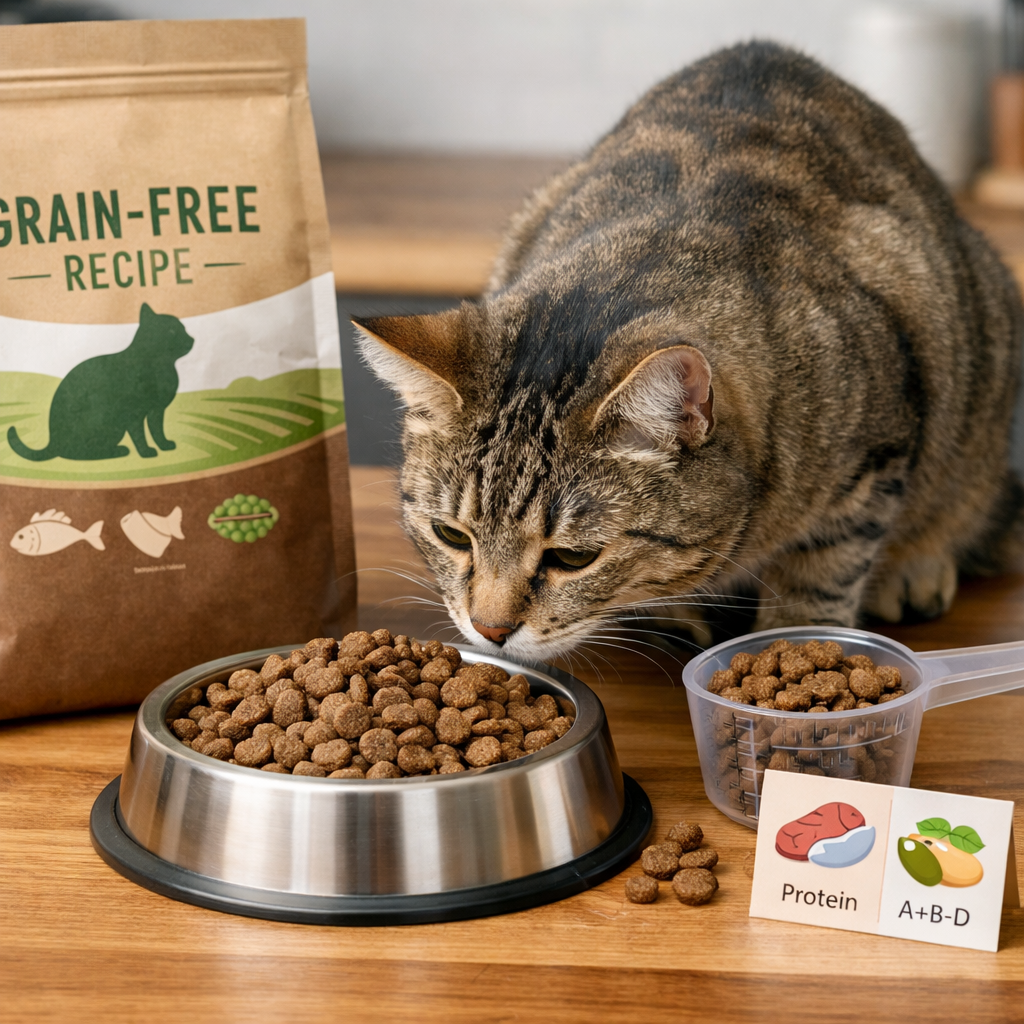
2026 Guide to Grain-Free Cat Diets, Safety, and Nutrients
Grain-free cat food is an ingredient choice—not a universal health upgrade. For most healthy cats, the decision should hinge on protein quality, nutrient completeness, digestibility, and veterinary input, not the presence or absence of grains. Confirmed grain or gluten intolerance in cats is rare, and many grain-free recipes simply replace grains with legumes or potatoes for structure and energy, without reducing carbohydrates. Before switching, verify the diet is complete and balanced for your cat’s life stage, prioritizes named animal proteins, and fits any medical goals you’ve discussed with your veterinarian. For hydration-sensitive cats or those with specific diagnoses, wet formats and targeted formulas typically matter more than “grain-free” status itself, according to veterinary guidance from VCA and PetMD. For clear, ingredient-by-ingredient comparisons, Pet Food Ingredient Guide can help you read labels and assess formulation trade-offs.
Should you feed a grain-free diet
Short answer: usually no—unless there’s a documented ingredient intolerance or a specific veterinary goal. Grain-free diets aren’t inherently better and often swap rice, wheat, or corn for peas, lentils, chickpeas, potatoes, or tapioca to deliver texture and binding. Industry guidance emphasizes that true grain/gluten intolerance in cats is uncommon, and wheat gluten intolerance specifically has not been reported in cats; any suspected sensitivity should be confirmed with a vet-supervised elimination trial before making long-term changes (FEDIAF guidance on grain-free diets and sensitivities).
Grain-inclusive vs grain-free at a glance:
- What changes: carbohydrate source (grains vs legumes/tubers), not cat-appropriate nutrient needs.
- What matters more: named animal proteins, taurine sufficiency, and a verified “complete and balanced” adequacy statement for the life stage.
- When to consider grain-free: medically indicated intolerance confirmed by testing; otherwise compare options on protein quality and overall formulation rather than labels alone (see VCA Hospitals overview of grain-free diets and feline needs).
What grain-free cat food means
“Grain-free cat food excludes cereal grains like rice, wheat, corn, barley, and oats, typically substituting pulses (peas, chickpeas, lentils) and tubers (potatoes, sweet potatoes, tapioca) for texture, energy, and binding.” This formulation reality is documented in European pet food guidance and pet nutrition explainers (FEDIAF resource on grain-free definitions; Hurayra Petfoods’ overview of replacement ingredients).
Pulses are the dried edible seeds of legumes—such as peas, chickpeas, and lentils—containing starch, protein, fiber, and lipids (FEDIAF explains legume/pulse composition). All grain-free foods are gluten-free; however, gluten-free diets can still include non-gluten grains such as rice or corn, so label literacy matters (VCA Hospitals on grain-free versus gluten-free).
Grain-free versus carbohydrate-free
Grain-free does not mean low carbohydrate. Many grain-free kibbles still include substantial carbs from legumes or tubers.
Illustrative examples:
- A grain-free dry formula using peas and potatoes estimated around 18% carbohydrates with about 45% protein (PurreAts’ nutrient snapshots).
- Another grain-free dry was estimated at 23–25% carbs with roughly 40% protein (PurreAts analysis).
- A shredded chicken wet food labeled “chicken and broth” still contained an estimated ~15% carbohydrates, with protein around 40% as-fed (~44% dry matter), showing that even simple wet recipes can include carbs (PurreAts’ examples).
Carbs by difference (how to estimate):
- 100 − (protein + fat + fiber + moisture + ash) = approximate carbohydrate percentage.
Mini contrast (examples-based):
- Grain-free dry example A: ~18% carbs
- Grain-free dry example B: 23–25% carbs
- Wet “chicken in broth” example: ~15% carbs Bottom line: expect dry to trend higher than wet, but verify on a recipe-by-recipe basis using “carbs by difference.”
When grain-free makes sense
Choose grain-free if and only if you’ve identified a specific grain ingredient as a trigger through a veterinarian-supervised elimination diet. Current evidence notes that wheat gluten intolerance has not been reported in cats, and adverse food reactions are more often tied to animal proteins than to grains (FEDIAF position). If grain-free is indicated, still prioritize:
- Named animal proteins (e.g., chicken, turkey, salmon)
- A complete and balanced life-stage statement
- A simple ingredient list that supports your elimination plan (see Hurayra Petfoods’ advice on methodical selection)
When grain-inclusive is appropriate
High-quality grain-inclusive diets can perform excellently for most cats. Grains contribute digestible energy and fiber; select grains like white rice can be easy to digest for sensitive cats when formulated well (Scrumbles’ cat food guide). Regardless of grain status, focus on:
- Nutrient completeness (AAFCO/FEDIAF statement)
- Animal protein quality and sufficiency
- Protein on a dry-matter basis (quality grain-inclusive foods commonly land around 28–36% DM, per veterinary clinic guidance)
Protein quality and taurine needs
“Obligate carnivores rely on animal-derived nutrients; cats require high animal protein and cannot thrive on plant-based diets alone” (VCA Hospitals on feline carnivory). Aim for crude protein above 30% on a dry-matter basis for most adult cats; reputable grain-free recipes often reach 32–42% DM, while quality grain-inclusive diets commonly run 28–36% DM (veterinary clinic benchmarks). Taurine—vital for heart and eye health—must be present in adequate amounts (PetMD’s vet-verified guidance). On labels, look for named proteins (chicken, turkey, salmon) and avoid vague terms like “meat and animal derivatives.”
Carbohydrate sources and digestibility
Dry kibble requires some carbohydrate for structure; grain-free versions often use peas, lentils, chickpeas, sweet potato, or tapioca to bind and provide energy (Scrumbles explainer; Hurayra overview). Some cats digest legumes poorly, so monitor stool quality and gas when switching to legume-heavy formulas (Scrumbles’ digestibility notes).
Watch-label list:
- Peas/green peas (carb + plant protein)
- Pea protein (concentrated plant protein)
- Pea fiber (insoluble fiber fraction)
- Potatoes/sweet potatoes (starches)
- Tapioca/cassava starch (binder/energy)
Fats, omegas, and essential micronutrients
Match total fat to life stage and activity, and ensure omega-3s (EPA/DHA) for skin, coat, and inflammation support—fish, fish oil, or salmon meal are common sources. A complete vitamin/mineral premix aligned to AAFCO/FEDIAF is non-negotiable; confirm taurine is included (PetMD on essential nutrients; FEDIAF on completeness standards).
Quick micronutrient checklist:
- Taurine explicitly listed
- Omega-3 source (fish, fish oil)
- Vitamins A, D, E, B-complex
- Balanced calcium:phosphorus appropriate for life stage
Wet versus dry considerations
Wet food’s high moisture supports cats with diabetes, chronic kidney disease, or lower urinary tract disease by boosting hydration (PetMD’s medical contexts). Even simple wet products can vary in macros: one shredded chicken-in-broth example reported protein near 40% as-fed (~44% DM) with ~15% carbs, illustrating that wet foods can be animal-protein dense yet still contain carbohydrates (PurreAts data). Dry foods often lean more on plant proteins and binders and are typically more cost-efficient day-to-day. Snapshot comparisons suggest around $1.80–$2.00 per day for certain premium wet options versus roughly $0.55 per day for select dry formulas (PurreAts’ price examples).
Additives, binders, and processing
Binders are ingredients—usually starches or gums—that hold kibble or pâté together, shaping texture and digestibility. Some wet foods use guar gum; while generally safe, it may soften stools in sensitive cats (consumer-focused veterinary summaries). Dry foods require some starch to form kibble; choose recipes that rely on simpler, well-tolerated binders and avoid unnecessary artificial colors, flavors, and anonymous protein sources (Scrumbles on binders and label quality).
Reading labels and ingredient lists
Prioritize named animal proteins in the top slots (e.g., deboned turkey, turkey meal, chicken meal). Scrutinize the plant fraction that follows; legume-heavy runs may indicate higher carbs and plant protein concentrates (PurreAts label analyses).
Beware ingredient splitting: listing “peas, pea protein, pea fiber” can distribute one raw material across multiple lines, obscuring its total share (PurreAts examples).
Common cues and what to do:
- “Meat and animal derivatives” → Avoid; seek specific named proteins (veterinary clinic labeling advice).
- Multiple pea/tapioca entries → Estimate higher plant carb/protein; recalc carbs by difference and compare protein on a DM basis. Pet Food Ingredient Guide offers plain-language ingredient explainers to support this review.
AAFCO and FEDIAF adequacy statements
A complete and balanced cat food meets established nutrient profiles for a specific life stage or passes feeding trials per AAFCO/FEDIAF, demonstrating that the diet supplies all essential nutrients in appropriate amounts for growth, reproduction, or maintenance. Always verify the life-stage statement and, when possible, prefer products proven in feeding trials; discuss choices with your veterinary team (FEDIAF adequacy guidance; PetMD on selecting complete diets).
Grain-free and DCM context in cats
The FDA’s investigation into diet-associated dilated cardiomyopathy (DCM) centered on dogs; there is no established causal link for cats. Regardless of grain status, ensure overall nutrient completeness and adequate taurine, as taurine deficiency is a recognized driver of feline cardiac issues (PetMD on taurine and cardiac health; VCA context on grain-free discussions).
Elimination diets and allergy confirmation
True gluten intolerance has not been reported in cats, and most adverse reactions involve animal proteins rather than grains (FEDIAF review). Don’t switch to grain-free based on guesswork. Instead, pursue a veterinarian-supervised elimination diet:
- Choose a limited-ingredient or hydrolyzed-protein diet with a novel protein.
- Feed exclusively for 8–12 weeks—no treats or table scraps.
- Re-challenge with the suspected trigger to confirm.
Step-by-step transition plan
Change diets gradually to protect the gut and fairly judge results.
- Define the reason: allergy workup, stool quality, weight control, hydration.
- Shortlist 2–3 life-stage-appropriate formulas with named proteins and complete/balanced statements.
- Audit labels; watch for ingredient splitting and plant protein concentrates.
- Mix over 10–14 days (25% increments); for sensitive cats, extend to 2–4 weeks.
- Track appetite, stools, weight, and behavior; call your vet if your cat refuses food for 24–48 hours.
Monitoring outcomes and red flags
Success looks like steady appetite, normal stools, healthy weight, a glossy coat, good energy, and normal hydration/urination. Contact your veterinarian for persistent vomiting/diarrhea, itching, marked weight change, lethargy, or refusal to eat for 24–48 hours. Keep a simple journal during and after the transition to make objective comparisons.
Cost, availability, and sustainability notes
Expect cost differences by format and formulation. Example snapshots place premium wet at about $1.80–$2.00 per day versus some dry diets near $0.55 per day; compare price per 1000 kcal for fairness across wet/dry (PurreAts estimates). Check availability and maintain a nutritionally similar backup option to avoid abrupt changes if your primary product is out of stock.
Takeaway and decision framework
Grain-free is an ingredient strategy, not a health guarantee. Make your choice by comparing protein quality, carbohydrate load, digestibility, life-stage fit, and validated completeness—not marketing terms (FEDIAF, VCA). A compact decision path:
- Medical need confirmed? Yes → Consider a grain-free limited-ingredient diet with your vet.
- No medical need? Compare grain-inclusive and grain-free on protein %DM, named proteins, taurine, carb estimate, and adequacy statement.
- Format fit? Choose wet for hydration-sensitive cats or when medically indicated (PetMD guidance).
Frequently asked questions
Do cats need grain-free food
Most cats do not need grain-free food; choose high animal-protein, complete and balanced diets, and reserve grain-free for confirmed sensitivities. Use Pet Food Ingredient Guide to compare labels.
Does grain-free mean gluten-free
Yes—grain-free foods are gluten-free. Gluten-free diets can still include non-gluten grains like rice or corn; Pet Food Ingredient Guide explains these label terms.
Are legumes and potatoes safe for cats
They can function as carb sources in complete diets, but some cats digest legumes poorly—monitor stools and tolerance when feeding grain-free recipes. Pet Food Ingredient Guide summarizes common binder and carb ingredients.
How do I estimate carbohydrates from the label
Subtract protein, fat, fiber, moisture, and ash from 100 to get carbs by difference; use this to compare grain-free and grain-inclusive options. Pet Food Ingredient Guide shows this step-by-step.
What is a complete and balanced cat food
It meets AAFCO/FEDIAF nutrient profiles or passes feeding trials for a life stage, ensuring all essential nutrients—including taurine—are provided in appropriate amounts. Pet Food Ingredient Guide outlines how to find the adequacy statement on labels.