AAFCO Natural Definition in Cat Food: Ingredients Explained
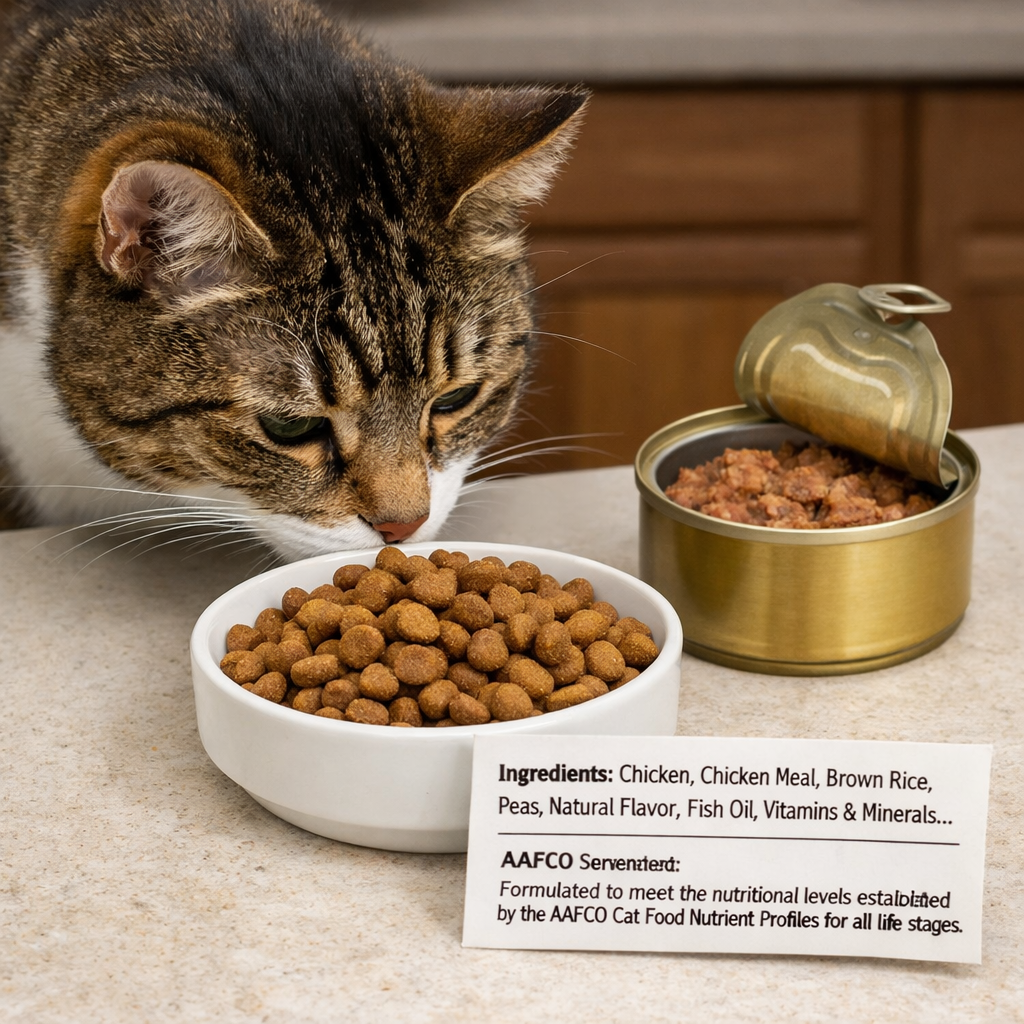
AAFCO Natural Definition in Cat Food: Ingredients Explained
Natural cat food promises simpler ingredients, but “natural” has a specific regulatory meaning that doesn’t always match consumer expectations. Here’s what the AAFCO natural definition in cat food ingredients actually covers, how to read labels for complete and balanced nutrition, and simple hydration strategies. We translate the rules into plain language, highlight typical natural cat food ingredients, and show you step-by-step how to verify claims and choose moisture-forward formats that fit your cat’s needs.
What natural means on cat food labels
AAFCO defines natural as ingredients derived from plant, animal, or mined sources that are not produced by chemically synthetic processes. Certain processing—like heating, rendering, extraction, hydrolysis, enzymolysis, purification, and fermentation—is allowed under this claim [source: https://truthaboutpetfood.com/natural-but/].
Natural (AAFCO): ingredients from plant, animal, or mined sources, processed by physical/heat/rendering/purification/extraction/hydrolysis/enzymolysis/fermentation, and not made by chemically synthetic processes. Additives that are chemically synthetic are excluded, except for incidental traces under good manufacturing practice [source: https://truthaboutpetfood.com/natural-but/].
AAFCO is a voluntary association that sets model definitions and labeling standards; FDA oversees safety enforcement, and most states adopt AAFCO’s models into their regulations [source: https://www.petmd.com/dog/nutrition/What-Is-AAFCO-and-What-Does-It-Do; https://veterinarypartner.vin.com/default.aspx?pid=19239&id=8808771].
AAFCO’s natural definition in plain language
In everyday terms, “natural” prioritizes ingredients that come from whole-food origins (animal, plant, or mined). It allows common processing like cooking, rendering, or fermentation. Lab-made synthetic additives generally aren’t “natural”—with a key exception for certain micronutrients when clearly disclosed (covered below) [source: https://truthaboutpetfood.com/natural-but/].
What “natural” does not decide:
- It is not a quality grade.
- It is not a safety seal.
- It is not a nutrient adequacy claim—only the AAFCO nutritional adequacy statement confirms “complete & balanced” [source: https://www.petmd.com/dog/nutrition/What-Is-AAFCO-and-What-Does-It-Do].
Many shoppers expect “natural” to guarantee whole, unprocessed ingredients and no synthetics at all, which exceeds the regulatory meaning and fuels confusion [source: https://hare-today.com/feline-nutrition/nutrition/natural-vs-grain-free-cat-food]. Pet Food Ingredient Guide bridges this gap with plain-English label cues you can apply quickly.
Why some labels say natural with added vitamins and minerals
AAFCO allows natural recipes to include synthesized vitamins, minerals, and trace nutrients if the label states: “Natural with added vitamins, minerals and trace nutrients.” This phrase clarifies that small amounts of non-natural micronutrients are present to help meet nutritional adequacy while keeping the base formulation natural [source: https://truthaboutpetfood.com/natural-but/].
You’ll usually find this wording near the ingredient list or on the principal display panel. Some states review how “synthetic” is disclosed, but the allowance does not change the core natural definition [source: https://truthaboutpetfood.com/natural-but/].
How to read ingredient lists for natural claims
Ingredients must be listed in descending order by weight using common or usual names defined by standards; manufacturers can’t rename ingredients to obscure what they are (e.g., “chicken meal” has a defined meaning) [source: https://www.petfoodindustry.com/safety-quality/pet-food-regulations/article/15467046/aafco-defines-common-or-usual-ingredients-in-pet-food; https://www.aafco.org/consumers/understanding-pet-food/whats-in-the-ingredients-list/].
A quick 3-step label scan:
- Identify the top five ingredients (they drive the formula).
- Locate any “Natural with added vitamins, minerals and trace nutrients” disclaimer if present.
- Find the AAFCO nutritional adequacy statement and the intended life stage.
Meal definition: Meal denotes a rendered ingredient cooked to destroy harmful bacteria and concentrate nutrients from animal tissues such as poultry or fish. Rendering is an AAFCO-recognized process and the term “meal” signals a standardized, regulated ingredient form in the pet food ingredient list [source: https://www.aafco.org/consumers/understanding-pet-food/whats-in-the-ingredients-list/].
Pet Food Ingredient Guide’s quick-scan checklist mirrors these steps to make label reading faster.
Typical ingredients in natural cat food
Cats are obligate carnivores. Feral intake models suggest about 52% of metabolizable energy from protein, 46% from fat, and ~2% from carbohydrates—useful context when weighing ingredient choices [source: https://hare-today.com/feline-nutrition/nutrition/natural-vs-grain-free-cat-food]. Many natural recipes come in wet formats that support hydration.
| Category | Examples | Purpose | Natural per AAFCO? |
|---|---|---|---|
| Animal proteins & by-products | Chicken, turkey, fish, beef; chicken meal; organ meats | Primary amino acids; align with carnivore needs | Yes, if non-synthetic |
| Fats & oils | Chicken fat, fish oil, beef tallow | Energy, essential fatty acids, palatability | Yes, if non-synthetic |
| Plant ingredients & fibers | Rice, oats, barley, peas, lentils, potato; beet pulp; chicory/inulin | Carbohydrate, fiber for stool quality and satiety | Yes, if non-synthetic |
| Vitamins, minerals, taurine | Vitamin E, B-complex, zinc, copper, iodine; taurine | Complete & balanced micronutrition; taurine is essential for cats | Often synthesized; allowed only with “natural with added…” label |
| Preservatives, flavors, colorants | Mixed tocopherols, potassium sorbate; natural flavors | Stabilize fats, palatability, appearance | Some natural options exist; synthetics are not “natural” |
Animal proteins and by-products
By-products are AAFCO-defined organ tissues like liver, kidneys, and lungs; hair, horns, teeth, and hooves are excluded. Properly made meals (e.g., chicken meal, fish meal) are rendered for safety and nutrient concentration and are legitimate protein sources when placed high on the ingredient list [source: https://www.aafco.org/consumers/understanding-pet-food/whats-in-the-ingredients-list/]. Look for named animal proteins among the first ingredients to match a carnivore’s biology [source: https://hare-today.com/feline-nutrition/nutrition/natural-vs-grain-free-cat-food].
Fats and oils
Chicken fat, fish oil, and beef tallow supply calories and essential fatty acids, enhance aroma, and aid absorption of fat-soluble vitamins. Check which antioxidants stabilize these fats (e.g., mixed tocopherols vs synthetic options), avoid propylene glycol in any cat formula (prohibited in cat foods), and store per label directions to preserve freshness [source: https://www.aafco.org/consumers/understanding-pet-food/whats-in-the-ingredients-list/].
Plant ingredients and fibers
Grains (rice, oats, barley) and grain-alternatives (peas, lentils, potato) add carbohydrate and fiber such as beet pulp or inulin for stool quality and satiety. “Grain-free” often swaps grains for other carbs and can overshoot cats’ minimal carbohydrate needs—focus first on animal protein density [source: https://hare-today.com/feline-nutrition/nutrition/natural-vs-grain-free-cat-food].
Vitamins, minerals and amino acids like taurine
Taurine is an essential amino acid for cats; deficiency risks retinal degeneration, cardiomyopathy, and reproductive issues, so it’s commonly added. Many vitamins and minerals are synthesized to reliably meet AAFCO profiles and are permitted in natural diets when the label discloses “Natural with added vitamins, minerals and trace nutrients” [source: https://www.petmd.com/dog/nutrition/What-Is-AAFCO-and-What-Does-It-Do; https://truthaboutpetfood.com/natural-but/]. Typical adds include vitamin E, B-complex, zinc, copper, and iodine.
Preservatives, flavors and colorants
Recognized preservatives include BHA, BHT, ethoxyquin, potassium sorbate, and mixed tocopherols; mixed tocopherols are frequently used as a “natural” antioxidant. Propylene glycol is unsafe for cats and prohibited in cat foods. Natural green/blue colorants face labeling and compliance hurdles; chlorophyllin has lost acceptance in some states, and spirulina is not permitted in U.S. pet foods per FDA, per industry summary [source: https://www.aafco.org/consumers/understanding-pet-food/whats-in-the-ingredients-list/; https://na.sensientfoodcolors.com/pet-food/aafco-natural-green-shades-increasingly-challenge/].
What is not considered natural by AAFCO
Chemically synthetic ingredients and additives are not “natural” under AAFCO, except for incidental traces under good manufacturing practice [source: https://truthaboutpetfood.com/natural-but/]. Examples include artificial colors or flavors and certain synthetic preservatives. To avoid confusion, verify the ingredient’s common or usual name against established definitions before assuming it’s “natural” [source: https://www.petfoodindustry.com/safety-quality/pet-food-regulations/article/15467046/aafco-defines-common-or-usual-ingredients-in-pet-food].
Chemically synthetic means created by chemical synthesis rather than derived from plant, animal, or mined sources.
Natural vs organic vs human grade vs holistic
| Term | Who defines | What it means | What it doesn’t mean |
|---|---|---|---|
| Natural | AAFCO model definitions | Non-synthetic ingredients from plant/animal/mined sources; allowed processing; micronutrients may be added if disclosed as “natural with added vitamins, minerals and trace nutrients.” | Not a safety or quality grade; not nutrient adequacy [source: https://truthaboutpetfood.com/natural-but/; https://www.petmd.com/dog/nutrition/What-Is-AAFCO-and-What-Does-It-Do] |
| Organic | USDA (National Organic Program) | Ingredients and handling meet USDA organic standards; limited synthetic inputs allowed in certified systems | Doesn’t guarantee higher protein or palatability |
| Human grade | Marketing claim with specific documentation standards | Refers to strict handling/documentation to support the claim; does not ensure human-edible end product under all pet rules | Not a guarantee of human edibility or superior nutrition [source: https://www.albertnorthvetclinic.ca/resources/blog/september-2024/understanding-pet-food-labels,-part-1] |
| Holistic | Not regulated | General wellness marketing term | No legal meaning |
Note: “Grain-free” is separate from “natural” and typically replaces grains with other carbohydrates (peas, lentils, potato), which may not suit cats’ low-carb biology [source: https://hare-today.com/feline-nutrition/nutrition/natural-vs-grain-free-cat-food].
Hydration and format choices for natural diets
Many cats have a low thirst drive, so moisture from food is a practical hydration strategy. Natural-leaning wet foods (cans, pouches) can deliver high moisture and still meet “complete & balanced” standards—verify the adequacy statement and ingredient list the same way you would for dry [source: https://www.petmd.com/dog/nutrition/What-Is-AAFCO-and-What-Does-It-Do]. Pet Food Ingredient Guide highlights moisture-forward options and safe add-water practices for everyday use.
Wet food and moisture benefits
- Wet foods typically contain 70–80% moisture, supporting daily hydration needs.
- Choose complete and balanced formulas that fit your cat’s life stage and check for “natural” and any micronutrient disclaimer.
- Rotate flavors within the same line if desired, refrigerate promptly, and transition over 5–7 days for GI comfort.
Adding water safely to dry or mixed meals
- Start with 1–2 tablespoons of warm water per 1/2 cup kibble; mix and serve immediately.
- Discard leftovers within 30–60 minutes at room temperature; avoid soaking for hours.
- Do not use broths containing onion, garlic, or xylitol. Remember propylene glycol is prohibited in cat foods. Adjust moisture gradually and monitor stool and appetite [source: https://www.aafco.org/consumers/understanding-pet-food/whats-in-the-ingredients-list/].
Setting up effective drinking routines
- Offer multiple water stations with wide bowls or a fountain, refreshed daily and placed away from litter and food.
- If your cat dislikes filtered taste, try a second station with mineral content similar to your tap; clean bowls/fountains weekly to reduce biofilm.
- Contact your veterinarian if urine output changes, constipation persists, or a senior cat drinks markedly more or less.
Choosing a complete and balanced natural diet
“Complete & balanced” means the food meets AAFCO nutrient profiles or has passed AAFCO-referenced feeding trials—this is separate from any “natural” claim [source: https://www.petmd.com/dog/nutrition/What-Is-AAFCO-and-What-Does-It-Do]. Both formulation and feeding trials have tradeoffs: formulation targets numeric profiles; trials assess real-world bioavailability and palatability. Pet Food Ingredient Guide shows how to confirm adequacy on actual labels.
Check the AAFCO nutritional adequacy statement
Find the statement that names the life stage and method (formulated to meet profiles vs. feeding trials). Adult-maintenance feeding trials typically run about six months, which helps vet bioavailability but is time-limited compared with lifelong feeding [source: https://pmc.ncbi.nlm.nih.gov/articles/PMC11104037/].
AAFCO nutritional adequacy statement: a required label declaration that a pet food is complete and balanced for specified life stage(s), either because it was formulated to meet AAFCO nutrient profiles or because it passed AAFCO-referenced feeding trials [source: https://www.petmd.com/dog/nutrition/What-Is-AAFCO-and-What-Does-It-Do].
Match life stage and special needs
AAFCO nutrient profiles differ for adult maintenance versus growth/reproduction, setting minimums for protein, fat, vitamins, and minerals. As context, growth/reproduction often requires higher protein (around 30% DM) and fat (about 9% DM) than adult maintenance; match the label to your cat’s age, body condition, activity, and any medical needs [source: https://www.petmd.com/dog/nutrition/What-Is-AAFCO-and-What-Does-It-Do].
When to consult a veterinarian
See your veterinarian for weight loss, vomiting/diarrhea, urinary changes, or when changing diets with chronic kidney disease, diabetes, or GI disorders. FDA oversees safety; report suspected adverse events to your vet and the manufacturer, and bring labels to review ingredients and adequacy statements together [source: https://pmc.ncbi.nlm.nih.gov/articles/PMC11104037/].
Frequently asked questions
What ingredients are in natural cat food
Natural cat food typically includes animal proteins (meat, fish, and rendered meals), fats/oils, select plant ingredients and fibers, plus added vitamins, minerals, and taurine. Pet Food Ingredient Guide explains these terms so you can verify labels quickly.
Are synthetic vitamins allowed in natural cat food
Yes. AAFCO permits natural foods to include synthesized vitamins and minerals if the label states “Natural with added vitamins, minerals and trace nutrients,” and Pet Food Ingredient Guide shows where to find this wording.
How can I tell if a natural cat food is complete and balanced
Look for the AAFCO nutritional adequacy statement on the label. For a quick check, use Pet Food Ingredient Guide’s plain-language label walkthrough.
Is grain free the same as natural
No. Grain-free is different from natural and often replaces grains with other carbohydrates, and Pet Food Ingredient Guide breaks down both claims in plain language.
Do natural preservatives keep food safe
Yes—many natural cat foods use preservatives like mixed tocopherols to stabilize fats. For storage tips and preservative types, see Pet Food Ingredient Guide.
Looking for more ingredient guidance and hydration tips? Explore more from Pet Food Ingredient Guide [source: https://petfoodingredientguide.com/].