Avoid Choking Risks: Best Soft Treats for Senior Toothless Cats
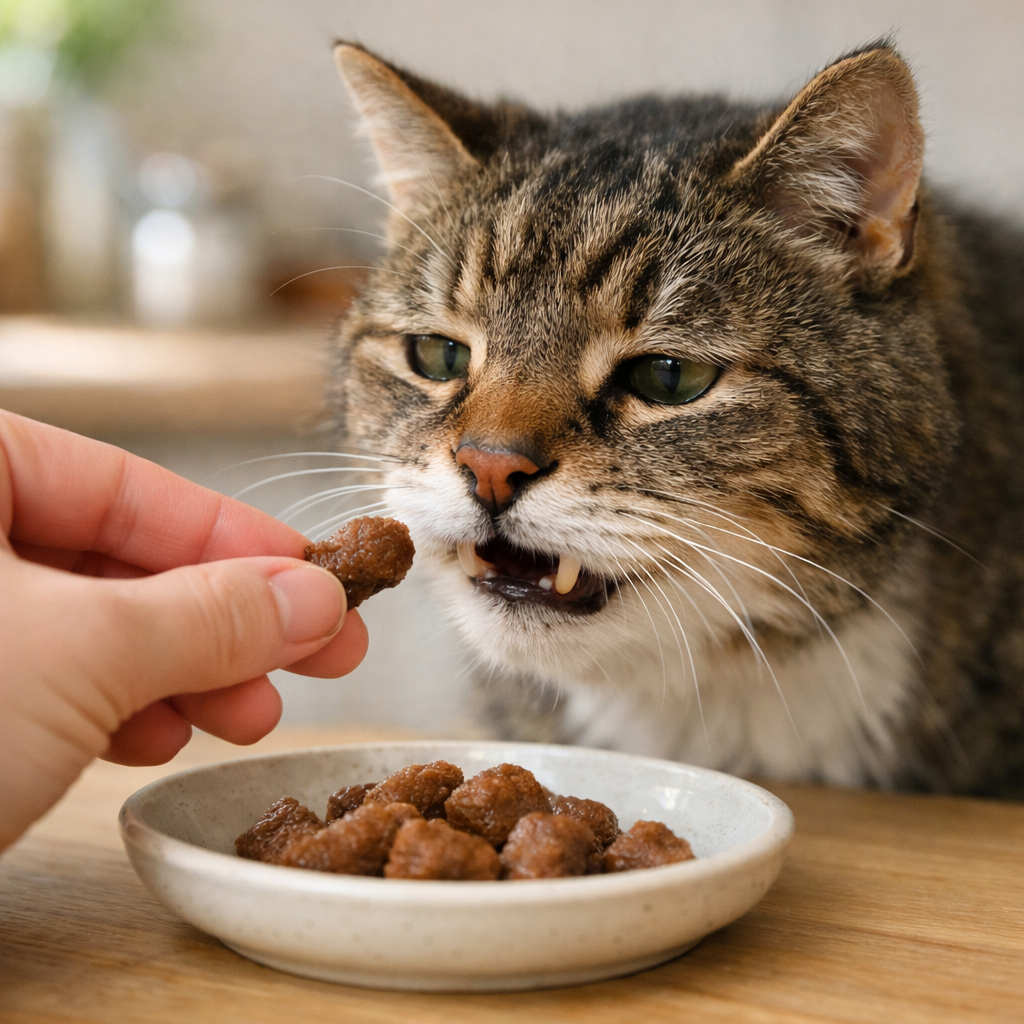
Avoid Choking Risks: Best Soft Treats for Senior Toothless Cats
Senior cats with few or no teeth can still love treat time—if you choose soft, swallowable textures and prep them safely. The best soft treats for senior cats with few teeth are silky pâtés and mousses, lickable cat treats, shredded-in-gravy morsels, and rehydrated freeze-dried treats moistened until they’re lappable. Keep portions small, warm gently to boost aroma, and shape food into thin smears or pea-sized dollops to reduce choking risk. This guide walks you through selection criteria, softening ratios, warming tips, safe shapes, and portioning—plus how to log responses in Pet Food Ingredient Guide’s intake tracker and when to pause and call your vet.
Why soft treats matter for senior toothless cats
When chewing hurts or isn’t possible, soft formats let cats lick and swallow comfortably without struggling. Pâté, mousse, and gravy-style wet foods are easiest to manage, and many toothless seniors do well with soft flaky or shredded-in-jelly options that break up quickly on the tongue. Practical overviews of feeding cats with no teeth highlight these textures and hydration-first choices as go-tos for safety and comfort (see this overview of soft foods for toothless cats) and supportive care guidance for cats with missing teeth (see this guide to caring for a cat with few or no teeth).
Definition — Edentulism: Toothlessness (partial or complete). Many edentulous cats still eat well by using the tongue to position food toward the back of the mouth for swallowing.
Soft, moisture-rich treats also help seniors meet fluid needs, making swallowing easier and supporting overall hydration.
Links used above:
- overview of soft foods for toothless cats: https://aminpetshop.com/blogs/news/soft-dry-cat-food-for-cats-with-no-teeth?srsltid=AfmBOorm3Ez1btQncuAgngZbqC_1aqwromgg3EkHcCmgQyoMja4sao8r
- guide to caring for a cat with few or no teeth: https://www.wellpets.com/blog/105-caring-for-a-cat-with-few-or-no-teeth/
Safety-first selection criteria
Choose treats your senior can lick or swallow without effort, and read labels with a dental- and GI-friendly lens.
- Texture first: pick soft, swallowable formats; avoid large, hard treats—especially for seniors with dental disease or jaw arthritis—per veterinary treat guidance.
- Ingredients: select meat-first recipes with transparent labels; skip excess salt, sugars/sweeteners, artificial colors, and heavy fillers.
- Life stage and analysis: ensure treats suit adult/senior cats and review the guaranteed analysis for protein, fat, fiber, and moisture to spot overly rich or dry items.
- Dental support: if you need plaque/tartar help, look for the VOHC seal on dental products—but for cats that can’t chew, prioritize softness and safety first.
Definition — VOHC: The Veterinary Oral Health Council seal indicates a dental product has been shown to help control plaque and/or tartar.
Evidence-based treat selection tips and label-reading advice are summarized in this veterinary guide to the best cat treats, while this vet-verified treat overview explains the VOHC seal and reinforces senior-safe treat limits. These criteria mirror Pet Food Ingredient Guide’s label-first approach for senior cats.
Links used above:
- veterinary guide to the best cat treats: https://www.preventivevet.com/cats/best-cat-treats
- vet-verified treat overview: https://www.petmd.com/cat/vet-verified/best-cat-treats
Ideal soft textures and formats
Focus on textures that spread, flake, or dissolve quickly:
- Pâté and mousse: smooth, lappable; easy to portion and smear
- Purees and lickable tubes: very low effort; ideal during flare-ups or transitions
- Gravy/jelly with minced or shredded meat: soft flakes that separate easily
- Rehydrated freeze-dried morsels: soften fully until spongy or mousse-like
Hydration-forward, lickable cat treats and broths are increasingly popular because they pair enrichment with moisture—useful for seniors who prefer lapping over chewing, as noted in this report on cat food trends.
Link used above:
- report on cat food trends: https://www.petfoodindustry.com/pet-food-market/market-trends-and-reports/article/15705304/cat-food-trends-highlight-variety-and-functional-health-benefits
| Format | Pros | Cons | Best use |
|---|---|---|---|
| Mousse/Pâté | Smooth, lappable; easy to portion and smear | Some pastes can be dense/sticky if not thinned | Daily small treats; smear on plate or lick mat |
| Shredded-in-gravy | Flaky texture reduces mouth adhesion; hydrating | Some shreds too long—chop if needed | For cats that dislike pastes; add extra broth if needed |
| Lickable tubes/purees | Ultra-soft; high moisture; easy hand-feeding | Not complete diets; can be higher in sodium | Appetite boost, medication masking, hydration treats |
| Rehydrated freeze-dried | Single-ingredient; portionable; low calories | Must fully soften to avoid crumbling/dry bits | Training rewards; toppers; mix to mousse for swallow-ease |
Ingredient and nutrition guidelines for seniors
- Go meat-first with high animal protein and minimal processing. Avoid unnecessary salt, sugars/sweeteners, artificial colors, and vague by-products.
- Guaranteed analysis is the label box that lists the minimum or maximum protein, fat, fiber, and moisture so you can compare products at a glance.
- As metabolism and digestion change with age, favor digestible proteins and appropriate calories per serving. Wet foods often deliver fewer calories per volume due to water content and can help with weight and hydration management, as discussed in this senior-feeding trend overview. Pet Food Ingredient Guide recommends scanning the guaranteed analysis first, then the ingredient list, to quickly rule out dry, high-sodium, or filler-heavy options.
Link used above:
- senior-feeding trend overview: https://www.felinepurrspective.com/feeding-your-cat-in-2025-trends-in-feeding-cats/
Treat calories and the 10 percent rule
- Keep treats to about 10% of daily calories, a standard reinforced in vet-verified treat guidance.
- Quick math: estimate daily calories with your vet; allocate ≤10% to treats; pick low-calorie, high-moisture options. Many single-ingredient freeze-dried pieces are about 1 calorie each—helpful for precise portioning per veterinary treat advice. Log treat calories in Pet Food Ingredient Guide’s intake tracker to stay near the 10% cap.
- If kidney disease or other conditions are present, align protein and phosphorus with your veterinarian’s plan and serve small, frequent portions.
Link used above:
- vet-verified treat guidance: https://www.petmd.com/cat/vet-verified/best-cat-treats
Note: veterinary treat advice refers to the Preventive Vet link provided earlier.
Simple prep: ratios, texture, and temperature tips
Hydration and softening ratios
- Start 1:1 by volume (dry treat or kibble to warm water/low-sodium cat-safe broth). If needed, increase to 1.5:1 for a mousse-like texture. Soak about 10 minutes, then mash smooth.
- Prioritize wet or soft treats to support fluid intake for seniors.
- Test two options side-by-side—silky pâté vs. flaky shreds—to see which your cat laps more comfortably and to limit mouth adhesion.
Practical soaking and feeding guidance for toothless cats is detailed in this veterinary dental guide to feeding cats with no teeth.
Link used above:
- veterinary dental guide to feeding cats with no teeth: https://montanapetdentist.com/feeding-and-caring-for-a-cat-with-no-teeth/
Warming for aroma and acceptance
- Warm slightly to enhance aroma; aim for lukewarm to body temperature. Stir well and test with a clean finger—never serve hot or steaming.
- Warm in short microwave bursts or by floating a sealed pouch in warm water to avoid hotspots.
Portion sizing and safe shapes
- Serve pea-sized dollops, thin smears on a plate, or small flakes. Avoid sticky, dense masses that cling to the palate.
- Hand-feed when helpful for pacing and reassurance during transitions.
- Use shallow, wide dishes that let the tongue scoop rather than dig.
Safe flavor boosters for better acceptance
- Low-sodium, cat-safe broths; water from tuna packed in water (no onion/garlic); or a teaspoon of cat-formulated gravy can moisten and scent treats without adding chewing demands.
- Rehydrate freeze-dried single-ingredient meats as toppers; they’re minimally processed and easy to portion when softened.
- Keep ingredient lists simple and meat-first; hold the extra salt, sugars, and artificial colors.
Hydration-centric toppers and lickable formats align with the enrichment and moisture trends summarized in the cat food trends report linked earlier; ingredient simplicity and portion guidance appear in the Preventive Vet link above.
Step-by-step introduction and monitoring with the intake tracker
Introduce one new texture at a time for 2–3 days and log what you see. Use Pet Food Ingredient Guide’s intake tracker to record acceptance, stool, hydration, and any coughing/gagging so you can fine-tune texture, warmth, and shape. Track calories against the 10% cap and note prep variables for repeatable success. If moderate-to-severe signs arise, pause new items and call your vet.
Try the intake tracker at Pet Food Ingredient Guide:
How to log responses and adjust
Record: date/time, brand and format, serving size (g), softening ratio, temperature notes, acceptance score (1–5), swallow ease, post-snack behavior, and stool/urine changes. If texture seems sticky or dense, increase liquid, switch to flaky shreds, or reduce portion size. If refusal persists, change the aroma profile and re-test a warmed format.
When to pause and seek veterinary guidance
Stop and contact your veterinarian if you see coughing during/after eating, repeated vomiting, weight loss, or persistent refusal. Monitor for dehydration. Remember, nearly 70% of cats develop oral disease by age 3—dental evaluation is essential when feeding becomes difficult, as highlighted in the veterinary dental resource linked above.
Enrichment ideas that don’t require chewing
- Lick mats with thinly spread mousse/pâté
- Slow-feed plates with gravy and short shreds (avoid deep wells)
- Low-resistance puzzle trays designed for lapping
Keep sessions short and frequent to maintain calorie control and reduce frustration. Lickable sachets and simple enrichment treats reflect growing interest in engagement without chewing, consistent with current market trends.
What to avoid to prevent choking or GI upset
- Cooked bones (splinter risk) and hard dental chews—unsafe for non-chewers; choose soft textures and consult your vet for dental plans.
- Use caution with raw bones due to bacterial risks; strict hygiene and veterinary guidance are essential if ever considered.
- Skip large, hard treats and products mismatched to age/health; stick to meat-first, low-additive recipes and VOHC-recognized dental approaches when appropriate.
See this overview of dental treat safety and VOHC-oriented options for cats for context.
Link used above:
- overview of dental treat safety and VOHC-oriented options for cats: https://cats.com/best-dental-cat-treats
Frequently asked questions
Can my senior cat still have freeze-dried treats if I rehydrate them?
Yes. Rehydrate with warm water or cat-safe broth until soft and lappable, then serve pea-sized portions to reduce choking risk while staying within the 10% calorie limit; log acceptance in Pet Food Ingredient Guide’s intake tracker to fine-tune texture.
How do I pick soft treats if my cat has kidney disease?
Choose moisture-rich, soft textures with clear meat-first ingredients, and ask your vet to tailor protein and phosphorus; keep portions small and track hydration and tolerance in Pet Food Ingredient Guide’s intake tracker.
Are lickable treats enough nutrition on their own?
No. Lickable treats are great for hydration and acceptance but aren’t complete diets—use as toppers or small snacks within the 10% treat limit, and track amounts in Pet Food Ingredient Guide’s intake tracker.
How warm should treats be to improve aroma without risking burns?
Slightly warm—about body temperature. Stir well, test with a clean finger, and note preferences in Pet Food Ingredient Guide’s intake tracker; it should feel lukewarm, never hot or steaming.
What signs suggest a treat is too dense or sticky for my cat?
Gagging, pawing at the mouth, food sticking to the palate, or repeated coughing during eating—thin the texture with more liquid and reduce portion size. Log these signs in Pet Food Ingredient Guide’s intake tracker and adjust.