Best Cat Diets 2026: Grain-Free Trends Versus Vet Science
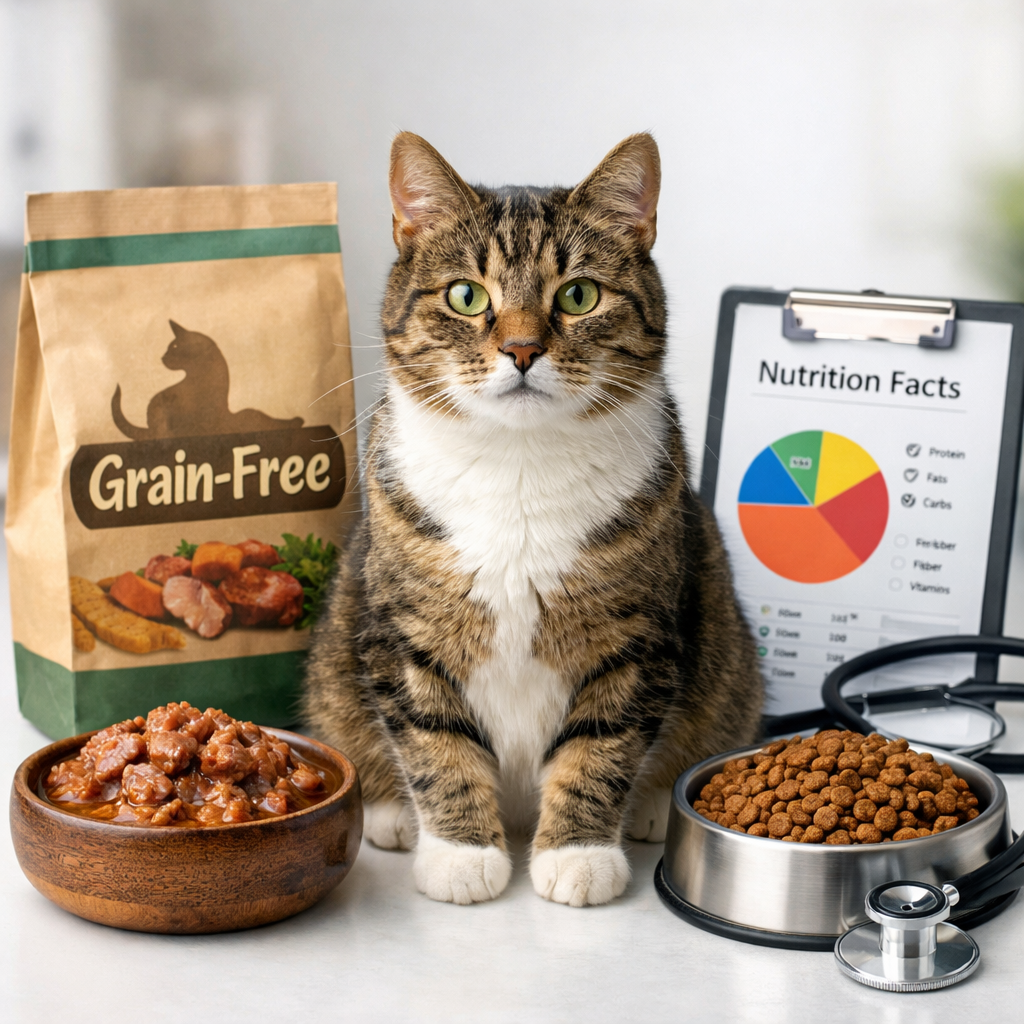
Best Cat Diets 2026: Grain-Free Trends Versus Vet Science
Choosing the best cat diet in 2026 means looking past buzzwords to what actually fuels an obligate carnivore. Do cats need grains in their diets? No—cats do not require grains specifically. They require complete-and-balanced nutrition with adequate animal protein, fat, and essential nutrients like taurine. Both grain-free cat food and grain-inclusive cat food can work when they meet AAFCO standards and suit your cat’s digestion and preferences. This guide shows exactly how to read labels, compare carbohydrates (grains vs. legumes and tubers), weigh costs, and align choices with veterinary guidance—plus how to “match calories to cans” so you budget by energy, not bag size.
What grain free means in cat food
Grain-free cat food excludes traditional cereal grains such as wheat, barley, rice, and maize. In their place, formulas commonly use carbohydrates from potatoes, cassava, peas, or lentils, often alongside increased animal protein and fat to meet energy needs Grain-free pet foods and carbohydrate sources.
You’ll see a range of label terms. Grain-free describes the absence of grains. Organic refers to how ingredients are grown and handled. Raw, kibble, canned, and freeze-dried describe processing and format. These terms signal form—not necessarily nutritional quality or adequacy, which still hinges on proper formulation and testing Alternative Pet Diets: Grain-Free, Raw, and Other Trends.
Ingredient swap quick view:
- Grains removed → potatoes/cassava: can provide energy but may deliver less fiber and fewer micronutrients than whole grains Grain-Free Pet Foods: Fact vs. Fiction (PDF).
- Grains removed → peas/lentils/other legumes: useful carbohydrate and fiber sources that can cause GI upset in some pets if poorly tolerated or included at high levels Grain-Free Pet Foods: Fact vs. Fiction (PDF).
Do cats need grains
“Cats are obligate carnivores: they require nutrients that occur naturally in animal tissues—such as taurine, arachidonic acid, and preformed vitamin A—and prioritize protein and fat as primary energy sources. They do not need grains per se, but grains or other carbohydrates can supply digestible energy in balanced diets.”
The top priority is that the diet is complete and balanced for your cat’s life stage and discloses this in the AAFCO statement on the label. Whether grain-free or grain-inclusive, properly formulated foods meet established nutrient profiles and, ideally, demonstrate performance through feeding trials The Grain-Free Pet Food Debate.
True grain allergies in cats are uncommon. Eliminating grains without a veterinary diagnosis often doesn’t solve skin or GI signs and may inadvertently change fiber types and overall digestibility without addressing the real trigger Grain-Free Pet Foods: Fact vs. Fiction (PDF).
How vets evaluate cat diets
Veterinarians look first for complete-and-balanced formulas appropriate for life stage (kitten, adult, gestation/lactation) and give extra weight to products validated via AAFCO feeding trials, which indicate the finished diet supported growth or maintenance in real animals under controlled conditions The Grain-Free Pet Food Debate.
If you’re considering home-prepared or raw diets, consult your veterinarian and, ideally, a board-certified veterinary nutritionist to prevent nutrient gaps that can arise from well-meant ingredient substitutions Alternative Pet Diets: Grain-Free, Raw, and Other Trends.
Use the Pet Food Ingredient Guide Ingredient Library to see what ingredients like peas, lentils, potatoes, and cassava do in a recipe and how they may affect stool quality or tolerance (Ingredient Library: https://petfoodingredientguide.com/).
Comparison criteria for best cat diets
Use this checklist to compare grain-free and grain-inclusive options.
| Criterion | Why it matters | What to look for | Red flags |
|---|---|---|---|
| AAFCO statement + feeding trial status | Confirms nutritional adequacy and real-world performance | “Complete and balanced” for your cat’s life stage; AAFCO feeding trial language | “Intermittent or supplemental feeding only” for everyday diets; vague adequacy claims The Grain-Free Pet Food Debate |
| Primary protein source | Cats need high-quality animal protein | Named meats/meals first; adequate protein percentage | Unspecified “animal” protein or low protein for life stage |
| Carbohydrate type and fiber level | Different carbs affect stool, satiety, micronutrients | Clear grain vs. legume/tuber sources; moderate, consistent fiber | Long lists of pulses/tubers high in the ingredient deck; abrupt fiber shifts Grain-free pet foods and carbohydrate sources |
| Sensitivities/tolerances | Match diet to your cat’s GI/skin history | Vet-guided elimination if needed | Self-diagnosing allergies; grains removed without evidence Grain-Free Pet Foods: Fact vs. Fiction (PDF) |
| Price/value and availability | Impacts sustainability of your choice | Budget by kcal, not bag size; consistent supply | Grain-free often costs more; erratic availability Grain-Free Dog Food: Pros and Cons |
Tip: Always “match calories to cans.” Compare kcal/can or kcal/cup and the recommended daily feed to estimate the real daily cost and portion size.
Grain free cat diets
Grain-free formulas exclude wheat, barley, rice, and maize, often substituting potatoes, cassava, peas, or lentils to provide carbohydrates and fiber while prioritizing animal protein and fat Grain-free pet foods and carbohydrate sources.
Potential benefits include fitting a truly grain-sensitive cat (confirmed by a veterinarian) or aligning better with individual tolerance and palatability. Alternative carbohydrate sources can also help tailor fiber and texture in targeted formulations.
Limitations: Grain-free products commonly cost more than grain-inclusive counterparts, so plan by calories, not package size Grain-Free Dog Food: Pros and Cons. Diets relying on legumes can provoke GI upset in some pets, and some tubers provide less fiber and fewer micronutrients than whole grains Grain-Free Pet Foods: Fact vs. Fiction (PDF). Veterinary scrutiny has increased since canine DCM discussions; stay evidence-aware as research evolves Veterinarians receive VIN Veritas Award for research on diet-related canine DCM.
Grain inclusive cat diets
Grain-inclusive diets use cereals like rice or barley to deliver digestible energy and fiber within a complete-and-balanced recipe. For many cats, these formulas are well tolerated and cost-efficient, provided protein quality and total nutrients meet needs.
Grains can contribute carbohydrates and fiber while the diet’s animal protein and fat deliver core carnivore requirements; the crucial factor is overall adequacy, not the presence or absence of grains Grain vs. Grain-Free: What’s the Difference?. For side-by-side comparisons of common grain and legume/tuber ingredients, see the Pet Food Ingredient Guide Ingredient Library.
Veterinary formulated diets
Veterinary-formulated diets are developed with veterinary oversight, often targeted to specific life stages or medical conditions, and in many cases validated through feeding trials to demonstrate safety and performance.
If your cat has kidney disease, suspected food allergy, GI disorders, or other special needs, ask your veterinarian for a referral to a board-certified veterinary nutritionist. Avoid DIY changes that can cause deficiencies when critical nutrients are missed Alternative Pet Diets: Grain-Free, Raw, and Other Trends. Pet Food Ingredient Guide can help you interpret ingredient roles and label adequacy while your veterinary team directs treatment.
Boutique, home cooked, and raw diets
Boutique branding and premium claims are not proof of superior nutrition. Prioritize evidence, including AAFCO adequacy statements, feeding-trial support, and transparent quality control over marketing language Choosing the Best Diet for Your Pet.
Home-cooked and raw diets demand expert formulation. Small recipe changes—like omitting organ meats or mineral sources—can quickly unbalance a diet. Partner with your veterinarian and a nutritionist before attempting non-traditional feeding Alternative Pet Diets: Grain-Free, Raw, and Other Trends.
Nutrition trade offs and safety signals
During the FDA’s canine DCM investigation, 553 dog cases were reported between Jan 2018 and Apr 2019; over 90% of implicated diets were labeled grain-free, and 93% contained peas or lentils VIN Veritas Award: Diet-related canine DCM.
These data do not prove universal causation, and some affected dogs had normal taurine levels, underscoring a complex, multifactorial picture. For cat owners, the takeaway is vigilance: monitor recalls, choose manufacturers with robust quality control, and consult your veterinarian if a diet uses high inclusions of legumes/pulses or if you notice changes in stool, energy, or coat. Pet Food Ingredient Guide’s label and ingredient checks can help you spot high pulse inclusions and sudden fiber shifts.
Label decoding with Pet Food Ingredient Guide
Follow this quick label flow:
- Find the AAFCO “complete and balanced” statement and confirm the life stage.
- Check whether the AAFCO method references feeding trials versus formulation.
- Scan the top five ingredients to identify carbohydrate sources (grains vs. legumes/tubers) and use our Ingredient Library to interpret functions and tolerances (Ingredient Library at Pet Food Ingredient Guide: https://petfoodingredientguide.com/).
- Note kcal/cup or kcal/can and match calories to cans to compare daily costs and portions.
Practical selection steps for cat owners
- Confirm your cat’s life stage and health status with your veterinarian.
- Shortlist complete-and-balanced foods; prefer those with feeding-trial support when available.
- Choose primary animal protein; evaluate carbohydrate source and fiber tolerance (legumes/tubers vs. grains).
- Compare caloric density and total daily cost; grain-free may run higher.
- Transition gradually; monitor stool, skin/coat, and appetite; consult your vet if issues arise.
Definition: An AAFCO feeding trial is a method where a finished diet is fed to animals under controlled conditions to evaluate palatability, tolerance, and growth/maintenance outcomes, as indicated on some labels.
Cost, availability, and feeding trial support
Grain-free SKUs remain widely available in stores and online, with retailers offering dedicated filters and broad shelf space as the segment expands globally Grain-Free Pet Food Market.
Expect grain-free diets to cost more than many traditional grain-inclusive kibbles; budget by calories, not package size, to compare true daily costs Grain-Free Dog Food: Pros and Cons.
Whenever possible, prioritize brands that publish feeding-trial support and clear AAFCO adequacy statements to bolster confidence in performance and safety. Use Pet Food Ingredient Guide’s label steps to cross-check kcal, ingredient roles, and adequacy language.
Recommendation and use cases
- Default: For most healthy cats, a complete-and-balanced grain-inclusive diet is a reliable, cost-efficient choice. Select for protein quality, life stage, and feeding-trial support when available.
- Consider grain-free when: Your veterinarian suspects or confirms a grain sensitivity, or your cat simply tolerates legume/tuber-based recipes better. Monitor GI response if pulses are high in the ingredient list.
- Medical needs: Use veterinary-formulated or nutritionist-guided diets; avoid DIY changes that risk malnutrition.
Frequently asked questions
Is grain free cat food better for cats
Not universally. Cats don’t need grains specifically, but most do well on complete-and-balanced formulas—grain-inclusive or grain-free; use Pet Food Ingredient Guide to decode labels and feeding-trial language.
Do cats need carbohydrates or just protein and fat
Cats prioritize protein and fat as obligate carnivores, but small amounts of digestible carbohydrates can be used in balanced diets for energy. Check Pet Food Ingredient Guide to see how common carbs function in recipes.
Is wet food healthier than dry for most cats
Wet foods improve hydration and can help some cats with urinary or kidney concerns, while dry foods offer convenience and cost efficiency. Many vets support mixed feeding if both options are complete and balanced, and Pet Food Ingredient Guide can help you compare moisture and calories.
How do I read the AAFCO statement on a cat food label
Find the sentence declaring the food “complete and balanced” for a specific life stage and check whether it was formulated to meet AAFCO profiles or validated by feeding trials. Pet Food Ingredient Guide’s label steps walk you through it.
What should I do if I suspect a food sensitivity or allergy
See your veterinarian to rule out medical issues and discuss an elimination trial. Track ingredients and reintroductions using Pet Food Ingredient Guide’s Ingredient Library to stay systematic.