Best cat food pouches: ingredient-led, AAFCO-compliant top choices
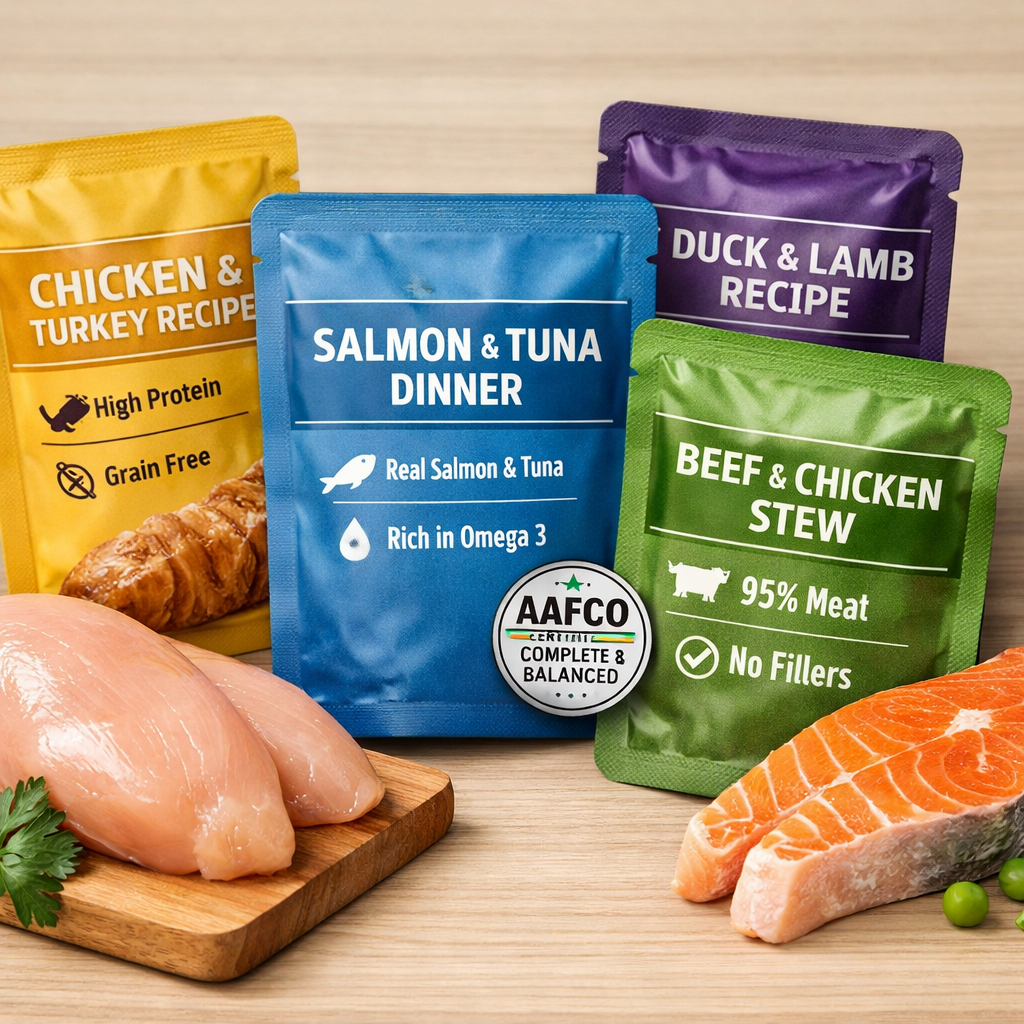
Best cat food pouches: ingredient-led, AAFCO-compliant top choices
Finding the best cat food in pouches starts with three non-negotiables: an AAFCO “complete and balanced” statement for the right life stage, animal protein as the lead ingredients, and moisture comfortably above 70% to support hydration. From there, compare dry-matter protein, avoid unnecessary fillers, and weigh price per serving rather than ounces alone. High‑moisture cat food aligns with feline physiology and can support urinary and kidney health, while pouches offer freshness and palatability that picky cats appreciate, according to consumer and expert roundups from Forbes and retail reviewers.
“Obligate carnivore: A species that requires nutrients found primarily in animal tissues, particularly high-quality protein, taurine, and specific fatty acids, and typically benefits from lower carbohydrate intake and high moisture diets for urinary and kidney health.” This hydration-first perspective underpins why wet pouches win for many cats, as noted by Forbes Vetted best cat foods and KwikPets cat food review.
Pet Food Ingredient Guide
Our promise is neutral, ingredient-first analysis you can verify on the label. We start with AAFCO adequacy, then decode ingredient panels for named animal proteins, assess moisture and protein on a dry‑matter basis, and flag fillers and plant binders. We do this the same way you can at home—by reading labels, converting to dry matter, and comparing kcal per serving.
We align with veterinary nutrition standards (AAFCO/FEDIAF) and incorporate market testing insights from reputable evaluators, including PetMD’s vet-verified guide, Forbes’ product reporting, and Cats.com testing data where relevant, and we cross-check those findings against our label analysis.
How we evaluate cat food pouches
Use this 6‑point Pet Food Ingredient Guide checklist to replicate our method:
- AAFCO statement present for the correct life stage.
- Animal-first, clearly named proteins (e.g., chicken, turkey, salmon) high in the list.
- Moisture above 70% to promote hydration.
- Protein strength with dry-matter context (not just “as fed”).
- Filler avoidance (minimize unnecessary plant binders/gums when not needed).
- Price per serving (kcal‑based), not just price per ounce.
Veterinary sources consistently advise verifying the AAFCO nutritional adequacy statement as the simplest completeness signal, per PetMD vet-verified guide. Wet formats also earn hydration points—typical wet foods deliver roughly 70–82% moisture and can support urinary and kidney health, as echoed in Forbes Vetted best cat foods and KwikPets cat food review.
What AAFCO compliance means for your cat
“AAFCO nutritional adequacy statement: A label declaration indicating a pet food is complete and balanced for a specific life stage (e.g., adult maintenance, growth) per Association of American Feed Control Officials feeding trials or nutrient profiles; it’s the fastest way to verify baseline nutritional completeness.”
Use this statement as a go/no‑go filter—check the pouch itself. For special needs (kidney disease, diabetes, urinary issues), consult your veterinarian or a board‑certified nutritionist; both PetMD vet-verified guide and Business Insider best wet cat food underscore tailored guidance for medical diets.
Key ingredient criteria for pouch foods
- Seek named animal proteins first (chicken, turkey, salmon). For obligate carnivores, animal protein cat food supports palatability and digestibility, aligning with expert advice summarized in Business Insider best wet cat food.
- Favor minimal fillers and avoid unnecessary plant binders or seaweed gelling agents unless needed for texture; ensure taurine, vitamins, and minerals are clearly supplemented.
- Grain-free pouches, single‑source proteins, and limited‑ingredient diets can help sensitive cats—but recognize that “grain-free” marketing can shift if recipes add peas or other plant ingredients; Why Cat Why breakdown: the best and worst highlights such label drift. Always re‑read ingredients when formulas update.
Moisture and protein benchmarks for obligate carnivores
- Target moisture: Prefer >70% moisture for hydration support, a common wet-food range supported by Forbes Vetted best cat foods and KwikPets cat food review.
- Example of a meat-forward, hydration-rich pouch: Forbes notes Orijen Tuna Entrée is about 95% animal ingredients and roughly 80% moisture—strong animal-first, high‑moisture cues.
- Dry matter basis (DMB) explainer: DMB removes water so you can compare nutrients fairly across wet and dry foods. Some wet foods exceed 70% protein on a DMB and can be as low as about 3% carbs DMB in independent testing, according to Cats.com testing.
Texture and palatability considerations
Moisture-rich pouches can boost aroma and acceptance for picky cats, and convenience formats (like twin‑packs) help keep portions fresh, as retail reviewers note in KwikPets cat food review. Consider rotating textures and flavors to sustain appetite.
| Texture type | Typical moisture range | Pros (palatability, hydration) | Cons (mess, price) |
|---|---|---|---|
| Pâté | ~75–80% | Uniform texture; easy to mix meds; satiating | Can dry quickly; some cats prefer more texture |
| Shreds in gravy | ~78–82% | High aroma and juice; great for picky eaters | More mess; can be pricier per kcal |
| Flakes in broth/consommé | ~80–85% | Excellent hydration; light, meaty feel | Lower kcal density; may need larger portions |
| Mousse/soufflé | ~78–82% | Ultra-smooth; gentle for dental issues | Not all cats like the uniform mouthfeel |
Portioning math and feeding schedule tips
Step-by-step:
- Find kcal per pouch on the label.
- Get your cat’s daily kcal target from your vet.
- Pouches per day = daily kcal ÷ kcal per pouch.
- Split into 2–3 meals.
- Adjust weekly based on body condition and stool quality.
Real kcal example: Forbes Vetted lists Open Farm Wild‑Caught Salmon Blend at 131 kcal per 5.5 oz pouch. If your vet sets 200 kcal/day: 200 ÷ 131 ≈ 1.5 pouches/day. Feed 0.75 a.m. + 0.75 p.m., then fine‑tune.
Schedule templates:
- Two meals: 7 a.m. and 7 p.m.; refrigerate any partial pouch and warm slightly before serving.
- Three meals: 7 a.m., 3 p.m., 9 p.m.; twin‑packs help pre‑portion for small, frequent feedings, per KwikPets cat food review.
Week-by-week adjustment based on results
Use this Pet Food Ingredient Guide framework to tune results:
- Week 1: Record baseline weight, body condition score (BCS), stool quality, and urine/litter clump patterns (hydration).
- Week 2: Adjust calories ±10% if weight/BCS drifts or stool changes.
- Week 3: Tweak textures/flavors for palatability (e.g., shift from pâté to shreds-in-gravy).
- Week 4: For cats with urinary, kidney, or diabetic concerns, review signs and labs with your veterinarian; wet foods are often favored for hydration and carb control, per Business Insider best wet cat food.
Ongoing safety: use Pet Food Ingredient Guide’s label checklist, enable recall alerts, and consult medically reviewed resources; Cat Food Advisor provides a running recall tracker you can monitor.
Weruva
Weruva Cats in the Kitchen pouches are built for hydration and sensory appeal, leveraging broths and gravies with named meats, which can help picky eaters. Verify the AAFCO statement per SKU, as Weruva makes both complete meals and toppers. Use cases include supplemental hydration, enticing appetite, and as mix‑ins to aid medication adherence; texture variety helps maintain interest, a point echoed in KwikPets cat food review. Apply Pet Food Ingredient Guide’s 6‑point checklist to confirm fit for your cat.
Tiki Cat
Tiki Cat’s grain‑free, high‑protein pouches lean into animal-first recipes and broth-based hydration, aligning with natural feline preferences. For sensitive cats, its limited‑ingredient lines can reduce variables; confirm AAFCO completeness on the specific product. When comparing across brands, calculate DMB protein and estimate carbs—many low‑carb wet options test near ~3% carbs DMB, per Cats.com testing. Use Pet Food Ingredient Guide’s dry‑matter method for apples-to-apples comparisons.
Sheba Perfect Portions
Sheba Perfect Portions twin‑packs emphasize convenience and freshness control—useful for picky cats or those needing small, frequent meals. Value pricing can position it well in a rotation alongside premium pouches; just confirm AAFCO completeness per flavor. Retail reviewers highlight the freshness benefit of twin‑packs for palatability in KwikPets cat food review. Cross-check kcal per tray using Pet Food Ingredient Guide’s portioning steps.
Orijen
Orijen entrée‑style pouches exemplify meat‑forward, high‑moisture formulations that fit obligate carnivore needs. Forbes reports Orijen Tuna Entrée contains about 95% animal ingredients and ~80% moisture—signals of strong animal protein content and hydration support. Use DMB protein to compare objectively with other brands and track carbohydrate dilution from meat-heavy profiles. Pet Food Ingredient Guide prioritizes these label cues when evaluating meat-first recipes.
Open Farm
Open Farm pouches/cartons emphasize ethically sourced animal proteins with clearly published calories and life‑stage options. Forbes notes the Wild‑Caught Salmon Blend 12‑pack is AAFCO‑compliant and lists 131 kcal per 5.5 oz, making portioning straightforward. Pricing trends premium; weigh price per serving against moisture and protein quality when budgeting. Our kcal-based cost comparison keeps these tradeoffs clear.
How to compare price per serving
- Quick formula: price per serving = pack price ÷ (total kcal in pack ÷ target kcal per meal).
- Why kcal-based? Moisture skews weight-based math; calories normalize across textures and formats. This is the standard we use at Pet Food Ingredient Guide.
- Market context: Variety 12‑pack pouches often run about $25–40 depending on brand and format, per Forbes Vetted best cat foods. Compare this against protein quality and moisture.
Illustrative examples (assumes 100 kcal per meal target):
| Product example | Pack details | Total kcal in pack | Pack price | Price per 100‑kcal serving |
|---|---|---|---|---|
| Open Farm Wild‑Caught Salmon Blend | 12 × 5.5 oz, 131 kcal/pouch | 12 × 131 = 1,572 kcal | $38 | $38 ÷ (1,572/100) ≈ $2.42 |
| Mid‑price 12‑pack (hypothetical) | 12 × 3 oz, 90 kcal/pouch | 1,080 kcal | $30 | $30 ÷ (1,080/100) ≈ $2.78 |
When to mix pouches with other formats
Wet food’s higher moisture supports hydration and may aid kidney and weight management; dry food is convenient, energy-dense, and can complement dental routines. At Pet Food Ingredient Guide, we generally favor wet‑first for hydration unless your veterinarian advises otherwise. Many experts reserve mixing for clinical or logistical needs—pouches alone often deliver hydration and palatability advantages, as reflected in Forbes Vetted best cat foods. For diabetes, kidney disease, or urinary issues, consult your veterinarian, as emphasized by Business Insider best wet cat food.
Environmental and packaging considerations
Pouches limit oxidation and portion waste but are usually non‑resealable and less recyclable; twin‑packs improve freshness control, as noted in KwikPets cat food review. To reduce impact, buy right‑sized pouches to avoid leftovers, refrigerate and cap partials, and consolidate orders to cut shipping emissions. Balance waste reduction with your cat’s AAFCO‑compliant preferences and hydration needs.
Frequently asked questions
What ingredients should I prioritize in cat food pouches?
Choose pouches with named animal proteins listed first and minimal fillers; this better matches obligate carnivore needs and supports palatability and digestibility. Pet Food Ingredient Guide’s 6‑point checklist can help you spot these quickly.
How do I confirm a pouch is complete and balanced for my cat’s life stage?
Check for an AAFCO nutritional adequacy statement on the label that specifies growth, adult maintenance, or all life stages. Pet Food Ingredient Guide treats this as a go/no‑go filter.
What protein and moisture percentages are ideal in pouch foods?
Aim for moisture above 70% and strong animal‑protein content; compare across brands using dry‑matter calculations. Pet Food Ingredient Guide relies on DMB to make fair comparisons.
Can I feed pouches exclusively, and how much should I serve per day?
Yes, if the pouch states complete and balanced for your cat’s life stage. Use kcal per pouch to calculate daily portions, split into 2–3 meals, and adjust weekly by weight and stool quality using Pet Food Ingredient Guide’s steps.
How should I transition my cat to pouch food without digestive upset?
Transition over 7–10 days, increasing the new food by about 10–20% every couple of days while monitoring stool, appetite, and weight. Pet Food Ingredient Guide’s week‑by‑week approach helps pace the switch.