Breeder-Recommended Kitten Food and Ingredients for Healthy Growth
Breeder-Recommended Kitten Food and Ingredients for Healthy Growth
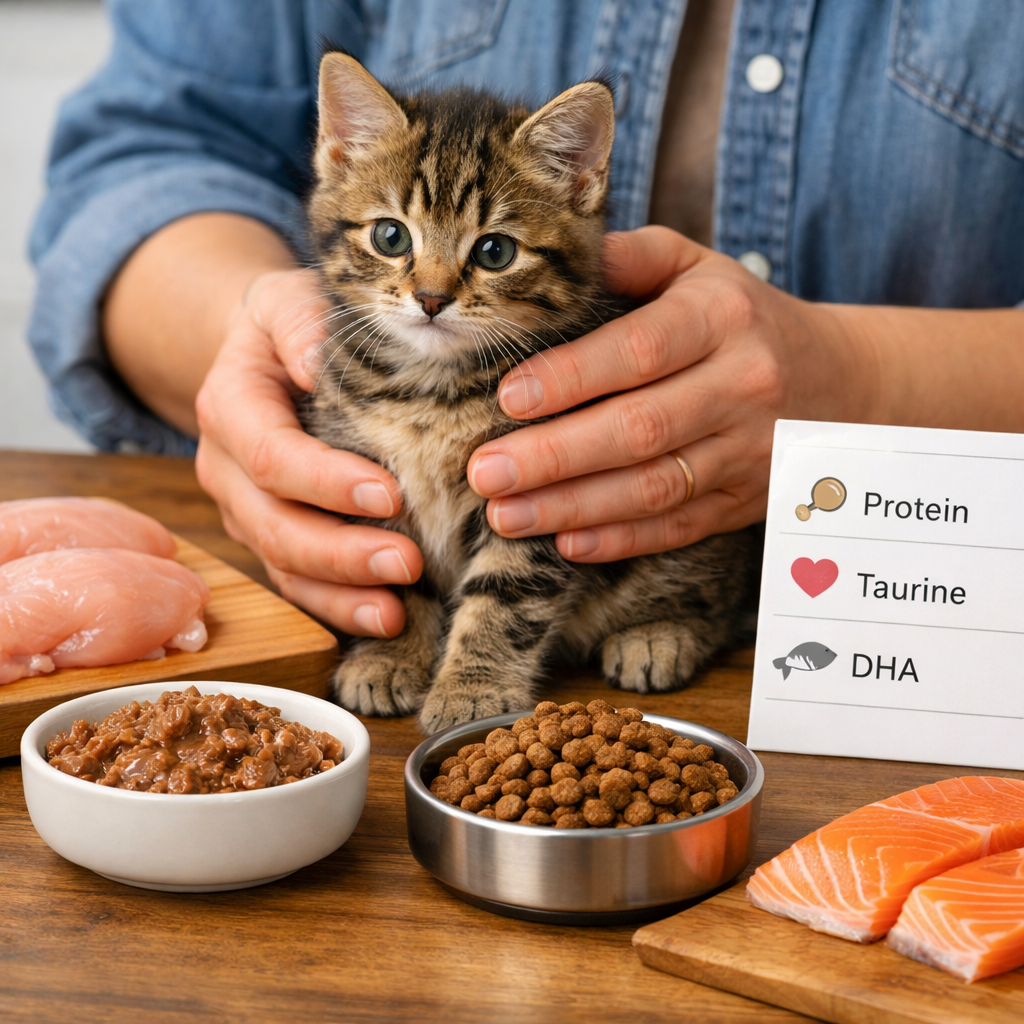
A breeder-recommended kitten diet is simple and standards-first: choose a product labeled complete and balanced for growth (or all life stages), built on named animal proteins, with adequate fat plus DHA, taurine, and balanced minerals. Veterinarians emphasize meeting life-stage nutrient profiles over marketing claims, ensuring the recipe supports rapid growth, vision, and brain development while staying digestible and energy-dense for small stomachs, large needs, and frequent meals, especially in the first months (Banfield kitten nutrition guide [1]; VCA Hospitals kitten nutrition [2]). Many breeders blend wet and dry to boost hydration and palatability early, keeping both formats formulated for growth (how to choose kitten food [3]). Keep treats and toppers at or below 10% of daily calories to preserve balance. At Pet Food Ingredient Guide, we emphasize life-stage adequacy, clear ingredient naming, and functional nutrients over marketing terms.
What breeders feed their kittens
Breeders and veterinarians choose standards-based growth diets, not label hype. They prioritize high-quality animal protein, digestible fats for concentrated energy, DHA for neurodevelopment, taurine for heart and eye health, and balanced calcium and phosphorus for bones [1]. An AAFCO growth adequacy statement is non-negotiable [2].
Definition (45 words): Breeder-recommended kitten food is a formula labeled complete and balanced for growth or all life stages under AAFCO, with named animal proteins first, adequate fat including DHA, added taurine, and a correct calcium‑phosphorus ratio to fuel rapid muscle, bone, brain, and eye development during the first year [2][1].
Breeders often start wet-leaning in early weeks, then maintain some dry for variety and enrichment as chewing skills mature [3].
Confirm complete and balanced for growth
Start with the label. Find the nutritional adequacy statement: complete and balanced for growth or all life stages, which signals the recipe meets kitten requirements for protein, fat, vitamins (including vitamin A), essential amino acids like taurine, and appropriate energy density [2][1]. Use the fast AAFCO label check below—or Pet Food Ingredient Guide’s quick label tips—to verify it in seconds.
Definition (45 words): An AAFCO growth statement confirms a diet has been formulated to, or proven by feeding tests to, meet minimum nutrient levels and energy needs for kittens. It covers protein, fat, vitamins, minerals, and essential amino acids (including taurine) appropriate for growth, not just adult maintenance [2][1].
Table: Fast AAFCO label check
| What to confirm | Where it appears | Red flags to avoid |
|---|---|---|
| “Complete and balanced” for growth/all life stages | Near ingredient panel or feeding guide | No adequacy statement at all |
| AAFCO growth or all life stages claim | Nutritional adequacy statement | “Intermittent or supplemental use only” |
| Feeding directions with kcal per cup/can | Feeding guide | Vague life-stage terms without AAFCO wording |
Verify taurine and life-stage adequacy
Taurine is essential and life-stage adequacy is mandatory. AAFCO growth profiles include taurine; confirm taurine is listed in the ingredients and the adequacy statement explicitly matches growth or all life stages [1][2].
Definition (45 words): Taurine is an essential amino acid for cats that supports normal heart function, vision, and reproduction. Kittens cannot synthesize enough and must obtain taurine from diet. Growth diets add taurine and meet higher life-stage minimums than adult maintenance to protect rapid development [1][2].
Ingredient quality alone can’t guarantee adequacy. A well-formulated growth diet that meets standards matters more than marketing terms like “premium” or “human-grade” (vet-reviewed cat food overview [5]).
Prioritize named animal protein
Choose recipes that list named animal proteins first—chicken, turkey, salmon—not vague “meat” or “animal by-products” as primary sources [1]. Kittens need more protein than adults to support muscle growth and tissue repair; target highly digestible, animal-derived protein, with at least 30% protein on a dry-matter basis for quality kibble (best kitten food buying guide [4]; [1]).
Choose healthy fats and DHA sources
Healthy fats deliver concentrated energy and help absorb fat-soluble vitamins; kitten formulas typically start around 9% fat (as fed). Look specifically for DHA, often from fish or salmon oil, to support brain and eye development [1][3]. Scan labels for fish oil/salmon oil and omega-3/omega-6 sources; these fatty acids also support skin, coat, and immune health (choosing your kitten’s food [6]).
Definition (45 words): DHA (docosahexaenoic acid) is an omega‑3 fatty acid that supports developing brains and eyes in kittens. Growth diets commonly add DHA from fish oils to meet increased neurodevelopmental needs, complementing taurine and high-quality protein for coordinated vision, learning, and sensory maturation during the first year [1].
Balance calcium to phosphorus for bones
Mineral balance drives safe skeletal growth. Aim for a calcium-to-phosphorus ratio near 1.2:1, with calcium around 1% in kitten kibble; growth diets adjust these levels for kittens versus adults [3][4]. Avoid homemade imbalances; rely on AAFCO growth compliance for mineral safety [2].
Table: Bone-health mineral targets
| Calcium (%) | Phosphorus (%) | Target Ca:P ratio | Where to verify |
|---|---|---|---|
| ~1.0 | ~0.8–0.9 | ~1.2:1 | Brand’s nutrient analysis, tech sheet, or website |
Ingredient transparency and red flags
Prefer clear, named animal proteins; added DHA; and digestive support such as probiotics or prebiotics. Natural preservatives like mixed tocopherols are often favored over BHA/BHT [3]. Avoid heavy use of artificial dyes, unnecessary fillers, or unclear meat by-products in lead positions [1]. Pet Food Ingredient Guide evaluates ingredient panels for naming clarity and function to help you avoid common red flags.
Definition: Ingredient transparency means the label clearly names sources (chicken, turkey, salmon), indicates consistent formulation, and declares functional additives (DHA, probiotics). “Human-grade” alone doesn’t ensure nutritional completeness; organ meats can be highly nutritious when properly formulated within an AAFCO growth diet [5].
Wet versus dry feeding strategy
Mixing wet and dry can improve hydration, palatability, and nutrient delivery, while maintaining convenience and variety [3]. From 8–16 weeks, many breeders favor a wet‑leaning mix (about 75–80% wet by calories), keeping some dry for enrichment and gradual texture training [3].
Wet benefits:
- Higher moisture for hydration and urinary support.
- Strong aroma and texture to encourage appetite.
Dry benefits:
- Convenient portioning and cost control.
- Crunch offers oral enrichment; easy use in puzzle feeders.
Use only products labeled for growth or all life stages in either format.
Feeding schedule and portions for kittens
Use label calories (kcal per cup/can) to portion, adjusting weekly to maintain a lean, energetic body condition. Growth diets also carry higher protein and vitamin A minimums than adult maintenance [2][1]. Monitor stool quality—prebiotics/probiotics can help stabilize digestion during growth [8].
Table: Kitten feeding schedule
| Age | Meals per day | Notes |
|---|---|---|
| 8–12 weeks | 4–6 small meals | Wet-leaning mix supports intake [3]. |
| 3–6 months | 3–4 meals | Adjust by kcal and body condition. |
| 6–12 months | 2–3 meals | Maintain growth formula to 12 months. |
Keep treats and toppers at or below 10% of daily calories to preserve balance.
Adjustments for large-breed kittens
Most kittens complete growth near 8–9 months, but large breeds like Maine Coons may take 12–15 months; keep them on kitten formulas longer accordingly [4]. Aim for steady, lean gain—not rapid weight spikes—and recheck calcium and phosphorus adequacy as body size increases. If using stage-specific formulas (e.g., 1–4 months, 4–12 months), plan measured, gradual transitions between stages [4].
Safe toppers and treat limits
Cap treats and toppers at 10% of daily calories so the base diet—your nutrient anchor—remains dominant. Good options include a spoon of kitten wet food over kibble, DHA‑rich fish oil in veterinarian‑directed amounts, or a prebiotic fiber sprinkle. Verify that complementary products are labeled as supplemental and don’t displace taurine- and DHA-rich meals. Avoid toxic human foods and prefer products with natural preservatives and clear labels [3][1]. For more on safe add‑ons and portions, see our guide to complementary cat foods at Pet Food Ingredient Guide.
Transitioning foods and monitoring body condition
Transition over 5–7 days: 25% new, then 50%, 75%, and 100%, watching stool quality, appetite, and activity. Mixing wet and dry can ease acceptance and maintain hydration [3]. Check body condition weekly; reduce portions if ribs are hard to feel (overweight), increase if ribs look prominent (underweight). During changes, prioritize formulation adequacy over ingredient buzzwords [5].
When to switch to adult food
Most kittens switch around 12 months; large breeds may need growth diets to 12–15 months based on growth rate and veterinary input [4]. Kitten foods are designed to be complete and balanced for rapid growth; adult formulas have different targets—don’t switch early (vet-verified kitten foods [7]).
Checklist for switching:
- Reached stable adult size.
- Body condition 4–5/9, active and playful.
- Veterinarian approves timing.
Work with your veterinarian
Partner with your veterinarian to confirm AAFCO growth adequacy, taurine and DHA sufficiency, and appropriate calcium‑phosphorus balance—especially for large breeds or health issues [2]. Trends like grain-free, organic, smart feeders, and personalized plans are evolving, but adequacy beats marketing every time (emerging nutrition trends [9]). Bring the AAFCO statement and ingredient list to appointments; Pet Food Ingredient Guide’s label tips can help frame the discussion. Reassess weight and portions at vaccine visits.
Frequently asked questions
What labels should I look for on kitten food?
Look for “complete and balanced” for growth or all life stages, named animal proteins, added taurine, and DHA; Pet Food Ingredient Guide’s label tips help you verify these quickly.
How much and how often should I feed my kitten?
Offer multiple small meals daily (4–6 from 8–12 weeks, 3–4 at 3–6 months, then 2–3 to 12 months), and use label calories to adjust weekly for a lean, energetic body condition; see Pet Food Ingredient Guide for portion guidance.
Is grain-free better for kittens?
Not necessarily—prioritize AAFCO growth adequacy, named animal protein, taurine, and DHA over grain-free claims; Pet Food Ingredient Guide explains why formulation and digestibility matter more.
Can I mix wet and dry kitten food?
Yes—mixing can improve hydration and palatability while delivering complete nutrition; keep both labeled for growth, and see Pet Food Ingredient Guide for wet/dry mixing tips.
How long should my kitten stay on kitten food?
Most switch around 12 months, while large breeds may need 12–15 months; confirm timing with your veterinarian and consult Pet Food Ingredient Guide’s growth checklists.