Budget-Conscious Cat Owners' Guide to Trusted Premium Cat Food Retailers
Budget-Conscious Cat Owners’ Guide to Trusted Premium Cat Food Retailers
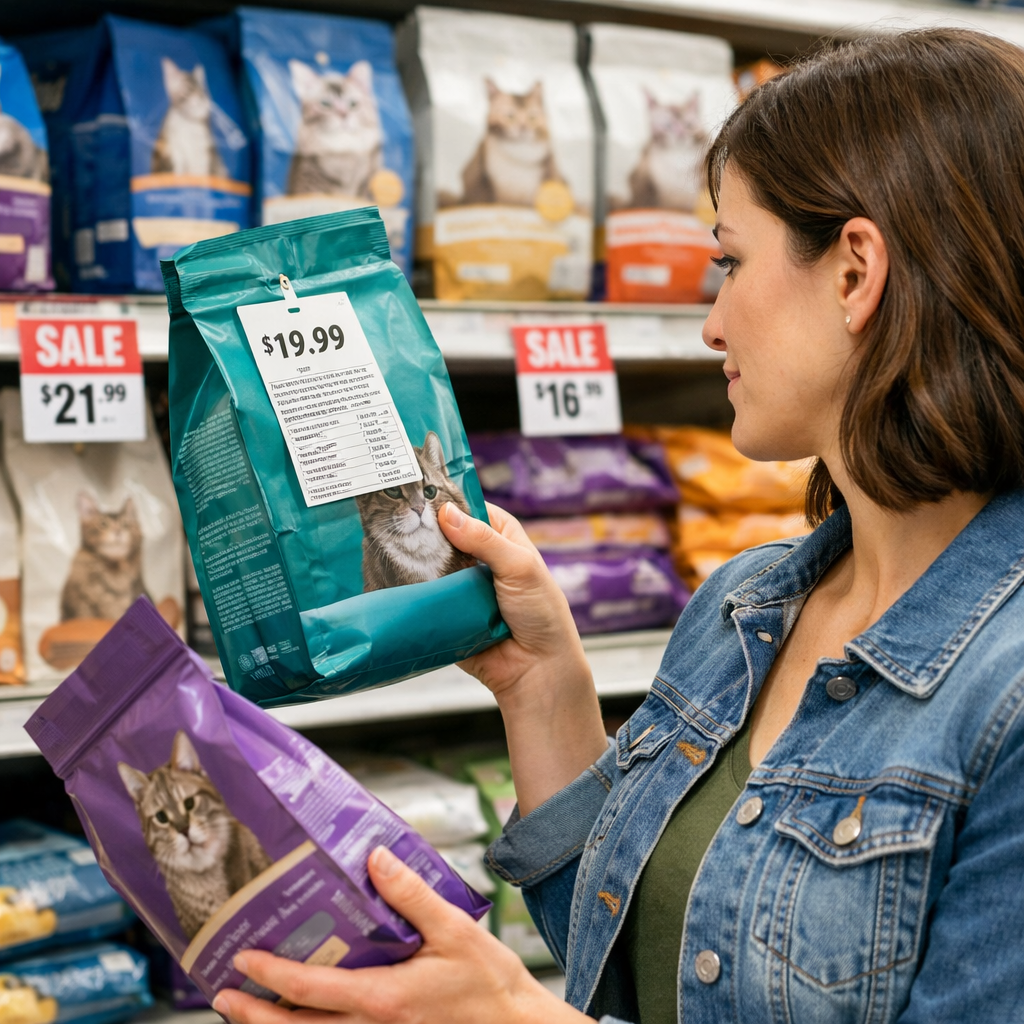
If you want accessible premium cat food on a budget, you don’t need to chase fancy labels—you need ingredients that put animal protein first, an AAFCO complete-and-balanced statement, and a buying plan that lowers your unit price per ounce. This guide shows you the best places to buy cat food for less (Chewy, Amazon, Petco, PetSmart, big-box, and independents), how to use autoship discounts and smart timing, and how to portion precisely so you cut cost per day without sacrificing nutrition. It’s a neutral, math-first approach—aligned with Pet Food Ingredient Guide’s focus on label science and measurable savings—so you can shop with confidence and feed consistently. For deeper ingredient know‑how and portioning tips, visit Pet Food Ingredient Guide’s resources at https://petfoodingredientguide.com/.
How to define premium on a budget
“Premium cat food on a budget means formulas prioritizing animal protein, meeting AAFCO complete-and-balanced standards, and transparent ingredients—purchased via smart pricing (unit-cost) and retailer discounts rather than paying for branding alone.”
Look for the AAFCO nutritional adequacy statement; it tells you a diet is “complete and balanced” for a life stage based on formulation or feeding trials—a reliable baseline for safety and nutrition, as explained in Business Insider’s expert guide to cat food (https://www.businessinsider.com/guides/pets/best-cat-food). Pet Food Ingredient Guide treats the AAFCO statement as the baseline, then compares ingredient panels and cost per ounce.
Trends that justify key “premium” attributes include steady demand for grain-free options, functional ingredients (e.g., digestive or skin support), and transparent sourcing. The USA cat food market is large and growing—about $39 billion—with online retail expansion improving access and deals, though raw-material price volatility can shift availability and shelf price (https://www.kenresearch.com/industry-reports/usa-cat-food-market). Consumers also favor simple, transparent ingredient lists they can understand (https://www.mintel.com/insights/household/pet-industry-trends/).
Quick label checks you can apply anywhere—these mirror Pet Food Ingredient Guide’s review flow:
- Animal protein listed before starches or fillers.
- Clear species-specific meats (e.g., chicken, turkey) vs. vague by-products.
- AAFCO “complete and balanced” statement for your cat’s life stage.
- Calorie content per 100 g or per can to enable cost/day math.
Where to buy premium cat food for less
Each channel has a savings angle:
- Chewy: deep selection and frequent promos; autoship discounts help routine budgets.
- Amazon: fast shipping and price competition across listings drives deal opportunities.
- Petco and PetSmart: wide specialty brand access and services that add value for health-focused buyers.
- Big-box/supermarkets: convenience, store brands, and strong weekly promotions.
Reviewed’s roundup of the best places to buy cat food notes these channel strengths and discount tools, helping you match your needs to the right storefront (https://www.reviewed.com/pets/features/best-places-buy-cat-food). With the USA cat food market at roughly $39 billion and online growth expanding offer density, competitive pricing is within reach if you compare unit prices and time purchases (https://www.kenresearch.com/industry-reports/usa-cat-food-market). Use Pet Food Ingredient Guide’s simple cost‑per‑ounce method to compare across retailers.
Fast tips for affordable premium cat food:
- Compare unit price per ounce, not just sticker price.
- Turn on autoship/subscription, but re-check cost per ounce before each shipment.
- Track retailer sale events and coupon stacking.
- Consider compliant store brands that meet your ingredient standards.
- Bulk-buy during discounts you actually use within 4–6 weeks.
Channel snapshot
| Channel | How it helps you save | Typical tools |
|---|---|---|
| Chewy | Large selection; frequent promos | Autoship %, bundle deals |
| Amazon | Listing competition; fast delivery | Subscribe & Save, coupons |
| Petco | Specialty diets; services add practical value | Repeat delivery %, pickup |
| PetSmart | Broad in-store variety; promotions | Loyalty, in-store deals |
| Big-box/supermarkets | Convenience; private labels and weekly ads | Circulars, bulk packs |
| Independents | Advice; small-brand access; samples | Loyalty, sample sizes |
Chewy
Chewy is a go-to for affordable premium choices thanks to its breadth of brands and recurring promotions that pair well with autoship. To maximize savings:
- Set autoship for staples, then compare the per-ounce price with and without autoship before confirming.
- Stack site promos with larger case sizes to reduce shipping-triggered costs; watch how cost per ounce moves as you change quantities.
Example autoship math (illustrative)
| Product size (case) | List price | Autoship price | Cost/oz (list) | Cost/oz (auto) | Est. monthly cost at 5.5 oz/day |
|---|---|---|---|---|---|
| 3-oz x 24 (72 oz) | $36.00 | $34.20 (−5%) | $0.50 | $0.475 | $82.50 vs $78.38 |
| 5.5-oz x 24 (132 oz) | $39.60 | $37.62 (−5%) | $0.30 | $0.285 | $49.50 vs $47.03 |
Tip: Re-check cart math before each shipment; dynamic promos can alter cost/oz.
Amazon
Amazon’s strength is speed and listing competition—use both while avoiding price traps.
- Compare Subscribe & Save to one-time pricing by cost/oz, and re-check before each shipment since prices are dynamic.
- Favor listings with recent Q&A and clear ingredient panels; zoom product photos for the AAFCO statement when available.
- Watch multipack variations (e.g., 12 vs. 24 cans) because per-ounce pricing often flips which is cheaper.
Petco
Petco blends specialty diets with services (like in-store clinics), which can add value if you’re managing skin, weight, or urinary goals.
- Use repeat delivery on therapeutic or niche formulas; confirm “complete and balanced” status for non-therapeutic items.
- Time store pickup with online promos and ensure unit price parity between online and shelf tags.
PetSmart
PetSmart’s wide in-store variety and frequent promotions can help you test formats and sizes cost-effectively.
- Combine in-store clearance with bulk multipacks to push cost/oz down.
- Ask for lot dates and scan for recipe tweaks that may affect palatability or nutrient density before you stock up.
Big-box and supermarkets
These stores deliver convenience and often lower-cost private labels—just hold the line on nutritional fundamentals.
- Confirm an AAFCO complete-and-balanced statement and prioritize animal protein among the first ingredients.
- Beware vague terms like “meat and animal derivatives” and very low named-meat percentages, which can appear in some budget sachets (https://www.theguardian.com/money/2019/jul/20/cat-food-should-you-spend-more-on-posh-brands).
- Use house-brand budget wet food that meets your criteria as a rotation option to keep average cost/oz down.
Independent pet stores
Local shops can save you money indirectly through better choices and fewer returns.
- Ask for sample cans or small bags to test palatability before buying cases.
- Tap staff expertise to interpret ingredient panels and verify functional additives (e.g., prebiotics) that justify price.
Subscription and fresh delivery services
Subscription cat food means recurring shipments—dry, wet, or fresh—with intro discounts and predictable supply. Weigh convenience against long-term cost/oz versus canned or kibble.
- Subscription-based and direct-to-consumer delivery is growing and can add value (including sustainability/traceability), but may raise long-run cost; evaluate with unit-price math (https://www.kenresearch.com/industry-reports/usa-cat-food-market).
- Use trial boxes to calculate true cost/oz and daily cost; keep a budget canned fallback for flexibility.
- Transition gradually between formats to avoid GI upset and wasted food. Pet Food Ingredient Guide’s stance: price it first, then decide if the convenience is worth it.
How to compare prices the smart way
Unit price per ounce is total price divided by total ounces—your apples-to-apples metric across bag sizes, cans, and pouches.
Three steps:
- Convert package weight to ounces.
- Divide price by ounces for cost/oz.
- Multiply cost/oz by your cat’s daily ounces to get cost/day.
With online retail expansion and active competition, dynamic pricing is common—track sale events across retailers to secure the best unit prices (https://www.kenresearch.com/industry-reports/usa-cat-food-market). This is the same simple formula we use at Pet Food Ingredient Guide for apples-to-apples comparisons.
Portioning math that lowers your cost per day
Daily calories needed ÷ calories per ounce = daily ounces. Then, daily ounces × cost/oz = daily cost. Pet Food Ingredient Guide starts with the label’s kcal/oz to keep portioning math precise.
Example anchor: A moist, meat-first wet food at roughly 33 kcal/oz often pencils out near $1.64/day at budget prices—use your label’s kcal/oz and your store’s cost/oz to recalc precisely (supported by cats.com’s canned food analyses at https://cats.com/reviews/best-canned-cat-food).
Illustrative portion-cost table (maintenance, adult spay/neuter cats vary; adjust to your vet’s guidance)
| Cat weight | Target kcal/day | Food kcal/oz | Ounces/day | Cost/oz | Cost/day |
|---|---|---|---|---|---|
| 8 lb | 160 | 33 | 4.85 | $0.30 | $1.46 |
| 10 lb | 180 | 33 | 5.45 | $0.30 | $1.64 |
| 12 lb | 220 | 33 | 6.67 | $0.30 | $2.00 |
Wet food budgeting without guesswork
Meat-focused wet formulas deliver hydrating moisture alongside nutrition and can help many cats meet fluid needs—a practical benefit when budgeting around real intake (https://cats.com/reviews/best-canned-cat-food).
Useful price markers:
- Dave’s canned foods often sell under $0.30/oz—a solid budget benchmark for animal-protein-first wet options (source above).
- Weruva “Cats in the Kitchen” lines commonly average about $0.40/oz—helpful as a mid-budget reference (https://cats.com/best-cheap-cat-food).
Wet-buy checklist:
- Confirm an AAFCO complete-and-balanced statement.
- Check that animal protein leads the ingredient list.
- Calculate cost/day from calories/oz and your cat’s target intake.
- Buy multipacks during promos or autoship cycles to lock in savings.
Use these markers as references; Pet Food Ingredient Guide recommends recalculating with current labels and prices.
Week-by-week adjustment plan to avoid waste
- Week 1: Feed the portioning formula, log intake, leftovers, stool quality, and weight.
- Week 2: Adjust portions ±5–10% based on weight trend and bowl waste; keep timing consistent.
- Week 3: Recheck cost/day; if intake is steady, move to larger packs to reduce cost/oz.
- Week 4: Lock the routine and align autoship to true consumption.
Keep transitions gradual between brands or formats to reduce GI upset and waste; predictable routines also simplify cost control (market context and availability dynamics summarized at https://www.kenresearch.com/industry-reports/usa-cat-food-market). This incremental approach reflects Pet Food Ingredient Guide’s focus on predictable routines and measurable savings.
Watchouts that impact price and nutrition
Raw-material price swings and regulatory labeling rules influence availability, formulations, and what you see on packs—periodically recheck labels and pricing windows (https://www.kenresearch.com/industry-reports/usa-cat-food-market).
- Recipe changes can alter nutrient density and palatability—monitor label updates and recent reviews.
- Be wary of vague proteins like “meat and animal derivatives” and very low named-meat percentages on some budget lines (https://www.theguardian.com/money/2019/jul/20/cat-food-should-you-spend-more-on-posh-brands).
- Always anchor on an AAFCO “complete and balanced” statement for baseline adequacy (see AAFCO explanation cited earlier).
Sample monthly buying plan
Use this fill-in template to pair retailers, formats, and math to your budget using Pet Food Ingredient Guide’s unit-price method. Replace numbers with your actual prices and portions.
| Retailer | Product/format | Size | Price | Cost/oz | Ounces/day | Days covered | Cost/day | Est. total cost/month |
|---|---|---|---|---|---|---|---|---|
| Chewy | Budget wet (Dave’s example) | 5.5-oz x 24 = 132 oz | $39.60 | $0.30 | 5.5 | 24 | $1.65 | ~$49.50 |
| Amazon | Mid-budget wet (Weruva CITK) | 3-oz x 24 = 72 oz | $28.80 | $0.40 | 5.5 | 13 | $2.20 | ~$66.00 |
| Petco | High-protein dry (topper) | 5 lb = 80 oz | $20.00 | $0.25 | 1.0 | 80 | $0.25 | ~$7.50 |
Notes:
- Price anchors reflect common ranges: Dave’s <$0.30/oz (cats.com canned guide) and Weruva CITK ~ $0.40/oz (cats.com cheap picks).
- Retailer strengths: Chewy promos/autoship, Amazon speed/competition, Petco/PetSmart specialty/services (see channel roundup linked earlier).
Frequently asked questions
How do I know a retailer is trustworthy for premium cat food?
Look for established retailers with clear return policies, accurate ingredient panels, and product pages that show an AAFCO complete-and-balanced statement. Pet Food Ingredient Guide’s checklists help you verify labels quickly.
Is premium cat food really worth the extra cost if I’m on a budget?
Yes—prioritize animal protein first on the label and an AAFCO statement, then use unit pricing and autoship discounts to keep daily costs predictable. Pet Food Ingredient Guide focuses on label-first choices that stretch budgets without sacrificing essentials.
What’s the cheapest way to buy wet food without sacrificing quality?
Shop cost per ounce, target budget-friendly lines that still meet AAFCO, and time bulk multipacks with promos or autoship for steady savings. Pet Food Ingredient Guide’s cost/oz method makes the tradeoffs clear.
How often should I adjust portions to manage cost and weight?
Review intake, weight, and leftovers weekly; adjust by 5–10% and keep feeding times consistent to reduce waste. Pet Food Ingredient Guide’s portioning approach uses label calories to guide small, steady tweaks.
How can I bulk buy without spoilage or palatability issues?
Buy sizes your cat finishes within 4–6 weeks, store kibble airtight and cans cool and dry, and test small quantities before large orders. Pet Food Ingredient Guide recommends trialing flavors first to avoid costly returns.