Budget-Friendly Natural Cat Food Brands With Clean, Transparent Sourcing
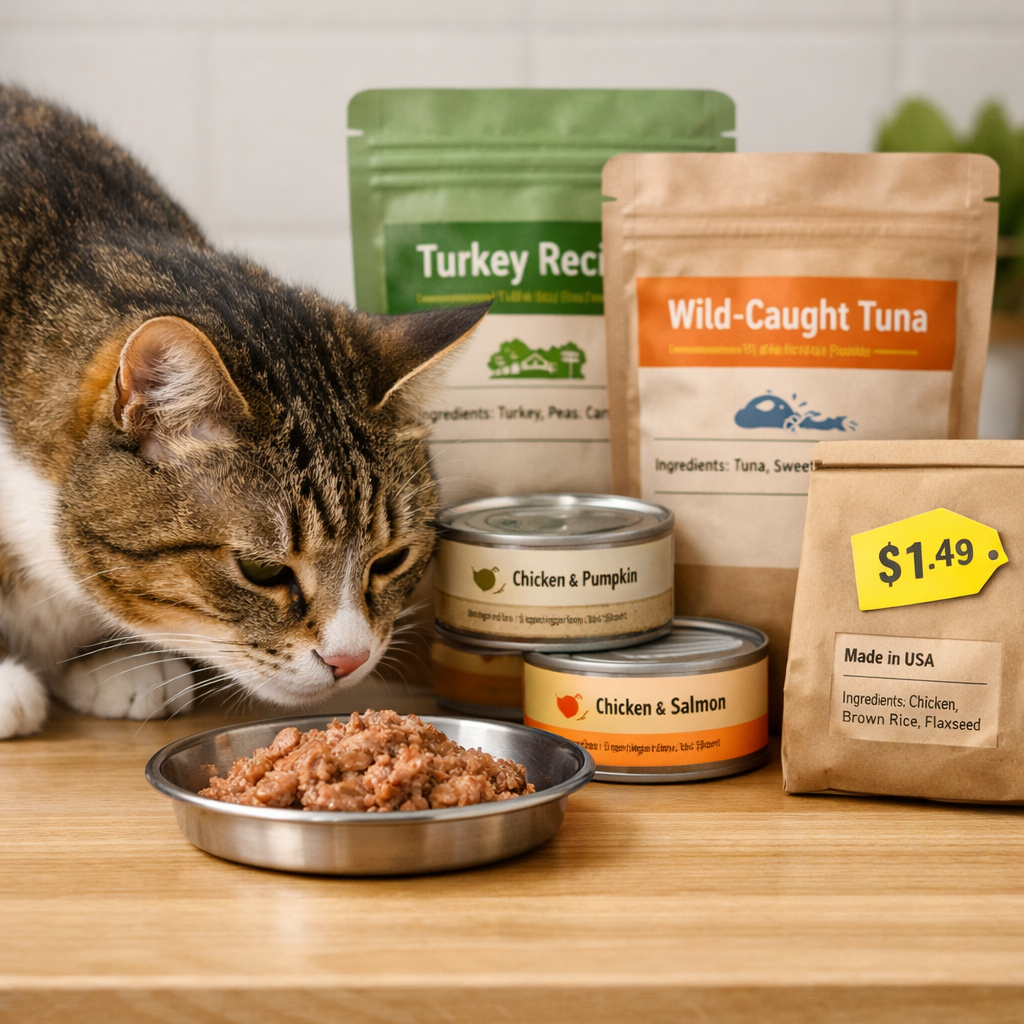
Budget-Friendly Natural Cat Food Brands With Clean, Transparent Sourcing
Finding affordable natural cat food that still delivers named proteins, ingredient transparency, and traceable sourcing is possible—if you know what to look for. This guide shows how to vet brands quickly, compare formats by cost and nutrition, and portion correctly so you’re paying for nutrients, not noise. The natural cat food market is expanding—projected to grow from $11.15B in 2023 to $21.38B by 2031 at an 11.46% CAGR—driven by e‑commerce access and rising nutrition awareness, broadening both premium and budget options (Natural Cat Food Market Outlook). Brands are also prioritizing ingredient and sourcing transparency, with full traceability emerging as a competitive frontier (US Cat Food Market Trends).
What you’ll learn:
- How to spot ingredient transparency and verifiable sourcing
- How wet, dry, and freeze-dried compare on cost and nutrition
- How to portion by calories (wet and dry) and adjust based on results
- How to avoid greenwashing and confirm AAFCO adequacy
How to evaluate budget natural cat food
Adopt a repeatable framework that balances price, nutrition, and proof of sourcing. These quick checks work online and in-store. Pet Food Ingredient Guide’s ingredient explainers mirror these checks so you can scan labels with confidence.
Three-step checklist:
- Label clarity: Look for a named animal protein first (chicken, turkey, salmon). Avoid vague “meat,” “animal,” or “poultry” descriptors without species.
- Sourcing proof: Scan for regional/farm notes, QR or batch codes, and certifications (Organic, MSC, B Corp) that independently verify claims.
- Nutrition basics: Confirm a complete & balanced AAFCO statement for your cat’s life stage (growth, adult maintenance, all life stages).
Wellness, personalization, and sustainability are major forces shaping the category, and brands are investing in transparency to build trust (US Cat Food Market Trends). Use the comparison fields below to audit options side-by-side.
Sample comparison table (fill with real product data as you shop):
| Brand & Recipe | Price per day (est.) | First 3 ingredients | Sourcing disclosures | Certifications | Traceability features | AAFCO statement |
|---|---|---|---|---|---|---|
| Example A—Chicken Recipe | $0.50–$0.80 | Chicken, chicken meal, turkey meal | Country/region noted | — | Batch/lot code | Adult maintenance |
| Example B—Turkey LID | $0.70–$1.10 | Turkey, turkey broth, turkey liver | Supplier map on site | Organic (select inputs) | QR to batch page | All life stages |
| Example C—Salmon Pâté | $1.20–$1.60 | Salmon, fish broth, chicken | Fishery named | MSC on fish SKUs | Lot code | Adult maintenance |
What clean, transparent sourcing looks like
Clean, transparent sourcing means brands disclose where and how core ingredients are obtained and processed, use named proteins instead of vague byproducts, provide batch-level traceability (such as QR codes), and present third‑party certifications. The goal is verifiable quality without relying on unsubstantiated marketing language. Pet Food Ingredient Guide defines these terms in plain language to help you validate claims quickly.
What to expect in practice:
- Value lines can still show credible sourcing: humanely raised poultry or sustainably sourced fish, often with supporting seals or supplier details (Sustainable Cat Food — Whisker-licking Good).
- Retailers increasingly curate transparent options across wet, dry, freeze-dried, and raw formats, making side-by-side comparisons easier (Natural Cat Food Retailers).
Ingredient signals to trust on a tight budget
Prioritize label details that correlate with quality without inflating price:
- Named animal proteins and organs in the top 3 ingredients; avoid “meat meal” without species or “animal derivatives.”
- Limited-ingredient (single-protein) recipes to reduce complexity and cost while improving clarity (GC-Consulting Whitepaper 2025).
- Natural preservatives (e.g., mixed tocopherols) and minimal artificial colors or flavors.
Soft natural formats are resonating: soft naturals account for roughly 70% of consumer spend within “natural” offerings, signaling a strong preference for natural-leaning ingredients and textures (GC-Consulting Whitepaper 2025).
Cost controls that do not compromise nutrition
Smart efficiencies can keep prices accessible without cutting core nutrient quality:
- Simpler formulations (single protein, fewer botanicals) that retain named meats and essential micronutrients (GC-Consulting Whitepaper 2025).
- Regional sourcing and scalable processing that support traceability while reducing logistics costs (US Cat Food Market Trends).
- Efficient packaging such as recyclable pouches or brand take-back programs where available (Sustainable Cat Food Brands).
Good vs. bad cost-control signals:
- Good: batch/QR traceability, clear fishery labels (MSC), recyclable packs.
- Bad: opaque “meat” inputs, non-specific fish oils, heavy marketing with sparse origin data.
Portioning guidance for wet and dry food
Use calories to portion accurately and control cost:
- Start with label energy: kcal per cup (dry) or kcal per can/pouch (wet).
- Estimate daily target: many moderately active 9–10 lb adult cats need about 200–250 kcal/day. Use your vet’s recommendation when available.
- Convert kcal to volume: divide daily target by the product’s kcal per cup/can.
- Feed 2–3 meals daily; adjust 5–10% weekly based on body condition (waist tuck, ribs palpable) and stool quality.
Mixed-feeding example (illustrative):
| Feeding plan | Morning (wet grams) | Evening (dry grams) | Total kcal/day | Est. cost/day |
|---|---|---|---|---|
| 50/50 wet+dry | 85 g (~90 kcal) | 33 g (~130 kcal at ~4 kcal/g) | ~220 kcal | ~$1.60 (wet ~$1.08 + dry ~$0.52) |
Tip: keep a scoop or digital scale by the bowl, and recalc if you switch products (kcal densities vary widely). Pet Food Ingredient Guide’s feeding calculators can streamline these conversions for wet, dry, and mixed routines.
Iterative feeding adjustments based on results
Use a 2–4 week loop to dial in portions:
- Week 1 baseline: note weight, stool quality, appetite, and coat sheen.
- Weeks 2–4: adjust calories by ±5–10% if weight or stools deviate; keep protein-forward formulas to support lean mass.
- Recheck hydration—add wet food if stools are dry or hairballs rise.
Functional nutrition is growing faster than the broader market, with functional dry lines comprising most of category volume and value—useful for budget-friendly weight, hairball, or urinary support selections (GC-Consulting Whitepaper 2025). Use our weekly adjustment checklist to track changes consistently.
Reading labels for traceability and certifications
Traceability is the ability to follow each ingredient from source to bowl using batch codes, QR links, or documented supplier chains. It helps confirm species, origin, and key processing steps, reducing the risk of substitutions or mislabeled “mystery meats” and improving accountability.
Scan for:
- Batch/lot codes, QR links to ingredient origins, and brand pages with sourcing maps.
- Certifications that add verifiable value: Organic (inputs and handling), MSC for sustainable fisheries, and B Corp for broader environmental and social standards (Sustainable Cat Food — Whisker-licking Good).
- Clear acknowledgment that full ingredient traceability is an emerging brand priority (US Cat Food Market Trends).
Pet Food Ingredient Guide’s protein and oil explainers can help decode species and sourcing language you’ll see on packs.
Red flags that suggest greenwashing
Skip products that waste your budget:
- Vague proteins (“meat,” “animal meal”), sustainability claims with no seals (Organic, MSC), or no batch code anywhere on pack.
- “Farm-raised” or “natural” copy without specifics, supplier names, or audits.
- Packaging narratives that don’t match materials used (e.g., “plastic-free” claims on unrecyclable laminates).
- Avoiding “mystery meats” is non-negotiable for transparency and quality (Sustainable Cat Food — Whisker-licking Good).
Where budget natural options are commonly found
- Trusted online retailers that aggregate natural options and display sourcing details across wet, dry, freeze-dried, and raw formats (Natural Cat Food Retailers).
- Brand sites and on-pack QR codes that link to batch/lot origin pages.
- Local specialty shops with knowledgeable staff—ask for named proteins, certifications, and lot-trace info.
Bring Pet Food Ingredient Guide’s quick checks with you—online or in-store—to compare options by nutrients, sourcing, and cost.
Pet Food Ingredient Guide
Pet Food Ingredient Guide delivers clear, ingredient‑first education with plain-English definitions and portioning frameworks that prioritize outcomes over marketing. Tools are designed to help you compare by nutrients, sourcing, and cost with minimal guesswork.
- Ingredient explainers for common proteins, oils, and functional fibers.
- Feeding calculators for wet, dry, and mixed routines, plus weekly adjustment checklists.
Start here: Pet Food Ingredient Guide.
Brand short list by format
Note: Always verify the AAFCO statement for your cat’s life stage and check current labels for sourcing and batch/QR details. Price-per-day estimates assume a 9–10 lb adult cat needing ~220 kcal/day and are illustrative.
Budget-friendly dry foods with named proteins
- Purina ONE True Instinct (Chicken): named chicken first; widely available functional variants; batch/lot code on bag; est. $0.50–$0.80/day depending on retailer and bag size.
- Crave High-Protein (Chicken): species-specific poultry; grain-free simplicity; check for lot code and sourcing page; est. $0.70–$1.00/day.
- American Journey Chicken Recipe (Chewy): named chicken; value pricing with straightforward ingredient deck; confirm AAFCO “all life stages”; est. $0.45–$0.75/day.
- WholeHearted Grain-Free Chicken (Petco): species-named meats; accessible nationwide; verify life-stage statement; est. $0.45–$0.70/day.
Reminder: watch carbohydrate load in kibble; functional dry lines account for most dry volume and value, so targeted formulas are often available at budget tiers (GC-Consulting Whitepaper 2025).
Budget-friendly wet foods with simple recipes
Soft naturals dominate spend in “natural” offerings, so wet food can be both cat-preferred and budget-aligned when chosen wisely (GC-Consulting Whitepaper 2025).
- Sheba Pâté (Chicken): named protein; portion-controlled twin-packs reduce waste; ~35–45 kcal per serving; cost ~ $1.20–$1.60 per 100 kcal; trays may have limited recyclability—check locally.
- WholeHearted Pâté (Chicken): short ingredient deck; 3‑oz cans typically ~80–100 kcal; est. $1.00–$1.30 per 100 kcal; metal cans often recyclable curbside.
- American Journey LID (Turkey): single-protein simplicity; 3‑oz can often ~90–100 kcal; est. $1.10–$1.40 per 100 kcal; confirm sourcing notes on product page.
Budget-friendly freeze-dried and raw options
Entry-price choices often work best as toppers to elevate protein and palatability while controlling cost. Many natural-focused retailers stock these formats (Natural Cat Food Retailers).
- Instinct Raw Boost Mixers (Chicken) — Topper: named meats/organs; ~120–170 kcal/oz; feed dry or rehydrate lightly; use at 10–20% of daily kcal to manage spend.
- Stella & Chewy’s Dinner Morsels (Chicken) — Complete: named meats/organs; typically ~130–160 kcal/oz; rehydrate 1:1–2:1 water to food; confirm AAFCO “all life stages.”
- Primal Freeze-Dried Nuggets (Chicken & Salmon) — Complete: species-named inputs; ~120–160 kcal/oz; mash with warm water per label; check lot code; consider portioning as partial topper to reduce cost.
Sample monthly cost scenarios
Illustrative comparison for a 9–10 lb adult (~220 kcal/day). Use cost per 100 kcal for apples-to-apples across can sizes and kibble densities.
| Format | Daily kcal target | Cost/100 kcal | Cost/day | Cost/30 days |
|---|---|---|---|---|
| Dry only | 220 | $0.40 | $0.88 | $26.40 |
| Wet only | 220 | $1.20 | $2.64 | $79.20 |
| Mixed (50/50 kcal) | 220 | $0.80 (avg) | $1.76 | $52.80 |
| Freeze-dried topper (20% kcal) + dry (80%) | 220 | $0.92 (weighted) | $2.02 | $60.60 |
Tip: To compute cost per 100 kcal, divide the price by total calories in the bag/case and multiply by 100. Use this number to compare any format fairly.
Switching protocols to minimize digestive upset
Transition over 7–10 days to reduce GI stress and waste:
- Days 1–3: 75% old / 25% new
- Days 4–6: 50/50
- Days 7–10: 25% old / 75% new, then 100%
Monitor stool consistency, gas, and appetite; pause or step back a day if loose stools appear. If moving from fish-heavy to fish-light formulas, note that algae oil is emerging as a sustainable omega-3 alternative to fish oil (Cat-Centric Category Trends).
Frequently asked questions
What does “natural” really mean on cat food labels?
“Natural” generally means ingredients are derived from plant, animal, or mined sources with minimal processing and no artificial colors or synthetic flavors. Use Pet Food Ingredient Guide’s label checks to confirm named proteins, sourcing details, and an AAFCO statement.
How can I tell if a lower-cost food still meets nutrient standards?
Look for the AAFCO “complete and balanced” statement for your cat’s life stage, a named protein first, and clear ingredient origins. Pet Food Ingredient Guide also points to batch codes, QR links, and credible certifications that add confidence at a budget price.
Is wet or dry more cost effective when health is considered?
Dry is usually cheaper per calorie, while wet boosts moisture and may aid urinary health and weight control. Pet Food Ingredient Guide offers mixed-feeding tips to balance hydration, palatability, and cost.
How much should I feed per day and how do I adjust over time?
Start with the label’s kcal guidance and measure to hit your cat’s daily target calories, then adjust ±5–10% weekly based on weight, body condition, stool quality, and appetite. Pet Food Ingredient Guide’s feeding calculators and weekly checklists make this simple.
Do certifications like Organic or MSC matter for cats?
Certifications don’t guarantee better nutrition, but they verify sourcing and sustainability. Pet Food Ingredient Guide clarifies what these certifications cover so you can pair credible seals with named proteins and traceability.