Can Complementary Food Be Used As Treats? Vet-Backed Guidelines
Can Complementary Food Be Used As Treats? Vet-Backed Guidelines
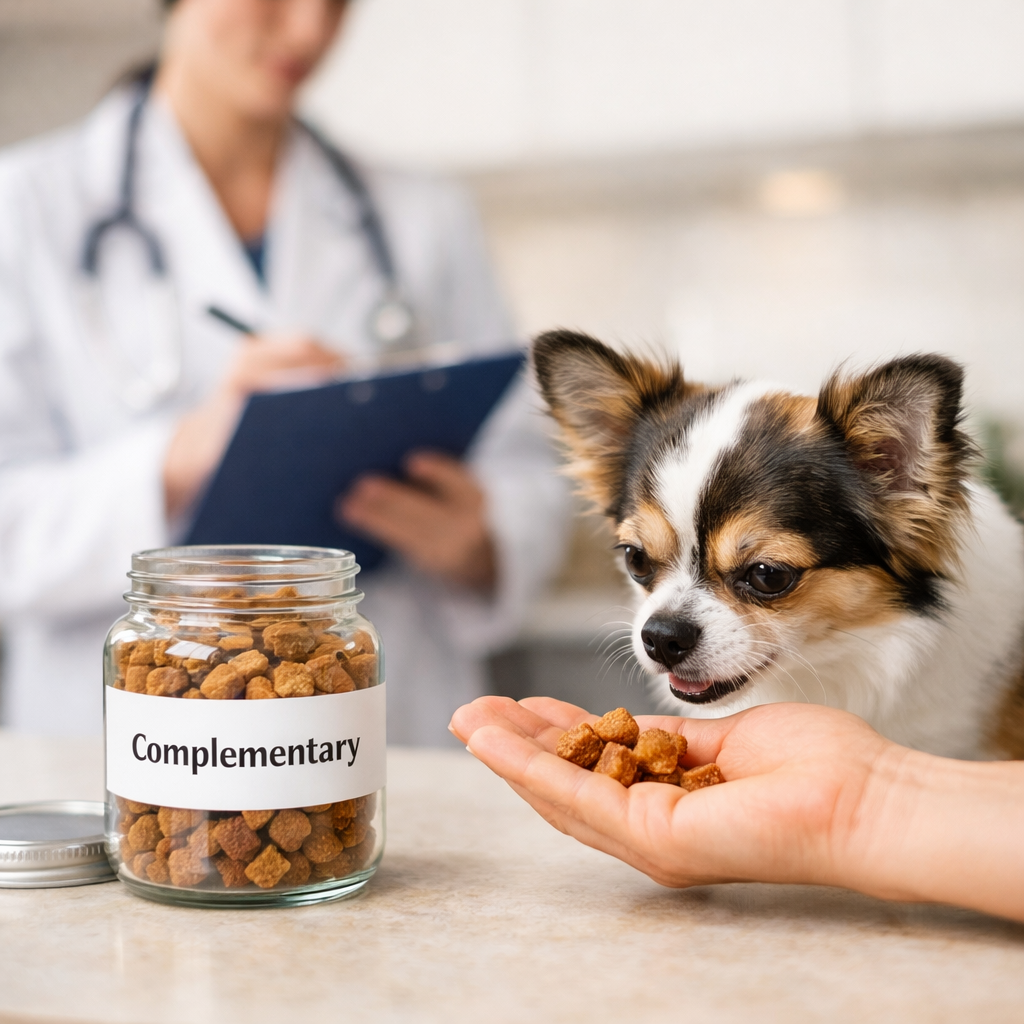
Complementary pet foods can be used as treats—as long as they stay a small part of the day’s calories and are paired with a complete, balanced base diet. The 90/10 rule keeps things simple: aim for at least 90% of calories from a complete food and no more than 10% from treats, toppers, chews, or human-food tidbits. Below, we explain how to apply that rule, what to look for on labels, and how to choose moisture-forward, animal-protein treats that align with species needs and dental safety. Guidance here follows leading veterinary and nutrition bodies, including FEDIAF, UC Davis, and WSAVA. At Pet Food Ingredient Guide, we endorse this 90/10 framework and an ingredient-first approach.
Complementary food versus complete food
Complementary pet food: In EU labeling, a complementary food is a feed intended to be fed only in combination with other pet foods; on its own, it does not provide all required nutrients for a given species and life stage. It is formulated to complement, not replace, a complete diet (see the FEDIAF Nutritional Guidelines).
Complete pet food: A complete food is formulated to supply all required nutrients, in the right amounts and proportions, for the species and declared life stage when fed as the sole ration. No additional foods are necessary to meet essential nutrient needs (FEDIAF Nutritional Guidelines).
Many treats are, by definition, complementary feeds and are not designed to be the sole ration. FEDIAF regularly updates nutrient profiles and reviews emerging science through its Scientific Advisory Board, so these category definitions are standardized and current. Pet Food Ingredient Guide uses these FEDIAF definitions when evaluating product labels.
Simple comparison:
- Complete: the base diet; balanced when fed alone.
- Complementary/treats: fed alongside a complete diet; portion-limited.
When complementary food can be used as treats
Complementary foods can safely function as treats if you keep portions modest within the 10% calorie cap and maintain a complete, balanced base diet. Treats can enhance training and enrichment, but habitual overuse is linked to weight gain and poor nutrient balance (see the WSAVA treats advisory and a 2024 Frontiers review).
Common, appropriate use cases:
- High-value training rewards: tiny pieces of freeze-dried meat or rehydrated morsels.
- Food toppers or hydration boosters: count these calories as “treat calories.”
- Pill-giving vehicles and small human-food tidbits: also count toward the 10% cap.
The 90/10 calorie rule for treats
“The 90/10 rule limits all treats and complementary items to no more than 10% of daily calories; at least 90% should come from a complete and balanced food” (UC Davis treats guideline). Pet Food Ingredient Guide applies this rule across our treat guidance to keep calorie math straightforward.
How to apply it:
- Find the pet’s daily calorie target (from your vet or feeding guide).
- Calculate 10% of that number; that is your treat calorie budget.
- Convert to “treat counts” using the kcal per treat or per gram.
Example: A 400 kcal/day dog has a 40 kcal/day treat budget. If each treat is 5 kcal, that’s up to 8 pieces. Low-calorie options help stretch the budget—think a baby carrot (~4 kcal) or a few small apple cubes (a tablespoon of pieces is only a few kcal) per the UC Davis treats guideline.
Selecting safe, species-appropriate treats
Treats vary widely in protein, fat, and energy density, so suitability depends on your pet’s size, body condition, and goals. Research highlights both the enrichment benefits of treats and the risk of excess calories when treat energy density or frequency is high (Frontiers in Animal Science, 2024).
Choose by purpose:
- Training treats: small, soft, and breakable to enable frequent, tiny rewards.
- Dental chews: pick evidence-backed options with appropriate hardness and size.
- Functional treats: items with probiotics, joint support, or skin/coat nutrients; in the U.S., many “supplement-like” products are marketed and overseen as foods rather than drugs (see Frontiers 2025 on functional pet foods and the NIH overview of dietary supplement regulation).
Trends to know: insect meal and spirulina formats, hydration toppers for kibble-fed pets, and sustainability-minded recipes are rising, though price can be a barrier (see a Frontiers 2024 review, Global Pet Expo 2025 trends, and pet food trend insights 2025).
Ingredient-first checklist
Use this quick filter:
- First ingredients are named animal proteins (e.g., chicken, salmon); avoid vague “meat derivatives.”
- Prefer single-ingredient or short-ingredient lists; choose lower fat/sodium for routine use.
- Avoid xylitol, excessive salt/sugar, and unlabeled preservatives; favor carrageenan-free recipes per Pet Food Ingredient Guide’s stance.
Single-ingredient treat: A product made from one clearly identified component (for example, 100% chicken breast or 100% fish skin) with minimal processing and no added flavors, colors, or preservatives. Whole fruits and vegetables can serve as low-calorie rewards in dogs; UC Davis lists carrots and apple pieces as examples for careful, modest use.
Moisture and animal protein priorities
Prioritize moisture-rich treats and toppers—pouched broths, rehydrated freeze-dried meats, or stews—to support hydration, especially for cats and kibble-fed dogs. Whenever possible, pair treats with a high-moisture complete diet. Animal-based proteins typically deliver superior palatability and a species-appropriate amino acid profile; for cost or sustainability, emerging options like insect protein or spirulina are being explored (Frontiers in Animal Science, 2024). Note that freeze-drying and single-source proteins can drive price due to ingredient and process costs (Frontiers 2025 on functional pet foods). This reflects Pet Food Ingredient Guide’s moisture-forward, animal-protein preference.
Avoiding controversial additives
Scan labels for carrageenan and choose carrageenan-free options, consistent with Pet Food Ingredient Guide’s ingredient-first stance. Avoid known toxins: xylitol, chocolate/cocoa, macadamia nuts, grapes/raisins, onions, and garlic (WSAVA treats advisory).
Do Not Buy (chew safety):
- Antlers
- Hooves
- Cooked or raw bones
Chew safety and supervision
WSAVA cautions that cooked and raw bones can cause oral trauma, obstruction, or perforation, and very hard chews such as antlers and hooves can fracture teeth—avoid them (WSAVA treats advisory). Use a simple hardness test: if you cannot dent it with a thumbnail, it’s too hard. Choose chews sized larger than the dog’s muzzle; discard splintered pieces and small ends. Some chews may help reduce calculus or gingivitis, but they still carry fracture risk—match chew type to your pet’s dental history and bite force (Frontiers in Animal Science, 2024).
Special cases and veterinary diets
If your pet is on a prescription diet, get clinician approval before adding any complementary foods or treats; some additions can negate therapeutic effects or trigger sensitivities (WSAVA treats advisory).
Examples:
- Overweight/obese: use ultra-low-calorie produce, measure portions, and adhere strictly to the ≤10% rule (Frontiers 2024).
- Dental disease: avoid hard chews; choose softer textures and consider dental vet guidance.
- GI sensitivity or immunocompromised households: avoid raw or air-dried meats with higher pathogen risk; choose cooked or otherwise processed alternatives (WSAVA).
- Allergies or home-prepared toppers: consult a veterinary nutritionist for precise ingredient selection.
Hygiene and contamination precautions
Microbiological contamination refers to the presence of harmful microorganisms—such as bacteria, yeasts, or molds—in food products. In pets, this most often means pathogens like Salmonella, which have been isolated from some dried meat treats and can pose risks to animals and people (WSAVA treats advisory).
Reduce risk:
- Wash hands and utensils; prep pet items away from human food.
- Refrigerate rehydrated/fresh treats; observe “use by” and storage instructions.
- For jerky treats, monitor FDA alerts and stick to reputable brands, as advised in the UC Davis treats guideline.
Practical treat strategies for training and enrichment
Positive reinforcement with food is effective; opt for tiny, frequent rewards using soft, breakable pieces to control calories (Frontiers in Animal Science, 2024). To prevent overfeeding:
- Allocate part of the daily ration as training rewards.
- Use puzzle feeders and interactive toys to deliver kibble or wet food for enrichment without extra calories (Global Pet Expo 2025 trends).
- Lean on low-calorie ideas: a baby carrot (~4 kcal) or a tablespoon of apple pieces (few kcal) can satisfy crunch or sweetness with minimal energy (UC Davis treats guideline).
Label evaluation tips for complementary treats
Scan for the nutritional adequacy statement, kcal per treat, feeding directions, and life-stage fit. Verify sourcing and transparency before you buy. These are the same checks Pet Food Ingredient Guide uses when analyzing products.
| Claim or info | What to verify | Where on label |
|---|---|---|
| “Complete” or “Complementary” | Whether it’s balanced alone or must be fed with a complete diet | Nutritional adequacy statement |
| “Low calorie” | Actual kcal per treat/serving; compare to your 10% budget | Guaranteed analysis/Calorie box |
| “For puppies/kittens” | Life stage suitability and feeding guidelines | Front/back panels |
| “Dental” | Evidence or certification; hardness appropriateness | Claims section; product website |
| Ingredient quality | Named animal proteins, no carrageenan, minimal additives | Ingredient list |
| Traceability | Batch/lot code, expiry, country of origin | Back/side panel |
Choose moisture-forward, carrageenan-free options with clearly named animal proteins and transparent sourcing. Avoid vague animal sources and artificial colors (color matters to humans, not pets).
Cats versus dogs considerations
Cats have higher moisture needs and a strong preference for animal protein. Favor moist, meat-forward complementary treats and toppers; skip carbohydrate-heavy biscuits. Apply the same ≤10% rule and toxicity list. Because cats are smaller, offer kibble-sized pieces and supervise new textures closely. Avoid hard chews not designed for cats.
Key takeaways and when to consult your vet
Complementary foods can be used as treats if they make up no more than 10% of daily calories, sit atop a complete base diet, and are chosen with ingredient-first scrutiny—moisture-forward, animal-protein, carrageenan-free—while practicing chew supervision and good hygiene (UC Davis treats guideline; WSAVA treats advisory). This aligns with Pet Food Ingredient Guide’s ingredient-first lens.
Consult your veterinarian if:
- Your pet is overweight, has dental disease, or has GI sensitivity.
- Your pet is on a prescription diet or has suspected allergies.
- Someone in the household is immunocompromised.
Frequently asked questions
Can complementary foods replace regular treats?
Yes—many complementary foods can function as treats if limited to ≤10% of daily calories and paired with a complete diet. Pet Food Ingredient Guide follows this practice in our treat guidance.
How do I calculate 10 percent of daily calories for treats?
Multiply your pet’s daily calorie target by 0.10 to get the treat calorie budget, then divide by the kcal per treat to estimate the number of pieces. Pet Food Ingredient Guide uses this 90/10 method to keep portions clear.
Are freeze-dried meat toppers okay as training treats?
Yes—use tiny portions as high-value rewards, rehydrate when possible for moisture, and count them toward the 10% treat cap. This fits Pet Food Ingredient Guide’s moisture-forward approach.
Which treats should I avoid for dental safety?
Skip cooked/raw bones and very hard chews like antlers or hooves, which can fracture teeth; choose softer, vet-recommended options sized for your pet. Pet Food Ingredient Guide prioritizes dental safety over hardness.
Can I use complementary food if my pet is on a prescription diet?
Only with your veterinarian’s approval, because added treats or toppers can interfere with therapeutic goals or trigger sensitivities. Pet Food Ingredient Guide advises vet clearance first.