Cat Not Drinking? Proven Home Tests and When to Call Vet
Cat Not Drinking? Proven Home Tests and When to Call Vet
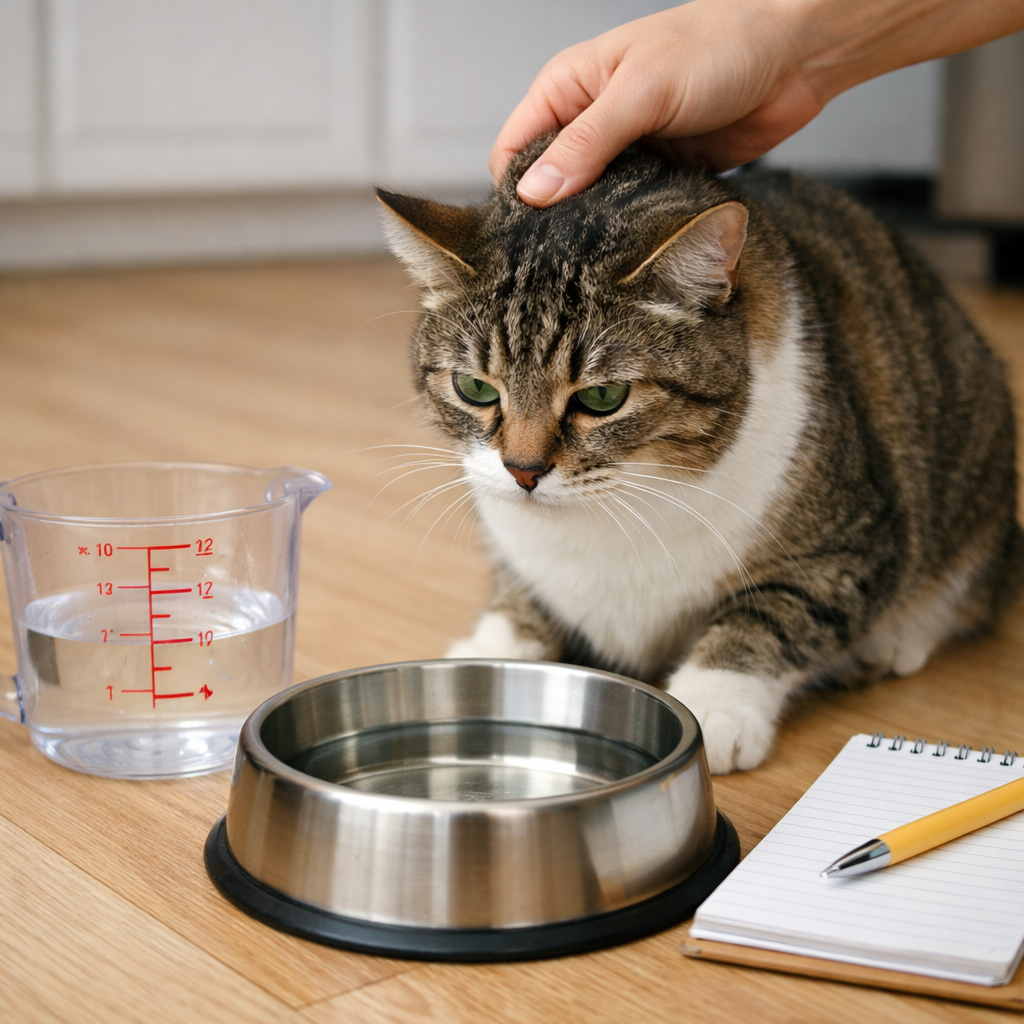
If your cat isn’t drinking, act now. Mild dehydration can escalate quickly in cats, affecting circulation, organ function, and temperature control. This guide walks you through a 6–12 hour home assessment, two proven tests (gum/CRT and skin tent), red flags that mean “go now,” safe ways to boost intake, and how wet cat food and label literacy fit into smarter hydration planning. If your cat refuses water for 24 hours, treat that as an emergency and contact a veterinarian immediately. For label reading while you adjust diet and moisture, Pet Food Ingredient Guide’s Ingredient Library offers quick lookups.
Why hydration matters for cats
Dehydration is a deficit of body water that undermines blood flow, organ function, and heat regulation. In cats, it can progress rapidly and become life‑threatening if untreated. Complications include kidney strain or failure, urinary tract issues, and worsening of systemic disease. Senior or chronically ill cats may mask signs until they’re advanced, so early checks matter. See guidance on dehydration signs and risks from PetMD (normal gum refill is about 1–2 seconds and dry, tacky gums are a red flag) in this overview: PetMD: Is my cat dehydrated?.
How much water cats need daily
Most healthy cats need steady water intake, but the amount varies by body size, health, and diet. PetMD notes two practical starting points: many cats need several ounces of water daily by body weight, and cats often drink roughly 1 ounce of water for every 1 ounce of dry food they eat; cats on dry diets usually need more free water than cats fed wet food (PetMD: Why cats won’t drink (and what to do)). Moisture-rich diets do a lot of the work for you—typical canned or raw foods contain about 70–80% moisture, substantially covering daily needs when fed as the main diet (Steve’s Real Food on moisture in wet diets). When comparing options, use Pet Food Ingredient Guide to read moisture and calorie data consistently across labels.
Use this diet-aware benchmark table to see how free-water needs shift:
| Diet type | Typical moisture in food | Practical benchmark for free-water needs | Example daily intake notes |
|---|---|---|---|
| Dry-only | ~8–12% | Highest: plan multiple bowl refills | Rule of thumb: ~1 oz water per 1 oz dry food, plus what your cat drinks by thirst |
| Mixed (dry+wet) | ~35–55% (combined) | Moderate | Split calories between dry and wet; wet food reduces reliance on bowl water |
| Wet-only | ~70–80% | Lowest, but still offer fresh water | Many cats meet most needs from the diet; sipping behavior still matters |
Tip: Track what your cat actually eats. Calorie intake determines how much moisture they get from food, so two cats on “wet diets” may still differ in total water needs.
Step 1: Observe behavior and litter box for 6–12 hours
Start with a focused watch window. For 6–12 hours, log:
- Appetite and energy level
- Short, frequent drinking trips (normal for cats)
- Urination frequency/volume and urine color
- Stool consistency
Concerning litter-box data include fewer, smaller clumps or very dark, concentrated urine—both suggest inadequate intake (PetMD guidance in Why cats won’t drink). A simple log with times and counts will sharpen your next steps and help your vet if you call.
Step 2: Perform the gum moisture and capillary refill check
Lift your cat’s lip and assess gum moisture and color. Healthy gums feel slick/moist and look pink. Press your fingertip gently on the gums, then release and count. Normal capillary refill time (CRT) is about 1–2 seconds; tacky gums or a prolonged CRT are red flags (PetMD: Is my cat dehydrated?).
Capillary refill time (CRT) is the time it takes for color to return to gum tissue after gentle pressure pushes blood out of the tiny vessels. In healthy cats, CRT is typically 1–2 seconds. Prolonged CRT can indicate dehydration or circulatory compromise.
Re-check twice within your 6–12 hour window to confirm what you see. Write down the seconds measured—this is useful data for your veterinarian.
Step 3: Do the skin tent elasticity test
Gently pinch a small fold of skin over the shoulder blades and release:
- Immediate return: likely normal hydration.
- Delayed return (~1–2 seconds): possible mild dehydration—monitor and continue to Step 4/5.
- More than 2 seconds: concerning—call your vet promptly.
Skin tenting can be less reliable in seniors or chronically ill cats due to age-related skin changes; always combine it with gum moisture/CRT and behavior data (PetMD: Is my cat dehydrated?).
Step 4: Scan for red flag signs that require urgent care
Seek urgent veterinary care if you see:
- Sunken eyes
- Marked lethargy or collapse
- Persistent vomiting or diarrhea
- Refusal to eat or drink for 24+ hours
- Open‑mouth breathing or panting (uncommon in cats)
- Painful abdomen, straining, or blood in urine
Refusal to drink for 24 hours is a veterinary emergency (American Pet Clinic on emergencies). Share a one‑page “Red Flag” list with family so anyone can act quickly.
Step 5: Encourage safe fluid intake at home
- Offer multiple clean water bowls, refreshed daily, placed away from litter boxes. Many cats prefer running water; a pet fountain can boost intake (Westfield Animal Hospital on water aversion; PetMD: Why cats won’t drink).
- Increase moisture via complete-and-balanced wet or raw foods. Cats on primarily dry food often need more free water; remember that cats typically sip in small, frequent bouts (PetMD: Why cats won’t drink). Check labels for moisture and calories; Pet Food Ingredient Guide’s Ingredient Library can streamline this.
- Do not force fluids without veterinary instruction. Aspiration can cause pneumonia. If your vet advises oral syringing, use a 3–5 mL needle‑less syringe, give small measured boluses to the side of the mouth, pause often, and stop if your cat resists or vomits (Meowant first-aid guidance).
Step 6: Decide when to call your veterinarian or seek ER care
Call vs. go now
- Go to ER now: collapse, labored/open‑mouth breathing, sunken eyes, repeated vomiting/diarrhea, refusal to eat or drink >24 hours, or skin tenting consistently >1–2 seconds (PetMD: Is my cat dehydrated?; American Pet Clinic on emergencies).
- Call your primary vet today: mild tacky gums or slightly delayed skin snap, reduced urine output, or behavior change that persists after home hydration efforts.
What your vet may do
- Physical exam with gum/CRT check and body condition/hydration scoring
- Baseline bloodwork and urinalysis to assess causes and severity
- Subcutaneous fluids for mild cases; IV fluids for moderate to severe dehydration (PetMD: Is my cat dehydrated?)
Ingredient labels, moisture, and calorie context in cat foods
Guaranteed Analysis lists moisture percentage “as fed.” Pair that with calorie density to understand how a wet food can hydrate while still meeting energy needs. Use Pet Food Ingredient Guide’s Ingredient Library to decode terms like broth, gravy, and meal, and to compare products consistently by moisture and calories so you can match calories to cans and plan hydration and energy together.
Example comparison (replace with your labels):
| Product example | Moisture % (as-fed) | Calories per can/pouch | Estimated free-water need by diet type |
|---|---|---|---|
| 3 oz pâté can | 78% | ~80 kcal | Wet-only: low; Mixed: moderate; Dry-only: higher |
| 5.5 oz minced can | 75% | ~180 kcal | Wet-only: low; Mixed: moderate; Dry-only: higher |
| 3 oz topper pouch (broth) | 85%+ | ~25–40 kcal | Adds moisture with minimal calories—use to supplement complete meals |
Using wet food and moisture-rich toppers appropriately
Incorporate complete-and-balanced wet foods, or add measured moisture‑rich toppers (water or pet-formulated low‑sodium broth) to increase intake without unbalancing nutrition. Wet diets delivering 70–80% moisture can reduce reliance on bowl water while maintaining hydration (Steve’s Real Food on moisture). Avoid adding electrolyte powders or homemade mixes unless your vet directs you (Meowant first-aid guidance). Use Pet Food Ingredient Guide’s Ingredient Library to verify “complete and balanced” statements and moisture percentages on labels.
Matching calories to cans and pouches
Start with your cat’s daily calorie target (from your vet or the food label’s feeding guide), then choose can/pouch combinations that hit energy needs while maximizing moisture.
Example mappings (customize with your brand’s kcal per can):
| Daily kcal target | If 3 oz cans ≈ 80 kcal | If 5.5 oz cans ≈ 180 kcal | Notes |
|---|---|---|---|
| 160 kcal | 2 cans (160 kcal) | ~0.9 can | Add a topper or a few kibbles if needed |
| 200 kcal | 2.5 cans (200 kcal) | ~1.1 cans | Split across 2–3 meals; add water to meals |
| 240 kcal | 3 cans (240 kcal) | ~1.3 cans | Monitor weight and litter-box output |
Verify label calories and moisture in our Ingredient Library to fine‑tune your plan.
Underlying causes to rule out with your vet
“Not drinking” can signal disease. Discuss kidney disease, diabetes, hyperthyroidism, urinary tract issues or obstruction, dental pain, and nausea with your veterinarian; persistent changes despite home efforts warrant diagnostics (Northeast Vet on causes). Heat exposure also increases fluid needs—monitor closely in hot weather (PetMD: Why cats won’t drink). Expect bloodwork, urinalysis, and possibly imaging; mild dehydration is often treated with subcutaneous fluids (PetMD: Is my cat dehydrated?).
Prevention tips to maintain healthy hydration
- Set up multiple water stations; refresh daily and clean bowls/fountains regularly to keep water appealing and reduce biofilm (PetMD: Why cats won’t drink; Westfield Animal Hospital).
- Experiment with bowl types (ceramic, glass, wide/shallow) and locations; many cats prefer running water from a fountain (Westfield Animal Hospital).
- Make monitoring routine: track litter-box clumps, weekly body weight, and any change in drinking pattern; small, steady sips are normal (Meowant first-aid guidance).
Frequently asked questions
What are the earliest signs of dehydration in cats?
Tacky or dry gums, slower capillary refill over 2 seconds, reduced urine output, and subtle lethargy are early signs; a delayed skin snap‑back at the shoulder blades can also indicate mild dehydration. For label‑based hydration adjustments, Pet Food Ingredient Guide helps you compare moisture and calories.
How long can a cat go without drinking before it is an emergency?
If your cat hasn’t drunk any water for 24 hours, treat it as an emergency and seek prompt veterinary advice—sooner if there’s vomiting, diarrhea, or marked lethargy. For day‑to‑day intake planning, Pet Food Ingredient Guide helps you match moisture and calories.
Can I give my cat electrolyte solutions at home?
Don’t force fluids without veterinary guidance. If your vet advises oral fluids, use small measured amounts via a needle‑less syringe and stop if your cat resists or vomits; for diet‑based moisture, Pet Food Ingredient Guide can help you choose appropriate wet foods.
Does wet food provide enough water for most cats?
Wet foods are typically 70–80% moisture and can cover much of a cat’s daily water needs. Many cats on wet diets require less free-water intake, but total hydration still depends on calorie intake and health status; Pet Food Ingredient Guide helps you read labels to balance both.
Why would a cat suddenly stop drinking?
Common reasons include stress, dirty or poorly placed bowls, pain (like dental issues), or illness such as kidney disease or urinary problems. If changes persist despite home measures, book a vet exam; meanwhile, use Pet Food Ingredient Guide to review labels as you adjust diet and water options.