Choose Safer Pet Food: Brands Using Real Meat First Ingredient
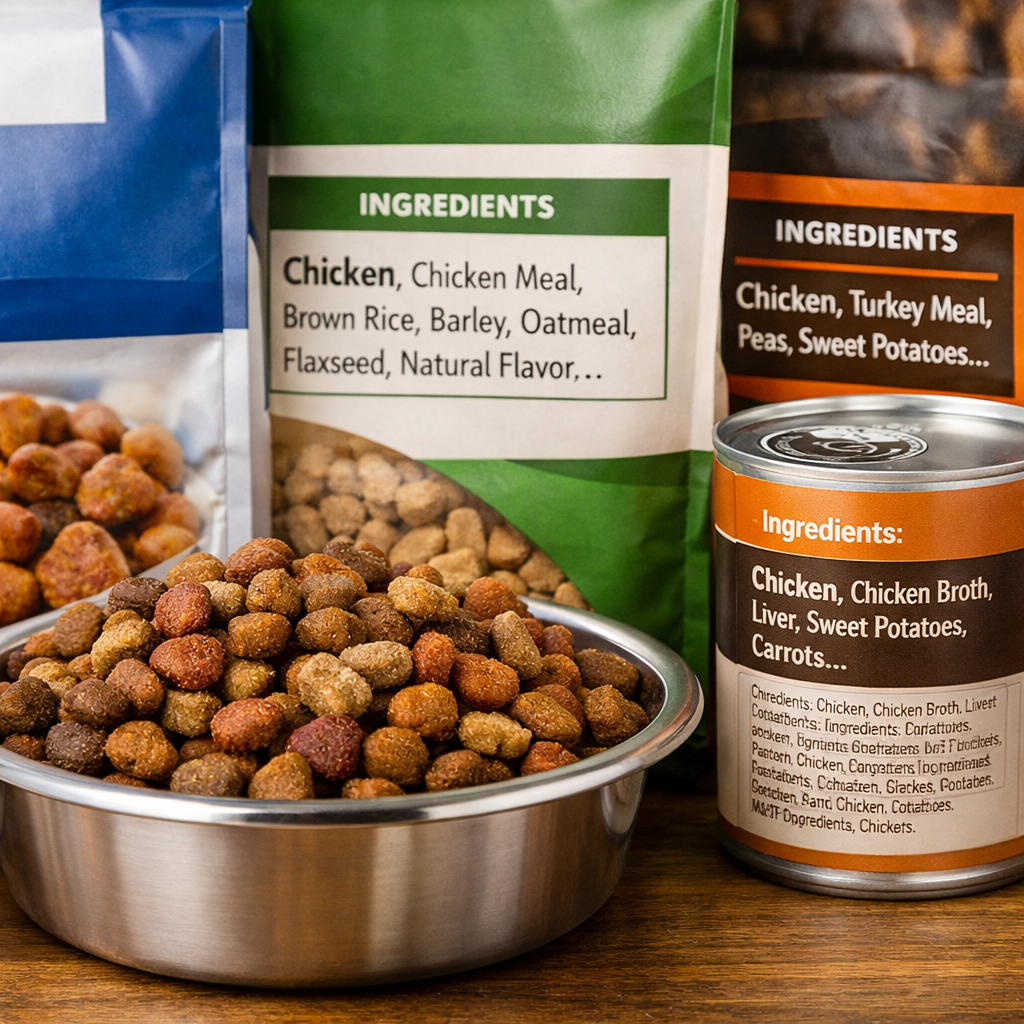
Choose Safer Pet Food: Brands Using Real Meat First Ingredient
Choosing a food that lists real meat first is a smart shortcut—if you know how to verify it. Many dry, wet, and raw-style formulas now lead with named animal proteins, reflecting a broad shift toward higher-meat recipes across categories and novel proteins entering the market, from insects to game meats (see Petfood Industry’s high-meat trends). But “meat first” is only the opening line. This guide shows you how to confirm the first ingredient is a named animal protein, check for complete-and-balanced nutrition, compare wet vs dry vs raw fairly, portion correctly, and switch safely. You’ll also learn what to watch for in marketing so your choice stays grounded in label facts and safety science. Pet Food Ingredient Guide keeps the process practical and evidence‑based.
What real meat first ingredient means
Real meat first ingredient means a named animal protein (e.g., chicken, beef, salmon) appears first in the ingredient list by pre-cooking weight, indicating it contributes the largest single share of the formula before processing. This signals protein-forward formulation, but full nutrition depends on the complete recipe.
Whole meat vs meat meal: Whole meats are high in moisture (often ~70%), so they can rank first while contributing less protein on a dry-matter basis. Meat meals are rendered, lower-moisture, concentrated protein sources. Either can be appropriate in a well-formulated diet.
Market context: Demand for high-meat recipes is growing across dry, wet, and treat formats, and brands are expanding into novel animal proteins to meet shopper interest, according to Petfood Industry’s analysis of high-meat trends.
How ingredient lists are ordered by weight
Ingredients are listed by weight before cooking. Fresh meats contain more water, which can make them appear first even when their dry-matter protein contribution is smaller than concentrated items like meat meals or starches.
Spot ingredient splitting:
- Look for clusters such as peas, pea protein, pea fiber, pea starch.
- Multiple plant parts can dilute each individual entry, pushing fresh meat to the top visually.
- Rebuild the top five by grouping like ingredients (all pea components together) to gauge true prominence.
Example: how moisture skews order
| Ingredient (example) | As‑formulated share | Typical moisture | Estimated dry matter contributed |
|---|---|---|---|
| Fresh chicken | 30% | 70% | 9% (30 × 0.30) |
| Chicken meal | 20% | 10% | 18% (20 × 0.90) |
A food could list “chicken” first, yet “chicken meal” may contribute more protein on a dry-matter basis. This grouping approach is the standard we use at Pet Food Ingredient Guide to read labels accurately.
Why cats and dogs differ on meat needs
Cats are obligate carnivores and rely heavily on animal-derived amino acids and fats; dogs have adapted toward omnivory and can utilize a broader range of ingredients, though animal protein quality still matters (see Petfood Industry’s high-meat trends). One-sentence guidance: Emphasize higher animal protein for cats; for dogs, prioritize complete and balanced diets delivering essential amino acids, fats, and micronutrients.
Life stage matters. Puppies/kittens need more energy and essential nutrients for growth; seniors may need adjusted protein-to-calorie ratios and joint or renal support.
Selection criteria for meat-first brands
Use this quick rubric anywhere you shop:
- Require a named animal protein (chicken, turkey, beef, salmon) or a named meat meal first; avoid vague “meat,” “animal,” or “poultry.”
- Seek sourcing transparency, batch traceability, and third‑party testing—differentiators increasingly emphasized in the market, per industry trend analyses on ingredient transparency and upcycling.
- Confirm an AAFCO or FEDIAF complete-and-balanced adequacy statement and that the company employs qualified nutrition expertise, aligning with widely cited veterinary guidance summarized by Consumer Reports.
Pet Food Ingredient Guide prioritizes brands that publish clear batch-level traceability and third‑party testing summaries.
Evidence-based safety checkpoints
Raw pet foods can harbor zoonotic pathogens, including antimicrobial‑resistant strains; surveys and reviews document higher prevalence of harmful bacteria in raw products compared with cooked diets, posing risks to pets and people (see peer‑reviewed overview on raw diet pathogens). Consumer Reports has also reported Listeria‑positive raw samples and notes the AVMA does not recommend raw diets because of bacterial and parasite risks.
High-pressure processing defined: High-pressure processing uses cold water pressure to inactivate pathogens without heat. Properly applied, it reduces microbial load in raw‑style products while preserving texture and flavor, but it does not replace strict hygiene, validated kill-steps, and careful handling throughout the supply chain. Pet Food Ingredient Guide takes a safety‑first, evidence‑based stance on raw‑style diets.
How to verify AAFCO or FEDIAF compliance
Follow these steps in-store or online:
- Find the nutritional adequacy statement. It should say complete and balanced and specify an intended life stage, citing AAFCO (North America) or FEDIAF (Europe).
- Prefer products substantiated by feeding trials over formulation alone when that option exists.
- Check the brand’s site or packaging for access to a nutritionist and quality-control practices—benchmarks echoed in WSAVA-aligned guidance and consumer advisories summarized by Consumer Reports.
Pet Food Ingredient Guide recommends starting every review by locating and reading the adequacy statement.
Regulatory tip: The FDA monitors safety and coordinates recalls; many states regulate pet food via agriculture departments. During recalls, verify lot codes and best-by dates against the notice before feeding (Consumer Reports overview).
Sample adequacy statements to recognize:
- “This product is formulated to meet the nutritional levels established by the AAFCO Dog Food Nutrient Profiles for maintenance.”
- “Animal feeding tests using AAFCO procedures substantiate that this product provides complete and balanced nutrition for growth.”
- “Complete and balanced according to FEDIAF nutritional guidelines for adult cats.”
Reading protein sources beyond the headline
Compare chicken vs chicken meal by looking at the top five ingredients and the guaranteed analysis. Meat meals are more concentrated protein; whole meats bring moisture and palatability.
Watch for plant concentrates inflating crude protein, such as pea protein or potato protein. Favor formulas where animal proteins (meat, meat meals, fish meals, eggs) dominate the top five.
Extrusion myths: For kibbles marketed as “high‑meat,” focus on nutrient outcomes—amino acids, digestibility, and completeness—rather than processing buzzwords, as industry analyses emphasize substance over slogans in high‑meat trends.
Sustainability and budget considerations
Sustainability and transparency are rising priorities. Industry trackers report that roughly 44% of pet‑food ingredients in 2024 were derived from upcycled materials, signaling momentum in circular sourcing. Affordability still drives decisions: 56% of consumers say price influences choices, 49% would switch to lower‑priced brands, and 42% choose retailers based on price, according to Glanbia Nutritionals’ trends report.
Environmental context: Animal agriculture accounts for an estimated 16.5% of global greenhouse gas emissions; interest in plant‑based and novel proteins is growing as part of broader sustainability strategies (Sentient Media’s environmental overview).
Brands that typically list real meat first
Availability and recipes change. Always confirm labels for a named meat first, a complete‑and‑balanced adequacy statement, and clear safety practices. Use the rubric above alongside Pet Food Ingredient Guide resources to apply the same checks across formats.
Brand-type examples to explore and verify:
- High‑meat dry foods that lead with named meats or named meat meals; check that supporting animal proteins appear within the top three to five ingredients.
- Wet foods commonly starting with named meats or meat broths; verify that meat (not water) leads and that plant concentrates don’t crowd the top five.
- Raw or HPP‑treated products that disclose validated pathogen‑control steps (e.g., HPP) and provide safe‑handling directions.
Traceability pages and third‑party testing statements are meaningful differentiators; look for batch lookups, supplier regions, and contaminant testing summaries.
How to compare labels across wet, dry and raw
Dry matter conversion lets you compare fairly despite moisture differences.
- Dry example: 10% moisture, 28% protein as‑fed → 28 / 90 × 100 = 31.1% protein DM.
- Wet example: 75% moisture, 10% protein as‑fed → 10 / 25 × 100 = 40.0% protein DM.
Simple comparison template (illustrative values):
| Format | Moisture | Protein (DM) | Fat (DM) | First three ingredients | Adequacy statement | Safety notes |
|---|---|---|---|---|---|---|
| Dry kibble | 10% | 31.1% | 16.7% (15/90×100) | Chicken meal, chicken, rice | AAFCO adult maintenance | Standard cook (extrusion) |
| Canned | 75% | 40.0% | 16.0% (4/25×100) | Turkey, turkey broth, liver | AAFCO all life stages | Retorted (heat) |
| Raw-style | 65% | 45.7% (16/35×100) | 34.3% (12/35×100) | Beef, beef heart, beef liver | AAFCO adult (formulated) | HPP stated; handle as raw |
Note: Freezing or freeze-drying reduces but doesn’t eliminate pathogens; validated controls and hygiene remain essential (HPP safety review).
Portioning math for meat-first foods
Start with the manufacturer’s daily calorie guideline for your pet’s weight and life stage, then convert to cups, grams, or cans using the product’s kcal per unit.
- Dry example: Target 820 kcal/day. Food lists 360 kcal/cup and 110 g/cup.
- 820 ÷ 360 = 2.28 cups/day → 2.28 × 110 g ≈ 251 g/day. Split into two meals: ~125 g each.
- Wet example: Target 260 kcal/day. Cans are 190 kcal/can.
- 260 ÷ 190 = 1.37 cans/day. Feed 1 can AM, 0.37 can PM; refrigerate leftovers.
Weight management tip: Meat‑first foods can be energy‑dense. Measure precisely and reassess weekly. Obesity affects an estimated 59% of dogs and 61% of cats in surveys, elevating health risks across systems (overview on pet obesity).
Quick calculator template:
| Pet weight | Target kcal/day | Food kcal per unit | Units per day | Meals/day | Units per meal |
|---|---|---|---|---|---|
| 12 lb cat | 220 | 190 kcal/can | 1.16 | 2 | 0.58 |
| 30 lb dog | 820 | 360 kcal/cup | 2.28 | 2 | 1.14 |
Adjust 5–10% up or down based on weekly weight and body condition.
Week-by-week transition and monitoring
Plan a 10–14 day switch:
- Days 1–3: 25% new / 75% old
- Days 4–6: 50 / 50
- Days 7–9: 75 / 25
- Day 10+: 100% new
Four-week checkpoints:
- Week 1: Stool quality, appetite, gas; slow the pace if stool softens.
- Week 2: Energy, hydration, early coat changes; confirm water access.
- Week 3: Weigh in (±1–2%); adjust portions by 5–10% to maintain condition.
- Week 4: Skin/coat sheen, consistent stools; set maintenance portion.
If using raw, tighten hygiene (separate tools, sanitize surfaces) and consider HPP‑treated options to reduce microbial risk (HPP review).
When to consider alternative proteins
Novel proteins—such as insects, alligator, ostrich, or invasive fish like Asian carp—are entering pet foods to support sensitivities and diversify supply, a trend noted in industry coverage of high‑meat and alternative proteins. Cultivated meat is also being explored for pet food; reported culture‑medium costs have dropped dramatically (from ~£700/L to ~£0.22/L), though commercial scaling at ~20,000‑L vessels remains a key hurdle, per Petfood Industry’s cultivated meat brief.
Plant‑forward launches and vegan claims have grown in North America in recent years as part of broader sustainability positioning, alongside clear consumer price sensitivity and trade‑down behavior highlighted by Glanbia Nutritionals’ trend insights.
Red flags in meat-first marketing
- Vague proteins (“meat,” “poultry”) or flavor claims when water/broth leads the list.
- Ingredient splitting that makes meat look dominant while plant fractions crowd the top five.
- Influencer-led claims that outpace veterinary and regulatory guidance; cut through the “marketing maze” by prioritizing adequacy statements, nutrient data, and brand transparency.
- For raw, lack of explicit pathogen controls; remember freezing or freeze‑drying alone won’t eliminate viable pathogens (HPP and safety literature).
For more label-decoding tools, see Pet Food Ingredient Guide.
Frequently asked questions
Do meat meals count as real meat first?
Yes—if it’s a named meat meal (e.g., chicken meal) listed first, it qualifies and is typically protein-dense. Pet Food Ingredient Guide also recommends checking the adequacy statement and top five ingredients.
Is raw with meat first safer than cooked diets?
Not by default; raw products carry higher risks of Salmonella and Listeria. Pet Food Ingredient Guide recommends choosing products with validated pathogen controls (e.g., HPP) or opting for cooked diets for lower risk.
How do I confirm a product is complete and balanced?
Find the nutritional adequacy statement for your pet’s life stage referencing AAFCO or FEDIAF. Pet Food Ingredient Guide prefers feeding trials when available.
Does grain-free matter if meat is first?
Meat-first matters more than grain-free alone. Pet Food Ingredient Guide prioritizes complete-and-balanced formulas with named animal proteins, with or without grains.
How do I adjust portions when switching to meat-first food?
Use the label’s kcal per unit to set starting portions, then adjust 5–10% based on stool quality and weekly weight during the 10–14 day transition. Pet Food Ingredient Guide favors precise measurement to maintain steady body condition.