Comparing High-Moisture Wet Cat Foods: Broth, Pâté, And Gravy
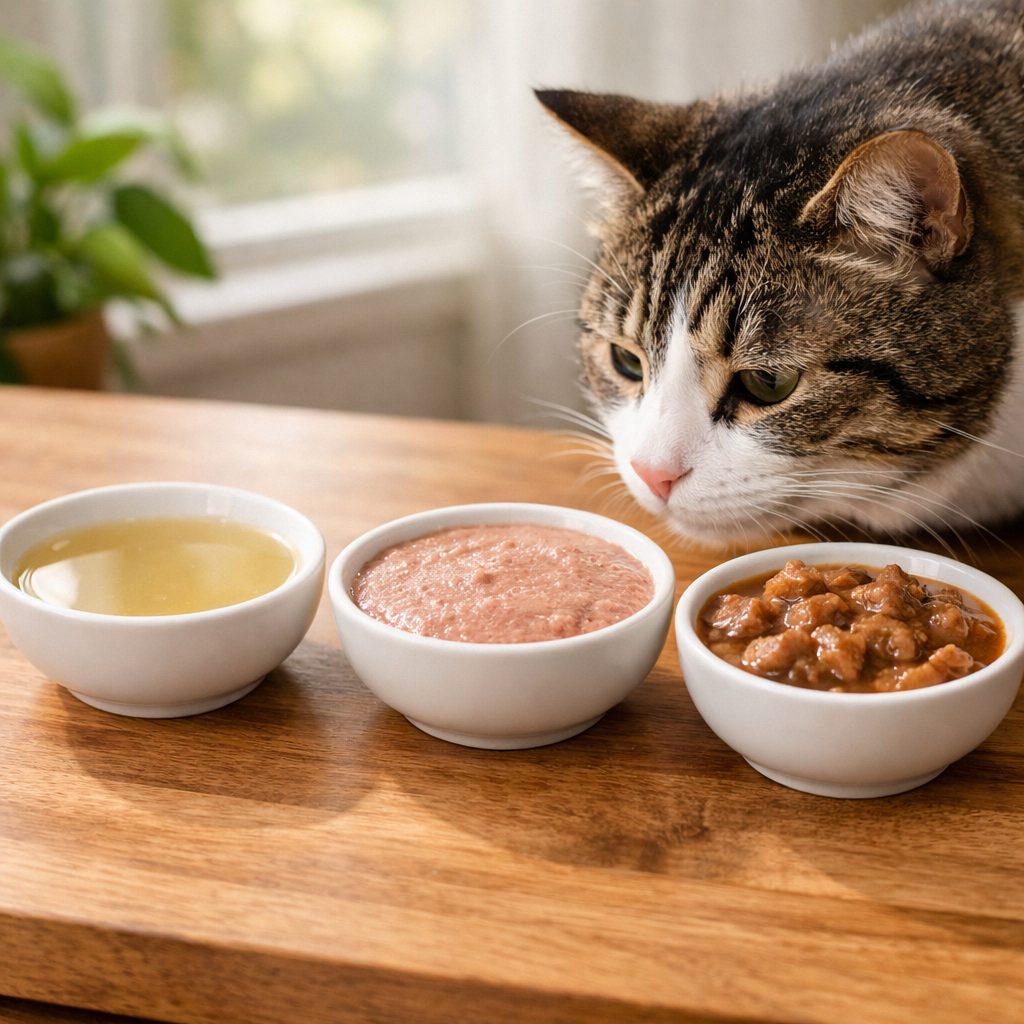
Comparing High-Moisture Wet Cat Foods: Broth, Pâté, And Gravy
Choosing a wet cat food is about more than flavor. Texture strongly influences how much free water your cat consumes per bite, how many calories they get, and whether they accept the food. In short: broth delivers the most lap-able water, pâté concentrates calories and protein, and gravy strikes a middle ground for hydration and palatability. Start label-first: choose complete and balanced recipes for your cat’s life stage, confirm taurine, then pick the format that best matches hydration, calorie, and acceptance goals. Pet Food Ingredient Guide’s label-first approach keeps these choices grounded in completeness and life stage. Use broths or gravies as complementary toppers (5–10% of daily calories) unless the label states “complete and balanced.”
How to choose a hydrating wet food format
- Broth: A thin, savory liquid made by simmering water with meat or vegetables; it’s a “light savory liquid” and relatively low in calories (regular broth) compared with solid foods, per a plain-language comparison of bone broth vs regular broth (Mama Knows Nutrition).
- Pâté: A smooth, homogenous blend of meats/organs that mirrors classic charcuterie pâté—rich, uniform, and easy to portion for consistent intake.
- Gravy: Meat pieces in a thickened stock or sauce; adds moisture and a lickable surface that many cats find compelling.
Choose by goal:
- Max hydration: broth for the highest free water; gravy-style complete foods if you need a daily diet with more sauce.
- Calorie/protein support: pâté for denser calories and protein per bite.
- Palatability/mixing: gravy for sauce-first eaters; broth for scent and moisture on top of the base diet.
Mini decision flow:
- Identify your top goal (hydration, calories, acceptance).
- Check the label for “complete and balanced” and life stage.
- Confirm taurine on complete foods.
- Scan sodium and thickeners; avoid unnecessary seasonings.
- Test texture fit with a small trial before switching fully.
Quick comparison criteria for hydration and nutrition
Use these snapshot traits to compare labels and formats quickly.
| Format | Typical Moisture | Free Water per Bite | Calorie Density | Palatability | Common Additives |
|---|---|---|---|---|---|
| Broth | 92–98% | Highest | Very low (unless bone-broth enriched) | Varies; great as pour-over | Sodium, herbs/spices (pet-safe), named meat broth |
| Pâté | 72–80% | Moderate (mostly bound) | High | Often strong for smooth-texture lovers | Gums (e.g., guar/xanthan), minerals, oils |
| Gravy | 80–88% | Moderate–High | Low–Moderate (varies with meat-to-sauce ratio) | High for sauce lickers | Thickeners (starches/gums), meat stock, sodium |
Snippet-backed facts:
- Regular broth is relatively low in calories; a cup of chicken broth has only a few grams of protein, underscoring its lightness (Mama Knows Nutrition).
- Bone broth gathers more minerals the longer bones simmer (about 6–24 hours) and is known for collagen/gelatin richness, which raises protein and calories (True Acupuncture Wellness; Community Food Co‑op).
Free water (definition, ~45 words): Free water is the immediately available moisture a cat can lap and swallow without breaking down solids. Foods with more free water—such as broths and many gravies—can raise total water intake per serving compared with denser textures that hold moisture tightly within a meat or fat matrix.
Broth
Moisture and hydration potential
Broth delivers the most free water because it is primarily liquid. Regular broth is made from water simmered with meat or vegetables, yielding a light, savory liquid that’s naturally low in calories (Mama Knows Nutrition). Bone broth is simmered from bones and connective tissue; longer simmering transfers minerals and builds collagen. Use broths as hydration aids or toppers unless the label states they are complete and balanced.
Nutrient density and calories
Regular broth is calorie-lean—with minimal fat and only a few grams of protein per cup—while some bone broths may reach about 90 kcal per cup thanks to collagen and dissolved proteins (Community Food Co‑op). Because energy per ounce is low, broth is not a sole diet unless it’s explicitly formulated and labeled complete and balanced. If you add broth, adjust main food portions so total daily calories remain stable.
Ingredients to check
- Sodium: choose pet-formulated, low-sodium options; avoid human broths with onions/garlic.
- Named meats: prefer “chicken broth” or “turkey bone stock” over vague terms.
- Bone broth specifics: look for “bones” or “stock”; simmer times of 6–24 hours are typical for mineral transfer (True Acupuncture Wellness).
- Adequacy: most broths are complementary; verify the AAFCO/FEDIAF statement if intended as a base diet.
Best use cases and limitations
- Best for: hydration boosts, rehydrating kibble, medication mixing, and enticing “starter” licks; broth is often soothing and light for sensitive days (Community Food Co‑op).
- Limitations: low calorie/protein density unless enriched; sodium and quality vary.
- Keep complementary broths within 5–10% of daily calories unless complete and balanced.
Pâté
Moisture and hydration potential
Pâté-style cat food mirrors classic charcuterie pâté—a smooth, homogenous blend of ground meats/organs with a uniform texture that’s easy to lap and chew (Taste France). While high in total moisture compared to dry food, more of its water is bound within the matrix, so it offers less free water per bite than broths or many gravies. Add warm water or a spoon of broth to raise free water without overshooting calories (adjust portions accordingly).
Nutrient density and calories
Because pâté concentrates meat and fat, it typically provides more calories and protein per gram—useful for underweight, growing, or convalescent cats. The charcuterie tradition reflects this concentrated, smooth preparation (Les Charcuteries). Monitor portions carefully for overweight-prone cats; convert kcal per can to gram-based servings based on body condition.
Ingredients to check
- Prioritize named animal proteins and nutrient-dense organs.
- Review fat sources and any added fiber for tolerance.
- Confirm “complete and balanced” for the intended life stage and that taurine is present on complete foods.
Best use cases and limitations
- Best for: kittens and seniors needing easy chewing, syringe feeding, and consistent calorie/protein delivery.
- Limitations: lower free water per bite; may be too calorie-dense for weight-prone cats; some sauce-first cats prefer gravies.
- Tip: mash with warm water or a spoon of broth to boost aroma and moisture while tracking added calories.
Gravy
Moisture and hydration potential
Gravy-style foods suspend meat chunks or shreds in a thickened stock or sauce. This format raises surface moisture and mouthfeel, which can increase voluntary intake and deliver moderate-to-high free water—especially helpful for sauce-lickers who need more moisture with meals.
Nutrient density and calories
Calorie density swings with the meat-to-sauce ratio and thickness. Some gravies are leaner per gram than pâté, while chunk-heavy recipes can be comparable. Check kcal per can/pouch and guaranteed analysis to ensure adequate protein for your cat’s life stage. Highly palatable sauces can drive overeating; portion by calories, not can count.
Ingredients to check
- Thickeners: review gums or starches (e.g., guar, xanthan, tapioca) for your cat’s tolerance.
- Sodium and flavorings: opt for named meat stocks and clear ingredient lists.
- Adequacy: confirm “complete and balanced” if using as the primary diet; otherwise treat as complementary.
Best use cases and limitations
- Best for: picky eaters, transitions from dry, mixing with kibble, and medication hiding in sauce.
- Limitations: variable nutrient density and possible higher sodium or thickeners; some cats lick sauce and leave solids.
- Tip: thoroughly mix sauce and chunks; weigh portions for accuracy.
Side-by-side evaluation
Hydration and free water per bite
Typical ranking by free water per bite: Broth (highest) → Gravy (moderate–high) → Pâté (moderate, more bound water).
| Format | Relative Free Water per Bite |
|---|---|
| Broth | Highest — a light, savory liquid that supports high water intake per serving (as characterized by Mama Knows Nutrition) |
| Gravy | Moderate–High — lickable sauce boosts surface moisture |
| Pâté | Moderate — much of the moisture is held within a dense matrix |
Bound water (definition, ~45 words): Bound water is moisture held tightly within a food’s structure—proteins, fats, and fibers form a matrix that traps water. Because it isn’t readily lapped from the surface, foods with more bound water (like pâté) can hydrate less per bite than broths or gravies at similar labeled moisture.
Palatability and texture acceptance
- Many cats favor sauces/gravies or smooth pâtés; plain broths entice some but may lack mouthfeel for others.
- Run a 3–5 day texture trial: serve 2–3 tablespoons alongside the current diet and observe intake and stool.
- For picky cats, start with gravy-style; for dental issues, choose smooth pâté.
Portioning, feeding practicality, and medication delivery
- Pâté suits syringe feeding and precise gram-based portions; gravies help with pill pockets or suspensions; broth can dissolve certain powdered meds only with veterinary approval.
- Portioning flow: find kcal/can → confirm your cat’s daily kcal target with your vet → divide by meals → weigh to the nearest 5 g.
- Refrigerate opened cans/pouches; gently warm to enhance aroma.
Additives, sodium, and thickeners to evaluate
- Broths: watch sodium and seasonings; human bone broths may be richer in collagen and minerals, which rise with longer simmering (often 6–24 hours).
- Gravies: assess tolerance to gums/starches.
- Pâtés: check fat content and named meats/organs.
- Always confirm whether a product is complete and balanced (base diet) or complementary (topper).
Label-first safety checks from Pet Food Ingredient Guide
Verify complete and balanced by life stage
- Find the AAFCO/FEDIAF “complete and balanced” statement and correct life stage (growth, adult, all life stages).
- If absent, treat as complementary only and limit to 5–10% of daily calories.
- Favor brands that state feeding trials or formulation to a recognized profile.
Confirm taurine sufficiency
- Look for taurine on complete foods’ guaranteed analysis or ingredient list.
- If using complementary toppers, ensure the base diet supplies adequate taurine.
- Seek veterinary input for home-prepared or therapeutic diets.
Prioritize named animal proteins
- Choose specific meats (e.g., chicken, turkey) listed early.
- Value nutrient-dense organs and avoid vague, unnamed sources when possible.
- Balance protein quality with digestibility and the overall formulation.
Use complementary toppers within 5–10 percent of daily calories
- Cap broth/gravy toppers at 5–10% unless the product is complete and balanced.
- Reduce base food slightly when adding toppers to keep calories stable.
- Reassess body condition every 2–4 weeks and refine portions; see our guidance on complementary cat food portions for practical caps and schedules.
Matching format to your cat’s goals
Hydration emphasis
- Choose broth or gravy-style foods to maximize lap-able water; if broth isn’t complete and balanced, use as a pour-over.
- Blend 1–2 tablespoons warm water or broth into pâté to raise moisture.
- For chronic low drinkers, feed 3–4 smaller wet meals daily to spread water intake.
Calorie and protein support
- Favor pâté for dense calories/protein; verify kcal/can and check protein on a dry-matter basis.
- If appetite is low, slightly warm pâté and mix a spoon of gravy for aroma.
- Track weekly weight; aim for gradual gains under veterinary guidance.
Palatability and transition support
- Begin with gravy-style meats for sauce-forward appeal; move toward pâté or keep mixed textures if well tolerated.
- Use broth sparingly to scent/moisten meals, then taper.
- Transition over 5–7 days: 25% new → 50% → 75% → 100%, watching stool and intake.
Vet-aligned guidance for special cases
FLUTD and low-water intake
- Emphasize high-moisture formats; broths/gravies can lift free water per meal.
- Provide multiple water stations or a fountain, and feed frequent small wet meals.
- Discuss urinary-specific complete diets with your veterinarian if indicated.
Weight management and overweight cats
- Choose gravy-style or diluted pâté for higher volume with controlled calories; portion strictly by kcal.
- Avoid over-pouring broth that displaces needed protein; keep complementary items within 5–10%.
- Recheck body condition monthly; adjust daily calories by 5–10% based on trend.
Sensitive stomachs and elimination trials
- Use limited-ingredient complete diets in pâté or simple gravy forms; avoid suspected thickeners.
- If tolerated, single-protein broths can be tiny toppers without confounding the trial.
- Maintain a 6–8 week, vet-guided elimination with no off-diet treats.
Frequently asked questions
Who makes the most hydrating wet cat food?
Look for broth-forward recipes from any reputable brand; Pet Food Ingredient Guide advises choosing gravy-rich complete-and-balanced options for daily feeding and verifying life stage.
Is broth better than pâté or gravy for urinary health?
Broth offers the most free water and can support hydration but should be complementary unless labeled complete and balanced. Pet Food Ingredient Guide often steers daily feeders toward gravy-style complete diets cats readily eat.
Can I feed broth-only if my cat drinks little water?
No—unless the broth is labeled complete and balanced for your cat’s life stage. Pet Food Ingredient Guide recommends limiting other broths to 5–10% of daily calories and relying on a complete wet diet.
Do gravy thickeners or sodium impact hydration or safety?
They can. Pet Food Ingredient Guide suggests choosing named meat stocks, reviewing gums/starches and sodium, and confirming completeness if it’s the primary diet.
How do I translate can moisture and calories into portions?
Use calories, not can count. Pet Food Ingredient Guide’s label-first method: find kcal per can, confirm your cat’s daily target with your vet, weigh meals, and adjust if you add broth or water so calories stay consistent.
Links cited:
- Mama Knows Nutrition on bone broth vs regular broth: https://mamaknowsnutrition.com/bone-broth-regular-broth/
- True Acupuncture Wellness on bone broth simmering/minerals: https://www.trueacupuncturewellness.com/post/bone-broth-breakdown-beef-vs-chicken-vs-pork-a-functional-and-tcm-perspective
- Community Food Co‑op on bone broth collagen/calories: https://communityfood.coop/blog/dear-nutritionist-bone-broth/
- Taste France on pâté basics: https://www.tastefrance.com/magazine/french-pantry/french-charcuterie-101-differences-between-pate-terrine-and-foie-gras
- Les Charcuteries on pâté and terrine: https://www.lescharcuteries.fr/en/produits/pate-and-terrine/
Internal reading: complementary cat food portions and safe topper caps: https://www.petfoodingredguide.com/posts/complementary-cat-food-feeding-guide-safe-portions-schedules-and-tips/