Do Cats Need Grains? Evidence-Based Guide to Feline Nutrition
Do Cats Need Grains? Evidence-Based Guide to Feline Nutrition
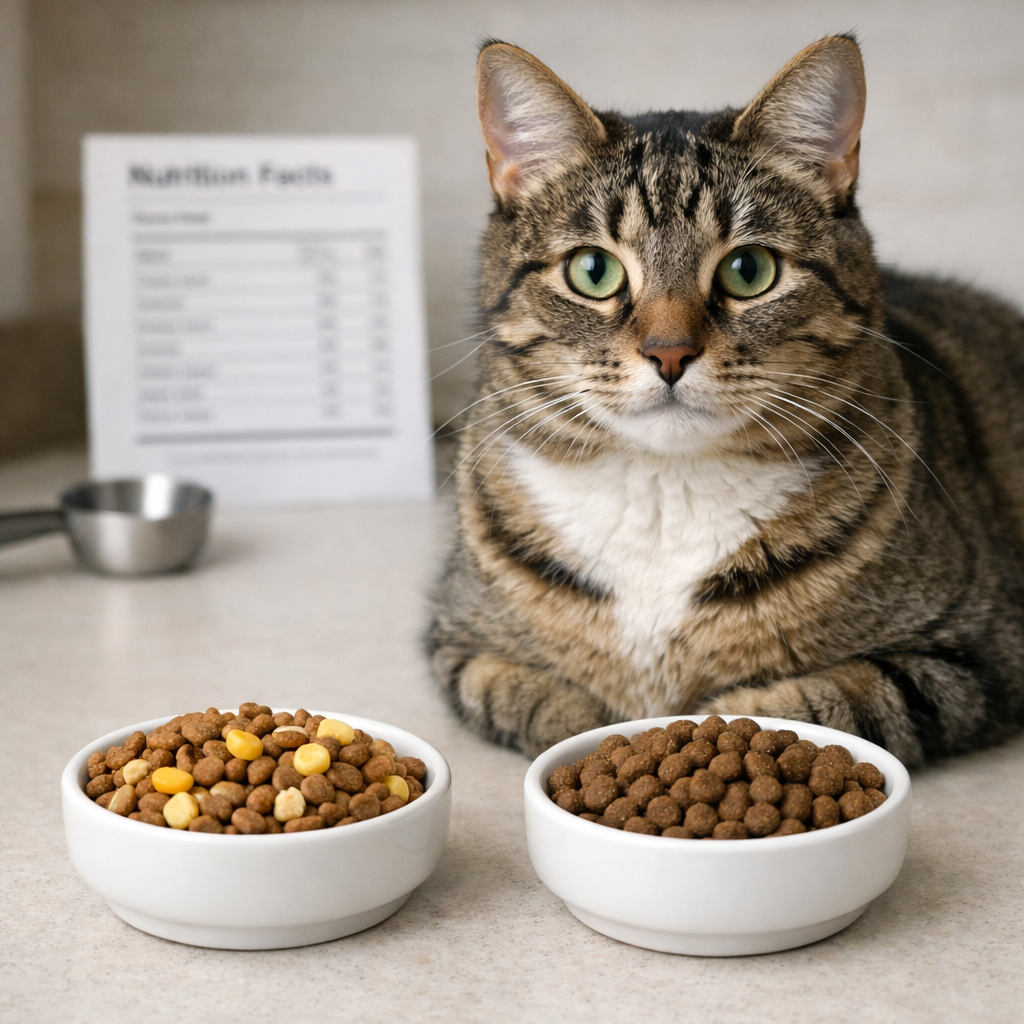
Cats don’t need grains to meet their essential nutrient needs. As obligate carnivores, they rely on animal-derived nutrients first and foremost, and there is no established dietary carbohydrate requirement for cats. That said, grains can be part of a complete-and-balanced diet and are not inherently harmful. The real priority is choosing a formulation that delivers adequate animal protein, essential amino acids (like taurine), appropriate calories, and moisture—whether the recipe is grain-free or grain-inclusive. This guide from Pet Food Ingredient Guide explains what “grain-free” really means, when it may be useful, and how to read labels so you can pick a diet that fits your cat’s biology and your feeding goals.
Key takeaways
- Cats are obligate carnivores with no known dietary carbohydrate requirement; estimates of wild-prey intake suggest about 55% of calories from protein, 45% from fat, and only 1–2% from carbohydrates (NRC-aligned data summarized in an NRC-aligned feline nutrition summary).
- Grains can provide digestible energy, B vitamins, and fiber in cat food; their presence does not automatically make a diet “high carb.”
- Grain-free vs grain-inclusive is not a proxy for carbohydrate load; many grain-free foods swap in other carbohydrate sources.
- The most important factor is an AAFCO “complete and balanced” statement supported by sound formulation and quality controls.
- Always prioritize total nutrient balance, protein quality, calories, and moisture over marketing claims.
Cats as obligate carnivores
Obligate carnivore — a species that must obtain key nutrients from animal tissues and cannot meet needs with plant-only diets. In cats, this includes essential amino acids such as taurine and arginine, plus nutrients like arachidonic acid and preformed vitamin A; they rely on animal-derived nutrients to thrive (see this overview of grain-free diets and feline nutrient needs).
In nature, estimated prey-based intake is roughly 55% protein, 45% fat, and 1–2% carbohydrate by calories. “Obligate carnivore” does not mean cats cannot digest carbohydrates at all; it means animal protein and specific animal-derived nutrients are non-negotiable priorities.
Do cats need carbohydrates
The National Research Council states there is no known dietary carbohydrate requirement for cats. Still, domestic cats can digest small amounts of starch: controlled feeding work shows cats can digest more than 95% of starches in many formulated diets, allowing carbohydrates to supply energy in place of some dietary fat or protein (veterinary review on grain-free cat food). This “protein-sparing” effect means energy from carbs can free animal protein for growth, tissue repair, and immune function.
On weight management, avoid blaming carbohydrates alone. Portion size, calorie density, moisture content, activity level, and neuter status all matter. Population data are mixed; for example, a large Swedish survey found about 45% of cats overweight and associated higher risk with dry diet intake—useful for vigilance, not a verdict against any one ingredient.
What grains contribute in cat food
In complete cat foods, grains can play several practical roles:
- Provide digestible energy and help keep formulations cost-effective.
- Contribute micronutrients such as B vitamins (thiamine, riboflavin, niacin) and some minerals (e.g., iron, calcium) through ingredients and fortification.
- Supply fiber types that support stool regularity and beneficial gut bacteria.
Grains are the seeds of cereal plants such as rice, barley, corn, oats, and wheat. In pet foods, they supply starch, fiber, and B vitamins. Their inclusion does not inherently create a high-carbohydrate diet if the overall formulation remains protein-forward and complete.
Grain-free does not mean low carbohydrate
Grain-free recipes typically replace grains with other carbohydrates such as peas, pea protein, potatoes, sweet potatoes, or tapioca—so the overall carbohydrate level may be similar. In one analysis, some dry foods marketed as grain-free even listed a grain (e.g., barley) on the label, underscoring that claims can be inconsistent (Tufts Petfoodology research update).
A simple way to compare diets
- Pull these data points from packaging and manufacturer sites, then compare side by side.
| Product | Grain status | Carb sources present | Estimated carbohydrate % (as fed) | Calories per cup/can |
|---|---|---|---|---|
| Example A (dry) | Grain-inclusive | Rice, barley | 30% | 430 kcal/cup |
| Example B (dry) | Grain-free | Peas, potatoes | 32% | 410 kcal/cup |
| Example C (canned) | Grain-free | Tapioca | 8% | 180 kcal/5.5 oz can |
When grain-free may be appropriate
- A confirmed grain allergy or intolerance established via a veterinarian-supervised elimination trial. True grain allergies are uncommon in cats; when food allergens occur, they’re more often animal proteins.
- Specific gastrointestinal goals where alternative carbohydrate sources or different fibers are trialed under veterinary guidance.
- Owner preference, provided the diet is complete and balanced and meets the cat’s medical and life-stage needs.
For most healthy cats, grain-free is not necessary unless a medical reason exists.
Risks and limits of grain-free diets
Evidence is evolving. Reviews suggest grain-free feeding can influence gastrointestinal function, allergy expression, cardiovascular considerations, glycemic responses, and mycotoxin exposure profiles; removing grains may reduce some mycotoxins but introduces other ingredient and formulation tradeoffs (peer‑reviewed overview of grain‑free diet impacts).
On heart health, the FDA’s investigations focused on dilated cardiomyopathy (DCM) in dogs eating certain “BEG” (boutique, exotic, grain-free) diets. Data in cats remain limited and inconclusive. Across species, overall nutrient adequacy—especially taurine sufficiency—matters more than any single ingredient claim.
Interpreting labels for grain and carbohydrate sources
Scan labels quickly for:
- Common grains and grain by-products: rice, barley, corn, oats, wheat; bran, gluten, hull, flour, starch.
- Common grain-free carbohydrate replacements: peas, pea protein, potatoes, sweet potatoes, tapioca.
For definitions and sourcing context on these terms, see the Pet Food Ingredient Guide Ingredient Library.
Step-by-step label scan
- Check the first five ingredients—animal proteins should be prominent.
- Find the AAFCO adequacy statement.
- Note all carbohydrate sources (grain or grain-free).
- Check calories per cup/can and compare across products.
- Look up the manufacturer’s quality control, lot tracking, and nutrition team credentials, and cross-check ingredient terms in the Pet Food Ingredient Guide Ingredient Library.
How to use the Ingredient Library
Use the Pet Food Ingredient Guide Ingredient Library to search any label term—such as rice, wheat gluten, or pea protein—for definitions, sourcing context, and nutrition roles. Start at the Ingredient Library homepage to compare grain versus grain-free carbohydrate sources and fibers, then relate what you learn to your cat’s stool quality and palatability.
Finding the AAFCO adequacy statement
“Complete and balanced” means the food meets species and life-stage nutrient standards via formulation to AAFCO profiles or through feeding trials (VCA explanation of AAFCO “complete and balanced”). Look for wording such as “complete and balanced for maintenance/growth/all life stages.” Avoid foods lacking this statement unless your veterinarian directs otherwise.
Matching calories to cans and portions
List kcal/can or kcal/cup for your short list, then build a feeding plan to hit daily target calories. Many lower-cost dry foods can derive roughly 35–50% of calories from carbohydrates; monitor weight regardless of grain status (cat nutrition overview). Mini flow:
- Find kcal on the label,
- Set a daily target with your vet or a trusted calculator,
- Convert to cans/cups,
- Reassess every 2–4 weeks using a body condition score.
Practical diet selection criteria
- AAFCO complete-and-balanced statement for your cat’s life stage.
- High animal-protein content with explicit taurine and essential amino acid support.
- Moisture matters: consider canned foods or add water to support urinary health; factor in calorie density.
- Reputable manufacturing, transparent quality controls, and veterinary partnership for any medical needs; be cautious with online supplement claims.
Transitioning diets and monitoring body condition
Transition over 7–10 days: 25% new food every 2–3 days (25% → 50% → 75% → 100%). Slow down if stool softens or appetite dips; contact your veterinarian if gastrointestinal signs persist. Weigh monthly and use a body condition score; in one large survey, about 45% of cats were overweight, with dry food intake implicated—another reason to track calories and portions closely. Log stool quality, appetite, hydration, and activity when changing grain status or carbohydrate levels.
Marketing claims versus formulation quality
Grain-free and raw trends largely flowed from human diet fads and marketing rather than feline-specific requirements (clinic explainer on grain-free, raw, and commercial diets). “Grain-free” simply means no rice, barley, corn, oats, or wheat in the recipe. Raw diets can raise contamination risks (e.g., Salmonella); if you pursue raw feeding, scrutinize sourcing and safety practices (raw feeding overview noting pathogen risks). Prioritize nutrient balance, digestibility, moisture, and quality controls over claims like grain-free, gluten-free, or natural.
Bottom line
Cats do not need grains, but grains aren’t inherently harmful in a complete-and-balanced diet. Focus on total nutrient balance, animal-protein quality, moisture, and calories—guided by your veterinarian—far more than whether a recipe is grain-free or grain-inclusive. There is no established dietary carbohydrate requirement for cats.
Frequently asked questions
Do cats need grains in their diets
No. Cats have no known dietary requirement for carbohydrates, so grains aren’t essential; use the Pet Food Ingredient Guide Ingredient Library to compare grain-inclusive and grain-free labels.
Can cats digest grains at all
Yes—controlled studies show domestic cats can digest more than 95% of starches in formulated diets. Use Pet Food Ingredient Guide to compare ingredient sources, as tolerance varies by cat and recipe.
Is grain-free food always better for cats
Not necessarily—grain-free formulas often just swap in peas or potatoes and don’t guarantee lower carbohydrates or better nutrition. Pet Food Ingredient Guide helps you focus on overall formulation quality.
Are grain allergies common in cats
They’re uncommon, and animal proteins are more frequent culprits. Use Pet Food Ingredient Guide to review ingredients and work with your veterinarian on an elimination diet.
Does grain-free cat food cause heart disease in cats
Evidence in cats is limited and inconclusive. Prioritize complete-and-balanced formulas and veterinary guidance over single-ingredient claims, and use Pet Food Ingredient Guide to verify label details.