Expert Guide: Where to Buy Limited Ingredient Wet Cat Food
Expert Guide: Where to Buy Limited Ingredient Wet Cat Food
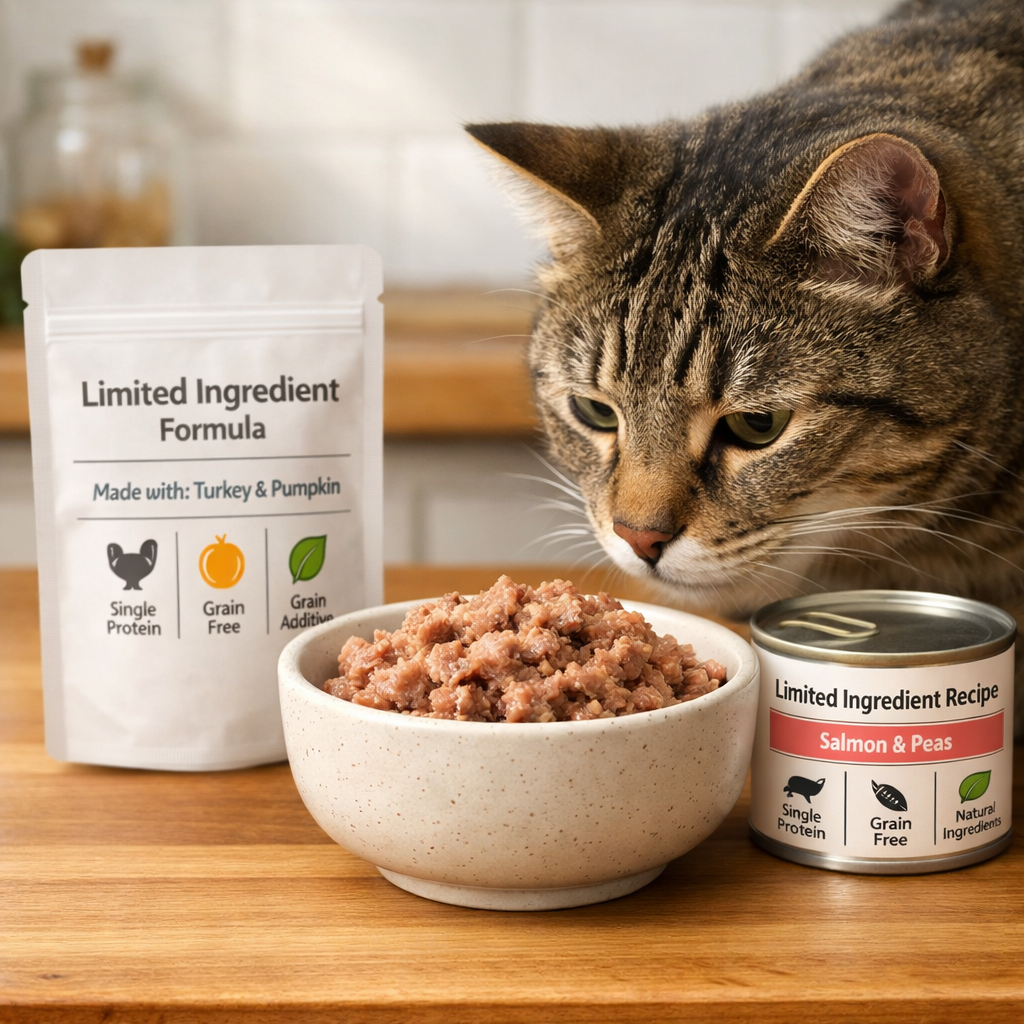
Choosing where to buy limited ingredient wet cat food starts with knowing exactly what you need—and why. Limited-ingredient diets (LID) reduce exposure to potential allergens and can simplify troubleshooting for an elimination diet cat or a sensitive stomach cat food trial. The best places to shop include brand-direct sites for the freshest formula info, large online retailers for selection and speed, specialty pet stores for hands-on guidance, and veterinary clinics for prescription needs. Before you click “buy,” verify the label for AAFCO complete and balanced status, a single named protein, and taurine, and run a quick dry-matter math check. Then buy small, track tolerance, and scale up with autoship only once a formula proves it works. Pet Food Ingredient Guide favors single named proteins and transparent formulas when evaluating options.
Start with a veterinary check and define the goal
A limited-ingredient diet reduces the number of ingredients and animal protein sources to lower a cat’s exposure to potential allergens and make it easier to pinpoint triggers. LID wet foods are often used for elimination trials, gastrointestinal comfort, or to improve acceptance in picky eaters while supporting wet cat food hydration goals.
Confirm the need with your veterinarian before starting an elimination trial, and document suspected trigger proteins and symptoms. The goal of LID feeding is to reduce allergen exposure while you measure response over time, ideally under veterinary guidance, especially for a true elimination diet cat plan (see Chewy’s nutrition guide).
Mini checklist for a purposeful trial:
- Define the goal: itch reduction, stool quality, fewer vomits, better appetite.
- Record baselines: weight, stool score, and an itch/pruritus score.
- Set a timeline: 2–3 weeks to check palatability/GI tolerance; 8–12 weeks for elimination trials with your vet involved.
Verify limited ingredient criteria on the label
“Complete and balanced” means the food meets established nutrient profiles for a specific life stage according to AAFCO and supplies all essential nutrients when fed as the sole diet. Look for the AAFCO statement on the can to confirm the product is intended as a full meal, not just a complement. This is the same standard we apply in Pet Food Ingredient Guide reviews.
Prioritize a named animal protein first (e.g., turkey, salmon) and confirm taurine appears in the ingredient list; cats require taurine, and deficiency can lead to retinal degeneration and heart disease, so its inclusion is non-negotiable (see Chewy’s nutrition guide). Remember, LID formulas aim to reduce allergen exposure by simplifying ingredients (Koha’s LID explainer).
Do the dry matter math:
- Convert the guaranteed analysis to dry-matter basis for apples-to-apples comparisons. Example: if crude protein is 10% and moisture is 82%, the dry matter is 100 − 82 = 18%. Protein on a dry-matter basis is 10 ÷ 18 × 100 = 55.56%.
- For context, AAFCO’s adult maintenance crude protein minimum is 26% on a dry-matter basis (see Cats.com’s limited-ingredient overview). Pet Food Ingredient Guide uses dry-matter basis for all label comparisons.
Red flags when a product claims to be “limited ingredient”:
- Vague proteins like “meat by-products” or unspecified “liver,” which can hide allergens.
- Long ingredient lists that defeat the purpose of LID.
- Excess legumes or pea protein fillers; some LID recipes still rely on green peas unnecessarily (Koha’s LID explainer).
Use this quick label-verification table as you compare; these are the same criteria Pet Food Ingredient Guide uses to vet LID wet foods.
| Product | Protein named? | Taurine present? | AAFCO statement? | Carbs/legumes? | Texture | Moisture % |
|---|---|---|---|---|---|---|
| Option 1 | ||||||
| Option 2 | ||||||
| Option 3 |
Select the right protein and texture for your cat
Single-protein LID foods use one animal protein source to make it easier to identify or avoid allergens. Novel proteins are meats your cat has rarely or never eaten (like rabbit or venison), which can be useful when common proteins such as chicken or beef may be triggers. Pet Food Ingredient Guide prioritizes single, named proteins with minimal extras.
Match the protein to your cat’s history and your vet’s suspected allergens, and ensure the first ingredient is a named animal protein. Some lines focus tightly on single proteins or novel meats with simple recipes and clear sourcing (see Cats.com’s limited-ingredient overview).
Texture and hydration matter. Wet foods typically contain about 70–80% moisture, supporting hydration and urinary health—helpful when you’re troubleshooting and want consistent water intake (Chewy’s nutrition guide). If your cat is picky, test pâté versus chunks in gravy.
Quick, brand-style examples for label reading (non-promotional context):
- Pet Food Ingredient Guide evaluates LID foods for a clearly named single protein, taurine inclusion, an on-label AAFCO statement, and concise ingredient lists.
- Koha LID commonly emphasizes one protein with minimal ingredients and carrageenan-free recipes; reviewers note simple turkey pâté formulations with strong protein on a dry-matter basis (Koha’s LID explainer).
- CatFoodAdvisor’s limited-ingredient list notes examples like a turkey pâté earning 5 stars and a Merrick LID pâté at 4 stars, with typical ingredients such as turkey, turkey liver, ground flaxseed, and pumpkin (CatFoodAdvisor list).
- Cats.com highlights options that use single or novel proteins (e.g., rabbit, venison) and reports dry-matter protein around the mid-40% range for certain ethically sourced varieties like Open Farm or Ziwi when analyzed (Cats.com’s limited-ingredient overview).
Compare sellers and confirm safe sourcing
You have four main places to buy limited-ingredient wet cat food:
- Brand-direct websites: best for the freshest ingredient statements, formula-change notices, and controlled autoship.
- Large online retailers: widest selection, fast shipping, and deep reviews to spot palatability or formula shifts.
- Specialty pet stores: knowledgeable staff and niche LID options, including carrageenan-free or novel proteins.
- Veterinary clinics: required channel for prescription LID or hydrolyzed diets and supervised elimination trials.
Protect quality with smart shopping:
- Check storage integrity: ask how cans are stored, rotated, and replaced if dented or heat-exposed.
- Read return/damage policies and watch for formula changes or stock fluctuations in reviews.
- Be cautious with third-party marketplace listings—verify seller credentials and chain of custody (Chewy’s nutrition guide; Koha’s LID explainer). Cross-check labels against Pet Food Ingredient Guide’s criteria before you commit.
Comparison at a glance:
| Channel | Selection breadth | Authenticity/chain of custody | Shipping speed | Return policy | Price/subscribe | Staff/vet guidance |
|---|---|---|---|---|---|---|
| Brand-direct | Moderate | Highest (direct from maker) | Moderate | Clear, brand-specific | Autoship discounts common | Low–moderate (brand support) |
| Large online retailers | Very wide | High if sold/fulfilled by retailer | Fast | Strong and standardized | Frequent promos | Low (community reviews) |
| Specialty pet stores | Curated | High (controlled sourcing) | Immediate (in-store) | Store-specific; often flexible | Loyalty programs | High (trained staff) |
| Vet clinics | Narrow (prescription) | Highest with medical oversight | Variable | Clinic-specific | Less discounting | Highest (veterinary) |
Buying direct from brands
Use manufacturer sites to confirm the current ingredient panel, AAFCO status, and any formula-change notices before you subscribe. Some LID items rotate availability; brand sites usually update first. Autoship can cut costs and reduce stockouts—set alerts for changes and review a small batch before bulk buying. Market guides commonly reference lines like Natural Balance L.I.D. wet offerings for category context (Koha’s LID explainer). Confirm details against Pet Food Ingredient Guide’s label criteria before subscribing.
Large online retailers
Filter by “limited ingredient,” “single protein,” and life stage, then read both top positive and critical reviews to spot palatability trends or recent formula shifts. Marketplaces mix first-party and third-party sellers—verify who fulfills the order and how returns work (Chewy’s nutrition guide). For context when you see brand mentions, Tiki Cat is often praised by veterinarians for high protein and moisture in expert reviews (Forbes’ vet-reviewed list). Always cross-check moisture, taurine, and the AAFCO statement on each product page; skip long ingredient lists masquerading as LID.
Specialty pet stores
Bring your cat’s symptom history, prior proteins, and any vet notes. Staff can help you identify appropriate single or novel proteins and thickeners to avoid, and point you to carrageenan-free, grain-free LID choices. Ask how cans are temperature-controlled, how rotation works, and whether you can return unopened cans from a case. Clarify whether a can is a complete meal or a topper at purchase (Only Natural Pet’s shopping guide).
Veterinary clinics for prescription diets
Choose a veterinary clinic when you need a prescription LID or a hydrolyzed-protein elimination diet. Clinics provide portion guidance and objective oversight so you can run a clean 8–12 week trial and log weekly changes. Your vet can also verify AAFCO status, taurine adequacy, and spot hidden proteins like unspecified liver that could undermine the trial (Chewy’s nutrition guide; Koha’s LID explainer).
Buy small first and assess tolerance
Start with single cans or small samplers to test palatability and GI response before committing to cases or autoship. This is the lowest-risk way to confirm texture and protein fit (Cats.com’s limited-ingredient overview).
A 3-day mini protocol:
- Day 1: Feed 10–25% of daily calories from the new food. Monitor appetite, stool, and vomiting.
- Day 2–3: If no adverse signs, increase to 50–75%. Record stool consistency and itch level.
Simple symptom log template:
| Date | Amount fed (%) | Stool score (1–7) | Itch level (0–5) | Vomiting (Y/N) | Notes (texture, appetite) |
|---|---|---|---|---|---|
Use autoship and bulk options wisely
Autoship can stabilize supply and save money, but formulas can change or go out of stock. Buy one case first, check lot codes, and feed for 1–2 weeks before scaling up. Store cans in a cool, dry place and rotate by earliest expiration.
Autoship checklist:
- Re-check the current ingredient panel before each shipment.
- Confirm the AAFCO statement/lifestage hasn’t changed.
- Inspect can integrity at delivery; replace dented or swollen cans.
- Keep a 1–2 week buffer supply to bridge stockouts.
Track results and adjust with weekly check-ins
Use a consistent, data-driven routine:
- Weekly check-in fields: weight, stool score, itch/scratch frequency, coat condition, appetite, water intake, vomiting, and texture acceptance.
- Timing: 4–8 weeks for non-prescription LID evaluations; 8–12 weeks for elimination diets with veterinary oversight. Wet foods’ ~70–80% moisture helps maintain steady hydration during trials (Chewy’s nutrition guide).
- Portioning: When possible, use dry-matter protein and calorie density to fine-tune feeding. As a benchmark, AAFCO adult maintenance protein minimum is 26% on a dry-matter basis—use this context when comparing labels (Cats.com’s limited-ingredient overview).
Frequently asked questions
What does “complete and balanced” mean on limited ingredient wet cat food?
It means the food meets nutrient profiles for a given life stage and can be fed as your cat’s sole diet; confirm by finding the AAFCO statement on the label. Pet Food Ingredient Guide recommends verifying the exact life stage listed.
How do I know if a formula truly uses a single protein?
Read the full ingredient list and make sure only one named animal protein appears; avoid vague terms like “meat by-products” or unspecified “liver.” Pet Food Ingredient Guide flags these as red flags when assessing LID claims.
Is wet limited ingredient food better than dry for sensitivities?
Wet LID foods support hydration and often use fewer additives, which some sensitive cats tolerate better; pick single or novel proteins and confirm complete and balanced status. Pet Food Ingredient Guide emphasizes simple, named proteins that meet AAFCO standards.
How long should I trial a new limited ingredient wet food before deciding?
Allow 1–2 weeks for basic tolerance and palatability, and 8–12 weeks for an elimination trial under veterinary guidance. Pet Food Ingredient Guide follows these timelines alongside vet oversight.
Should I avoid peas, potatoes, or thickeners in limited ingredient wet food?
If your cat is sensitive, minimize fillers like excess peas or pea protein and skip long ingredient lists; prioritize named proteins and simple, clearly labeled thickeners. Pet Food Ingredient Guide prioritizes short, transparent labels when evaluating LID foods.