Expert-Reviewed Premium Cat Foods You Can Buy At Grocery Stores
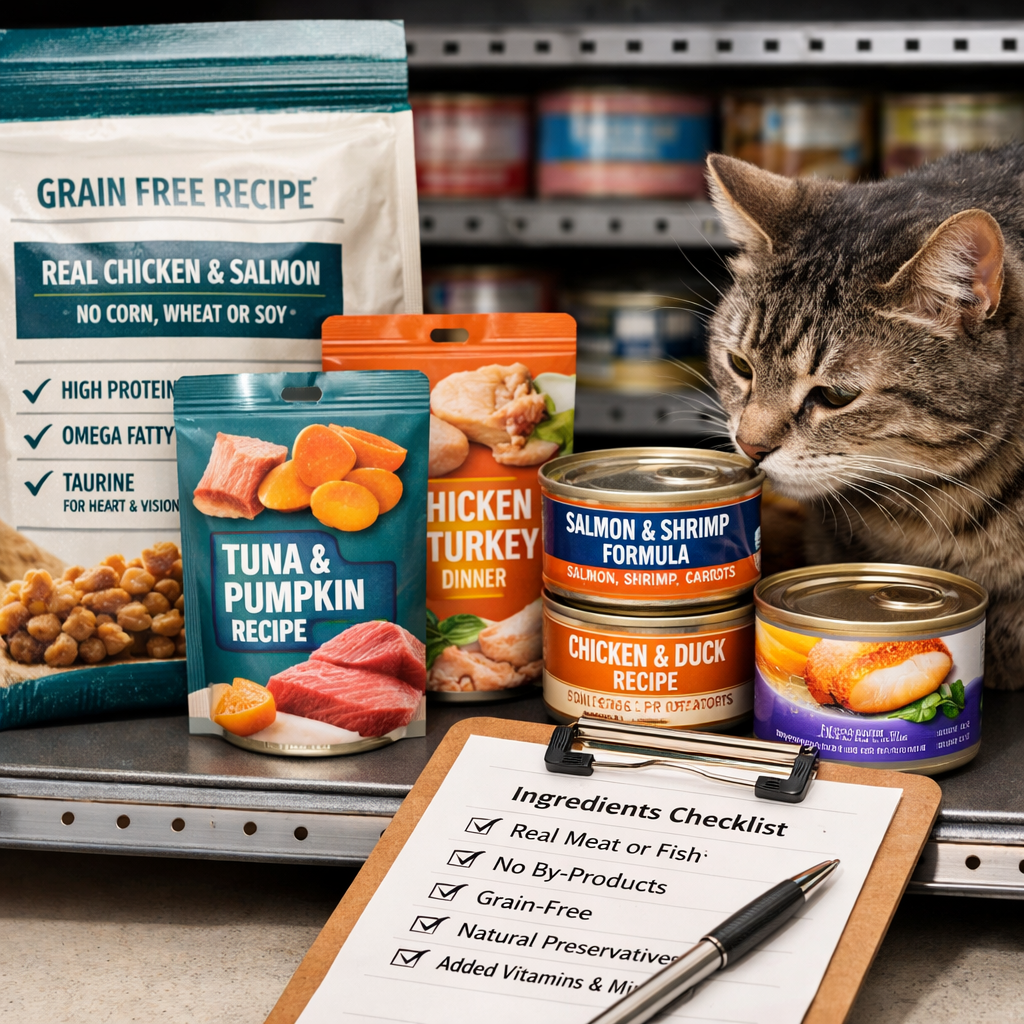
Expert-Reviewed Premium Cat Foods You Can Buy At Grocery Stores
Premium cat foods are no longer limited to pet boutiques—today, you can find natural, nutrient-forward options right in the supermarket aisle. This guide explains what “premium” really means on labels, how to spot genuinely high-quality grocery store cat food, and how to compare wet versus dry by calories and cost. At Pet Food Ingredient Guide, we focus on label literacy, functional ingredients like probiotics and omega-3s, and practical tools for calculating price per 100 kcal so you can make confident, budget-smart choices without sacrificing nutrition.
What premium means on grocery shelves
On supermarket shelves, “premium” is a marketing word—there’s no legal or AAFCO definition that guarantees superior nutrition or manufacturing standards. What matters is the formulation: complete-and-balanced status, life-stage fit, named animal proteins, and a sound guaranteed analysis supported by veterinary label-reading best practices (see this veterinary label‑reading guidance).
As premium-positioned cat foods expand through mass retail and e-commerce, shoppers see more options touting natural positioning, functional ingredients, and wellness claims. Growth is driven by pet humanization and demand for clearer labels and added benefits, according to a market analysis of the premium cat food segment.
“Premium grocery cat food” typically means branded diets with named animal proteins, added functional ingredients (probiotics, omega‑3s), and fewer fillers, sold at supermarkets or mass retail. The term isn’t legally defined, so buyers should confirm nutrient adequacy, life‑stage fit, and ingredient transparency.
How we evaluated premium grocery cat foods
At Pet Food Ingredient Guide, we reviewed premium grocery options using criteria grounded in veterinary and standards guidance:
- AAFCO “complete and balanced” for the stated life stage.
- Clear, named animal proteins and organs; transparent ingredient lists.
- Guaranteed analysis aligned with feline needs and format (wet vs dry).
- Palatability and cat-specific R&D attention, given cats’ texture/smell sensitivity and the category’s shift toward higher-quality proteins and feline-first formulations, per industry analysis of cat‑specific nutrition and palatability trends.
- Price-per-ounce and price-per-100 kcal value.
- Wide availability in grocery or mass retail.
Price does not equal quality; research-backed, vet‑endorsed formulations and sound labels are better signals than marketing or cost alone, as reinforced by vet‑verified guidance on choosing cat food. Third‑party rankings vary because of differing methods and affiliations—cross‑check any list against the label and your vet’s advice.
Label checkpoints that matter more than marketing
Use this quick aisle checklist from Pet Food Ingredient Guide:
- Look for “complete and balanced” plus a life-stage statement (kitten, adult, all life stages) per AAFCO guidance.
- Confirm named meats and organs (e.g., chicken liver). Vague entries like “liver” without a species can obscure sourcing quality, as highlighted in veterinary label‑reading guidance.
- Scan the guaranteed analysis for protein/fat/moisture. For dry foods, remember fresh meats lose moisture during cooking; the final composition should still deliver meaningful protein levels.
Mini-definition:
- Guaranteed analysis: The label box listing minimum protein and fat and maximum fiber and moisture. It lets you compare macronutrients across foods and formats; on dry foods, it’s essential because moisture loss can change ingredient prominence after cooking, per veterinary label‑reading guidance.
Wet versus dry formats for premium diets
Cats are discriminating and highly sensitive to texture and aroma. Wet foods often align better with feline moisture needs and palatability, and the industry continues to invest in cat-specific palatability research and textures, per industry analysis of cat‑specific nutrition and palatability trends. Some dry diets carry higher carbohydrate loads (from grains or potatoes), which may be less ideal for certain cats—another reason to check the guaranteed analysis via veterinary label‑reading guidance.
Comparison at a glance:
| Format | Strengths | Watch‑outs | Often best for |
|---|---|---|---|
| Wet (cans/pouches) | High moisture; often more palatable; easier portion control | May include gums (e.g., guar gum) that can affect digestibility in some sensitive cats; higher cost per kcal | Picky eaters, overweight cats needing volume without excess calories, hydration support |
| Dry (kibble) | Convenient; typically lower cost per kcal; easy to store | Can be higher in carbohydrates; less moisture; verify protein/fat with guaranteed analysis | Budget-conscious feeding, puzzle feeders, mixed feeding with wet |
Life stage and health-specific grocery options
Premium grocery lines commonly segment by life stage and wellness goals:
- Kittens: Formulas emphasize growth with higher protein, fat, key minerals, and DHA to support brain and eye development, as summarized in a consumer‑focused overview of best cat foods and label tips.
- Adults and seniors: Look for balanced protein, controlled minerals, and formats that fit weight and hydration goals.
- Condition-focused options: Urinary support, digestive health (often with prebiotics/probiotics), and weight management are common in mass retail, reflecting increased cat-specific R&D and functional products highlighted in industry analysis.
Mini-flow for picking:
- Confirm “complete and balanced” for your cat’s life stage.
- Align with a specific health goal recommended by your veterinarian.
- Trial small sizes first to assess palatability and texture.
Ingredient quality signals to look for
- Prefer named animal proteins and organs (e.g., turkey heart, chicken liver) over generic “meat” or “liver.” Specific species names improve transparency on sourcing and quality, as emphasized in veterinary label‑reading guidance.
- Functional additives such as probiotics and omega‑3s are common in premium lines because shoppers want benefits beyond basic nutrition, according to market analysis of the premium cat food segment.
Concise definition:
- Functional additives: Ingredients added for specific health benefits beyond core nutrition—like probiotics for gut balance or omega‑3s for skin and coat. They should complement, not replace, adequate animal protein and balanced minerals.
Red flags that deserve a second look
- Ingredient cautions: Artificial flavors and texture agents such as guar gum can affect digestibility or stool quality in some cats; if your cat is sensitive, discuss with your vet, as noted in a consumer‑focused overview of best cat foods and label tips.
- Marketing watchouts: Unregulated “premium” claims, undisclosed species in meat or by‑product terms, and front‑of‑pack buzzwords that don’t match the guaranteed analysis—all flagged by veterinary label‑reading guidance.
- Market realities: Price swings in downturns, counterfeit or sub‑standard imitators, complex supply chains, and shifting labeling rules that can force reformulation—risks noted in market analysis of the premium cat food segment.
Portion, calories, and price per ounce made simple
A quick method to compare wet, dry, and pouches:
- Step 1: Find kcal per can/pouch/cup on the label.
- Step 2: Convert to price per 100 kcal: (Price ÷ total kcal per unit) × 100.
- Step 3: Start with the feeding guide, then adjust to maintain ideal body condition.
Mini-definition:
- Kilocalories (kcal): The energy content of food. Price per 100 kcal enables apples‑to‑apples comparisons across wet and dry despite moisture differences.
Example comparison (for illustration only):
| Format | kcal/unit | Units/day for a 10‑lb cat (example) | Cost/unit | Cost/100 kcal |
|---|---|---|---|---|
| Wet pâté (3 oz can) | 90 | 2.2 | $1.20 | $1.33 |
| Dry kibble (1 cup) | 400 | 0.5 | $2.00 | $0.50 |
How to transition to a new premium food
- Days 1–2: 75% old / 25% new
- Days 3–4: 50% / 50%
- Days 5–6: 25% / 75%
- Day 7: 100% new
Slow the schedule for sensitive stomachs. Monitor stool quality, appetite, hydration, and coat. If your cat refuses, test texture changes (pâté vs shreds vs morsels); palatability often hinges on aroma and mouthfeel. Consult your vet before changes for kittens, seniors, or cats with medical conditions.
Use Pet Food Ingredient Guide to decode labels
Our Ingredient Library clarifies label terms (meat by‑products, carrageenan, taurine, and more) and explains ingredient roles and quality. Use our calorie-comparison guidance to match kcal to cans and pouches and convert to price per 100 kcal for budget planning and precise portions. Explore the Ingredient Library.
Ingredient Library for clear definitions
Below are concise, quotable definitions you’ll find in our Ingredient Library:
- By‑products: A mix of nutrient-dense organ tissues (and sometimes other non-muscle parts) from a named species. Quality varies by sourcing and processing. In cat food, well-specified by‑products can supply taurine and micronutrients; always confirm “complete and balanced” and species naming on the label.
- Organ meats: Edible internal organs like liver, heart, and kidney. These are naturally rich in vitamins, minerals, and amino acids. In feline diets, named organ meats (e.g., chicken liver) add palatability and essential nutrients, complementing muscle meat to support a balanced amino acid profile.
- Guar gum (a food gum): A soluble fiber and thickener used to bind wet foods. In small amounts it helps texture; some cats with sensitive GI tracts may experience softer stools. If reactions occur, try formulas with alternative binders or different textures and consult your veterinarian.
Why named species matter:
| Named species example | Vague term | Why it’s better |
|---|---|---|
| Chicken liver | Liver | Clear species improves transparency, sourcing accountability, and lets you avoid proteins your cat doesn’t tolerate. |
Matching calories to cans and pouches
A simple, repeatable approach:
- Read kcal per unit (can/pouch/cup) from the label.
- Estimate daily needs (e.g., a typical 10‑lb indoor adult often needs ~180–220 kcal/day; confirm with your vet).
- Compute cost per 100 kcal: (Price ÷ total kcal per unit) × 100, then estimate daily cost.
Worked examples:
- Wet: If a 3 oz can has 90 kcal and costs $1.20, cost/100 kcal = ($1.20 ÷ 90) × 100 = $1.33. At 2.0–2.4 cans/day for a 10‑lb cat, daily cost ≈ $2.40–$3.20.
- Dry: If 1 cup has 400 kcal and costs $2.00, cost/100 kcal = $0.50. At ~0.5 cup/day, daily cost ≈ $1.00.
Template you can fill in:
| Product/format | Unit size | kcal/unit | Price/unit | Cost/100 kcal | Units/day (your cat) | Est. daily cost |
|---|
Moisture differences make kcal-based comparisons essential. For dry foods, remember that ingredient lists are pre‑cooking; the guaranteed analysis and kcal give the clearest picture of final nutrient density per veterinary label‑reading guidance.
Interpreting functional additives and claims
Popular functional additives include:
- Probiotics: Live microorganisms that can support gut balance and stool quality.
- Omega‑3s (EPA/DHA): Fats that can support skin, coat, and inflammation modulation.
Consumer demand for wellness features in premium segments continues to grow, per market analysis of the premium cat food segment. Claim cautions:
- Functional claims should complement a complete-and-balanced base diet.
- If your cat is sensitive, watch for artificial flavors or certain texture agents (like some food gums).
- Run this claim check:
- Is the benefit tied to a listed ingredient?
- Is the food complete and balanced for your cat’s life stage?
- Do the guaranteed analysis and kcal profile fit your goals?
Frequently asked questions
What makes a grocery cat food truly premium?
Look for complete-and-balanced nutrition, named animal proteins, and transparent ingredient lists. Functional extras like probiotics or omega‑3s are a plus, but quality is best judged by the label and analysis, not the word “premium”—our label checklist can help you verify claims.
Should I choose wet or dry for a picky or overweight cat?
Many picky or overweight cats do well on wet food because it’s more palatable and higher in moisture. You can also mix wet and dry—just compare calories and measure portions carefully.
How can I tell if a food is complete and balanced for my cat’s life stage?
Check the nutritional adequacy statement for “complete and balanced” and a life-stage designation (kitten, adult, all life stages)—see Pet Food Ingredient Guide’s label tips for what to look for. If it’s missing, treat the product as a topper or treat, not a sole diet.
Are by-products acceptable in premium foods?
By‑products can be nutritious organ meats, but quality varies; see Pet Food Ingredient Guide’s Ingredient Library for clear definitions. Prefer named species (e.g., chicken by‑products) and confirm the diet is complete and balanced with a suitable protein and mineral profile.
How do I compare calories across cans, pouches, and dry kibble?
Use kcal per unit on the label and convert to price per 100 kcal for apples‑to‑apples comparisons. This accounts for moisture differences and helps you manage both budget and daily portions; use Pet Food Ingredient Guide’s template to do the math.