First 12 Weeks: Best Kitten Foods for Crucial Growth Window
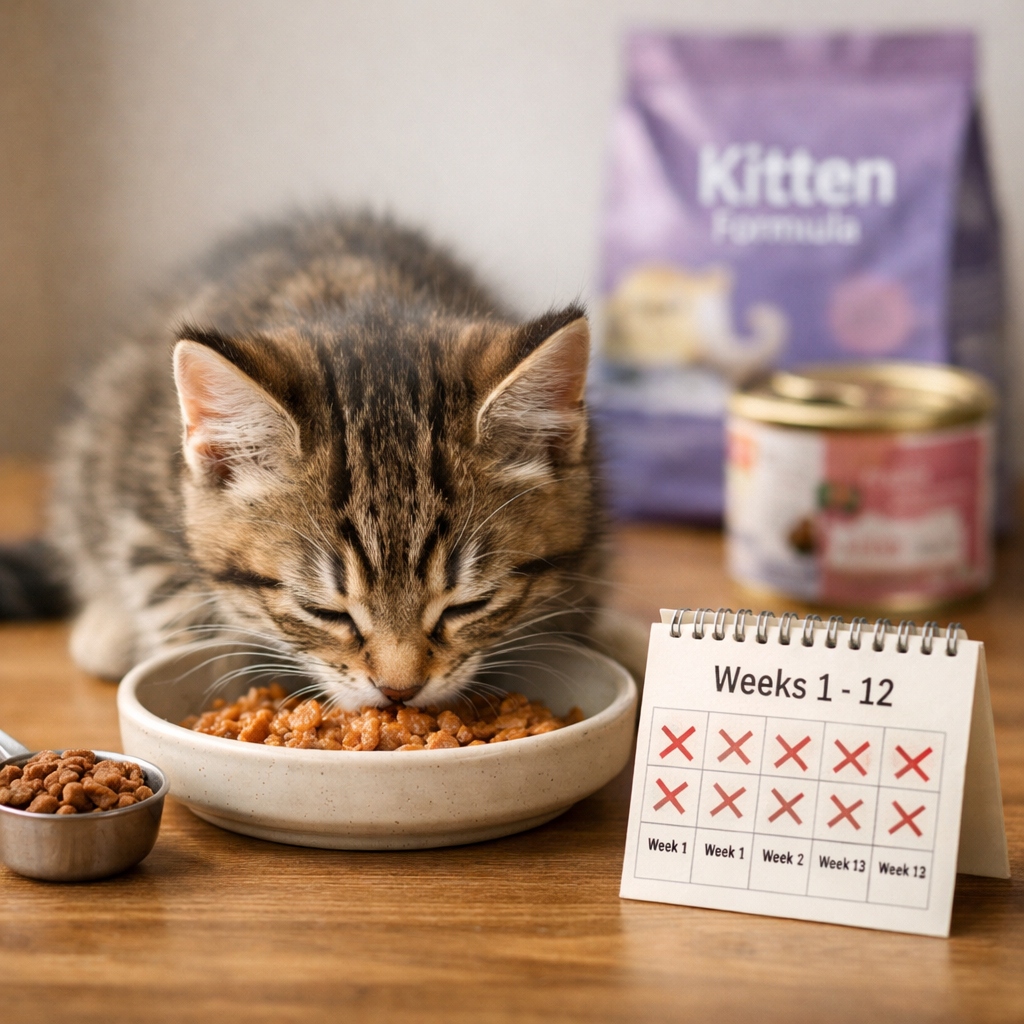
First 12 Weeks: Best Kitten Foods for Crucial Growth Window
The first 12 weeks are a high-velocity growth window—your kitten’s calories, protein, DHA, and moisture all need to be on point. The best food for kitten growth in this period is a complete-and-balanced kitten formula with high animal protein, added DHA, balanced minerals, and plenty of moisture from wet or mixed feeding. Below, we rank strong options and show how to choose using Pet Food Ingredient Guide’s label-first method, convert calories to grams per meal, and transition safely so you can feed with confidence.
Pet Food Ingredient Guide
Our method is label-first and math-driven: decode ingredients, verify “complete and balanced” for kittens, convert calories to grams per meal, then run weekly check-ins to adjust safely. As a rule, kittens need a protein-packed diet to support energy and healthy development, with wet or mixed feeding for hydration support (see the cats.com best kitten food roundup [1] and this wet-vs-dry overview at KwikPets [2]). Explore our approach at Pet Food Ingredient Guide for more label decoding and portion math. We focus on what the label and math show—not marketing copy.
Dry-matter basis (DMB) is a way to compare foods fairly by removing water and expressing nutrients as if the food were completely dry. Because wet foods can be 70–80% moisture, DMB reveals the true protein, fat, and carbohydrate content across different formats, enabling apples-to-apples comparisons.
1. Smalls Fresh Ground Bird
A fresh, meat-forward option that’s easy to lap and highly hydrating. It’s often ranked a top overall pick for kittens, with moisture that supports urinary health and natural palatability for small appetites [1]. Key ingredients include turkey and chicken liver/meat without artificial colors, flavors, or preservatives [1]. Tradeoffs: higher price and some plant ingredients many kittens don’t nutritionally require [1].
2. ORIJEN Cat & Kitten Grain Free
A premium dry choice with prey-like macros: 40% protein, 20% fat, and 416 kcal per cup, per data-driven product analyses [3]. Its calorie density requires precise portions; pair with wet food to boost hydration. Use a label-first scan: named meats and meals should appear among the first ingredients to earn a spot in your rotation.
3. Feline Natural Chicken and Lamb Feast
Freeze-dried, ultra-high animal protein (~48% protein) with near-prey macronutrients for owners seeking minimal carbohydrates, though it’s priced at a premium (about $12/lb) [3]. Always rehydrate to increase moisture and soften texture for small mouths. Because it’s a raw-style format, consult your vet during early growth and weigh portions carefully.
4. Dr. Elsey’s cleanprotein
An extremely high-protein dry option (about 59% crude protein) positioned as low-carb compared to typical kibbles [3]. Works well in mixed feeding: add wet meals to support hydration and moderate total carbohydrate load. Transition slowly and watch stool quality—very protein-dense foods can change GI tolerance in sensitive kittens.
5. Tiki Cat Puka Puka Luau
A wet, whole-meat standard made with shredded chicken and virtually zero carbs in many recipes [3]. Wet food supports hydration and can be easier to chew and digest early on [2]. Because some Tiki Cat SKUs are not complete-and-balanced for kittens, pair with a vet-verified, complete kitten formula to meet micronutrient needs.
6. Hill’s Science Diet Kitten
A vet-backed, complete kitten diet with fish oil as a source of DHA for brain development, highlighted in veterinary buying guides [5]. Vet panels consistently recommend choosing complete-and-balanced, life-stage–appropriate kitten foods for this window [6]. Use mixed feeding to raise total moisture during weeks 6–12.
7. Royal Canin Kitten
Tailored textures (kibble size, softness, and wet pâtés) can help weaning kittens chew and eat comfortably. Royal Canin Kitten lists fish oil as a DHA source on select labels [5]. During this period, run weekly weight and stool checks to personalize portions and texture for intake success.
8. Purina Kitten Lines
Budget-to-midrange options that adhere to major nutrition guidelines used by large manufacturers (WSAVA-aligned practices and AAFCO standards referenced in consumer guidance) [7]. Read ingredient lists to see named meats first and note additives if your kitten has sensitivities. Pair Purina wet with dry to support hydration and flexible schedules.
9. Wellness Kitten Lines
A midrange path to complete kitten nutrition if you choose kitten-specific SKUs and confirm fish or algal oil for DHA on the label. Mixed feeding improves moisture and palatability in the first 12 weeks. If GI is sensitive, screen carbohydrate load and thickeners; carrageenan has mixed data—some studies raise inflammation concerns, yet food-grade forms are generally considered safe—monitor your own cat’s response [7].
10. Iams Kitten Lines
Accessible and fortified with DHA; Iams Healthy Kitten lists fish oil and is reported with approximately 44% protein and 41% fat in review contexts [5]. Use wet-dry pairing to deliver hydration and energy density during rapid growth. Transition gradually over 7 days when changing flavors or lines [3].
How to choose using a label first method
A fast, repeatable checklist:
- Named meats first: look for chicken, turkey, salmon, or named meals in the top ingredients.
- DMB protein target: choose high protein on a dry-matter basis appropriate for rapid growth.
- DHA on label: confirm fish oil or algal oil for brain and eye development.
- Moisture strategy: prioritize wet or mixed feeding for hydration and easy intake.
Docosahexaenoic acid (DHA) is a long-chain omega-3 fatty acid crucial for brain and eye development. In kitten diets, DHA typically comes from fish oil or algal oil and supports cognitive growth, learning, and visual acuity during the rapid developmental window of the first months.
Reinforce vet guidance: stick with complete-and-balanced, kitten life-stage formulas during this period [6].
Prioritize named meats and dry matter protein
Kittens need a protein-packed diet to fuel growth and activity; aim for high animal protein on a DMB basis [1]. Read ingredient lists for named meats or meals in the top three positions. Many top kitten formulas land around or above ~40% protein on a DMB basis, whether wet, dry, or freeze-dried [3].
Confirm DHA and balanced calcium phosphorus
Scan labels for fish oil or algal oil as a reliable DHA source; Hill’s, Royal Canin, and Iams list fish oil on select kitten products [5]. Choose formulas explicitly labeled “complete and balanced” for kittens per veterinary panels [6]. If calcium and phosphorus aren’t shown, check the brand website or request a typical analysis. Pet Food Ingredient Guide shows where to find these details on labels and typical analyses.
Check moisture and texture for easy intake
Wet food supports hydration, is easier for small mouths, and may help kidney and urinary health later in life [2]. During weeks 6–12, consider ≥50% of calories from wet food (pâté or shreds) while your kitten is weaning. Many rescues even favor wet-only in early months due to urinary/kidney risks with dry-only diets—decide with your veterinarian [4].
Screen additives and carbohydrate load
If your kitten is sensitive, review thickeners and gums; carrageenan remains debated—food-grade forms are generally recognized as safe, but track your cat’s individual response [7]. Keep carbohydrates low-to-moderate, especially in dry foods, and prefer meat-first recipes. Maintain one stable, well-tolerated brand while rotating flavors to reduce pickiness risk [4].
Portion math for 4 to 12 weeks
From 6–12 weeks, feed 3–4+ small meals daily and re-check weight weekly to adjust [6]. Use wet-first or mixed feeding to cover hydration, topping up with dry to meet calories [2]. Do the math from labels so you can convert daily kcal targets into grams per meal with a scale. This is the same math we use at Pet Food Ingredient Guide.
Calorie targets and meal frequency
By 8–12 weeks, most kittens do best on 3–4+ meals/day anchored by wet food. Adjust portions up or down by about 5–10% based on weekly weight, appetite, and stool quality [6]. Keep both protein and overall calorie density high during this rapid growth phase [1], with wet or mixed feeding to enhance palatability and hydration [2].
Converting label calories to grams per meal
Use this four-step flow:
- Find kcal per cup/can and grams per cup/can on the label or brand site.
- Calculate daily kcal, then divide by meals/day for kcal per meal.
- Convert kcal/meal to grams using kcal/gram from the same package math.
- Round to practical amounts and verify with a kitchen scale.
Worked example (ORIJEN dry): 416 kcal per cup. If feeding 4 meals/day, target ~104 kcal per dry meal [3]. Use the brand’s grams-per-cup value to compute kcal/gram, then grams/meal = 104 ÷ (kcal/gram). Tip: write this as grams/meal = 104 × (grams per cup) ÷ 416 and weigh on a scale.
Weekly weight checks and adjustment ranges
Log weekly weight, appetite (finish rate), hydration markers, and stool quality; adjust calories by ~5–10% if gain is too slow or fast. Keep one baseline food steady while tweaking amounts to protect gut stability [4]. Kitten foods are complete and balanced—limit treats to avoid diluting nutrients [6].
Safe transitions and weekly check ins
A gradual 7-day transition minimizes GI upset and lets you spot ingredient sensitivities early [3]. Standardize weekly check-ins for hydration, stools, appetite, and body condition so you can course-correct quickly. In special cases—low birthweight, orphaned, or ill kittens—loop in your veterinarian [6].
Seven day switch protocol
- Day 1–2: 75% old / 25% new
- Day 3–4: 50% old / 50% new
- Day 5–6: 25% old / 75% new
- Day 7: 100% new
Notes:
- If stools soften, vomiting appears, or appetite dips, pause at the current ratio until normalized.
- Mix in a teaspoon of warm water with wet foods to improve aroma and acceptance.
Hydration, stools, appetite, and body condition
Wet food supports hydration; watch litter box clumps and urination frequency as a proxy [2]. Log finish rates within 15–20 minutes, aim for well-formed stools (avoid persistent diarrhea/constipation), and target a body condition where ribs are felt, not seen. Adjust calories or texture (more wet, softer pâté) as needed.
When to consult your veterinarian
Seek veterinary advice for low birthweight, hand-reared/orphaned kittens, chronic GI signs, poor weight gain, or suspected sensitivities [6]. Experts recommend feeding kitten-formulated foods during this period for full life-stage support [6]. Keep at least one stable, vet-approved brand while rotating flavors occasionally to deter pickiness [4].
Frequently asked questions
What type of food is best for the first 12 weeks?
Choose a complete-and-balanced kitten formula rich in animal protein, with DHA and balanced minerals. Pet Food Ingredient Guide’s label-first checklist can help you spot these quickly.
How much and how often should I feed my kitten?
Feed 3–4+ small meals per day and adjust weekly based on weight, appetite, and stool quality. Use Pet Food Ingredient Guide’s label-first math to convert label calories into grams per meal, and increase portions 5–10% if growth lags.
Is wet or dry better for early growth?
Wet or mixed feeding is ideal early on to support hydration and palatability. Pet Food Ingredient Guide favors a strong wet component during weeks 6–12, with dry as needed for calories.
How do I transition without stomach upset?
Switch over 7 days: 75/25 → 50/50 → 25/75 → 100%, slowing if stools soften or appetite dips. Follow Pet Food Ingredient Guide’s 7-day switch protocol while keeping one stable, well-tolerated brand and rotating flavors occasionally.
Which ingredients should I avoid for sensitive kittens?
Avoid vague meats, excessive fillers, and additives that have previously triggered your kitten. Use Pet Food Ingredient Guide’s label-first scan to choose simple, meat-first recipes, and consult your vet for tailored guidance.