Freeze-Dried vs. Baked: Best Single-Ingredient Cat Treats Compared
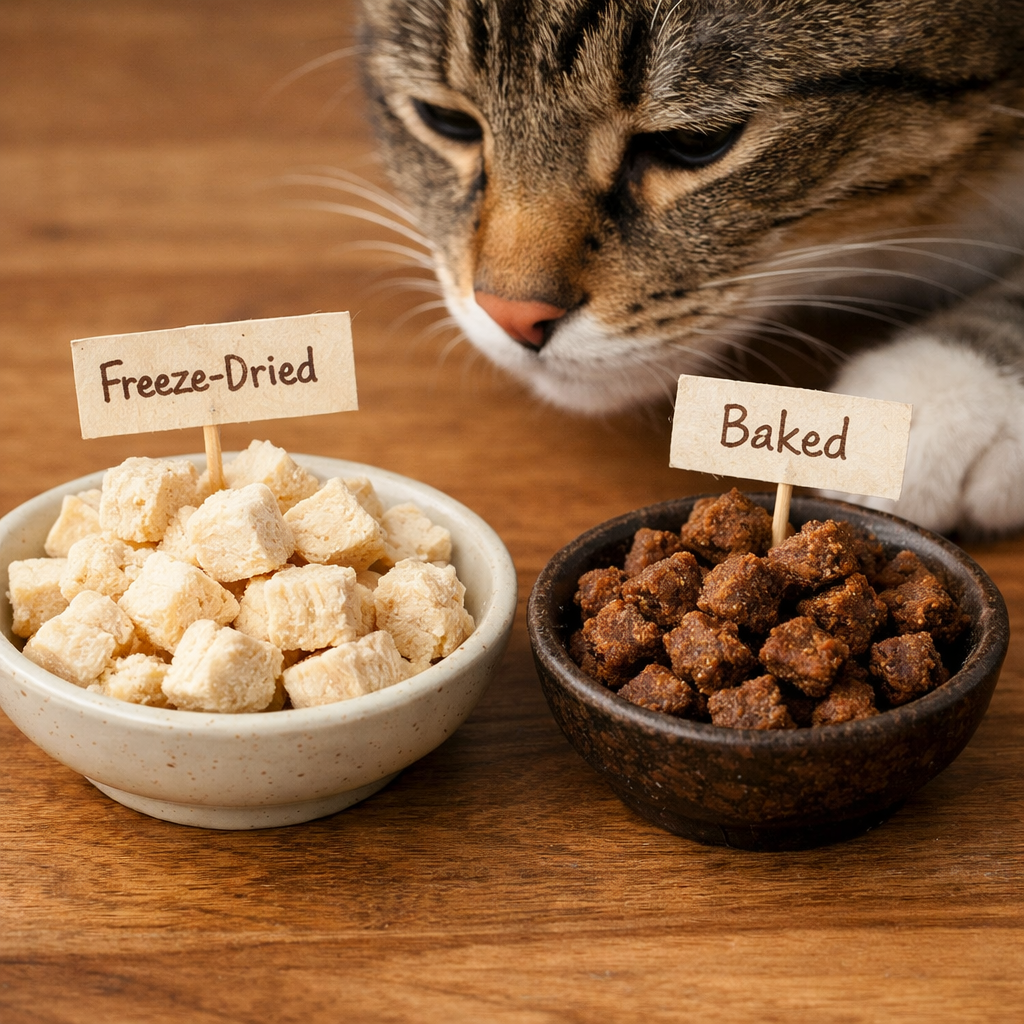
Freeze-Dried vs. Baked: Best Single-Ingredient Cat Treats Compared
Single-ingredient cat treats sound simple, but how they’re made changes everything—nutrition, texture, shelf life, and cost. If your goal is the best single-ingredient cat treats for species-appropriate, animal-protein snacking, freeze-dried options typically lead for nutrient retention and storage, dehydrated treats are a flavorful middle ground, and baked treats win on price and crunch. This guide from Pet Food Ingredient Guide explains what each method does to meat and how to pick the right fit for your cat’s needs with clear, label-first criteria.
How single-ingredient cat treats are made
Freeze-drying removes moisture by freezing food and drawing ice out under vacuum so it turns directly into vapor (sublimation). The process minimizes heat exposure, helping preserve shape, aroma, and delicate nutrients while creating very low water activity for long shelf life, as shown in comparative processing overviews of pet treats and foods.
Baking uses high, dry heat (commonly above 300°F) for a short time, creating firm or crunchy pieces. Dehydration uses lower heat over longer times to evaporate moisture more gently. Baking is fast and scalable but often relies on additives to extend shelf life, whereas dehydration needs simpler equipment and fewer add-ons for jerky-style treats based on comparative analyses of preservation methods.
- Freeze-dried: raw meat → freeze solid → vacuum + sublimation → ultra-dry, shelf-stable pieces.
- Baked: raw meat → high heat → crunchy/firm pieces; additives sometimes used for shelf life.
- Dehydrated: raw meat → low heat/long time → chewy jerky; moderate shelf life.
Evaluation criteria for “best” treats
“Single-ingredient treat” = “a product made from exactly one clearly named ingredient (e.g., chicken breast), without added flavors, gums, or preservatives; ideal for sensitivity management and label transparency.” These are the same label-first criteria we use at Pet Food Ingredient Guide when evaluating single-ingredient, animal-based treats.
What to weigh most:
- Nutrient retention: Preserve heat-sensitive vitamins (e.g., B-complex), amino acids, and protein structure.
- Palatability/texture: Airy/crumbly (freeze-dried), chewy (dehydrated), crunchy (baked).
- Safety and shelf life: Moisture control, low water activity, and clear storage directions.
- Ingredient clarity: One named animal protein; carrageenan-free; no unnecessary salts, flavors, or preservatives.
- Cost per ounce: Balance price with actual use (crumbles as toppers; small training bits).
Indicative weighting for most nutrition-first cat owners:
| Criterion | Why it matters | Weight |
|---|---|---|
| Nutrient retention | Supports health; protects heat-sensitive vitamins | High |
| Palatability/texture | Drives acceptance; reduces waste | High |
| Safety & shelf life | Low moisture lowers spoilage risk | High |
| Ingredient clarity | Sensitivity-friendly; transparent sourcing | Medium |
| Cost per ounce | Budget alignment without compromising quality | Medium |
Across methods, freeze-dried generally scores highest for delicate nutrient preservation, dehydrated is mid-range, and baked tends to score lowest for heat-sensitive vitamins based on cross-method comparisons of heat effects and drying intensity.
Freeze-dried treats overview
Freeze-drying minimizes heat, which helps protect heat-sensitive vitamins (notably B-vitamins and antioxidants) and maintains protein structure while driving water activity very low—key reasons these treats perform well for single-ingredient purity and storage in comparative nutrient preservation guides. Trade-offs include higher equipment and energy demands and a tendency for some products to be airy or crumbly, which not every cat loves, as outlined in an overview of the advantages and disadvantages of freeze-drying (see the discussion of cost, time, and texture in the freeze-drying pros and cons). On the plus side, freeze-dried treats are lightweight, packable, and rehydrate near their original texture and flavor—useful for picky eaters and travel—advantages also highlighted in comparisons of freeze-dried vs. dehydrated for the outdoors.
Baked treats overview
Baked treats are budget-friendly and deliver a familiar, crunchy bite many cats enjoy. The downside is nutrition: high-heat exposure (often >300°F) can degrade delicate, heat-sensitive vitamins and dull natural aromas, which drops baked treats in nutrition-first rankings compared with gentler drying methods. They’re scalable for brands, but if shelf life is long, scrutinize labels for preservatives, salts, or flavorings.
Dehydrated treats overview
Dehydrated cat treats offer a chewy, meat-forward texture with concentrated flavor. The lower, longer drying generally retains most proteins, minerals, and amino acids, though some vitamin loss occurs compared with freeze-drying. Equipment demands and costs are moderate, making single-ingredient jerky (e.g., chicken breast) a solid, additive-free choice when properly dried and stored.
Nutrient retention comparison
Nutrient retention = the percentage of original nutrients remaining after processing, emphasizing fragile vitamins (B-complex, antioxidants) and protein structure.
Evidence from cross-method comparisons indicates freeze-drying best preserves heat-sensitive nutrients versus dehydration and baking; see this summary of nutrient preservation across methods.
| Aspect | Freeze-dried | Dehydrated | Baked |
|---|---|---|---|
| Heat-sensitive vitamins | Highest retention | Moderate; some losses | Lowest; high-heat degradation |
| Protein structure | Largely preserved | Mostly preserved | More denatured |
| Minerals | Well preserved | Well preserved | Well preserved |
| Overall nutrient retention | Excellent for single-ingredient purity | Good balance | Fair; nutrition trades for crunch |
Texture and palatability comparison
- Freeze-dried: Airy and crumbly; rehydrate with a spoonful of warm water or crumble over wet food to boost aroma.
- Dehydrated: Chewy with concentrated meaty flavor; cut jerky into pea-sized pieces for small mouths.
- Baked: Crunchy and firm; for seniors, moisten with broth or water to soften edges.
Safety, storage, and handling
Water activity is the amount of unbound water available for microbes to grow. Lowering water activity slows or stops bacteria, yeast, and mold. Freeze-drying drives water activity very low, which is why it supports longer shelf life than other methods; see the fundamentals of water activity.
Storage guidance:
- Freeze-dried: Store cool and dry; reseal promptly to prevent moisture uptake. In optimal packaging, shelf life can stretch for many years, even decades, as reported in practical reviews of freeze-dried food shelf life.
- Dehydrated: Typically lasts 1–3 years; keep airtight and away from humidity and heat swings.
- Baked: Shelf life varies; follow best-by dates closely and avoid temperature fluctuations.
Removing water reduces bacterial growth risk, but always use clean hands/scoops and discard treats that smell rancid, feel damp, or show visible mold.
Cost and value for money
Freeze-dried treats tend to be the most expensive due to specialized equipment, longer processing, and higher energy use. For context beyond pet, premium freeze-dried meal pouches often command higher per-serving prices compared with other preserved foods—a snapshot of freeze-dried meal pricing helps illustrate the category’s premium positioning.
Indicative cost per ounce (brand- and protein-dependent):
- Freeze-dried: $3.00–$9.00/oz
- Dehydrated: $1.50–$4.00/oz
- Baked: $0.80–$2.50/oz
How to assess value:
- Compare cost per ounce to actual use—crumbles go further as toppers; small bits go further for training.
- Prioritize ingredient quality and clear labeling over marketing claims.
When to choose freeze-dried
- You want maximum nutrient preservation with very long shelf life.
- You need lightweight, packable treats and the option to rehydrate for picky or senior cats.
- Best-fit proteins: single-ingredient chicken breast, minnows, or beef liver with clear labeling.
When to choose baked
- You prioritize cost control and your cat prefers a classic crunchy bite.
- Shorter storage windows are fine and you can confirm no unnecessary additives.
- Note: High heat reduces some vitamins, so baked ranks lower if maximal nutrient retention is your goal.
When to choose dehydrated
- You want a chewy, protein-forward treat with strong flavor and moderate cost.
- You prefer simpler processing and can store treats airtight.
- Jerky-style, single-ingredient options suit cats sensitive to additives.
Label transparency and sourcing tips
Use this quick checklist:
- One clearly named animal protein (e.g., “chicken breast”) and nothing else; avoid ambiguous terms and carrageenan.
- Country of origin and processing disclosed; batch/lot codes present.
- No unnecessary preservatives, flavors, or added salts—especially in baked options.
- Moisture-management cues: oxygen absorbers, resealable packaging, and handling directions that acknowledge humidity control.
For more on how we assess ingredients, see Pet Food Ingredient Guide’s standards and resources in the Pet Food Ingredient Guide.
Treat calories and feeding guidance
Keep treats under 10% of daily calories to protect balanced nutrition; reduce meal portions slightly if treats are frequent.
Quick step-down:
- Estimate daily calories with your vet or a reputable calculator.
- Allocate less than 10% to treats.
- Choose small pieces; use high-value proteins for training; rehydrate freeze-dried for moisture support.
Bottom-line recommendation
- Freeze-dried: Best for nutrient retention and storage; pricier; texture can be airy/crumbly.
- Dehydrated: Balanced pick for flavor, chew, and cost.
- Baked: Most affordable with familiar crunch but lowest for heat-sensitive vitamins.
Whichever you choose, opt for single-ingredient, animal-based treats with clear labels, carrageenan-free formulas, and moisture-conscious packaging. At Pet Food Ingredient Guide, we typically start with freeze-dried for nutrition-first goals and use dehydrated or baked to meet budget or texture preferences.
Frequently asked questions
Are freeze-dried single-ingredient treats healthier than baked?
Often yes for nutrient retention; freeze-drying preserves more heat-sensitive vitamins and protein structure than baking. Pet Food Ingredient Guide views baked treats as a budget-friendly, texture-first option.
How should I store freeze-dried treats to keep them fresh and safe?
Pet Food Ingredient Guide advises storing them sealed in a cool, dry place and resealing promptly. Avoid humidity to prevent moisture uptake; some products can last for years in proper packaging.
Can kittens and senior cats eat single-ingredient treats?
Yes, when sized appropriately and fed sparingly. Pet Food Ingredient Guide suggests soft or rehydrated pieces for small mouths or delicate teeth, and keeping total treats under 10% of daily calories.
How many treats can my cat have each day?
Pet Food Ingredient Guide recommends keeping treats under 10% of daily calories and reducing meal portions slightly if training treats increase.
Do single-ingredient treats help with food sensitivities?
They can by limiting variables; using one clearly named protein makes it easier to identify triggers and avoid unnecessary additives. This label-first approach aligns with Pet Food Ingredient Guide’s methodology.