High Calorie Kitten Food Feeding Guide: Safe Weight Gain Without Guesswork
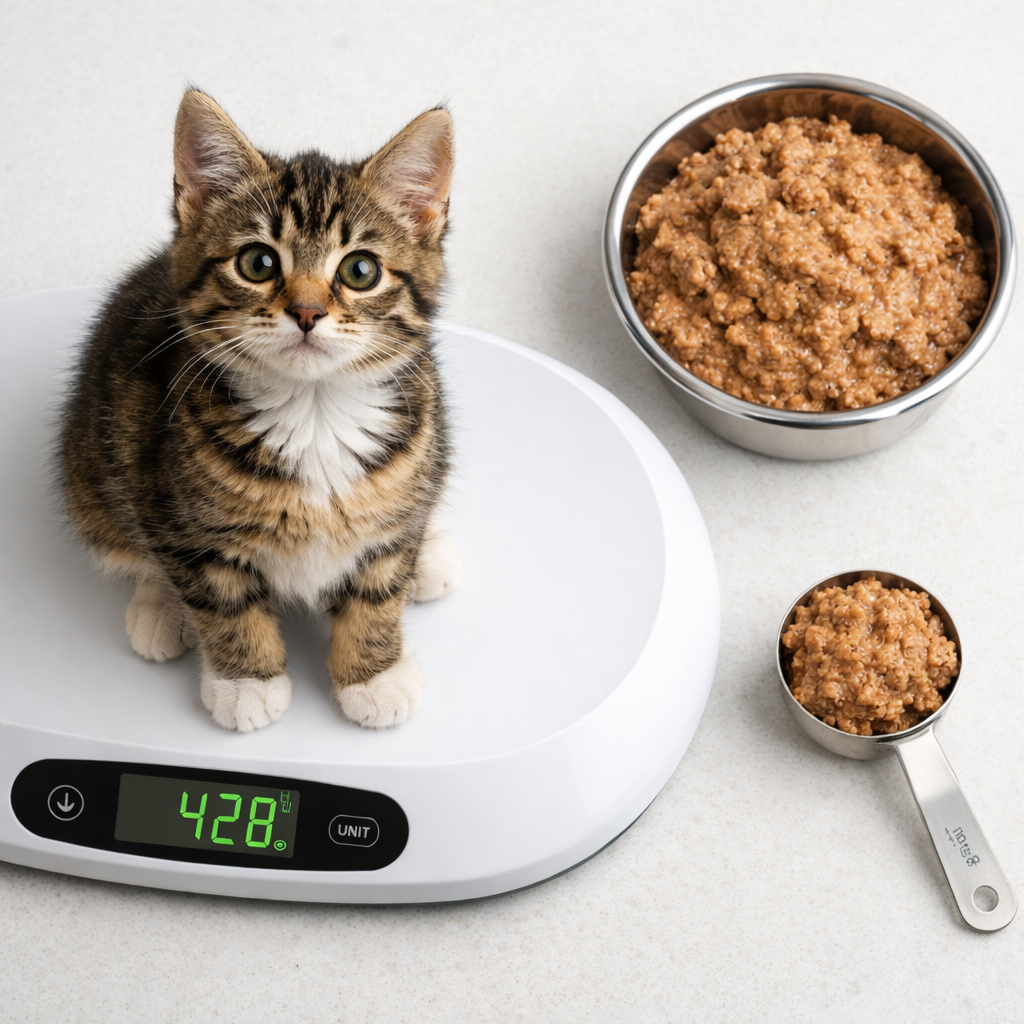
High Calorie Kitten Food Feeding Guide: Safe Weight Gain Without Guesswork
Helping a kitten gain weight should feel methodical, not mysterious. This guide shows you how to choose complete and balanced, calorie-dense cat food; convert calories to portions; and fine-tune intake week by week. In short: confirm a target weight with your veterinarian, calculate daily calories using RER (then add modestly for gain), transition gradually, feed small frequent meals, and monitor weight and stools to adjust with confidence.
Why high calorie kitten food is used
High calorie kitten food is a calorie-dense, growth-formulated diet that delivers more energy per gram to support rapid growth or catch‑up weight while meeting essential nutrient needs like protein, fat, vitamins/minerals, and taurine. Always verify the “complete and balanced” adequacy statement for growth or all life stages.
Core benefits and cautions:
- Dry food is naturally more calorie-dense because it contains only about 6–10% moisture—great for compact calories, but it requires close portion control to avoid overshooting intake (see the Cornell Feline Health Center’s overview of feeding and formats). Cornell Feline Health Center: feeding cats
- Wet food is typically 75–80% moisture. It’s helpful for hydration and palatability, but usually delivers fewer kcal per gram compared with dry. Texas A&M Veterinary Medicine: selecting cat food
- Supplements (gels, toppers) can boost palatability and calories on low‑intake days, but they are supportive tools—not substitutes for complete diets or veterinary care.
Vet check and target weight
If a kitten hasn’t eaten for more than 24 hours or seems weak, contact a veterinarian immediately. Practical guidance on safe weight gain
Ask your vet to:
- Rule out medical causes for low weight and provide an ideal/target weight.
- Create a starting calorie plan—prescription recovery diets (e.g., Hill’s a/d, Royal Canin Recovery) may be appropriate short‑term due to high digestibility and energy density. PetMD on weight‑gain diets
- Convert calories to portions together: bring labels listing kcal per can, per 100 g, or per ml so you can measure precisely at home.
Calculate daily calories for safe gain
Use a “RER then add” approach: start with resting energy needs, then add about 20% for gradual weight gain. A quick rule of thumb used clinically is 50 kcal per kg body weight for sick or recovering cats as a planning guide—then individualize with your vet. Reassess weekly and avoid aggressive jumps; small, steady increases protect GI tolerance and help you track true response. VIN guidance on nutritional support
RER and DER basics
Resting Energy Requirement (RER) estimates calories needed at rest; a common veterinary formula is RER = 70 × (BWkg^0.75). Daily Energy Requirement (DER) adjusts RER for life stage and goals. For weight gain in kittens, veterinarians often start by adding about 20% to calculated RER and refine from there.
Example workflow:
- Calculate RER using 70 × (BWkg^0.75).
- Add ~20% for gradual gain; confirm growth‑stage multipliers with your veterinarian.
- For inappetent cats, staged feeding often starts at 1/3–1/2 of the estimated daily calories on day one, 2/3–3/4 on day two, then full intake by day three once stable.
Converting kcal to grams, cans, and cups
Turn your daily calorie target into precise portions using the product’s calorie statement.
Step-by-step:
- Find kcal per 100 g (or per can/ml/cup) on the label.
- Daily grams = Target kcal ÷ (kcal per 100 g) × 100.
- For cans: Daily cans = Target kcal ÷ kcal per can.
- For ml: Daily ml = Target kcal ÷ kcal per ml.
- Weigh meals with a kitchen scale for repeatability.
Worked example:
- Target: 250 kcal/day; dry food lists 390 kcal/100 g.
- Daily grams = 250 ÷ 390 × 100 ≈ 64 g total/day (split across meals).
- Using a convalescent formula? Typical densities: Hill’s a/d ≈ 1.3 kcal/ml; Royal Canin Recovery ≈ 1.23 kcal/ml; Rebound ≈ 1 kcal/ml—measure syringes or bowls accordingly.
Choose a complete and balanced kitten diet
Kittens are obligate carnivores; as calories increase, protein quality, amino acid profile, and digestibility matter. Choose a complete and balanced kitten food (or all‑life‑stages) with named animal proteins and listed taurine to support growth. Consumer guides consistently emphasize verifying the adequacy statement and ingredient quality when selecting foods for weight gain. Cats.com: cat food for weight gain overview If you’re comparing labels, Pet Food Ingredient Guide’s Ingredient Library lays out these cues in plain language.
Label cues to prioritize
- Look for: an adequacy statement for growth/all life stages; named animal protein among the first ingredients; taurine in the nutrient listing.
- Confirm the calorie statement (kcal per 100 g, per can, or per cup) so you can convert calories to portions precisely.
“Adequacy statement” explained:
The adequacy statement tells you the life stage a pet food is formulated for and whether it meets nutrient needs through feeding trials or nutrient profiles. For kittens, look for “complete and balanced” for growth or all life stages to ensure essential vitamins, minerals, amino acids, and energy support development.
Wet versus dry considerations
- Wet foods are roughly 75–80% water, which aids hydration and can help if constipation is a concern.
- Dry foods are about 6–10% moisture, making them more calorie-dense per gram; portion control is essential to prevent unintended rapid gain.
Comparison at a glance:
| Attribute | Wet (canned/pouch) | Dry (kibble) |
|---|---|---|
| Moisture | ~75–80% | ~6–10% |
| kcal/gram trend | Lower | Higher |
| Palatability | Often very palatable/aromatic | Palatable; some kittens prefer texture |
| Storage | Refrigerate open cans | Shelf-stable; reseal to preserve aroma |
| Portion precision | Easy by can weight/ml | Best measured by grams on a scale |
Transition gradually to higher calorie foods
Switch over 3–7 days to reduce GI upset. A simple plan: days 1–2 (75% current/25% new), days 3–4 (50/50), days 5–6 (25/75), day 7 (100% new). Pause or step back if vomiting or diarrhea appears. If the kitten is anorectic, follow staged refeeding (about 1/3–1/2 day one; 2/3–3/4 day two; full by day three once stable) under veterinary direction.
Feed small, frequent, measured meals
- Offer small, frequent meals: generally 3–4 meals/day until about 6 months, then move to twice daily while monitoring body condition.
- Weigh portions with a kitchen scale for accuracy and consistency across caregivers. Purina Institute: feeding kittens
- If mixing wet and dry, add the calories from both to stay on target.
Monitor progress and adjust
Track weekly weight, body condition, appetite, and stool quality. Adjust total daily calories gradually (about ±5–10%) based on trend and tolerance; consult your vet if gain stalls or accelerates too quickly. As kittens near maturity, remember most adult cats require only around 200 kcal/day—avoid runaway calories as growth tapers.
Body condition and growth rate targets
Use kitten‑appropriate body condition scoring visuals and aim for steady gain without prominent ribs or a potbelly. Normalize expectations with growth charts from neonatal through weaning to keep perspective on age‑appropriate progress. ASPCApro: kitten weight and age chart
Tracking stools, appetite, and hydration
Keep a simple daily log:
- Appetite: did your kitten finish measured portions?
- Stools: formed vs. loose; note any vomiting.
- Hydration: urine output, wet food intake; consider warming wet food to about 38.5°C/101.5°F to boost aroma and intake.
If loose stools, vomiting, or refusal appears during a change, revert to the previous step and call your vet.
Practical intake-boosting tips
- Warm wet food to near body temperature for aroma appeal.
- Offer calm, separate feeding stations in multi‑cat homes to reduce intimidation.
- Use high‑protein, low‑volume treats (e.g., single‑ingredient freeze‑dried meat) sparingly between meals.
- Keep a feeding schedule and weigh every portion to avoid drift.
Ingredient Library tools for label literacy
Our Ingredient Library helps decode terms like taurine, animal fat, by‑products, meal, ash, moisture, and metabolizable energy—and connects those definitions to calorie math and digestibility. Explore it here: Pet Food Ingredient Guide — Ingredient Library
Label terms and what they signal:
| Label term | What it means for calories/intake |
|---|---|
| Moisture (%) | Higher moisture lowers kcal per gram; affects how much volume you must feed. |
| Named animal protein | Typically signals better amino acid profile and digestibility per calorie. |
| Animal fat | Concentrated calories; improves palatability; track portions carefully. |
| By‑products | Nutrient‑rich parts; quality varies; review source and balance. |
| Meal (e.g., chicken meal) | Dried, concentrated protein; affects kcal/gram and amino acid density. |
| Ash | Mineral content; indirectly reflects space not available for energy. |
| Metabolizable energy | The usable calories your kitten actually absorbs; base your math on this. |
When supplements or recovery diets are appropriate
Supplements are supportive tools, not replacements for complete diets or for veterinary care. Examples:
- Calorie gels/powders used sparingly on low‑intake days in measured amounts.
- Veterinary recovery diets (e.g., Hill’s a/d, Royal Canin Recovery) offer high digestibility and concentrated calories for short‑term use; typical densities are about 1.3 kcal/ml (a/d) and 1.23 kcal/ml (Recovery), helpful for syringe or precise measured feeding.
- Commercial toppers—such as a high‑calorie kitten topper—can add concentrated fat/calories; use as optional, measured add‑ons within your daily target. High‑calorie kitten topper example
When to seek veterinary reassessment
- Immediate contact: anorexia >24 hours, weakness, rapid weight loss, or persistent vomiting/diarrhea.
- Reassess if weight plateaus for 2+ weeks, body condition trends above ideal, or intake remains below target despite palatability tactics.
- If syringe feeding is required, follow staged feeding (about 1/3–1/2 → 2/3–3/4 → full) with known kcal/ml to avoid refeeding complications.
Frequently asked questions
How many calories should my kitten eat to gain weight safely
Start with calculated RER and add about 20% for gradual gain, then adjust weekly based on weight and body condition; ask your veterinarian to confirm targets for your kitten’s age and size. Pet Food Ingredient Guide provides label‑math examples to turn that target into measured portions.
How often should I feed a high calorie kitten diet each day
Offer 3–4 small meals per day until about 6 months old, then transition to twice daily while monitoring body condition and growth. Measured portions help—see the Pet Food Ingredient Guide Ingredient Library for portioning tips.
How do I convert the label’s kcal per 100 g or per can into portions
Divide your kitten’s daily calorie target by the label’s kcal per 100 g (then multiply by 100) to get grams per day; for cans, divide by kcal per can and weigh portions with a kitchen scale. The Pet Food Ingredient Guide Ingredient Library walks through this math.
What nutrients matter most for kittens gaining weight
Prioritize high‑quality animal protein, adequate fat, and essential micronutrients including taurine in a complete and balanced growth or all‑life‑stages diet. Pet Food Ingredient Guide explains these nutrients and how to spot them on labels.
Can I mix kitten and adult foods during a weight gain plan
Stick to kitten‑formulated or all‑life‑stages diets to ensure growth nutrients; if mixing foods, do it gradually and calculate combined calories to keep portions accurate. Pet Food Ingredient Guide’s label conversion steps can help you add up calories across foods.