How to Choose Specialty Brand Cat Foods Veterinarians Actually Recommend
How to Choose Specialty Brand Cat Foods Veterinarians Actually Recommend
Choosing an accessible premium cat food starts with your cat’s medical needs, then layers in label literacy and brand credibility. The goal is simple: feed a complete and balanced diet that fits your cat’s life stage, health status, and preferences without overpaying for marketing. Ask your veterinarian which specialty cat food brands align with your cat’s clinical picture, confirm the AAFCO statement and feeding directions, and favor companies that publish data and run feeding trials. For label and formulation checks, Pet Food Ingredient Guide helps you verify AAFCO statements, nutrient profiles, and ingredient claims. From there, select a format (wet, dry, or mixed) that supports hydration and intake, transition slowly, and track outcomes over 30–90 days. This guide distills what veterinarians actually recommend, so you can choose confidently and keep your cat thriving.
Start with your veterinarian’s assessment
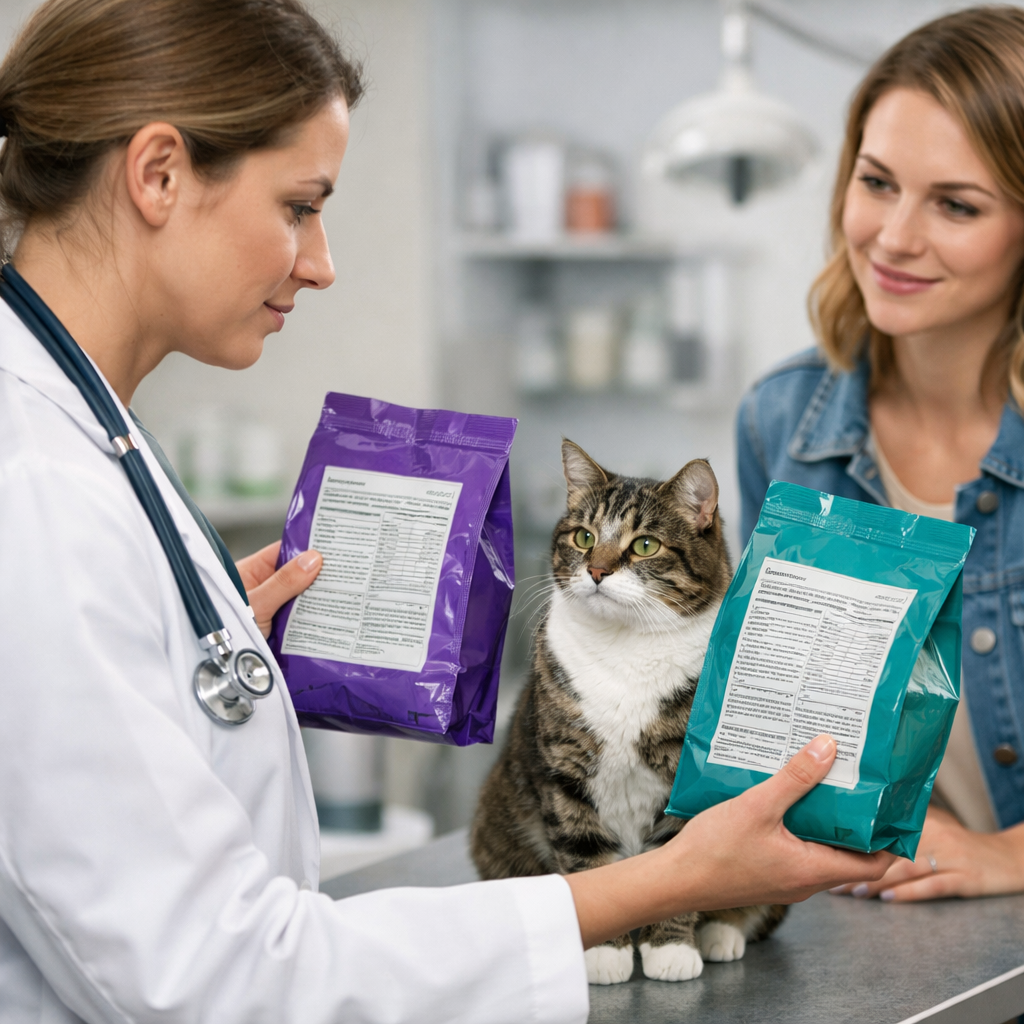
Your veterinarian knows your cat’s individual nutritional needs and should guide brand and formulation choices based on life stage, activity level, body condition, and medical history. A clinical nutrition plan may differ for kittens, healthy adults, seniors, or cats with conditions such as kidney disease, urinary crystals, diabetes, or obesity. As a result, what counts as vet-recommended cat food for one cat may be inappropriate for another, even within the same specialty cat food brands portfolio. Veterinarians frequently point owners toward research-driven companies because their formulas are vetted and easier to match to clinical goals, as noted in Sploot Vets’ guide to vet-recommended brands (Hill’s, Royal Canin, Purina, Iams) and what to look for in a label and brand process Sploot Vets’ guide.
Therapeutic/prescription diet: a veterinary-directed formulation designed to manage a specific medical condition; it may require a prescription and monitoring for a defined period.
Confirm AAFCO nutritional adequacy and life stage fit
Before you buy, find the AAFCO nutritional adequacy statement on the package. It should say the food is complete and balanced for growth (kittens), adult maintenance, all life stages, or gestation/lactation. AAFCO standards define required nutrients and feeding directions in the U.S., and the FDA works with AAFCO on labeling and ingredient definitions; that’s why the AAFCO statement matters for day-to-day safety and adequacy, not just marketing, according to guidance from the Cornell Feline Health Center. Most kittens transition to adult food around 12 months, but timing can vary—confirm with your vet, especially for large-breed or medically complex cats.
Validate evidence, expertise, and transparency behind the brand
Not all “premium” labels signal better nutrition. Prioritize brands that conduct feeding trials, employ board-certified veterinary nutritionists, publish nutrient profiles, and make it easy to contact them with formulation questions. Veterinarians often recommend large research-focused brands because they publish data and have clinical track records, and price alone is not a quality indicator Mountain View Veterinary Hospital’s diet selection advice.
Brand credibility checklist:
- Feeding trials demonstrate the whole diet performs in real cats, not just on paper.
- In-house or contracted board-certified veterinary nutritionists oversee formulation and QA.
- Published typical nutrient analyses and clear AAFCO statements confirm adequacy.
- Transparent customer support answers formulation and sourcing questions.
| Credibility factor | What good looks like | Why it matters |
|---|---|---|
| Has feeding trials? | AAFCO or colony-based trials with published summaries | Proves palatability, digestibility, and real-world outcomes |
| Employs board-certified nutritionists? | DACVN/ECVCN involvement listed | Ensures evidence-based formulation |
| Publishes nutrient profiles? | Typical (not just minimum/maximum) nutrient analyses | Lets vets match diets to medical needs |
| Clear contact for questions? | Phone/email and lot codes traceable | Transparency and quality control |
Identify whether a prescription diet is required and how to use it
Prescription therapeutic diets are used only when a veterinarian diagnoses a condition that benefits from targeted nutrition (e.g., renal diet for CKD, urinary care diet for crystals, hypoallergenic cat food for suspected food allergies) and often require a prescription. Some are fed short-term, others long-term—overfeeding or using them without medical need can cause problems. Follow your vet’s portion, duration, and monitoring instructions Ponderosa Vet Clinic on prescription diets.
Prescription diet: a specialized formulation intended to manage a diagnosed medical issue; dispensed under veterinary guidance with defined indications and monitoring.
Choose the right format for hydration, texture, and dental needs
Wet food typically contains about 70–80% moisture, which supports hydration in cats that don’t drink much and can help urinary and kidney health Cat Care Society feeding guide. Dry kibble usually contains less than 5–10% moisture and is extruded, often with higher carbohydrates and fiber, and it stores and measures easily. Choose the texture and format that best fits hydration needs, dental status, and your cat’s preferences. For picky eaters, palatability matters—selective eating can lead to inadequate calorie intake—so you may need to trial different textures or mixed feeding to meet goals.
Secondary considerations:
- Oral comfort: senior cats or those with dental disease may prefer soft pâté or minced textures.
- Calories: dry foods can be more energy-dense per cup; wet foods can help portion control by volume.
- Convenience: dry stores longer; wet improves water intake and may reduce urinary issues.
Plan a controlled transition and portion strategy
Transition gradually over 7–10 days: start with 25% new/75% current food for 2–3 days, then 50/50, then 75/25, watching for GI upset; adjust more slowly for sensitive cats. For finicky cats, try changing temperature, texture, or adding a vet-approved topper first. Portion control matters: free-feeding encourages overeating, while meal feeding helps prevent obesity; a typical adult cat needs roughly 180–220 calories per day, adjusted for activity and body condition. A simple heuristic: if the volume in the bowl routinely exceeds the size of your cat’s head, you may be overfeeding, as noted in NBC News’ veterinarian-reviewed buyer’s guide NBC News’ veterinarian-reviewed buyer’s guide.
Monitor clinical outcomes and follow up with your vet
Over the next 30–90 days, track weight, body condition score, coat and skin quality, stool consistency, litterbox behavior (urination frequency/straining), appetite, energy, and any clinical signs. Share notes and photos with your vet at rechecks. The American Animal Hospital Association emphasizes team-based systems to consistently gather nutrition information and guide recommendations—and reminds us therapeutic diets are underused, with only about 7% of eligible pets on them in a 2003 study AAHA team-based nutrition resource. Compliance and follow-up drive outcomes.
Ingredient and label checkpoints pet guardians should verify
Label Checkpoints:
- AAFCO statement confirming complete and balanced for your cat’s life stage
- Life stage and species match; feeding directions with calories per cup/can
- Ingredient panel clarity and contact information for the manufacturer
- Guaranteed analysis and typical nutrient profile availability
- Lot code and best-by date; processing type (kibble, canned, freeze-dried, etc.)
- Functional ingredients (e.g., omega-3s, prebiotics) with a stated purpose
Ingredient panel: the ordered list of inputs by pre-processed weight; fresh meats can appear higher due to water content but move down the list after cooking. Pet Food Ingredient Guide can help you locate and interpret each of these items on the label.
| What to check | Why it matters | Where to find on label |
|---|---|---|
| AAFCO “complete and balanced” | Confirms nutrient adequacy for life stage | Near feeding directions or analysis |
| Calorie content (kcal/cup/can) | Enables accurate portioning | Feeding directions box |
| First 3–5 ingredients | Indicates major contributors (aim for animal proteins) | Ingredient list |
| Manufacturer contact + lot code | Traceability and quality questions | Back panel or bottom stamp |
| Feeding directions | Starting portions to avoid over/underfeeding | Near AAFCO statement |
Protein sources and order of ingredients
Prioritize high-quality animal proteins among the first ingredients to support essential amino acid needs. Remember, ingredient lists are ordered by pre-processed weight; whole chicken may appear first because of water but can shift down the list after moisture loss during cooking. Be mindful of ingredient splitting (e.g., multiple rice or pea fractions) that can make carbohydrates appear lower in the order without reducing their total contribution.
Guaranteed analysis and dry matter comparisons
Use the guaranteed analysis to compare protein, fat, fiber, and moisture—and convert to a dry matter basis to compare wet vs dry fairly. Dry matter basis recalculates nutrients after removing water.
- Step 1: 100 – moisture% = dry matter%
- Step 2: (nutrient% ÷ dry matter%) × 100 = nutrient% on a dry matter basis
Additives, preservatives, and functional fibers
Functional fibers like cellulose or beet pulp support stool quality and hairball control; prebiotics help feed beneficial gut bacteria. Omega-3s (EPA/DHA) can support skin, coat, and joint health. Note preservatives and additives, then judge them in the context of overall formulation quality, feeding trial evidence, and the presence of a valid AAFCO complete and balanced statement.
Misleading or unregulated marketing terms
Terms like “premium,” “gourmet,” or even “human-grade” are not reliably defined in pet food regulations and don’t guarantee quality or completeness; focus on the AAFCO “complete and balanced” claim and evidence behind the brand Kansas State University pet food selection tips.
Processing methods and what they mean for nutrition
Processing changes moisture, stability, safety, and how nutrients are delivered. Match the method to your cat’s hydration needs, palatability preferences, and your household’s safety and storage realities.
| Format | How it’s made | Moisture% (typical) | Carb/fiber tendency | Safety notes | Storage | Best for |
|---|---|---|---|---|---|---|
| Kibble (extruded) | Cooked under heat/pressure, dried into pellets | 5–10 | Often higher carbs/fiber | Low moisture; handle like dry goods | Shelf-stable in sealed container | Convenience, measuring, toppers |
| Canned (retorted) | Sealed cans/pouches sterilized by heat | 70–80 | Typically lower carbs | Excellent shelf stability when unopened | Room temp unopened; refrigerate | Hydration, urinary support, picky eaters |
| Freeze-dried | Frozen then moisture removed by sublimation | 2–5 (dry form) | Variable | Rehydrate; watch pathogen controls | Sealed dry; rehydrated promptly | High palatability with careful handling |
| Raw | Minimally processed raw meats/bones/organs | 60–75 | Very low carbs | Higher pathogen risk without validated controls | Cold-chain required | Only with veterinary guidance |
| Gently cooked | Lightly cooked, often refrigerated/frozen | 60–75 | Variable | Needs rigorous QA and complete formulations | Refrigerated/frozen | Texture-sensitive cats; owner-preferred |
Kibble, canned, and moisture considerations
Wet foods deliver about 70–80% moisture and can support hydration in cats that drink little. Dry kibble is typically low-moisture, extruded, and often higher in carbohydrates and fiber; it stores well and is easy to portion. Mixed feeding can balance hydration, palatability, and calorie control for many cats Texas A&M Pet Talk on selecting cat food.
Freeze-dried, raw, and gently cooked safety factors
Freeze-dried and raw diets are minimally processed and can pose pathogen risks if not validated; gently cooked diets aim to improve safety while preserving texture. Discuss these options with your veterinarian, and prioritize brands with clear microbiological controls and oversight by veterinary nutritionists to ensure complete and balanced formulations and safe handling practices.
When to seek a board-certified veterinary nutritionist
Ask for a referral to a board-certified veterinary nutritionist for complex cases (chronic kidney disease, IBD, diabetes, food allergies), multi-morbidity, home-prepared diets, or repeated failures on commercial options. A board-certified veterinary nutritionist is a veterinarian with advanced training and certification in animal nutrition who designs and evaluates diets and often oversees clinical feeding plans and monitoring.
How Pet Food Ingredient Guide can help your decision
Use Pet Food Ingredient Guide as your neutral, evidence-informed companion for label literacy and side-by-side comparisons. Pair our tools with your veterinarian’s recommendations and a monitoring plan to make confident, data-driven choices for accessible premium cat food Pet Food Ingredient Guide.
Ingredient dictionary and label claim explainers
Our ingredient dictionary translates proteins, fats, fibers, and additives into plain language with sourcing notes and typical functions. Use our claim explainers to decode “complete and balanced,” “human-grade,” and “natural,” and to confirm AAFCO compliance and feeding directions.
Processing and sourcing overviews
Review our deep-dives on kibble, canned, freeze-dried, and gently cooked diets to understand moisture, nutrient retention, and safety trade-offs. Check our sourcing overviews to evaluate supply chain transparency and quality control practices.
Feeding and transition basics
Leverage our step-by-step transition guides, portion calculators, and meal-feeding tips to reduce GI upset and avoid overfeeding. Keep tracking outcomes and schedule 30–90 day follow-ups with your veterinary team.
Frequently asked questions
Do I really need a prescription diet or can I use an over-the-counter alternative?
Use a prescription diet only when your veterinarian diagnoses a condition that requires it. For OTC alternatives, compare labels and nutrients with Pet Food Ingredient Guide.
What matters more, ingredients or feeding trials and nutritionist oversight?
Both matter, but feeding trials and nutritionist oversight show the whole diet works as intended; Pet Food Ingredient Guide helps you find these details quickly.
Is wet or dry better for most cats with urinary or weight issues?
Wet foods support hydration for urinary health, while measured meal feeding is key for weight control. Your vet may recommend mixing formats to meet both goals; Pet Food Ingredient Guide can help compare moisture and calories across options.
How long should I trial a new specialty food before deciding it works?
Evaluate for 30–90 days unless your vet advises sooner. Track outcomes and adjust with your veterinarian; Pet Food Ingredient Guide can help you stay organized.
Are terms like natural or holistic meaningful on cat food labels?
These marketing terms aren’t standardized and don’t guarantee quality. Look for the AAFCO “complete and balanced” statement and evidence of research and nutritionist oversight, and use Pet Food Ingredient Guide to verify definitions.