How to Choose the Best Gravy Cat Food for Hydration
How to Choose the Best Gravy Cat Food for Hydration
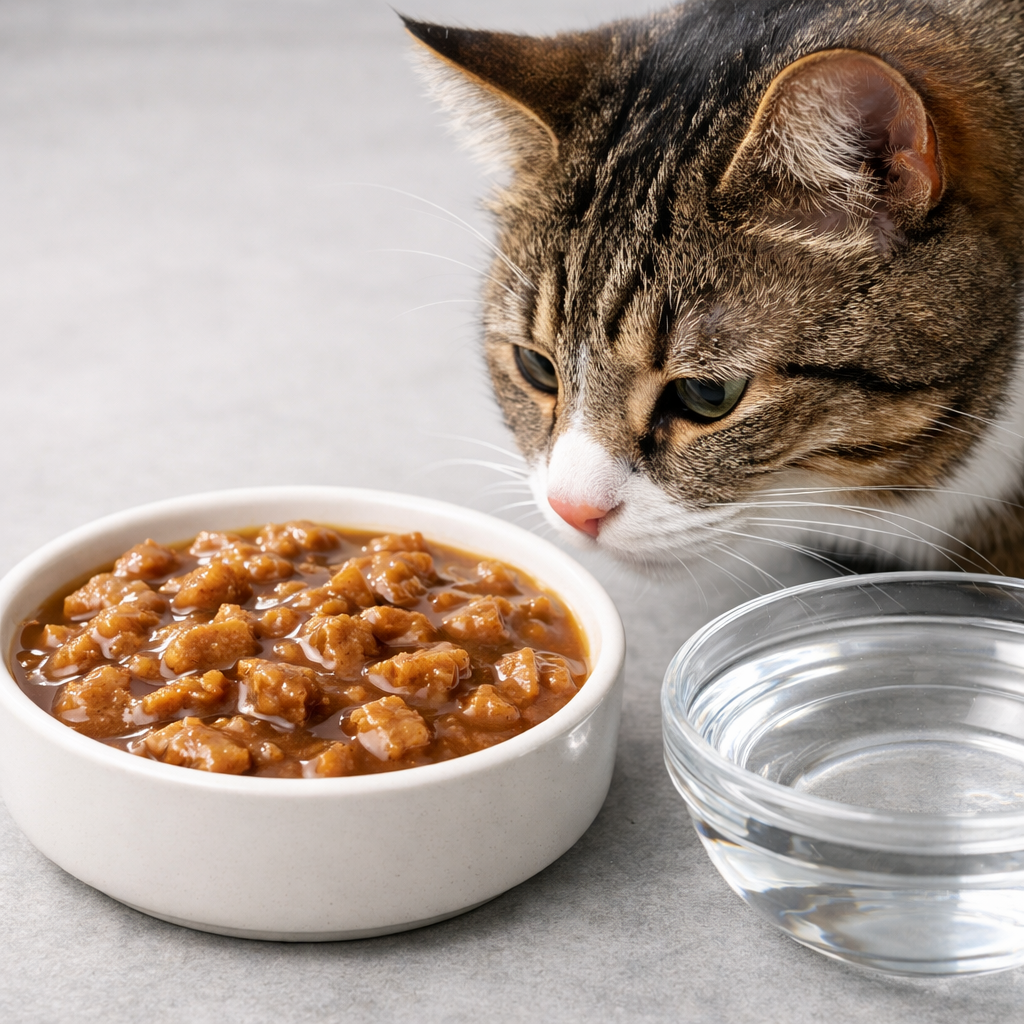
“Gravy cat food refers to wet foods featuring chunks, shreds, or minced meat served in a savory sauce. These formats typically deliver 70–80% moisture—far higher than dry kibble—so they boost water intake per meal and support hydration. They’re sold in cans or pouches and vary by texture, thickness, and protein base” (reported ranges align with wet-food norms). See guidance on wet-food hydration from AAHA’s feline wellbeing overview.
“Complete and balanced means the food meets established nutrient profiles for a life stage and does not require additional supplementation to be nutritionally adequate. Confirm this by locating the AAFCO nutritional adequacy statement on the label; it specifies the intended life stage and feeding purpose.”
Looking for the best gravy cat food for hydration? Start with high-moisture, complete recipes that match your cat’s life stage, texture preferences, and health needs. Then confirm label adequacy, prioritize animal proteins, and trial textures and serving temperatures to ensure consistent intake. Pet Food Ingredient Guide’s ingredient profiles and label explainers make these checks faster.
Why hydration matters for cats
Cats are desert-adapted and often have a low thirst drive. Moisture-rich diets supply water directly in the meal, which helps maintain urine dilution and supports urinary tract health. AAHA emphasizes that wet foods, at roughly 70–80% moisture, meaningfully increase total water intake and can protect urinary health.
Wet food contains about 75–80% water, while dry food is typically under 5% moisture, so each canned or pouched meal delivers far more water than kibble alone according to veterinary nutrition guidance from Texas A&M.
Research in cats links higher water intake (about 42.0–52.1 mL per kg body weight daily) with lower risk of feline lower urinary tract disease (FLUTD). Cats with calcium oxalate stones have been observed to consume drier diets (~21% moisture) than healthy cats (~32%). These data point toward hydration as a practical, diet-based risk reducer.
FLUTD is an umbrella term for conditions causing discomfort or obstruction in the lower urinary tract—such as inflammation, crystals, or stones—often showing up as straining, frequent small urinations, blood in urine, or accidents. Keeping urine dilute with high-moisture diets and adequate water intake can help at-risk cats.
Watch for signs of low hydration: tacky or dry gums, lethargy, smaller and darker litter clumps, or strong-smelling, concentrated urine. If your cat strains, vocalizes, or you see blood in the urine, contact your veterinarian immediately.
Gravy cat food formats and moisture targets
Aim for 70–81% moisture in complete wet foods. Many gravy/jelly pouches and canned recipes list ~78–81% moisture as-fed; these levels reliably increase water intake (see manufacturer guidance that illustrates typical moisture ranges). Pet Food Ingredient Guide summarizes typical moisture targets by texture so you can scan labels efficiently.
Cans vs pouches both can deliver excellent hydration. Pouches are convenient and often portion-friendly; cans may offer broader texture variety. Choose what your cat consistently eats.
Jelly vs gravy is partly seasonal and preference-driven: jelly can feel lighter and “cooler,” while gravy may be richer and heartier—some cats flip preferences with the weather.
Texture comparison and when to choose:
| Texture/Format | Typical Moisture % | Pros | Cons | When to Choose |
|---|---|---|---|---|
| Pâté | 75–80 | Uniform texture; easy to portion | Some cats reject dense texture | For cats who like smooth, cohesive meals |
| Minced/Meatloaf | 75–81 | Small bite-size pieces; mixable | Can dry at edges if left unserved | Texture compromise between pâté and shreds |
| Flaked | 75–80 | Delicate strands; easy to lap | Can be messy; pieces may separate | For cats who lick more than chew |
| Shreds/Chunks in Gravy | 78–81 | High sauce content; highly aromatic | Some cats lick gravy and leave chunks | For sauce-lovers; try smaller pieces or minced |
Step 1 Assess your cat’s needs
Start with a quick health snapshot:
- Life stage (kitten, adult, senior) and ideal body condition
- Activity level and calorie needs
- History of urinary issues, constipation, vomiting, or hairballs
- Stool quality and frequency
- Current water intake and litter box clump size/number
For hydration checks, use a gentle skin-tent test, monitor gum moisture, and track litter clumps. If you suspect kidney or urinary issues, discuss options with your veterinarian; higher total water intake is associated with lower FLUTD risk in the literature cited above.
Texture sensitivity is common—many cats prefer chunks-in-gravy over pâté, and vice versa—so plan to experiment with formats and piece sizes before buying by the case. Practical experience confirms strong texture preferences can determine success.
Step 2 Read the label for complete and balanced nutrition
Scan for the AAFCO nutritional adequacy statement to confirm the food is complete and balanced for your cat’s life stage (e.g., adult maintenance or all life stages). Marketing claims like “premium,” “gourmet,” or “human-grade” are not regulated guarantees of nutritional adequacy; the adequacy statement is.
Note calories per can/pouch and follow feeding directions; indoor cats depend entirely on owners to match intake to needs.
When comparing formulas, ask brands for typical analysis and mineral targets on both as-fed and dry matter bases. Dry matter protein and phosphorus are especially useful for more informed comparisons. Pet Food Ingredient Guide explains how to read the AAFCO statement and compare nutrients on a dry matter basis.
Step 3 Prioritize ingredient quality
Choose recipes that start with animal protein and clearly named meat sources. Balanced mineral levels—especially appropriate phosphorus and calcium—support urinary health and help maintain dilute urine when combined with adequate moisture.
Sensible sodium levels and the avoidance of unnecessary colors or artificial preservatives are reasonable quality cues in gravy foods. A complete and balanced formulation shouldn’t rely on “fillers” to create sauce texture.
Named meat meals vs fresh meats: Named meat meals (e.g., chicken meal) are rendered, moisture-reduced proteins from a specific species, so they’re more protein-dense by weight than fresh meats. Fresh meats can appear first on labels due to water content; once moisture is removed, a quality named meal can provide similar or higher protein density.
Protein sources and meals
Prioritize named, species-specific proteins (chicken, turkey, salmon) over vague terms (“meat,” “poultry”). When possible, compare protein quality on a dry matter basis, and request amino acid profiles or typical analysis to gauge completeness and digestibility.
Meat meal is a rendered, moisture-reduced ingredient from a named species. Because much of the water is removed, it’s more concentrated in protein than the same fresh meat on a label-by-weight basis.
Protein acceptance often tracks with texture: a cat that ignores pâté may devour shreds-in-gravy. Buy singles first, vary textures, and observe what’s eaten vs. left behind.
Grains and grain free context
Grains can provide digestible energy and useful fiber; grain-free does not automatically equal higher quality. Focus on adequate animal protein, appropriate minerals, and total moisture—key levers for urinary health.
If you suspect food sensitivities, work with your veterinarian rather than relying on marketing terms. Grain-free typically excludes corn, wheat, rice, and barley and often substitutes legumes or tubers; evaluate the full nutrient profile, not just the “free-from” claim.
Additives and functional ingredients
Functional ingredients—such as probiotics, omega-3s (EPA/DHA), and prebiotic fibers—may support stool quality, skin, and coat. Look for simple, evidence-based claims, and where possible, ask brands for inclusion levels and named strains.
If you need a hydration boost, nutritive water additions (like low-sodium broths) used as toppers can increase total water intake and have been shown to lower urine specific gravity (USG) in healthy cats within research parameters. For ingredient clarity on common thickeners and broths in gravies, see Pet Food Ingredient Guide’s ingredient profiles.
Step 4 Pick the right texture and gravy style
Common wet textures include pâté, minced, flaked, shreds, and chunks-in-gravy. Preference is strong and can determine success, so plan a brief home trial across styles.
Gravy vs jelly: gravy tends to feel richer and heartier; jelly can feel lighter—some cats shift preferences with the seasons.
Mini test plan:
- Buy singles in 2–3 textures and 1–2 protein bases.
- Test room temperature vs lightly warmed (never hot).
- Offer small portions to limit waste; refrigerate and cover leftovers promptly.
- Note what’s fully consumed vs licked and left behind.
Step 5 Evaluate brand transparency and safety
Verify the AAFCO adequacy statement and ask if any recipes have been validated in feeding trials, which can demonstrate digestibility and acceptance beyond formulation.
Request typical analysis, phosphorus targets, ash, and sodium levels, plus information on sourcing and manufacturing quality controls. Transparent, prompt responses are a positive sign. Pet Food Ingredient Guide offers plain-language definitions so you can interpret phosphorus, ash, and sodium values with confidence.
Practice safe handling: portion appropriately, refrigerate opened containers, and discard uneaten food before it sits out too long. Hydration-focused resources from pet nutrition brands reinforce prompt refrigeration and cleanliness to reduce bacterial growth risk.
AAFCO statements and feeding trials
Quote the full AAFCO adequacy line from the label and confirm it matches your cat’s life stage and feeding purpose (e.g., “complete and balanced for adult maintenance”). Feeding trials (AAFCO protocols) can provide an extra layer of evidence on palatability and nutrient bioavailability.
Keep notes or a small comparison table of adequacy statements when evaluating multiple foods.
Sourcing and processing
Rendering is a heat process that separates fat and reduces moisture in animal tissues to create stable meals.
Retort canning cooks sealed cans to sterilize contents for shelf-stable safety and texture consistency.
Pouch processing similarly heat-treats sealed pouches; it often supports delicate textures and convenient single-serve portions.
Ask brands about ingredient country of origin, supplier standards, and whether they own plants or use co-packers.
Storage and handling
- Serve small portions; limit counter time (aim to refrigerate leftovers within 1–2 hours).
- Refrigerate opened cans/pouches covered; use within 2–3 days for best quality.
- Reheat gently to lukewarm (not hot) to revive aroma; never microwave sealed cans or pouches.
Step 6 Trial, transition, and monitor
Purchase single cans/pouches first and transition over 7–10 days to minimize GI upset, especially when changing both format and protein base.
Track what matters: intake, stool quality and frequency, urine clump size/number, body weight, and behavior. Studies report that additive water can reduce USG; note that USG below about 1.019 wasn’t reported in the cited research, so persistently high USG or clinical signs warrant veterinary input.
Gradual transition plan
- Days 1–3: 75% current food / 25% new
- Days 4–6: 50% / 50%
- Days 7–9: 25% / 75%
- Day 10+: 100% new
Slow down if stools soften or appetite dips. Texture tweaks, gentle warming, or a small topper can help acceptance.
What to track for hydration and urinary health
- Total daily water plus wet food intake
- Litter clump number and size; any straining or blood
- Stool consistency and frequency
- Weekly body weight
- Optional: at-home USG via your veterinarian’s guidance; contact your vet if urine looks very concentrated or if there’s straining/hematuria
Mixing wet and dry the right way
Mixing wet and dry is fine; just mind calories, as dry is more calorie-dense. Some daily canned plus some dry can preserve texture flexibility while prioritizing hydration with gravy foods.
A practical split is 70% of calories from wet and 30% from dry. To calculate: use kcal per can/pouch and kcal per cup from labels, aim for your cat’s daily target calories, and apportion by percentage.
Special considerations for urinary and kidney health
Hydration is central for cats at risk of FLUTD or urolithiasis; high-moisture diets (wet, semi-moist, or fresh) can help maintain dilute urine within a comprehensive plan guided by your veterinarian.
For chronic kidney disease or other medical conditions, follow your vet’s prescription diet recommendations; do not replace therapeutic diets with over-the-counter gravy foods.
Adjunct strategies like wide bowls, multiple water stations, and cat fountains can raise total intake—many cats prefer moving water, and vet tips emphasize variety and convenience to encourage drinking. When evaluating non-prescription options, Pet Food Ingredient Guide can help you interpret ingredient lists and moisture targets.
Pet Food Ingredient Guide
Our mission is to decode labels and ingredients so you can choose with confidence. Explore our ingredient profiles, side-by-side comparisons, and plain-language explainers on terms like AAFCO, complete and balanced, meat meals, carrageenan, and phosphates—all connected to how gravy textures, palatability, and formulation quality affect real-world feeding. Visit Pet Food Ingredient Guide to learn more.
Frequently asked questions
Is gravy cat food better for hydration than dry food
Yes. Wet gravy foods typically contain 70–80% moisture while dry kibble is under 5%, so gravy foods deliver substantially more water per meal and support overall hydration; Pet Food Ingredient Guide can help you verify moisture content on labels.
What moisture percentage should I look for in gravy cat food
Aim for 70–80% moisture. Many cans and pouches list around 75–81%, which helps increase total water intake; Pet Food Ingredient Guide shows where to find this on the label.
How can I compare protein quality across gravy foods
Look for named animal proteins as primary ingredients and compare protein on a dry matter basis using Pet Food Ingredient Guide’s how-to. Ask brands for typical analysis and amino acid profiles when available.
My cat licks the gravy and leaves the chunks what should I do
Try minced or shredded textures, mash the chunks with a fork, slightly warm the food, or use a small topper. See Pet Food Ingredient Guide for texture tips.
How long can opened gravy cat food be stored safely
Serve small portions and refrigerate leftovers promptly. Discard food left at room temperature for long periods; Pet Food Ingredient Guide outlines safe handling basics.