How to Find Premium Cat Food Brands at UK Supermarkets
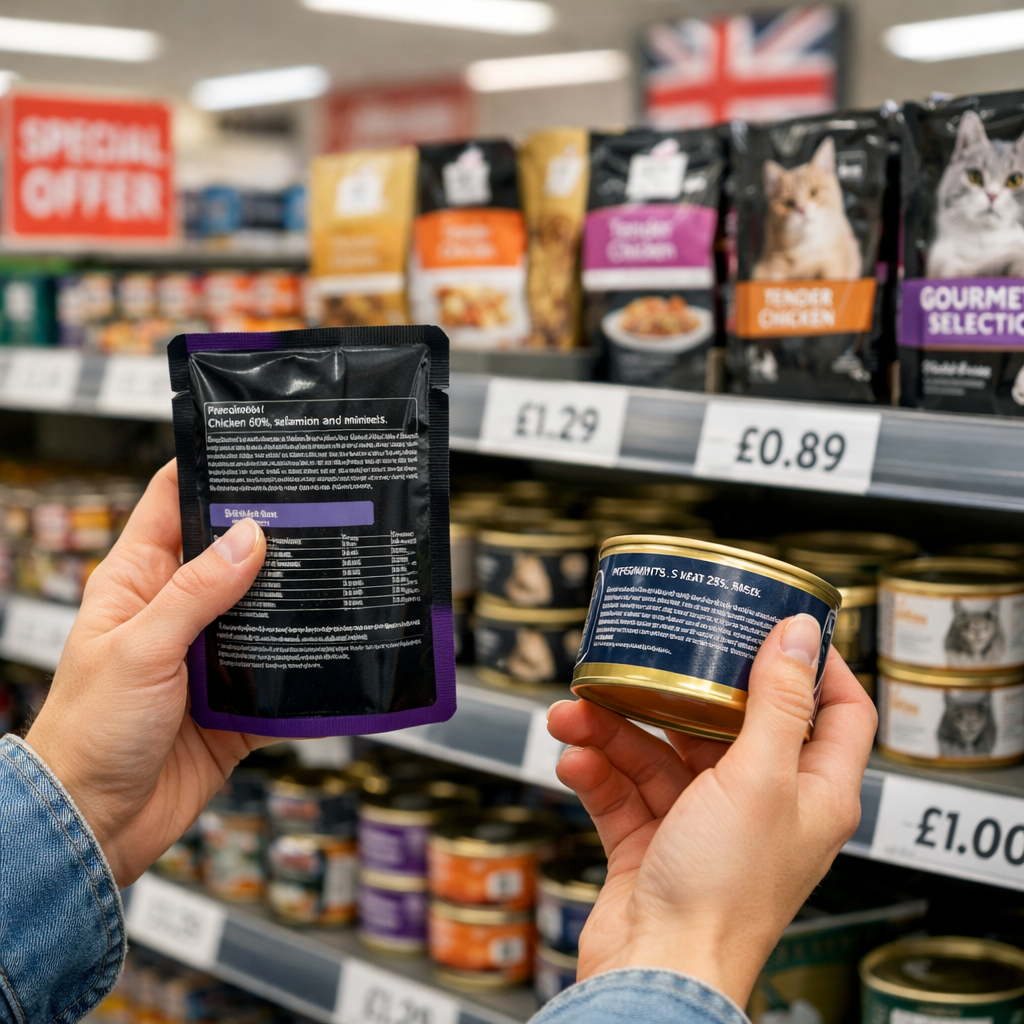
How to Find Premium Cat Food Brands at UK Supermarkets
Premium cat food is findable in UK supermarkets—you just need to shop with an ingredient-first lens. Start by matching food to your cat’s needs, then pick wet-first, complete recipes that list a named animal protein first, avoid vague “derivatives,” and keep labels clean and clear. Many major grocers now carry higher‑end lines alongside mainstream brands, and online retailers reveal what “premium” looks like for comparison. This guide shows exactly how to scan labels in-aisle, the moisture and protein benchmarks to use, and where to look for carrageenan‑free, species‑appropriate options that support urinary health, sensitive stomachs, and overall well‑being. Pet Food Ingredient Guide uses this ingredient-first approach so you can judge supermarket options confidently.
Start with your cat’s needs
“Premium” is only premium if it suits your cat’s life stage, health status, and preferences. Define needs first so you’re not led by marketing.
- Life stage: kitten, adult, senior (species-appropriate energy and nutrients)
- Weight/body condition: target healthy BCS; adjust calories accordingly
- Urinary history: prioritize moisture to support urinary health
- Sensitivities: look for hypoallergenic cat food or simple, single-protein recipes for a sensitive stomach
- Dental status: choose textures your cat can comfortably chew (pâté vs chunks)
- Feeding style: pouch, tray, tin, or dry; decide wet-first, dry topper, or mixed feeding
Prioritise wet food and moisture
Cats are obligate carnivores with a naturally low thirst drive; moisture supports hydration and urinary tract health. Moisture in cat food refers to the water content of the diet. Wet foods often exceed 70% moisture, helping support hydration and urinary tract health, especially for cats that under-drink. Dry foods average 8–12% moisture, so mixed feeding can bridge the gap. Online, premium ranges are often wet-led, with broad selections (e.g., Royal Canin, Applaws, Lily’s Kitchen) at retailers like Zooplus, which you can use as a benchmark for variety and formats (Zooplus wet cat food range). Use Pet Food Ingredient Guide’s ingredient-first benchmarks as you compare ranges online.
Wet vs dry at a glance:
| Feature | Wet food | Dry food |
|---|---|---|
| Typical moisture | 70–82% | 8–12% |
| Protein density (as-fed vs dry matter) | Lower as-fed; comparable or higher on a dry matter basis | Higher as-fed; evaluate on a dry matter basis |
| Palatability | Often higher (aroma/texture) | Convenient; some cats prefer crunch |
| Cost per 100g as-fed | Typically higher | Typically lower |
| Storage | Refrigerate opened packs; shorter shelf life once opened | Easy storage; long shelf life once opened |
Read labels for named animal proteins
On true premium recipes, a named animal protein leads the ingredient list (chicken, turkey, salmon), with clear percentages and specific cuts when possible. Avoid vague categories like “meat,” “fish,” or “animal derivatives.” On UK shelves, you’ll see a spread from mainstream to higher‑end lines—Tesco, for example, stocks labels such as Lily’s Kitchen and Applaws alongside Nood, Felix, Whiskas, Sheba, and Purina, so use the label to separate “named meat” and “high meat content” options from generic blends (quality cat food ingredients guide). Pet Food Ingredient Guide prioritises named meats and clear percentages for transparency.
Avoid vague derivatives and filler-heavy recipes
“Meat and animal derivatives” is a catch‑all label that can include mixed or unspecified animal parts and protein sources. It lacks transparency and may vary between batches, making it harder to assess quality and consistency for sensitive cats. Prefer recipes that don’t lead with derivatives or cereal fillers, keeping animal protein first and umbrella terms out of the top three ingredients (cat food guide insights).
Quick screen:
- Named animal protein first
- Cereal content not dominating
- No vague umbrella terms in the top three ingredients
Verify complete and balanced nutrition
“Complete cat food meets all essential nutrient requirements (per FEDIAF profiles) for daily feeding without additional supplements. Complementary foods are intended as toppers or treats and must be paired with a complete diet to avoid deficiencies.” Always check “complete” on the pack and confirm life-stage fit (kitten, adult, senior). Taurine is essential for cats and included in commercial complete foods—verify it on the label (see the quality cat food ingredients guide).
Check taurine and supportive add-ons
Taurine is mandatory in complete diets—make sure it’s present. Evidence‑informed extras like prebiotics/probiotics for gut health and antioxidants (e.g., cranberries, blueberries) can be beneficial when part of a balanced formula; Nood, for example, uses dried yeast as a functional digestive ingredient (as noted in the ingredients guide). Treat add-ons as supportive, not a substitute for solid fundamentals.
Compare protein and fat on a dry matter basis
Dry matter basis expresses nutrient percentages after removing water, letting you compare wet and dry fairly.
How to calculate:
- Note moisture % on the label.
- Dry matter % = 100 – moisture.
- Protein (DMB) = protein as-fed ÷ dry matter × 100.
- Fat (DMB) = fat as-fed ÷ dry matter × 100.
- Compare across foods on DMB, not as-fed. Normal ash (mineral) levels generally range around 5–8% (context from the cat food guide).
Look for carrageenan-free options
Carrageenan is a common gelling agent; many ingredient-first feeders prefer to avoid it. Check the “technological additives/gelling agents” line and favour carrageenan‑free recipes. Alternatives include agar-agar, cassia gum, locust bean gum, guar gum, and xanthan gum.
Carrageenan-free cues to scan in-aisle:
- Pâté or mousse textures that use agar-agar or plant gums (not carrageenan)
- Shredded “in broth” tins/pouches (often fewer thickeners; verify “complementary” vs “complete”)
- Brand product pages and retailer filters; large ranges like Zooplus wet listings help you pre‑screen by ingredients and texture
Validate sourcing, certifications, and label clarity
Prefer transparent sourcing and plain-language labels. For fish recipes, look for MSC/ASC marks indicating responsible seafood sourcing; many UK pet foods also use by‑products from the human food chain, which reduces waste when handled appropriately. Where possible, choose recyclable/compostable packaging—small switches add up across frequent purchases (sustainability context from the cat food guide).
Balance quality with budget and availability
Don’t assume price equals quality. Some own‑brand lines can outperform expectations on ingredients; discount grocers have occasionally beaten pricier brands on label clarity and meat content. Specialist brands may have fewer in‑store listings; Pets at Home and independents carry wider premium ranges like Orijen, Acana, and Applaws, which can guide what “high meat, clean label” looks like even if you buy from supermarkets (availability insights collated in the ingredients guide). Use trial/multipacks to manage cost and reduce waste while testing acceptance.
Test with small packs and transition gradually
Buy small pouches or multipacks first. Transition over 7–10 days, gradually increasing the new food. Track stool quality, appetite, coat condition, and litter habits; slow down or revert if issues arise. This improves palatability success and limits waste during the food transition.
Where to shop in the UK
Big supermarkets and what to expect in aisle
Expect a mix of mainstream brands plus select higher‑end labels. For example, Tesco carries Lily’s Kitchen, Applaws, and Nood alongside Felix, Whiskas, Sheba, and Purina—use the label to confirm a named protein first and “complete” status (brand range examples in the ingredients guide). Compare your aisle finds to the breadth of Zooplus wet options to gauge textures and protein variety. Use shelf‑edge details and product pages to verify protein sources and avoid vague derivatives. Pet Food Ingredient Guide helps you stay focused on named proteins, clear percentages, and complete status in-aisle.
When to use pet specialists and online retailers
Step beyond supermarkets if you need novel proteins, specialty textures (e.g., pâté/mousse for picky cats), or therapeutic lines. Pets at Home and independents stock wider premium ranges (e.g., Orijen, Acana, Applaws). Online marketplaces and community threads make it easier to source niche formats; many owners report pâté‑style foods like Weruva are favoured by picky cats, though availability may be online‑only (UK cat food comparison discussion; see also best wet cat food UK overview).
Short list: go specialist for
- Wider protein variety and novel proteins
- Specialty textures (smooth pâté, shredded-in-broth)
- Limited-ingredient or targeted formulations
Considering fresh or subscription options
Direct‑to‑consumer services (e.g., KatKin, Untamed; raw/fresh suppliers like Bella & Duke) deliver human‑grade or gently cooked meals with trial boxes and tailored plans—typically premium‑priced with strong palatability and convenience claims (UK cat food guide overview). Note trade‑offs: higher cost and cold-chain packaging; refrigerated transport and single-serve pouches can increase emissions. Transport accounts for a modest share of cat food manufacturing emissions overall (context from the cat food guide).
When to consider veterinary or specialist diets
Use veterinary or prescription diets for diagnosed conditions (urinary crystals, renal disease, GI issues, food allergies). Hill’s and Royal Canin are commonly used for targeted nutrition; buy via your vet, pet pharmacies, or authorised retailers. Always consult your vet before starting or stopping a prescription diet (owner experience thread).
Practical shopping tips and tools
- Ask staff about stock rotation; use loyalty apps and filters to check real‑time availability and ingredients.
- Compare protein and fat on a dry matter basis; confirm “complete” status and look for MSC/ASC where seafood is used.
- Use independent reviews and survey data to gauge consistency and acceptance; Which? reports large sample sizes for brand sentiment (e.g., Felix n=699; Whiskas n=530; Purina One n=386; Royal Canin n=381), helpful for triangulating quality and palatability (Which? brand survey). Combine survey signals with ingredient-first checks from Pet Food Ingredient Guide.
Frequently asked questions
How do I tell if a supermarket cat food is truly premium?
Look for a named animal protein first, “complete” nutrition, and clear percentages; avoid vague “meat and animal derivatives.” Pet Food Ingredient Guide explains these checks in plain language.
Which is better for most cats, wet or dry food?
Most cats benefit from wet or mixed feeding because higher moisture supports urinary health. Pet Food Ingredient Guide shows how to compare options fairly on a dry matter basis.
Are grain-free supermarket foods better for cats?
Not automatically—focus on named animal proteins, moisture, and overall formulation quality. Pet Food Ingredient Guide recommends choosing grain-free only if it suits your cat’s specific needs.
How can I compare cat foods fairly across brands?
Convert protein and fat to a dry matter basis and check the first three ingredients; confirm “complete” status and taurine. Pet Food Ingredient Guide provides straightforward comparison criteria.
When should I switch to a veterinary diet?
If your cat has diagnosed urinary, renal, GI, or allergy issues, speak to your vet about a prescription diet. Pet Food Ingredient Guide complements veterinary advice with label-reading basics.