How To Safely Get A Dehydrated Cat Drinking With Food
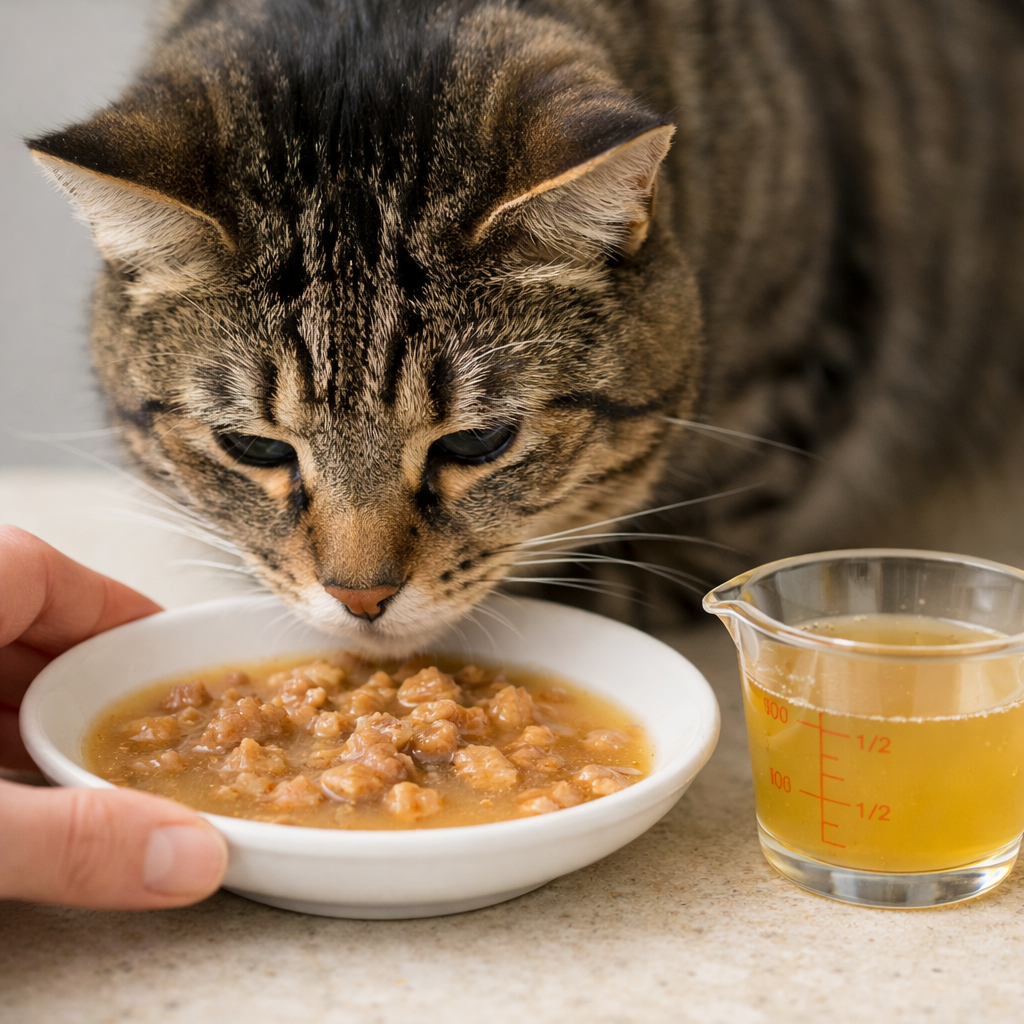
How To Safely Get A Dehydrated Cat Drinking With Food
When a cat won’t drink water, the fastest, safest fix is to move hydration into the bowl they rarely refuse: their food. This guide shows you how to raise moisture with wet meals, add water the right way, and optimize the drinking setup—while making clear when to call your veterinarian. You’ll get step‑by‑step ratios, texture and temperature tips, safe flavor boosters, and a simple intake tracker. If signs look moderate to severe at any point, skip home hacks and seek vet care promptly. As an ingredient-first resource, Pet Food Ingredient Guide focuses on safe, label-clear ways to raise moisture without compromising nutrition.
Start with a quick health check and call your vet if signs are moderate or severe
Dehydration is when a cat’s body loses more fluid than it takes in, lowering circulating blood volume and tissue perfusion. This strains kidneys, thickens saliva, and impairs temperature control. It can progress quickly with illness; severe cases require immediate veterinary assessment and fluid therapy.
Call your veterinarian if you notice any of these cat dehydration signs:
- Lethargy or weakness
- Tacky or dry gums, thick saliva
- Sunken eyes
- Reduced urination or small, hard stools
- Loss of skin elasticity (slow skin “tent” return)
Moderate to severe signs warrant urgent care; veterinary teams can confirm dehydration and safely administer IV or subcutaneous fluids for cats. Older cats and those with kidney disease are especially vulnerable, and dehydration can worsen underlying conditions (discuss escalation thresholds early with your vet) Vet Professionals: drinking tips. For a fuller overview of red flags and home checks, see the Cornell Feline Health Center’s hydration guide Cornell Feline Health Center: hydration guide.
Shift hydration to food first
Bowl drinking alone often isn’t enough. Canned food typically contains about 70–85% moisture, while dry kibble averages ~5–15% (often 8–10%). Simply switching to or increasing wet food is one of the most effective ways to raise daily fluid intake Moisture comparison.
Cats also have a naturally low thirst drive; they evolved to meet most water needs from prey, so still water may not prompt sipping reliably International Cat Care: drinking tips.
A quick start plan:
- Offer moisture-rich cat food 2–3 times daily by splitting your cat’s normal daily ration into smaller wet meals.
- Keep dry food minimal or use it temporarily as a topper during transition.
- Begin mixing in small amounts of water (details below), then nudge moisture up as your cat accepts the change.
Choose moisture-rich, carrageenan-free wet foods with named animal proteins
Pet Food Ingredient Guide favors recipes with high moisture, named meats, and carrageenan-free formulations. Select hydration-friendly cat food that aligns with species-appropriate nutrition:
- Moisture: 70–85% on the label.
- Protein quality: named animal proteins first (chicken thigh, turkey, salmon).
- Texture: pâtés or shredded recipes that mix with water easily.
- Thickeners: carrageenan-free gels/gravies; prefer simple binders like agar-agar or guar.
- Sodium: not excessive; avoid “extra salt” or heavily salted broths.
Label cues to guide quick picks:
| Look for | Avoid |
|---|---|
| Chicken thigh, turkey, rabbit | “Meat by-products,” “animal derivatives” |
| 75% moisture (typical of cans) | Very low moisture (dry-only diets) |
| Agar-agar or guar gum | Carrageenan |
| “No added salt” or modest sodium | “Broth” or gravy high in salt |
Transition gradually to avoid food refusal and stress
Change slowly over 5–10 days: 75/25 old:new, then 50/50, 25/75, and finally 100% new. Introduce one change at a time (new food first, then extra water). Pause if stools soften or appetite dips. Many picky cats accept added water more readily when increases are gradual. Use the daily tracker below to pace changes and spot setbacks early.
Add water to wet food the right way
Mixing water into wet food can safely lift fluids without relying on bowls. Go slow and be consistent so you protect appetite and digestion.
A simple, step‑by‑step:
- Start with the current wet portion.
- Stir in 1–2 teaspoons of lukewarm water per meal; blend to a uniform texture.
- Offer promptly; discard leftovers after 1–2 hours.
- If fully eaten with enthusiasm for 24 hours, increase water by 1 teaspoon per meal.
- Repeat until you reach your target ratio.
- Stop and reassess if intake drops, vomiting/diarrhea appears, or your cat seems nauseous.
Begin around 2:1 wet food to water and move toward 1:1 as tolerated
Mixing wet food with water at roughly 2:1, then nudging toward 1:1 as tolerated, is an effective way to boost fluids. Measure with teaspoons for consistency, adding 1–2 tsp per meal and reassessing acceptance before the next increase CKD hydration hacks.
Aim for stew-like texture and lukewarm temperature
Target a scoopable, stew-like texture with visible gravy—not a thin, separated soup. Serve at room temperature to slightly warm; many cats dislike very cold meals. Gently warm for 10–15 seconds in a microwave-safe dish, then stir thoroughly and test for hot spots Guide to hydrating a cat.
Boost palatability with safe flavor add-ins
Low-sodium broth is a diluted meat stock made with minimal added salt. For cats, it must be free of onion, garlic, and strong spices. Used sparingly to moisten meals, it boosts aroma and palatability while contributing a small but useful amount of fluid.
Use low sodium, onion- and garlic-free broths or tuna water in spring water
Some cats lap up flavored liquids. Safe options include a teaspoon or two of low-sodium chicken broth (onion- and garlic-free) or tuna water from fish packed in spring water. Mix into meals, offer lukewarm, and stop if any GI upset appears.
Rotate flavors and textures, avoiding abrupt changes
Keep novelty helpful, not chaotic. Try a weekly rotation—chicken broth one week, tuna water the next—introducing only one new element at a time. Maintain a consistent base food to prevent pickiness or food aversion.
Use texture-forward treats to add fluids
Treats can work as moisture vehicles—without overdoing calories. Keep total treats under 10% of daily calories and count them toward your cat’s energy needs.
Lickable treats and diluted purees
Thin lickable treats or meat purees with warm water to a pudding-like consistency. A simple 1–2–3: spoon a stripe on a lick mat, blend in 1–2 teaspoons warm water, serve between meals.
Ice cubes of broth or meat-blended slurries
Freeze low-sodium broth or tuna water into ice cubes to chill a water bowl or serve as a hydrating nibble. You can also blend cooked, unseasoned meat with water to make a slurry, then freeze in silicone molds for tidy portions Foothill Pet Hospital: cats and drinking water.
Optimize the drinking environment
Whisker fatigue is sensory overload that occurs when sensitive whiskers repeatedly brush the sides of bowls or other surfaces. In some cats it triggers avoidance of deep, narrow dishes and can suppress drinking. Wide, shallow vessels reduce whisker contact so sipping feels more comfortable.
Offer multiple wide, shallow glass or ceramic bowls away from litter and food
Place at least one water station per social group, and don’t make cats travel far. Many prefer wide, shallow bowls made of glass, ceramic, or stainless steel so whiskers don’t touch. Keep bowls separate from food and litter, and rinse and wash daily to encourage sipping.
Try a quiet location and gentle-flow fountain to encourage sipping
Set bowls in a quiet, low-traffic, or slightly elevated spot so your cat feels safe. Some cats prefer movement; cat water fountain benefits include gentle flow that oxygenates water and may reduce bacterial buildup. A slow-dripping faucet can be an alternative enticement Hydration tips.
Track intake and adjust
Measuring progress avoids guesswork and flags trouble early.
A simple daily tracker:
| Date | Meal times | Wet:water ratio | Add-ins used | Water bowl start/end | Litter box output | Body weight | Behavior notes |
|---|
Daily monitoring of food moisture, bowl levels, weight, and behavior
Weigh your cat weekly, track bowl levels, stool/urine changes, and appetite. As context, a common guideline is about 3.5–4.5 ounces of water per 5 lb of body weight daily; the Cornell Feline Health Center cites roughly 4 oz per 5 lb lean body weight per day. Wet-fed cats may drink less from bowls because their food supplies much of their water.
When to escalate to subcutaneous or IV fluids with your veterinarian
Contact your veterinarian promptly if intake doesn’t improve within 24–48 hours, if signs worsen, or if your cat refuses food or drink. Vets can restore hydration safely with IV or subcutaneous fluids and address the cause. Never syringe water into a cat—aspiration can cause severe pneumonia PetMD: dehydration and care.
Special considerations for chronic kidney and urinary issues
Cats with CKD and those prone to urinary problems have higher, more fragile fluid needs. Consistent moisture supports kidney function and helps maintain dilute urine.
Set individualized fluid targets with your veterinary team
Work with your vet to personalize goals. A common clinical target for some CKD plans is around 50 ml/kg/day total fluids, adjusted to labs and appetite. Discuss at-home subcutaneous fluids, anti-nausea medication, appetite support, and phosphate binders if needed.
Balance phosphorus, sodium, and protein while keeping moisture high
Choose wet foods formulated with controlled phosphorus and sodium for CKD/urinary support while keeping named animal proteins primary. Avoid heavily salted broths or toppers that can undermine renal goals; check labels and guaranteed analysis.
Ingredient-first checklist for hydration-friendly cat foods
This reflects Pet Food Ingredient Guide’s baseline ingredient-first criteria for hydration-friendly foods.
- Moisture: wet foods at 70–85% moisture
- Proteins: named animal proteins first
- Gums/gel: carrageenan-free when thickeners are used
- Sodium: not excessive; avoid salted broths and added salt
- Label clarity: short, identifiable ingredient lists with no vague by-products
Prioritize moisture, named meats, and clear labels
Scan labels quickly using this pocket guide:
| Look for | Avoid |
|---|---|
| ~75% moisture | Dry-only diets for dehydrated cats |
| Chicken, turkey, rabbit named first | “Meat meal,” “animal derivatives,” “meat by-products” |
| Simple binders (agar-agar, guar) | Carrageenan |
| Modest sodium, no added salt | “Flavorings,” colorants, added salt |
Avoid carrageenan and unnecessary sodium or fillers
Skip carrageenan thickeners and extra sodium that can irritate the gut or counter hydration goals. Favor simple recipes with clear animal proteins, minimal binders, and no vague by-products, flavorings, or dyes.
Frequently asked questions
How can I tell if my cat is mildly versus severely dehydrated?
Mild dehydration often shows as tacky gums and slightly reduced urine, while severe dehydration can include sunken eyes, poor skin elasticity, and lethargy. Use the quick checks in this Pet Food Ingredient Guide, and call your veterinarian immediately if signs are moderate to severe.
Is it safe to syringe water into a cat that won’t drink?
No—forcing water risks aspiration into the lungs. Instead, as we outline at Pet Food Ingredient Guide, raise moisture through wet food and safe flavor add-ins, and call your veterinarian if your cat still won’t drink.
How much water should my cat get each day from food and drink combined?
A common guideline is about 3.5–4.5 oz per 5 lb of body weight daily. Use the Pet Food Ingredient Guide tracker to tally intake from food plus bowls; wet‑fed cats often drink less because meals supply water.
What broths or flavorings are safe to add to my cat’s food?
At Pet Food Ingredient Guide, we suggest low-sodium broth without onion or garlic, or a small amount of tuna water from fish packed in spring water. Offer lukewarm and start with 1–2 teaspoons mixed into meals.
How long should I try at-home food hydration before seeing the vet?
Follow the steps in this Pet Food Ingredient Guide for 24–48 hours; escalate sooner if signs worsen. Lethargy, refusal to eat, or sunken eyes warrant prompt veterinary care.