How To Transition A 12-Year-Old Cat To Senior Cat Food
How To Transition A 12-Year-Old Cat To Senior Cat Food
A 12-year-old cat is squarely in the senior stage, and most do benefit from a careful switch to a senior-focused diet that’s easier to digest, supports joints, and manages phosphorus to reduce kidney strain. The safest approach pairs a vet check with a slow, monitored transition over 7–10 days. Senior-friendly textures—often wet or softened—can improve hydration and chewing comfort. If your cat has conditions like kidney disease, diabetes, arthritis, or dental disease, ask your veterinarian for guidance and baseline labs before changing foods. With the right plan, you can preserve lean muscle, protect organ health, and keep mealtimes enjoyable as your cat ages.
Should you switch a 12-year-old cat to senior food
Yes—most cats are considered senior by around age 10, and many 11–12-year-olds benefit from senior-targeted nutrition that emphasizes highly digestible animal protein, controlled phosphorus, omega-3s, and joint support. Veterinarians often recommend baseline bloodwork and a health review before changing diets to ensure the choice fits your cat’s medical picture and calorie needs, especially if kidney disease, diabetes, arthritis, or dental issues are present (see this veterinarian overview on when to switch to senior diets). Softer textures or wet food can also help with hydration and dental comfort as cats age, which commonly improves acceptance and meal enjoyment for seniors.
- Source: When to switch and why a vet check helps: veterinarian guidance on senior diet timing
- Texture and hydration considerations: senior diet texture and moisture benefits
What changes in senior cat nutrition
Senior cat food is a life-stage diet designed to support aging cats’ needs, typically emphasizing highly digestible animal protein, controlled phosphorus to ease kidney workload, omega-3 fatty acids and joint-support nutrients, antioxidants for cellular and urinary health, and textures or moisture levels that improve hydration and chewing comfort.
- Older cats benefit from highly digestible, high-quality protein to maintain lean muscle mass as metabolism changes with age; omega-3s are often included for joint and cognitive support. See a nutritionist’s overview of senior cat nutrition priorities.
- Many senior formulas moderate phosphorus to help reduce kidney strain while maintaining adequate protein and palatability.
Key differences at a glance:
| Nutrient/Feature | Typical adult maintenance | Senior-focused approach |
|---|---|---|
| Protein quality | Varies; animal or mixed sources | Animal-first, highly digestible to preserve muscle |
| Phosphorus level | Wider range | Controlled to support kidneys |
| Fat/digestibility | Standard adult range | Moderate, easily digestible for energy without GI stress |
| Omega-3s (EPA/DHA) | May be minimal | Included for joint/skin/brain support |
| Joint nutrients | Rare | Often glucosamine/chondroitin or green-lipped mussel |
| Fiber/prebiotics | Variable | Balanced fiber and prebiotics for stool quality |
| Moisture/texture | More dry options | More wet/soft textures for hydration and chewing ease |
Vet check and baseline assessments before switching
Book a senior wellness exam before you change foods. Many veterinarians run bloodwork and a urinalysis for seniors before recommending a formula change, helping tailor the plan and avoid surprises. Ask for a current body condition score, kidney and thyroid values, hydration status, and a dental check. Use those findings to decide between wet vs. dry, set daily calorie targets, and determine whether a therapeutic (prescription) kidney support diet or diabetes-friendly option is indicated.
How to choose a senior formula
Use this checklist to match a senior cat diet to your 12-year-old cat’s needs and preferences:
- Animal protein first; adequate, high-quality protein to preserve lean mass.
- Controlled phosphorus (kidney support) and moderate, digestible fat.
- Omega‑3s (EPA/DHA) and joint nutrients (glucosamine/chondroitin) for mobility.
- Balanced fiber and prebiotics for stool quality and gut health.
- High palatability and aroma; softer or wet textures for dental comfort.
- Complete and balanced for adult maintenance per AAFCO. “Senior” is not an AAFCO life stage—look for the adult maintenance statement.
- Avoid filler-heavy or very high-carbohydrate recipes if not medically indicated.
Pet Food Ingredient Guide prioritizes animal-first recipes with controlled phosphorus and transparent ingredient lists. Format matters: if hydration is a priority or chewing is uncomfortable, wet senior food can be advantageous. For label-reading help, see Pet Food Ingredient Guide’s ingredient evaluation approach.
Seven to ten day transition plan
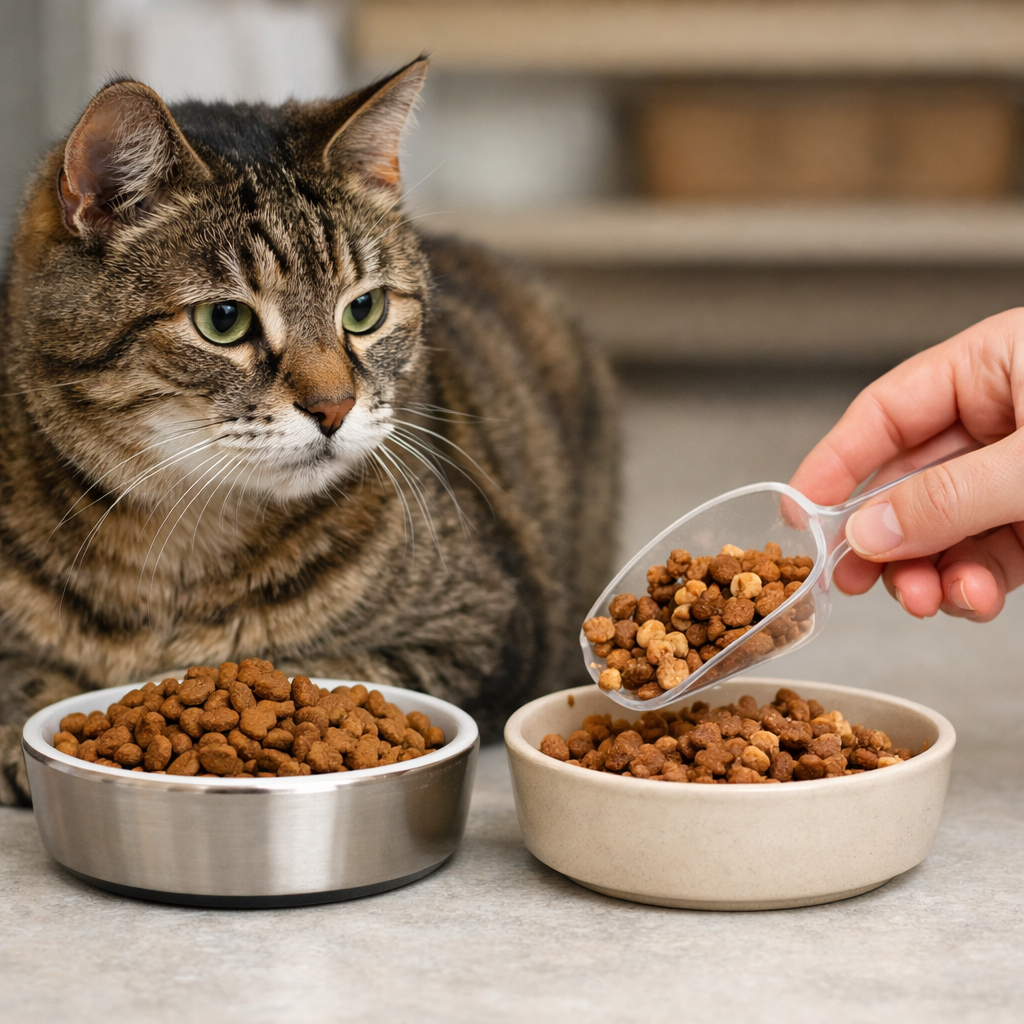
A gradual 7–10 day cat food transition schedule helps prevent vomiting, diarrhea, or food refusal. Standard veterinary advice is to increase the new food in small steps, pausing if GI signs appear and reverting to the last tolerated mix when needed. See a veterinarian-written guide to how to switch cat food safely.
The “critical window” in a food transition is Days 3–5 when the gut microbiome adapts most rapidly and stool changes are most likely. During this 48–72 hour period, monitor stool and appetite closely; if soft stool or mild GI signs appear, hold the prior ratio for 48 hours before advancing, and ensure hydration stays strong throughout the switch.
- Transition dynamics and pacing: 10-day senior transition guide
Suggested schedule:
| Days | Old:New food | What to watch |
|---|---|---|
| 1–2 | 75% : 25% | Appetite, stool consistency |
| 3–5 (critical) | 50% : 50% | Soft stool, gas—pause if needed |
| 6–8 | 25% : 75% | Hydration, weight trends |
| 9–11 | 0% : 100% | Maintain; call vet if problems persist |
Days 1–2 75 percent old 25 percent new
Start with roughly 75/25 and observe appetite and stool. Very sensitive seniors may do better with a 10‑day plan that begins around 90/10. Keep treats to no more than 10% of daily calories so you don’t dilute nutrients during this early phase.
Days 3–5 50 percent old 50 percent new critical window
Advance to 50/50. This is the microbiome’s “critical window,” when GI stress is most likely. If stool softens, hold the last tolerated ratio (e.g., 75/25) for 48 hours before increasing again. Use set mealtimes and remove leftovers after 20–30 minutes to track intake and reduce grazing, per guidance on structured feeding during food changes.
Days 6–8 25 percent old 75 percent new
Move to 25/75 while watching hydration and weight. If vomiting, diarrhea, or refusal occurs, revert to the last tolerated mix and proceed more slowly. If you’re switching between wet and dry, adjust portions for calorie density differences to avoid under- or overfeeding.
Days 9–11 100 percent new if tolerated
Transition to 100% new food by Day 9–11 if all signs are good. If tolerance is incomplete, extend the schedule and consult your veterinarian. Some seniors take several weeks—not days—to fully accept a new food.
Feeding method and hydration tips for seniors
- Use “soak and scent”: add warm water (~38°C/100°F) or a splash of low‑sodium broth to kibble for 10–15 minutes to boost aroma and soften texture.
- Offer wet food to support hydration and kidney comfort; many seniors find pâté or minced textures easier to eat.
- Set up success: scheduled meals, raised or easy‑access bowls, and a quiet feeding area. For picky seniors, a tiny taste dabbed on the leg can trigger grooming and sampling.
Monitoring and troubleshooting during the switch
Track daily: appetite, vomiting, stool consistency, water intake, weight, and activity. If mild soft stool appears during Days 3–5, hold the current ratio for 48 hours; if issues persist, revert to the last tolerated mix and increase more gradually. Scheduled meals (vs. free‑feeding) make intake easier to monitor and can improve acceptance.
Special considerations for common senior conditions
- Kidney disease: prioritize controlled phosphorus and moisture; keep hydration strong throughout any diet change.
- Arthritis/joint pain: select omega‑3‑rich foods and consider diets that include glucosamine/chondroitin for mobility support; see practical tips on easy diet changes for senior cats.
- Dental disease: prefer wet or soft textures that are easier to chew.
Ask your veterinarian whether a prescription kidney support diet or other therapeutic formula is indicated and how to pace the transition safely.
Treats supplements and add-ons during transition
- Keep treats to ≤10% of daily calories to avoid nutrient dilution and GI upset.
- Use simple, low-calorie toppers: warm water/broth soak, a spoon of the same‑brand wet food, or measured omega‑3 oil if your vet approves.
- If adding joint supplements (glucosamine/chondroitin), ensure they complement—rather than duplicate—amounts already present in the diet.
When to slow down stop or call the veterinarian
- If your cat refuses all food for more than 24 hours, contact your veterinarian immediately; prolonged fasting can be dangerous for cats. See this veterinary note on when food refusal needs prompt care.
- Slow or pause the transition if vomiting, diarrhea, or a marked appetite drop occurs; resume with a gentler, multi‑day plan rather than switching suddenly.
- Seniors are at higher renal and urinary risk—maintain hydration and call your vet promptly if lethargy, dehydration, or repeated GI signs appear.
Frequently asked questions
Is 12 years old the right time to start senior cat food
Yes—most cats are senior by 10, and many 12‑year‑olds benefit from senior formulas; ask your vet to review bloodwork and dental status to match the best senior cat diet for your cat. Use Pet Food Ingredient Guide to compare ingredients and phosphorus levels before you buy.
How do I switch foods without digestive upset
Use a 7–10 day cat food transition schedule, increasing the new food in steps and pausing if soft stool or vomiting appears. Feed on a schedule and keep treats under 10% of calories; Pet Food Ingredient Guide can help you select simpler, gentle formulas.
Should I choose wet or dry senior cat food
Choose what your cat will reliably eat and what supports health; wet food boosts hydration and is often easier to chew. Pet Food Ingredient Guide explains what to look for on labels.
What if my cat refuses the new senior food
Warm or moisten the meal, add a small topper, or start with tiny mix‑ins and go slower. If refusal lasts more than 24 hours, call your veterinarian.
How often should a senior cat see the vet during a diet change
Every six months is typical for seniors; during and after a diet change, your vet can monitor weight and labs and fine‑tune portions or formulas as needed. Between visits, use Pet Food Ingredient Guide to sanity‑check ingredient lists and phosphorus levels.