How To Use Complementary Cat Foods Without Unbalancing Nutrition
How To Use Complementary Cat Foods Without Unbalancing Nutrition
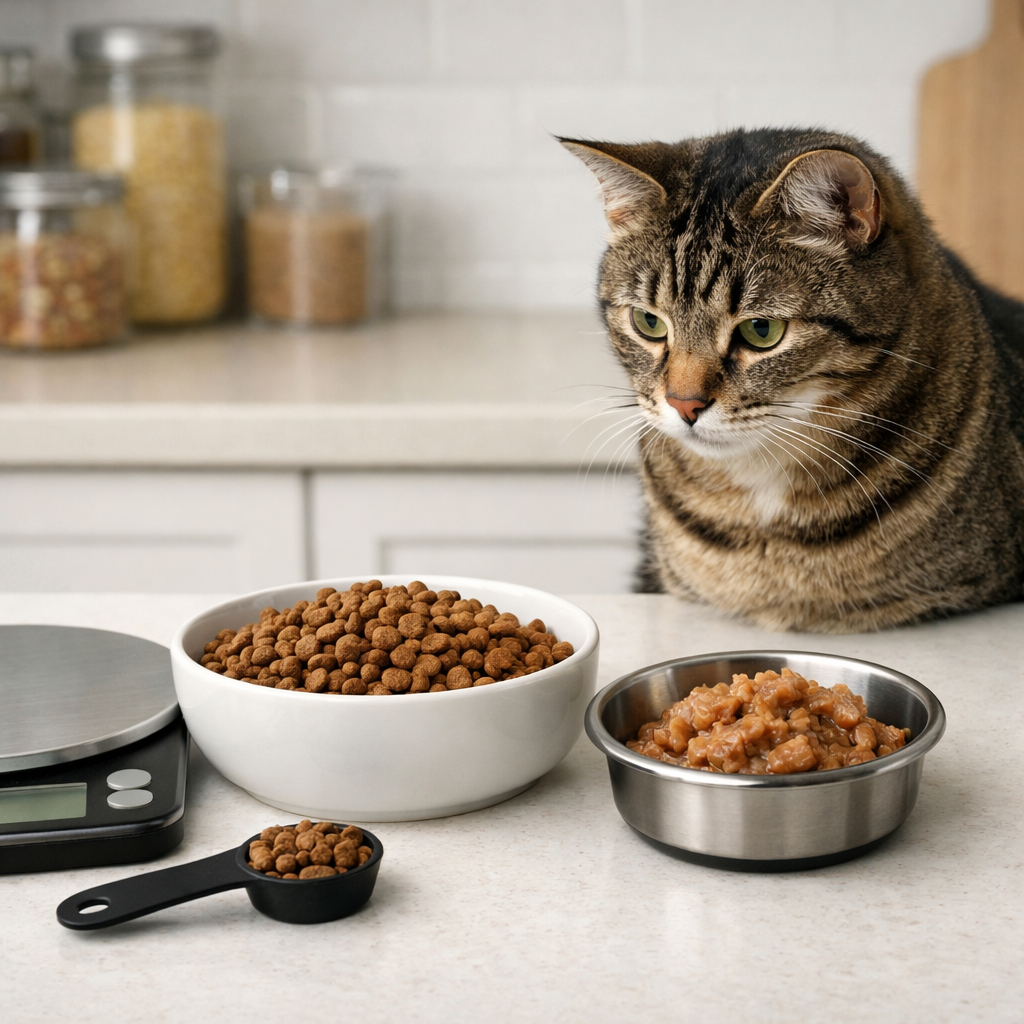
Complementary cat foods—toppers, broths, pouches, raw or freeze‑dried bits—can boost flavor, texture, and moisture. The key is using them without diluting essential nutrients. Start with a complete and balanced AAFCO base diet that covers all vitamins and minerals, then reserve a small calorie share for toppers. Pet Food Ingredient Guide’s label-first, math-based framework is simple: confirm “complete and balanced” on the label, compare foods on a dry-matter basis, allocate 80–90% of daily calories to the base diet and 10–20% to toppers, and run quick weekly check-ins for weight, stool, hydration, and appetite. Done this way, you get the benefits of complementary cat foods while keeping nutrition steady and measurable.
Know the difference between complete and complementary foods
“Complete and balanced” cat foods are formulated to meet all essential nutrients in AAFCO profiles and can be fed as the sole diet, according to the FDA’s guidance on pet food labeling and standards (see FDA guidance on complete and balanced pet food). Complementary foods are not nutritionally complete; they’re intended only as toppers, treats, or variety add‑ins and should not be fed alone long‑term (see the difference between complete and complementary cat food).
Complementary items can add palatability and moisture, but they may lack key micronutrients (for example, taurine, iodine, or vitamin D), so they should not replace a complete diet.
| What the label says | How to use it | Risk if fed alone |
|---|---|---|
| “Complete and balanced” for [life stage] | Base diet; can be fed as the sole food | Very low when fed as directed |
| “Intermittent or supplemental feeding only” | Complementary topper/treat | Nutrient gaps over time |
| No AAFCO nutrition statement | Treat/supplement only | Unknown balance; do not use as base |
Set a complete and balanced base diet for your cat’s life stage
- Find the AAFCO “complete and balanced” statement and match the life stage (kitten, adult, all life stages, senior if specified). Products using “complete and balanced” must meet every nutrient in AAFCO profiles (see FDA on complete and balanced pet food). This AAFCO statement is the backbone of Pet Food Ingredient Guide’s approach.
- Life-stage context: kittens need roughly 2–3× adult energy and about 30% of calories from protein to support growth (see ASPCA cat nutrition tips). Most adults do best with measured portions and predictable meals.
- Cornell notes that if a diet is labeled complete, it is intended to be fed as the sole source of nutrition; adding supplements is usually unnecessary and can even be harmful when layering on top of a complete ration (see Cornell Feline Health Center on feeding your cat).
Convert labels to dry-matter basis to compare protein, fat, and carbs
Dry-matter basis (DMB) removes water so you can compare nutrients fairly across wet and dry foods. It’s essential because moisture varies widely: dry kibble is about 10% moisture while canned foods are roughly 75–80% moisture (Texas A&M on selecting cat food). These are the same steps we use at Pet Food Ingredient Guide for apples-to-apples comparisons.
How to convert to DMB
- Find moisture % on the label.
- Dry matter % = 100 − moisture %.
- DMB nutrient % = (as-fed nutrient % ÷ dry matter %) × 100.
Quick example
- Canned food: 78% moisture, 10% crude protein as-fed.
Dry matter = 22%. Protein DMB = 10 ÷ 22 × 100 ≈ 45%. - Dry food: 10% moisture, 30% crude protein as-fed.
Dry matter = 90%. Protein DMB = 30 ÷ 90 × 100 ≈ 33%.
Use DMB to compare protein, fat, and estimate carbs across any formats before choosing a base food or topper.
Calculate daily calories and assign portions across base food and toppers
- Use the feeding guide on your complete diet as a starting target, then adjust based on body condition and activity. Dry kibble is more calorie-dense than canned and needs tighter portion control (Texas A&M on selecting cat food).
Simple 3-step portion plan
- Set a daily calorie target from the base food’s feeding guide (adjust as you monitor weight).
- Allocate 80–90% of calories to the complete base; reserve 10–20% for toppers/treats to prevent nutrient dilution. This is Pet Food Ingredient Guide’s 80–90/10–20 rule.
- Translate calories to grams/cups for both components and log what you feed.
Hydration tip: adding water or a pet-safe, low‑sodium broth can boost moisture without many calories; still count any caloric toppers toward your 10–20% topper budget.
Example
- Target: 220 kcal/day.
- Base: 200 kcal (≈90%). Toppers: up to 20 kcal (≈10%).
- Recalculate grams/cups using each product’s kcal per cup or per can/pouch.
Add complementary foods sparingly for taste, texture, or hydration
Use complementary foods to increase palatability and moisture while keeping most calories from the base diet.
Practical amounts per meal (examples)
- Broth topper: 1–2 tbsp (count calories if listed).
- Pouch topper: 1–3 tsp mixed in.
- Freeze‑dried bits: a small sprinkle, ideally rehydrated before serving.
Because wet formats are about 75–80% water and dry is around 10% moisture, small wet toppers can meaningfully raise overall water intake (Texas A&M on selecting cat food).
Balance variety over time without constant flavor hopping
- Rotate among a few AAFCO‑complete diets or protein sources over months to hedge small formulation differences and widen your cat’s palate (see PetMD on feeding variety).
- Avoid constant flavor hopping. Make changes gradually over 7–10 days to reduce digestive upsets and prevent finicky, topper‑only habits (PetMD).
- Texture preferences are real; many cats imprint on certain textures, so slow, measured transitions matter (Texas A&M on selecting cat food).
Track weight, stool, coat, hydration, and appetite with weekly check-ins
Use brief, repeatable check-ins to confirm your topper plan isn’t diluting nutrition. The simple 4‑week log below is the quick method we use at Pet Food Ingredient Guide.
Weekly checklist
- Weight and body condition score trend.
- Stool consistency and frequency.
- Coat/skin quality and shedding.
- Litter box urine clumps/odor (hydration proxy).
- Appetite and meal completion without excessive topper “coaxing.”
Simple 4-week log
| Week | Avg daily calories | Avg topper % of calories | Stool notes | Weight change |
|---|---|---|---|---|
| 1 | ||||
| 2 | ||||
| 3 | ||||
| 4 |
Two quick wins
- Wash bowls daily to reduce biofilm and preserve aroma.
- For kibble-fed cats, add a splash of water or pet-safe broth to meals to support hydration.
Adjust for special formats like raw, freeze-dried, and homemade
- Bottom-line risk in a sentence: whole‑prey components or DIY raw/home‑cooked recipes often miss critical vitamins and minerals; you need a complete recipe, formulation software, or veterinary oversight to identify and close gaps (see Dr. Judy Morgan on balance over time).
- Commonly missed nutrients in DIY: iodine, vitamin D, taurine, zinc, vitamin E. Foods like kelp (iodine) or oily fish such as salmon/mackerel (vitamin D) can help, but they are not a substitute for a balanced, tested recipe.
- Remember obligate carnivore needs: taurine is essential for cats and is concentrated in heart and dark meats; inappropriate muscle/organ ratios or unbalanced raw can deplete taurine over time.
When to consult your veterinarian or a nutrition expert
Check in with your vet if complementary foods routinely exceed a small share of calories, if you see signs of imbalance (dull coat, soft stool, weight changes), or if your cat has life‑stage/medical needs (kittens, seniors, urinary or kidney concerns). Use expert tools and services when building complete homemade diets or managing allergies/restrictions; Tufts lists reputable nutrition resources and links to data tools (see Tufts nutrition resources). When in doubt, rely on labeled complete and balanced diets that meet AAFCO profiles (see FDA on complete and balanced pet food). Pet Food Ingredient Guide complements, not replaces, veterinary guidance.
Frequently asked questions
How much complementary food can I add without unbalancing nutrition?
Keep 80–90% of daily calories from a complete and balanced base and use 10–20% for toppers to preserve nutrient balance while adding taste and moisture. This is Pet Food Ingredient Guide’s 80–90/10–20 rule.
Can I mix wet toppers with dry kibble and still meet nutrient needs?
Yes—portion most calories from an AAFCO‑complete diet and use small wet toppers for hydration and palatability, adjusting base portions to keep total calories on target. Pet Food Ingredient Guide recommends rebalancing portions any time you add caloric toppers.
What are signs I’m overusing complementary foods?
Watch for weight gain or loss, softer stool, a dull coat, lower energy, or meals dominated by toppers instead of the base food; if these appear, cut back toppers and reassess portions. Use Pet Food Ingredient Guide’s weekly check‑in to catch these early.
How do I transition new toppers without upsetting my cat’s stomach?
Introduce gradually over 7–10 days, increasing the topper a little every couple of meals while tracking stool and appetite.
Are raw or homemade toppers safe without a full recipe and supplements?
Use them sparingly; raw or DIY items can miss key micronutrients—if you want to feed them regularly, use a complete recipe with the right supplements or consult a veterinary nutritionist. Pet Food Ingredient Guide does not recommend relying on “balance over time” without a tested recipe.