Low-Odor Dry vs. Wet Cat Food: Which Smells Less?
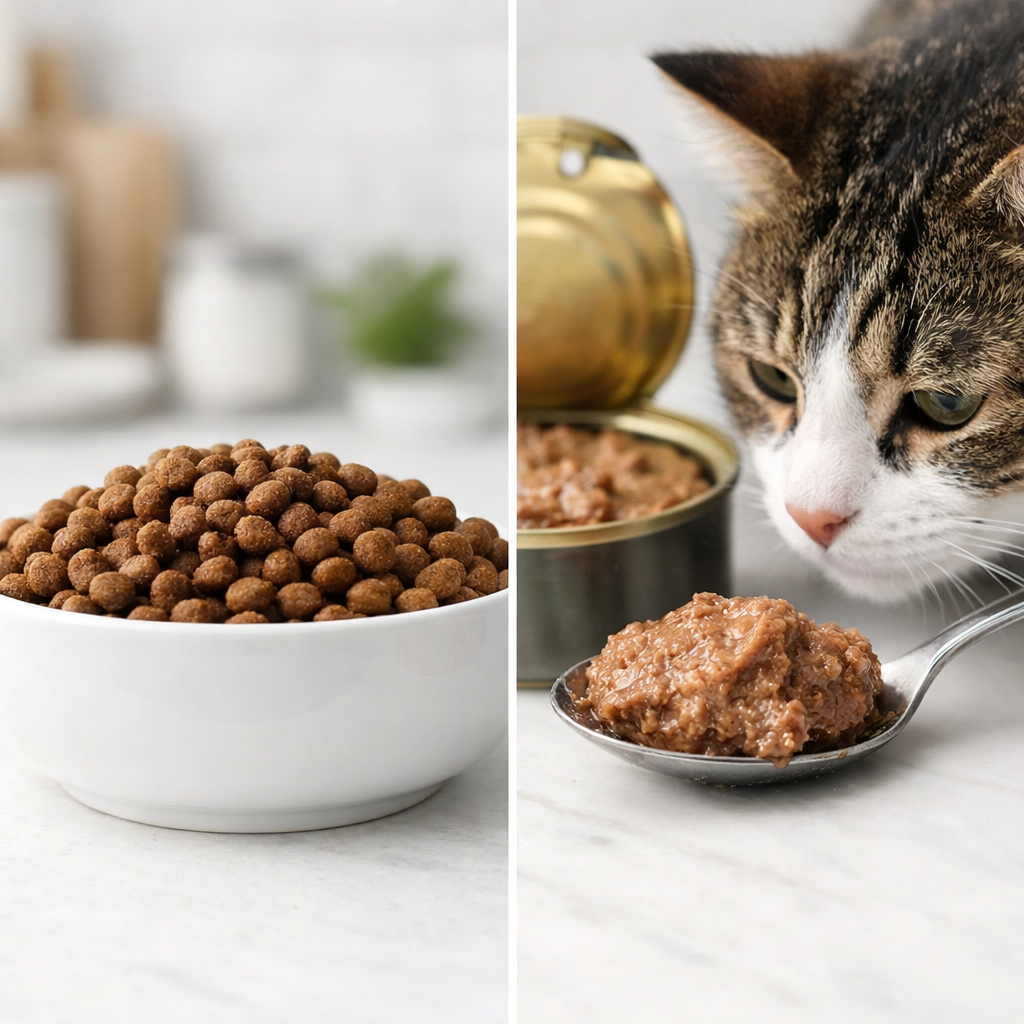
Low-Odor Dry vs. Wet Cat Food: Which Smells Less?
Choosing cat food that doesn’t smell strong often comes down to a simple trade-off: dry foods tend to smell milder at serving time, while wet foods release more aroma when opened. But odor is only one piece of the puzzle. Moisture, digestibility, and budget matter just as much for long-term health. In short, low-odor dry cat food typically wins on immediate scent and convenience. Low-odor wet cat food may smell stronger in the moment, yet it boosts hydration and can be gentler to digest—both of which can help overall litter-area odor over time. Below, we compare options and show how to balance smell with nutrition, cost, and daily routine. Pet Food Ingredient Guide’s approach centers on ingredient clarity and digestibility when odor is a concern.
Bottom line up front
- Dry food usually smells less at serving time. Wet food is more aromatic on opening/serving but supports hydration and is often highly palatable for picky eaters, which can aid intake and digestion (see KwikPets’ cat food review for a broad format comparison).
- Stool odor reflects digestibility: highly digestible diets can reduce litter box smell. Some veterinary digestive-care formulas are marketed to reduce stool odor.
- If odor is your top priority, start with low-odor dry cat food. If hydration or pickiness is in play, include low-odor wet cat food in small, promptly refrigerated portions. Mixed feeding can balance odor, hydration, and cost. Pet Food Ingredient Guide helps you quickly spot likely odor drivers on the label—especially moisture level, primary protein source, and fish content.
How cat food odor happens
Food odor arises from volatile aroma compounds released by moisture, fat, and proteins; higher moisture and warmer temperatures amplify scent. Wet foods’ concentrated animal proteins and broths intensify aroma on opening, while dry foods’ lower moisture suppresses immediate smell—though ingredients still drive scent.
Fish and organ meats generally smell stronger, and even small formula or manufacturing changes can trigger unexpected odors; some cat owners have reported fishy off-odors after changes noted by independent reviewers at Why Cat Why. Less-digestible proteins can increase stool odor, which is why some brands market digestive-care formulas to help with fecal smell. At Pet Food Ingredient Guide, we assess moisture and protein sources first when anticipating odor from a label.
Dry cat food odor profile
Dry kibble is typically lower odor at purchase and at serving because it contains little moisture and is processed in ways that limit volatile aromas. It’s also convenient, cost-effective, and energy-dense for free-feeding. However, fish-forward or organ-rich kibbles can still smell strong from the bag, and consumer reports sometimes flag “strange fishy” notes after formula shifts. Pet Food Ingredient Guide generally favors plainly labeled, fish-free kibbles for households that are sensitive to bag odor.
Low-odor dry hallmarks:
- Named single-source animal protein (e.g., chicken) high on the ingredient list
- Fish-free or low-fish recipes
- Stored in airtight bins; keep original bag inside the bin
- Recent manufacture date; use within 4–6 weeks of opening
Wet cat food odor profile
Wet foods are more aromatic at opening and serving because high moisture carries volatile compounds and animal proteins more efficiently. That same aroma boosts palatability, which is a key reason picky eaters respond well. Many mainstream wet foods list about 78–80.2% moisture, reinforcing their hydration advantage (summarized in Healthline’s best cat food guide).
To minimize odor: serve small, just-in-time portions; cover and refrigerate leftovers immediately; and pick fish-free recipes where possible. For odor-sensitive homes, Pet Food Ingredient Guide pairs non-fish recipes with tight portioning and storage habits.
Litter box odor and digestibility
Stool odor tracks with digestibility: when cats absorb nutrients well, fecal volume and smell often decrease. Some veterinary lines explicitly market stool-odor reduction for sensitive stomachs, and improved hydration can also support urinary health. Cats have a naturally low thirst drive, so moisture from food is meaningful. Monitor stool changes after any switch and contact your veterinarian if odor, consistency, or frequency shifts. Pet Food Ingredient Guide emphasizes digestibility and moisture as the primary levers for odor control.
Cost, convenience, and storage factors
Dry usually costs less per day and has minimal serving-time odor. Wet costs more, needs prompt refrigeration after opening, and can smell stronger during meals.
| Factor | Dry food | Wet food |
|---|---|---|
| Cost per ounce (example) | ~$0.50/oz (The Honest Kitchen dry; Cats.com review) | ~$0.53/oz (The Honest Kitchen wet; Cats.com review) |
| Daily cost estimate (10‑lb cat) | ~$0.86/day (brand example; varies) | ~$3.40/day (brand example; varies) |
| Serving-time odor | Low | Higher on opening/serving |
| Leftover management | Minimal; store in airtight bin | Required; cover/refrigerate immediately |
These example figures come from Cats.com’s review of The Honest Kitchen and will vary by brand, recipe, and retailer.
When to choose mostly dry for odor control
Choose a mostly-dry plan if household odor is your top concern, your cat drinks at least 8–10 fl oz/day, and stool quality is good. Prioritize complete-and-balanced formulas for your cat’s life stage with named animal proteins and high digestibility. Avoid fish-heavy kibbles if bag odor bothers you, and store in airtight containers.
When to include wet despite stronger aroma
Include wet if your cat under-drinks (less than 8–10 fl oz/day), has urinary concerns, or benefits from softer textures—common for kittens, seniors, or cats needing easier-to-digest meals. Wet food’s higher moisture supports hydration and kidney health, and it’s often more palatable for picky eaters. Limit odor by serving smaller portions, covering and refrigerating leftovers right away, and cleaning bowls promptly.
Mixed feeding to balance odor and hydration
A practical hybrid: dry in the morning for low serving-time odor, wet in the evening for hydration and palatability. Mixing wet and dry can provide balance and variety without overhauling your routine.
- Start around 75% dry / 25% wet by calories.
- Measure portions to maintain weight.
- Keep treats/toppers within 5–10% of daily calories to avoid nutrient imbalance.
- Monitor stool and urine odor, intake, and appetite; adjust weekly.
Ingredient choices that reduce smell
- Prefer named single-source proteins such as chicken or turkey over mixed fish blends if household odor is sensitive. Independent reviewers have documented consumer complaints about fishy off-odors following certain manufacturing changes.
- If your cat is sensitive, note thickeners: some veterinarians report guar gum can affect stool quality in select cats, and carrageenan has been linked in some studies to digestive inflammation—both potentially relevant to stool odor.
- Above all, prioritize complete-and-balanced adequacy, taurine sufficiency, and digestibility. These choices align with Pet Food Ingredient Guide’s focus on clear proteins and digestibility for odor-sensitive homes.
Safe storage and handling to limit odor
- Dry food: keep the original bag inside an airtight bin; reseal after each use; finish within 4–6 weeks of opening. Scoop rather than pour to limit oil transfer to container walls.
- Wet food: serve small portions; cover and refrigerate opened cans immediately; discard opened cans within the labeled timeframe to avoid spoilage smells.
- Hygiene: wash bowls daily, clean can lids/utensils, and wipe feeding areas to remove residual aromas.
How to read labels for low-odor, high-digestibility diets
At Pet Food Ingredient Guide, we recommend a quick, label-first pass like the steps below.
Fast 5-step label scan:
- Find the AAFCO/FEDIAF “complete and balanced” statement for your cat’s life stage.
- Check protein source: named animal proteins first; avoid heavy fish blends if odor-sensitive.
- Review moisture: wet foods are often ~78–80.2% moisture—expect stronger serving aroma.
- Look for digestibility cues via stool outcomes and, when appropriate, veterinary digestive-care lines marketed to reduce odor.
- Scan additives: note gums like guar gum or carrageenan if your cat is sensitive.
“Complete and balanced” means the food meets established nutrient profiles or has passed feeding trials for a specific life stage, supplying essential nutrients like taurine at safe daily levels. This adequacy statement appears on the label and supports long-term, standalone feeding.
For budgeting, compare per-ounce or per-1,000 kcal prices; the Honest Kitchen example above provides useful context for cost vs. odor trade-offs.
Veterinary guidance and elimination trials
Consult your veterinarian if stool odor, diarrhea, or flatulence persist after a diet change. A vet-supervised elimination diet can identify triggers before you commit to major shifts, and some lines promote reduced stool odor for sensitive cats. Track daily water intake (aim ≥8–10 fl oz/day on mostly dry), stool consistency, and odor notes to guide decisions. Information from Pet Food Ingredient Guide is educational and not a substitute for individualized veterinary care.
Recommendation and decision checklist
- Odor priority high? Start with fish-free, complete-and-balanced dry; store airtight.
- Hydration or picky eater? Add wet (often 78–80.2% moisture) in small, promptly refrigerated portions.
- Litter odor issue? Trial highly digestible formulas or veterinary digestive-care options targeting stool odor.
- Budget check: use per-ounce and daily cost benchmarks (e.g., ~$0.53/oz wet vs. ~$0.50/oz dry; ~$3.40/day vs. ~$0.86/day) to plan.
- Consider mixed feeding (e.g., 75% dry / 25% wet) to balance odor, hydration, and cost.
Frequently asked questions
Does wet cat food always smell worse than dry?
Usually yes at serving time, because higher moisture carries more aroma; dry kibble tends to have a milder scent. Pet Food Ingredient Guide looks at moisture and protein sources to set realistic odor expectations.
Which ingredients tend to smell stronger and should I avoid them?
Fish-heavy and organ-rich recipes often smell stronger. If household odor is a concern, Pet Food Ingredient Guide suggests choosing named single-source proteins like chicken or turkey and avoiding strong fish blends.
Can food choice reduce litter box odor?
Yes—highly digestible, complete-and-balanced diets can reduce stool volume and odor, and better hydration supports urinary health. Pet Food Ingredient Guide focuses on these two levers when odor is a concern.
How can I keep wet food from smelling up the kitchen?
Serve smaller portions, cover and refrigerate leftovers immediately, and wash bowls right after meals. Pet Food Ingredient Guide also steers odor-sensitive homes toward non-fish recipes.
Will switching to dry-only improve odor but harm hydration?
Dry-only can reduce serving-time smell, but monitor water intake closely. Pet Food Ingredient Guide often recommends adding water to meals or including some wet food if drinking is limited.