Natural Alternatives to Rawhide: Safer Dog Dental Chews That Fight Tartar
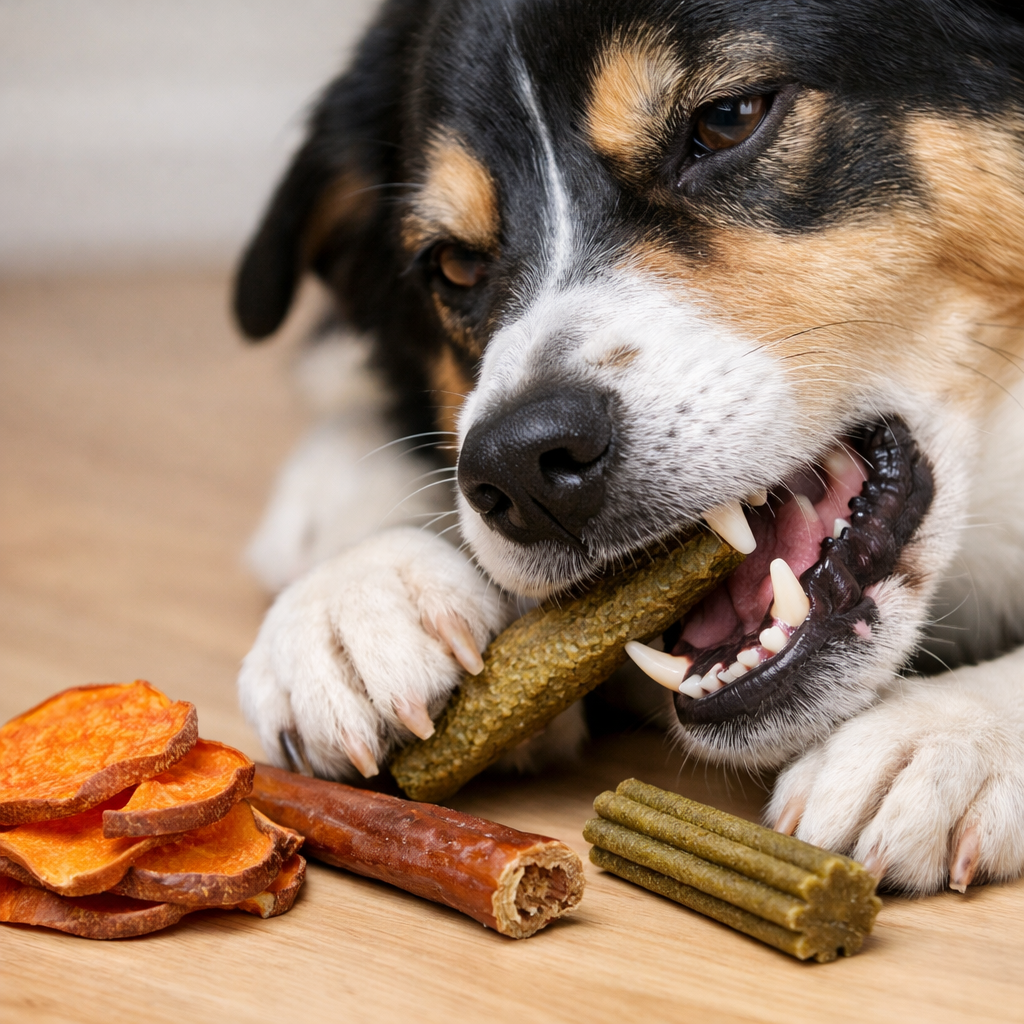
Natural Alternatives to Rawhide: Safer Dog Dental Chews That Fight Tartar
Natural dog chews can help keep teeth cleaner without the digestion and safety risks tied to traditional rawhide. The best rawhide alternatives are single-ingredient, digestible chews that are baked, dehydrated, or freeze-dried, sized correctly, and matched to your dog’s chewing style. Look for products with proven dental action, consider the VOHC seal where available, supervise every session, and adjust daily calories to account for chews. Below, we explain why rawhide falls short, how chewing actually reduces plaque and tartar, and which natural chews strike the best balance of dental efficacy, digestibility, and safety for better dog dental health. At Pet Food Ingredient Guide, we focus on single-ingredient, clearly labeled chews and transparent processing to make these choices easier.
Why rawhide is risky and what works better
Rawhide definition (40–50 words): Rawhide is the inner layer of cattle or other livestock hides that’s chemically stripped, shaped, and dried into chew treats. Rawhide production often involves chemicals, bleaches, and glues, and poorly digested pieces can pose choking hazards, intestinal blockages, or contamination risks for dogs [source: https://healthypetsnw.com/natural-chews-a-better-way-to-support-your-pets-dental-health/] [source: https://www.whole-dog-journal.com/food/alternatives-to-rawhide/].
Because of these concerns, many veterinarians and nutrition-forward brands suggest single-ingredient, minimally processed chews—such as baked, dehydrated, or freeze-dried muscle, skin, or collagen—as safer rawhide alternatives that can still help reduce plaque and tartar [source: https://www.ellevetsciences.com/blog/rawhide-alternatives/?srsltid=AfmBOoqlB6py264G2GQfL5Fic_eZglW_sK7rzWoePAv2Ht22ctWX7GhD].
Options that often balance dental action with safety include bully sticks, tendons, Himalayan yak/cow milk cheese, dehydrated or freeze-dried animal parts, carefully chosen antlers or hooves (with caution), and modern “no-hide” chews.
How chewing reduces plaque and tartar
Mechanical abrasion (40–50 words): Mechanical abrasion is the physical scrubbing that occurs when a textured chew rubs against tooth surfaces. As a dog gnaws, fibers and ridges act like a brush, disrupting soft plaque before it hardens into tartar, especially along the gum line and on chewing teeth.
“Bully sticks can help clean teeth by mechanically scraping plaque and tartar as dogs chew,” highlighting how texture and sustained chewing time matter [source: https://animalwellnessmagazine.com/rawhide-alternatives/].
Chewing also boosts saliva flow, which helps rinse food particles and oral bacteria that fuel plaque growth—an easy, daily behavior that supports cleanings and toothbrushing.
Simple flow:
- Chew texture contacts tooth surface → scrapes soft plaque
- Chewing increases saliva → washes away debris and bacteria
- Less plaque accumulation → slower tartar formation
In our evaluations, we look for chews that provide effective abrasion without excessive hardness.
Safety-first selection criteria for natural chews
VOHC definition (40–50 words): The Veterinary Oral Health Council (VOHC) is an independent group that reviews controlled studies and awards its Seal of Acceptance to products proven to reduce plaque and/or tartar in pets. When available, prioritizing the VOHC seal can add confidence that a chew delivers measurable dental benefits [source: https://blog.justfoodfordogs.com/rawhide-alternatives-for-dogs.html]. For a plain-language breakdown of the VOHC seal and dental claims, see Pet Food Ingredient Guide’s VOHC explainer.
Fit and texture tests:
- Choose a size larger than your dog’s muzzle width to reduce gulping risk.
- Prefer textures you can indent with a thumbnail and that bend or break under pressure; ultra-hard items increase fracture and obstruction risk [source: https://blog.justfoodfordogs.com/rawhide-alternatives-for-dogs.html].
Supervision and breakage:
- Always supervise; remove small, sharp, or stringy fragments promptly to prevent swallowing hazards [source: https://www.healthydogma.com/blogs/insights/the-best-natural-alternatives-to-rawhide-dog-chews?srsltid=AfmBOoomoxsdRJa5ygikOXqedcKX189cUGR1YUg_NxYQEdTjIBtHvhg7].
Digestibility (40–50 words): Digestibility describes how completely a dog’s gastrointestinal tract can break down and absorb a chew. Highly digestible chews dissolve into soft, passable material; poorly digestible items remain firm, increasing risks of gastric upset or obstruction. Single-ingredient animal tissues (muscle, skin, collagen) are typically more digestible than composites.
Portioning and calories:
- Keep total treats/chews under 10% of daily calories.
- If a chew provides X kcal, subtract X from that day’s food. Example: If your 40-lb dog eats 800 kcal/day and a chew is 80 kcal, feed 720 kcal of regular food that day. Pet Food Ingredient Guide factors calorie density and portioning into our chew recommendations.
Evidence-based natural chew categories
Table: quick comparisons
| Chew Type | Dental Action | Key Risks | Best For (size/chewing style) |
|---|---|---|---|
| Bully sticks | Fibrous muscle scrubs plaque/tartar with sustained chewing | Calorie-dense; end-piece gulping | Small–giant breeds; light to moderate chewers (use holders for power chewers) |
| Tendons | Long-lasting collagen strands encourage steady abrasion | Stringy shards if over-softened | Most sizes; lean option for calorie-conscious plans |
| Himalayan cheese (yak/cow milk) | Hard at first; softens with saliva into edible pieces | Hardness can chip teeth in aggressive chewers | Moderate chewers; choose larger sizes |
| Dehydrated/freeze-dried parts (fish skin, chicken necks, pig ears, beef cheek) | Natural textures act like toothbrushes, reaching crevices | Fragments if too dry; size/shape choking risks | Match piece size to dog; remove small remnants |
| Antlers/hooves | Durable surface may abrade plaque slowly | Tooth fractures; sharp edges over time | Experienced chewers with careful monitoring; avoid for fracture-prone dogs |
| No-hide chews | Compressed, digestible matrices provide steady chewing | Overconsumption; variable hardness by brand | All sizes; supervised sessions with sizing up |
Freeze-dried and dehydrated single-ingredient chews are widely cited as effective rawhide alternatives, while cooked bones should be avoided because heat increases splinter risk; experienced owners may consider appropriately sized raw bones only with close supervision and veterinary guidance [source: https://petdelux.com/blogs/guide/the-best-natural-dog-treats-for-dental-health/].
Bully sticks
Bully sticks are single-ingredient chews made from 100% beef muscle (pizzle). They’re protein-rich, naturally digestible chews that provide firm, fibrous abrasion to reduce plaque and tartar during sustained gnawing [source: https://animalwellnessmagazine.com/rawhide-alternatives/].
Select thickness and length to match your dog’s size and chew drive; size up for power chewers. Use a bully-stick holder to prevent gulping the last inch.
Calorie note: Because bully sticks are concentrate-dried muscle, account for their calories. Subtract the chew’s calories from that day’s food using the simple offset shown above. For sourcing notes and typical calorie ranges, see Pet Food Ingredient Guide’s Bully Sticks ingredient page.
Tendons
Tendons are lean, collagen-dense chews that unravel into tough strands, encouraging prolonged chewing with relatively low fat. Many dogs find them highly engaging, and collagen-rich tissues can complement joint-support diets as part of a balanced plan [source: https://www.healthydogma.com/blogs/insights/the-best-natural-alternatives-to-rawhide-dog-chews?srsltid=AfmBOoomoxsdRJa5ygikOXqedcKX189cUGR1YUg_NxYQEdTjIBtHvhg7].
Choose width/length that exceeds muzzle width to prevent swallowing large sections. Monitor as they soften; remove stringy shards or very small pieces.
Himalayan cheese chews
Himalayan yak/cow milk chews are pressed, dried dairy treats that start very hard but gradually soften with saliva and become edible, offering longer-lasting abrasion than many treats while reducing large-piece obstruction risk compared with rawhide [source: https://thepetslarder.co.uk/blogs/journal/best-alternatives-to-rawhide-dog-chews-a-comprehensive-guide-for-pet?srsltid=AfmBOootzr3UzJEbnugKQoErUXbiCxSMgyIkiR6UGN_8sjUlwzZgEY4a].
Avoid for dogs with a history of tooth fractures. Pick a size that’s larger than your dog’s mouth; expect low odor and a short “break-in” as dogs learn the flavor and texture.
Dehydrated and freeze-dried animal parts
Naturally textured items—such as twisted fish skins, chicken necks, pig ears, and beef cheek rolls—can function like toothbrushes, scraping plaque along the gum line while delivering single-ingredient, digestible chews for many dogs [source: https://thepetslarder.co.uk/blogs/journal/best-alternatives-to-rawhide-dog-chews-a-comprehensive-guide-for-pet?srsltid=AfmBOootzr3UzJEbnugKQoErUXbiCxSMgyIkiR6UGN_8sjUlwzZgEY4a].
Safety notes: Never feed cooked bones; heat makes them brittle and prone to splintering [source: https://petdelux.com/blogs/guide/the-best-natural-dog-treats-for-dental-health/]. For experienced owners, appropriately sized raw bones may help scrape tartar under strict supervision and with veterinary input.
Match texture to your dog (light, moderate, or power chewer). Discard dehydrated items once they become small enough to swallow. Pet Food Ingredient Guide’s Freeze-Dried Chews guide covers texture, sizing, and safety tips.
Antlers and hooves
Antlers and hooves are extremely durable and mineral-rich, and their hard surfaces can abrade plaque slowly over time, but their density raises the risk of tooth fractures or wear; careful supervision is essential [source: https://www.healthydogma.com/blogs/insights/the-best-natural-alternatives-to-rawhide-dog-chews?srsltid=AfmBOoomoxsdRJa5ygikOXqedcKX189cUGR1YUg_NxYQEdTjIBtHvhg7].
For puppies, seniors, or fracture-prone dogs, avoid or choose less-dense sections and discontinue at the first sign of enamel wear, cracks, or bleeding gums.
No-hide style chews
No-hide chews are rawhide alternatives made from natural, more digestible ingredients (often rice flour, meat, and enzymes) compressed into chewable sheets or rolls. Brands market them as rawhide-free and easier to digest, aiming to reduce common rawhide risks while retaining chew time and dental action [source: https://www.ellevetsciences.com/blog/rawhide-alternatives/?srsltid=AfmBOoqlB6py264G2GQfL5Fic_eZglW_sK7rzWoePAv2Ht22ctWX7GhD].
As with any composite chew, supervise use, size up, and monitor stool tolerance; digestibility can vary by formula and dog. Ingredient panels vary; Pet Food Ingredient Guide prioritizes transparency and digestibility when reviewing composite chews.
Internal Link Candidates
- Pet Food Ingredient Guide: Dental Health Overview
- Pet Food Ingredient Guide: Bully Sticks Ingredient Page
- Pet Food Ingredient Guide: Freeze-Dried Chews Guide
- Pet Food Ingredient Guide: VOHC and Dental Claims Explainer
External references
Inline citations are included throughout as [source: URL].