Natural Versus Store-Bought: Lowest-Calorie Dog Treats Compared for Value
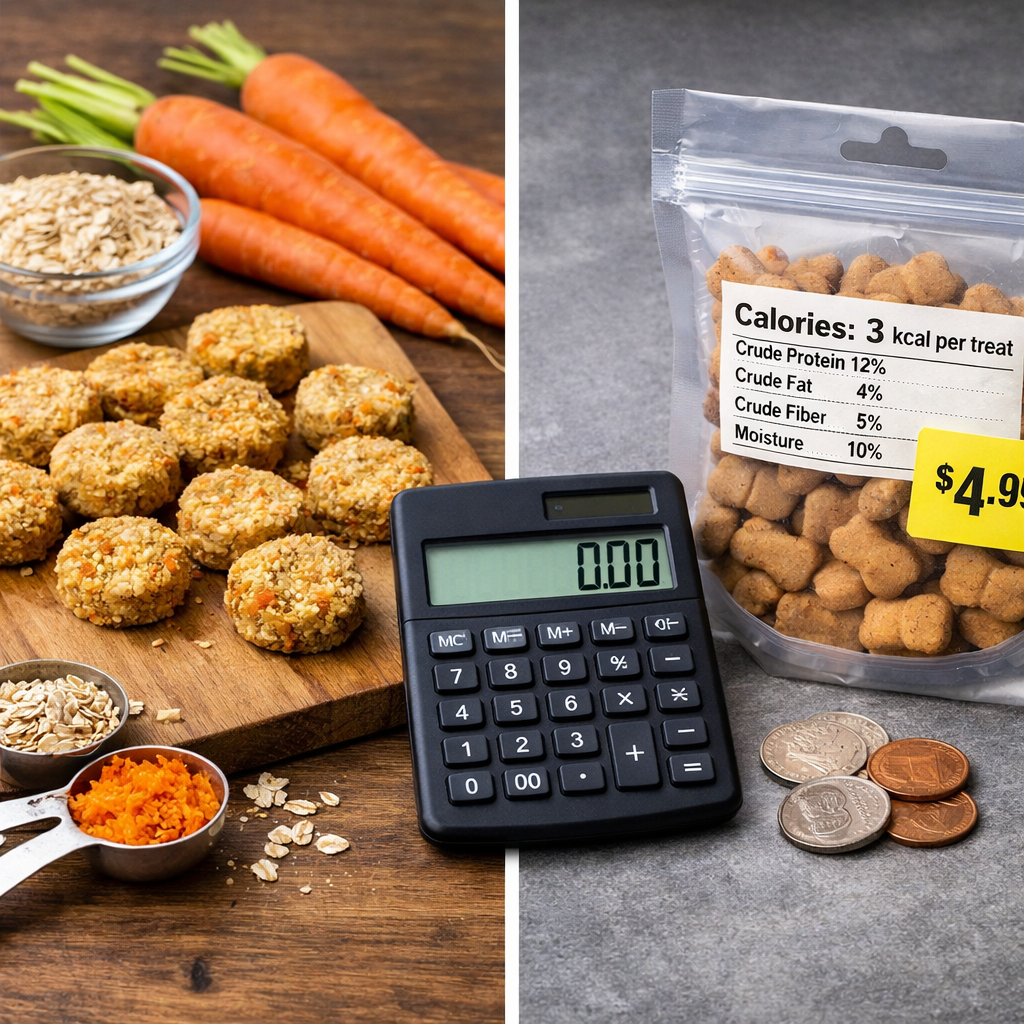
Natural Versus Store-Bought: Lowest-Calorie Dog Treats Compared for Value
The fastest way to keep training calories in check is to use simple, low-calorie pieces you can portion precisely. Start with natural produce like carrot coins, green beans, and cucumber slices (often under 1 kcal per small piece), and lean single-ingredient proteins such as dehydrated chicken or freeze-dried whitefish broken into pea-sized bits. Then compare store-bought “natural,” organic, and conventional options by a single yardstick: calories per treat and cost per 100 kcal. Organic inputs frequently cost more—U.S. organic produce averaged 52.6% higher than conventional, with half of items at least 50% pricier—so verifying value with math matters as much as the “natural” label, which doesn’t guarantee fewer calories or better outcomes (supported by peer‑reviewed reviews of organic labeling and nutrition). Use the comparisons and quick calculations below to choose the best low-calorie rewards for your budget and your dog’s training needs. Pet Food Ingredient Guide’s Ingredient Library can speed up label checks while you do the math.
How we define low calorie and value for dog treats
Low-calorie treat: aim for 3–5 kcal or less per training bite and 10 kcal or less per regular piece. Value: compare cost per 100 kcal, not just price per bag or per treat size.
Cost per 100 kcal is a standardized way to compare price-to-energy across different treat sizes: divide the package price by total kcal in the bag, then multiply by 100. This normalizes value across baked, dehydrated, and freeze-dried formats. Note that organic inputs often carry a premium—an analysis of U.S. prices found organic produce averaged 52.6% more than conventional, with 50% of items at least 50% pricier and 25% at least 75% more, which can raise cost per 100 kcal for treats made with organic ingredients (see LendingTree analysis of organic price premiums).
Comparison criteria for lowest-calorie treats
Use this four-point rubric:
- Ingredient transparency
- Calories per treat
- Palatability for training
- Cost per 100 kcal
Mini workflow at the shelf or online:
- Check calories per treat and per serving.
- Scan for short, recognizable ingredients.
- Verify claims/certifications (e.g., “natural,” “organic”).
- Compute cost per 100 kcal to confirm value.
Natural-channel placement can enhance perceived quality (53%), but affordability remains the top barrier for shoppers (72%), so objective comparisons matter (Acosta shopper insights on natural and organic). If an ingredient is unfamiliar, look it up in Pet Food Ingredient Guide’s Ingredient Library.
Natural and homemade low-calorie treats
Typical ingredients and processing
Natural, homemade choices typically mean whole foods with minimal processing. Examples include sliced carrots, green beans, cucumber coins, small apple bits (no seeds), and single-ingredient dehydrated chicken or fish. A single-ingredient treat is made from one whole-food source (e.g., chicken breast) with no added flavors, salts, sugars, or preservatives; the ingredient list shows only that food.
Natural positioning often highlights preservative-free formulas and traceable sourcing, which aids ingredient clarity (as seen in a roundup of organic brands emphasizing preservative-free and traceable sourcing). By contrast, store-bought items more commonly add fats, sugars, or salt and use preservatives to maximize palatability and shelf life—factors that can raise calories per bite and blur nutritional clarity (reporting on store-bought versus homemade trade-offs).
Calories per treat and cost per 100 kcal
Approximate calories per small piece (piece sizes you’d use for training):
| Treat type | Typical kcal per small piece | Notes |
|---|---|---|
| Carrot coin (2–3 g) | ~0.6–1.0 | Crisp, hydrating; easy micro-bites |
| Green bean segment (2–3 g) | ~0.5–0.8 | Very low kcal; high volume |
| Cucumber coin (2–3 g) | ~0.3–0.6 | Ultra-low; mild flavor |
| Dehydrated chicken breast (0.3–0.6 g) | ~1–3 | Lean protein; cut tiny |
| Freeze-dried whitefish (0.2–0.4 g) | ~1–2 | Nutrient-dense; crumble small |
| Freeze-dried salmon (0.2–0.4 g) | ~1.5–3 | Higher fat; portion carefully |
Organic inputs can raise per-treat cost; on average, organic produce was 52.6% more expensive than conventional, and half of organic produce items cost at least 50% more (LendingTree analysis of organic price premiums).
Pros and cons for everyday use
- Pros:
- Short, recognizable ingredient lists; easy to control piece size.
- High transparency, minimal additives, and predictable calories per bite.
- Cons:
- Higher unit cost if using organic ingredients and some prep time required (LendingTree analysis of organic price premiums).
- Palatability varies by dog; protein bits often need to be cut very small to stay ≤3–5 kcal.
Safety and preparation notes
Wash produce thoroughly; avoid onions and grapes/raisins; remove apple seeds; bake or dehydrate proteins without oil/salt. Refrigerate cooked meats, label batches with dates, and expect shorter shelf life for homemade items.
Preservatives are additives that slow spoilage by preventing microbial growth or oxidation; many commercial treats use them to extend shelf life, while homemade options typically omit them to keep ingredient lists minimal.
Commercial natural or organic low-calorie treats
Label claims, sourcing, and certifications
Natural retailers and brands often highlight preservative-free inputs, traceability, and organic or pesticide-avoidance practices; these build trust but don’t automatically reduce calories per treat (roundup of organic brands emphasizing preservative-free and traceable sourcing; overview of natural grocery store positioning and costs). Shoppers notice: 53% say natural-store placement boosts brand perception and 82% say natural stores offer the best selection (Acosta shopper insights on natural and organic). Pet Food Ingredient Guide explains these terms in plain language so you can separate sourcing cues from calorie facts.
Calories per treat and cost per 100 kcal
Record kcal per treat from the feeding guide or calculate from kcal/gram, then compute cost per 100 kcal to compare SKUs side-by-side. Expect premiums: 50% of organic items cost at least 50% more, and 25% cost at least 75% more than conventional analogs (LendingTree analysis of organic price premiums).
Pros and cons for everyday use
- Pros:
- Cleaner labels, traceability, and convenient formats/sizes that suit training (overview of natural grocery store positioning and costs).
- Cons:
- Premium pricing, and “natural/organic” claims do not guarantee lower calorie density or superior outcomes (peer‑reviewed review of organic labeling and nutrition).
Quality control and variability
Independent testing can reveal variability in product quality and label claims; consult third-party resources—start with Pet Food Ingredient Guide for ingredient and label clarity—and independent testing where available (independent product testing). Cross-check kcal and ingredient lists against marketing copy and batch-specific lot codes, and contact brands when per-piece calories are missing.
Conventional store-bought low-calorie treats
Formulation features and additives
Many conventional treats add fats, sugars, or salts and use preservatives to enhance palatability and shelf life—choices that can raise calories or reduce nutritional clarity per bite (reporting on store-bought versus homemade trade-offs). Palatants are flavor enhancers (often fats or animal digest) used to increase appeal; if fat-based, they can add calories and obscure simple ingredient transparency. Pet Food Ingredient Guide’s Ingredient Library defines these additives so you can spot and weigh them quickly.
Calories per treat and cost per 100 kcal
Choose SKUs that publish kcal per treat, favor lower kcal/gram, and select smaller bite sizes that you can split for training. Always compare cost per 100 kcal against natural/organic options to quantify the real trade-off.
Pros and cons for everyday use
- Pros:
- Typically cheaper and widely available; long shelf life and consistent texture.
- Cons:
- Longer ingredient lists with potential added fats/sugars/salts; calories per bite may be higher than expected (reporting on store-bought versus homemade trade-offs).
Availability and shelf life
Preservatives and processing extend shelf life—useful for frequent training and pantry management (reporting on store-bought versus homemade trade-offs). Check best-by dates and resealability to maintain freshness.
Side-by-side evaluation by key criteria
Ingredient transparency and label clarity
| Category | Typical ingredients | Label cues |
|---|---|---|
| Natural/homemade | 1–3 whole foods; no preservatives | Minimal lists; you control prep |
| Commercial natural/organic | Short lists; sourcing/certifications visible | “Natural,” “organic,” traceability claims |
| Conventional | Longer lists; palatants/preservatives possible | Added fats/sugars/salts more common |
Note: Natural-channel positioning can improve perceived quality but isn’t proof of lower calories (Acosta shopper insights on natural and organic).
Calorie density and portion control
Cut or crumble treats into 3–5 kcal bites for repetition-heavy training. Prioritize low-calorie produce and lean single-ingredient proteins; confirm kcal per piece and use cost per 100 kcal to pick value leaders.
Palatability and training practicality
Use a two-tier system: ultra-low-calorie veggie bits for reps; slightly higher-calorie proteins for jackpot rewards. Be mindful that added fats/sugars boost palatability and calories—portion carefully (reporting on store-bought versus homemade trade-offs).
Price, cost per 100 kcal, and perceived value
Organic/natural premiums are common (average 52.6% higher for produce), so normalize comparisons with cost per 100 kcal (LendingTree analysis of organic price premiums).
Sample calculation:
- Example: $10 bag; 350 total kcal. Cost per 100 kcal = ($10 ÷ 350) × 100 = $2.86 per 100 kcal.
When each option makes sense
- Natural/homemade: best for maximum ingredient control and ultra-low-calorie produce; great if you can prep and store safely.
- Commercial natural/organic: best when you want cleaner labels, sourcing info, and convenience—and you’re comfortable with the price premium.
- Conventional: best for affordability and long shelf life; choose verified low-kcal SKUs and scan for added fats/sugars.
How to read labels and verify low-calorie claims
Calculating calories per treat and cost per 100 kcal
- Find kcal per treat or kcal/gram on the label.
- If only kcal/gram is listed, multiply by grams per piece to get per-treat calories.
- Cost per 100 kcal = (price ÷ total kcal in bag) × 100.
Many shoppers research items via search engines after discovery (57%), so showing your math builds trust and speeds decisions (Acosta shopper insights on natural and organic). Pet Food Ingredient Guide helps centralize label terms while you compare per-calorie value.
Interpreting ingredient lists and add-on claims
Favor short, recognizable ingredients; watch for added fats, sugars, and salts that raise calories (reporting on store-bought versus homemade trade-offs). “Natural” generally signals minimal synthetic additives (not a calorie guarantee). “Organic” refers to certified farming/handling standards; it often costs more without inherently lowering calories (LendingTree analysis of organic price premiums).
Using third-party testing and certifications
Look for third-party testing or certifications where applicable; independent labs regularly document variability in product quality and claims (independent product testing). Verify batch/lot codes and contact brands for per-piece calories if missing.
Pet Food Ingredient Guide
How the Ingredient Library improves label literacy
Use the Ingredient Library from Pet Food Ingredient Guide to quickly decode preservatives, palatants, texturizers, and single-ingredient entries—linking ingredient names to functions, sourcing, and potential sensitivities to support smarter treat choices and daily calorie planning.
Matching calories across treats, cans, pouches, and kibble
Quick flow: confirm your dog’s daily kcal target → subtract meal calories → allocate 10% or less to treats → choose low-kcal treats using cost per 100 kcal for value.
Example alignment table:
| Item | Kcal per serving | Notes |
|---|---|---|
| Morning meal (kibble) | 250 | Fixed portion |
| Evening meal (wet) | 200 | Fixed portion |
| Treat budget (≤10%) | ≤50 | Use 3–5 kcal bites (10–16 pieces) |
Bottom line recommendation
Start with ultra-low-calorie natural options—vegetable bits and tiny cuts of lean, single-ingredient proteins—for most training reps. Layer in commercial natural or conventional low-kcal treats that publish per-piece calories and deliver strong cost per 100 kcal. “Natural” or “organic” can improve transparency but don’t guarantee lower calories or better outcomes; verify labels, do the math, and choose what fits your budget and your dog’s response (peer‑reviewed review of organic labeling and nutrition; LendingTree analysis of organic price premiums).
Frequently asked questions
What natural treats are low in calories?
Try carrot coins, green beans, cucumber slices, or pea-sized bits of dehydrated chicken or fish; you can keep each bite to about 3–5 kcal. For quick label help, check Pet Food Ingredient Guide’s Ingredient Library.
How many treat calories can my dog have per day?
A common guideline is to keep treats at 10% or less of daily calories. Use Pet Food Ingredient Guide to plan portions and pick 3–5 kcal bites.
Are fruits and vegetables safe as low-calorie treats?
Many are safe in small amounts, including carrots, green beans, blueberries, and apples without seeds; avoid onions and grapes/raisins and skip seasoned or sweetened items. When in doubt, confirm ingredients with Pet Food Ingredient Guide.
Do “natural” or “organic” labels guarantee lower calories?
No. These labels cover sourcing and processing, so still check per-piece calories and cost per 100 kcal with help from Pet Food Ingredient Guide.
Is freeze-dried better than baked for low-calorie treats?
Not always. Compare per-piece calories and choose the format your dog likes that fits your calorie budget, using Pet Food Ingredient Guide to interpret label terms.