Online Versus Local: Best Sources for Limited Ingredient Wet Cat Food
Online Versus Local: Best Sources for Limited Ingredient Wet Cat Food
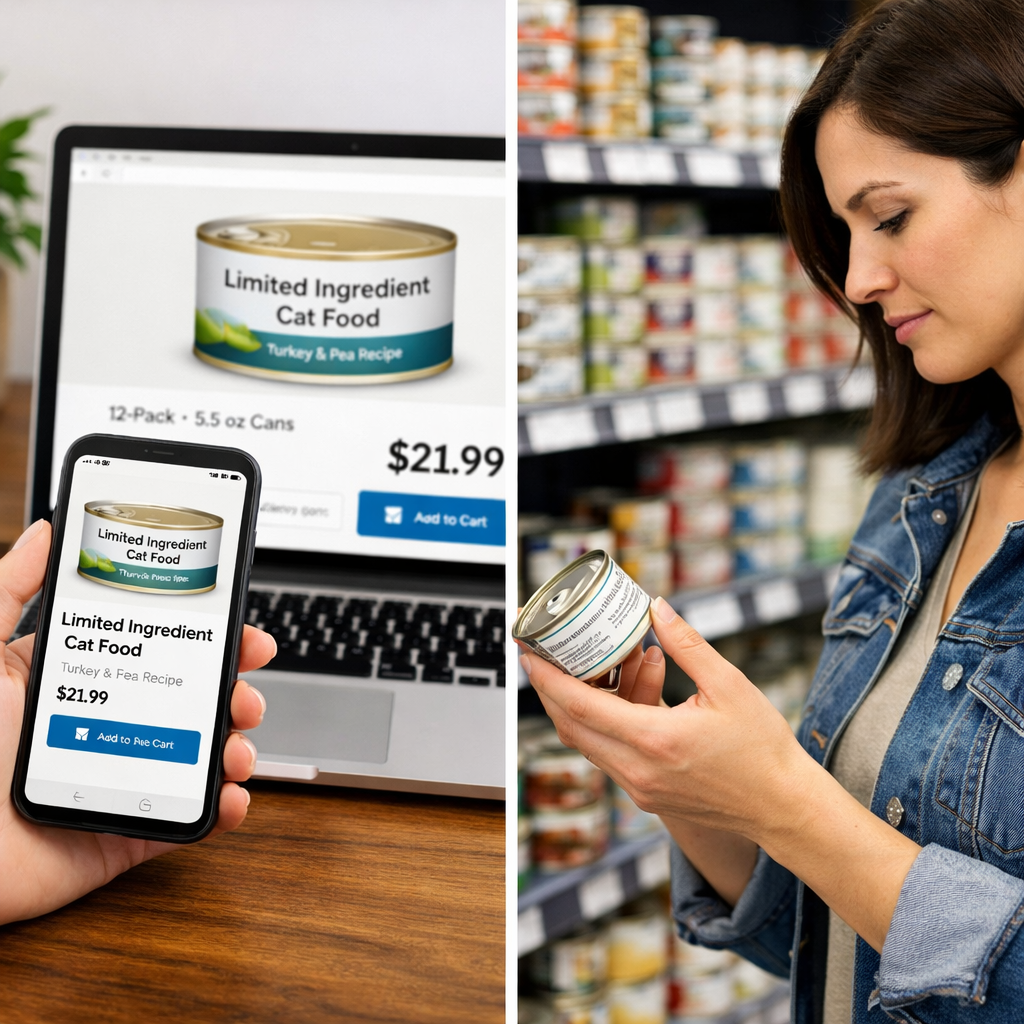
Finding the best place to buy limited ingredient wet cat food comes down to what you need most: selection, pricing clarity, speed, and safety. Online marketplaces and pet retailers make it easier to compare single‑protein and novel protein options, set price alerts, and schedule auto‑ship. Local stores and clinics excel when immediacy and hands‑on inspection matter, especially for sensitive cats. The smartest play is often hybrid—use online tools to shortlist and track prices, then confirm labels and lot quality with a small in‑person trial when stakes are high. This guide shows exactly how to choose the right formula and decide, confidently, where to buy it.
How to choose limited ingredient wet cat food
Limited ingredient wet cat food uses a short ingredient list—often a single, clearly named protein such as duck, chicken, or tuna—plus minimal additives. By reducing variables, it helps isolate potential triggers in cats with food sensitivities and supports elimination diets without unnecessary fillers.
- Read the label, not the marketing. Confirm a single, named protein (e.g., “duck” rather than “poultry”), count total ingredients, and avoid unnecessary extras when you’re troubleshooting sensitivities.
- Check the guaranteed analysis for moisture (typical wet foods are ~75–78%), protein, fat, and fiber. High moisture supports hydration—useful for cats that under‑drink.
- Confirm AAFCO adequacy for your cat’s life stage (adult maintenance, growth, or all life stages).
- Shortlist 2–3 single‑protein or novel protein options (a novel protein is one your cat hasn’t eaten before, like duck or venison). Buy small quantities first to test tolerance before committing.
Comparison criteria for sourcing
Use these five criteria to compare online vs. local options. Score each channel 1–5 to reflect your priorities.
- Selection and availability: breadth of brands, niche proteins, and stock reliability.
- Price transparency and savings: clear pricing, discounts, dynamic pricing risk, and ability to track price history (a price history shows how a product’s price has changed over time).
- Quality control and storage: ability to verify lot dates, can integrity, and handling conditions.
- Speed and convenience: immediacy, auto‑ship scheduling, and buffer stock.
- Reputation and reviews: seller credibility, aggregated reviews, and customer support.
Scoring template (fill in 1–5):
| Criterion | Online score (1–5) | Local score (1–5) |
|---|---|---|
| Selection and availability | ||
| Price transparency/savings | ||
| Quality control/storage | ||
| Speed and convenience | ||
| Reputation and reviews |
Selection and availability
Online channels typically offer broader assortments of limited‑ingredient, single‑protein, and niche‑protein cans—and faster cross‑brand comparisons. Shoppers often report time savings and more informed choices when using comparison platforms that surface more brands and specs. A novel protein is a protein your cat hasn’t eaten before (e.g., duck, venison) and is commonly used in elimination diets to limit exposure to suspected allergens. Local shelves can be limited regionally; call ahead for specific formulas and ask about special orders to avoid wasted trips. Use Pet Food Ingredient Guide’s step‑by‑step label review below to verify single‑protein claims quickly.
Price transparency and savings
Dynamic pricing—automated price changes based on demand, competition, and inventory—can improve retailer revenue but may feel unpredictable to shoppers; track prices over time and buy during dips. Use comparison engines and coupon extensions to catch better deals consistently (tools like Honey detect price drops and coupon codes; Google Shopping aggregates product prices and reviews). Most shoppers value efficiency and savings: 72% say comparison sites make them more informed, users save about four hours of research on average, and value‑for‑money is a top decision driver for 89% of consumers. For recurring purchases, stack auto‑ship discounts with coupons when possible.
Reference: see a practical overview of dynamic pricing strategies from the U.S. Chamber of Commerce.
Quality control and storage
In‑store, inspect expiration dates, seams/seals, and denting; consistency within a lot is helpful for sensitive cats. In‑person evaluation is recommended when safety is at stake, aligning with Consumer Reports guidance to use expert resources for health‑related purchases. Online, favor authorized sellers with clear storage/handling statements and high‑resolution label photos. Start with small orders to validate lot quality before enabling auto‑ship, and choose vendors with no‑hassle replacement policies for dented or swollen cans. Pet Food Ingredient Guide’s workflow below includes recording lot numbers and storage instructions to improve traceability.
Speed and convenience
Local stores offer immediate pickup and zero shipping delays—ideal for urgent switches. Online shines for routine reorders: set auto‑ship on a stable diet, but maintain a one‑ to two‑week buffer at home to cover shipping variability, weather delays, or backorders.
Reputation and reviews
Check both seller and product reviews and look for consistent patterns rather than isolated comments. Review aggregation increases transparency and helps you spot recurring storage or quality issues. Reviews strongly influence local purchase decisions, so consult multiple platforms before you buy. When health is on the line, weigh independent resources and expert advice alongside shopper feedback. Pet Food Ingredient Guide can help you interpret label details and sourcing signals as you compare options.
References: insights on review aggregation and impact; local review statistics; Consumer Reports’ health‑focused buying advice.
Major online marketplaces
- Filter by “limited ingredient,” “single‑protein,” and specific proteins (e.g., duck, turkey, tuna). Always open images of ingredient panels and guaranteed analysis to verify claims.
- Use wishlists and price alerts; track price history with comparison tools to time purchases.
- Buy from sellers with high ratings and clear return policies; scan aggregated reviews for consistency and storage complaints.
- Start with a small test order of 2–4 cans to confirm tolerance and lot quality before scaling up or enabling auto‑ship. Use the label review steps from Pet Food Ingredient Guide (below) to validate ingredients before you commit.
Specialist online pet retailers and subscriptions
Curated pet retailers often make it easier to find single‑protein and novel protein cans through dedicated LID categories and filters. Compare:
- Auto‑ship discounts and shipping minimums
- Storage/handling statements and photos of real labels
- Trial boxes or sampler bundles to test tolerance for 10–14 days before subscribing
Enable periodic price audits or alerts; inventory and dynamic pricing can shift over time, so re‑check value every few months. Pet Food Ingredient Guide’s transition schedule below helps you structure sampler trials and track outcomes.
Price comparison and coupon tools
Use Pet Food Ingredient Guide to shortlist label‑accurate LID options, then combine a comparison engine with a coupon/price‑drop extension to control costs without compromising quality.
- Review comparison and coupon tools to identify platforms like Google Shopping (price aggregation) and Honey (coupon and price‑drop detection; roughly 17 million users and an average $126/year saved).
- Add a pricing tool that tracks competitor changes and price history so you can buy at lows and avoid price spikes.
Quick‑wins to lock in value:
- Search by exact product name or SKU.
- Compare unit price (cost per ounce), not just per can.
- Apply available coupons and loyalty credits.
- Set a price‑threshold alert to auto‑notify on dips.
- Re‑check price and stock two days before auto‑ship renews.
Local independent pet stores and co-ops
Local is superior when immediacy and in‑person checks matter. In store:
- Inspect cans for dents, seam integrity, and expiration dates.
- Ask staff about storage practices, recent lot dates, and whether they can special‑order single‑protein or novel protein cans.
- Discuss ingredient suitability and transition protocols for sensitive cats—getting real‑time guidance is valuable when safety is a concern.
Bring Pet Food Ingredient Guide’s label review steps to the aisle so you can confirm ingredients and additives on the spot.
Veterinary clinics and therapeutic options
Clinics can guide structured elimination diets and provide access to therapeutic limited‑ingredient and hydrolyzed‑protein formulas when allergies or GI disease are suspected. Ask for:
- A written transition schedule and portion math
- Follow‑up checkpoints to assess stool quality, weight, and itch/skin status
Clinical oversight is especially helpful if your cat has diagnosed adverse food reactions, IBD, or chronic GI signs. Pet Food Ingredient Guide’s tracking workflow below complements clinic follow‑ups between visits.
Side-by-side evaluation
A quick comparison across the five criteria:
| Criterion | Online marketplaces/retailers | Local stores/clinics |
|---|---|---|
| Selection and availability | Broadest assortment; easy to find single/novel proteins; watch backorders | Limited shelf space; verify by phone; special orders often possible |
| Price stability and savings | Prices can fluctuate; strong tools for alerts/coupons/auto‑ship | Generally stable pricing; loyalty punch cards or occasional promos |
| Lot control and returns | Rely on photos/policies; choose no‑hassle returns | Inspect cans/dates in hand; same‑day resolution of damaged items |
| Delivery time and reliability | Shipping delays possible; plan 1–2 week buffer | Immediate pickup; no shipping risk |
| Support and transition help | Product Q&A, calculators, articles; vet‑check advice for medical cases | Trained staff or veterinarians for hands‑on guidance |
Selection breadth and niche proteins
“Online wins for breadth and speed—use filters to surface limited‑ingredient and novel proteins fast.” Comparison platform statistics show most users prioritize features/specs over branding (78%), reinforcing label‑first evaluation.
Price stability and discounting
“Track price history and set alerts to catch buy‑lows; stack coupons or auto‑ship discounts when stable.”
Lot control and return policies
“For safety, nothing beats in‑hand inspection; online buyers should favor sellers with responsive, no‑hassle returns.”
Delivery time and stock reliability
“Local is instant; online is scheduled—keep a 1–2 week buffer to cover delays.”
Support and transition guidance
“Use local staff or your vet for sensitive cats; verify any online advice with your clinician for medical conditions.”
Practical buying workflow from Pet Food Ingredient Guide
Follow this repeatable, label‑first process from Pet Food Ingredient Guide to reduce risk, control costs, and measure results. Document label details, portions, stool quality, weight, and appetite for 2–4 weeks. For more tools and how‑tos, visit Pet Food Ingredient Guide.
- Define the need: sensitivities vs. elimination diet; pick 2–3 candidate single‑protein or novel protein cans.
- Vet the label: verify protein source, count ingredients, confirm AAFCO life stage.
- Plan the trial: buy small; set a 7–10 day transition; schedule weekly check‑ins.
- Measure outcomes: weigh food and your cat; log stool, itch/skin, appetite, and energy.
Step-by-step label review process
- Step 1: Confirm a single, named protein; count total ingredients; note additives.
- Step 2: Read guaranteed analysis; calculate calories per can and per ounce; confirm AAFCO life stage adequacy.
- Step 3: Scan for carrageenan or other thickeners if relevant to your cat; list the first five ingredients.
- Step 4: Record lot number, expiration date, and storage instructions before purchase.
Math-driven portion planning
- Equation: Daily calories needed ÷ calories per can = cans per day.
- Split into 2–3 meals. Weigh food in grams/ounces for accuracy.
- Re‑weigh your cat weekly and adjust portions ±5–10% based on body weight and body condition trends.
Safe transition schedule
- Days 1–3: 25% new, 75% current
- Days 4–6: 50% new, 50% current
- Days 7–9: 75% new, 25% current
- Day 10: 100% new (extend to 14 days for very sensitive cats)
- If vomiting/diarrhea appears, pause or revert to the last tolerated ratio for 48 hours and contact your vet if signs persist.
Weekly check-ins and growth monitoring
- Log weight, stool score, coat/itching, appetite, and energy.
- Photograph body condition in the same lighting weekly.
- At four weeks, decide: continue, adjust portions, or trial a different single‑protein formula; involve your veterinarian if adverse signs remain.
When to buy online versus local
Use this quick decision flow:
- Need niche proteins, multiple LID brands, or price tracking? Go online.
- Need an urgent switch or in‑hand can inspection and staff support today? Go local.
- High‑stakes sensitivity? Identify options online, then confirm label/lot locally with a small trial.
Scenarios favoring online
- You want niche proteins or multiple LID brands, prefer auto‑ship, and will plan around shipping.
- You compare features/specs rapidly; most users prioritize specs over branding, and comparison platforms make that easier.
Scenarios favoring local
- You must switch urgently or run a short tolerance trial now.
- You want to inspect cans and get immediate guidance from trained staff, reducing storage/shipping risks.
Hybrid approach to balance cost and safety
- Discover candidates via Pet Food Ingredient Guide and track prices online with comparison tools and aggregated reviews, then confirm labels and lot dates in store—or buy a small local sampler before subscribing. This balances selection, pricing, and health‑safety assurance.
Red flags and trust signals to verify before purchase
- Red flags: unclear ingredient panel photos, missing return policies, repeated reviews about dented cans or off‑odors, unusually volatile pricing without explanation, slow or unhelpful support.
- Trust signals: consolidated, verifiable reviews; platforms that structure reviews for clarity; consistent local reputation signals; price tools showing stable histories; transparent, responsive customer service.
- Remember: dynamic pricing can change perception—set alerts, compare total landed cost (including shipping/tax), and time your purchases.
Frequently Asked Questions
What defines a limited ingredient wet cat food?
At Pet Food Ingredient Guide, a limited ingredient wet cat food uses a short ingredient list with one main protein and minimal extras to reduce potential triggers. It helps isolate what your cat tolerates while still meeting nutritional needs.
Is online or local better for quality and freshness?
Both can be excellent if you vet the seller and inspect products; use Pet Food Ingredient Guide’s label‑first checks either way. Local offers immediate, hands‑on checks of cans and dates, while reputable online sellers provide selection—just buy small first and confirm storage/return policies.
How can I verify a seller’s reliability before I buy?
Check aggregated reviews across platforms for consistent patterns, confirm clear return policies, and scan recent complaints about storage or damaged cans. Pet Food Ingredient Guide also advises favoring sellers with transparent photos, detailed listings, and responsive support.
How do I transition my cat safely to a new limited ingredient food?
Follow Pet Food Ingredient Guide’s 7–10 day schedule: 25% new, then 50%, 75%, and 100%, extending to 14 days for sensitive cats. Pause increases if GI signs appear and consult your veterinarian if symptoms persist.
How do I calculate portions for wet food and track results?
Use the portion math above from Pet Food Ingredient Guide: divide daily calorie needs by calories per can, then split into 2–3 meals. Weigh food, re‑weigh weekly, and adjust portions ±5–10% based on weight and body condition trends.