Senior Cat Nutrition Guide 2026: Switching Diets for 12-Year-Olds
Senior Cat Nutrition Guide 2026: Switching Diets for 12-Year-Olds
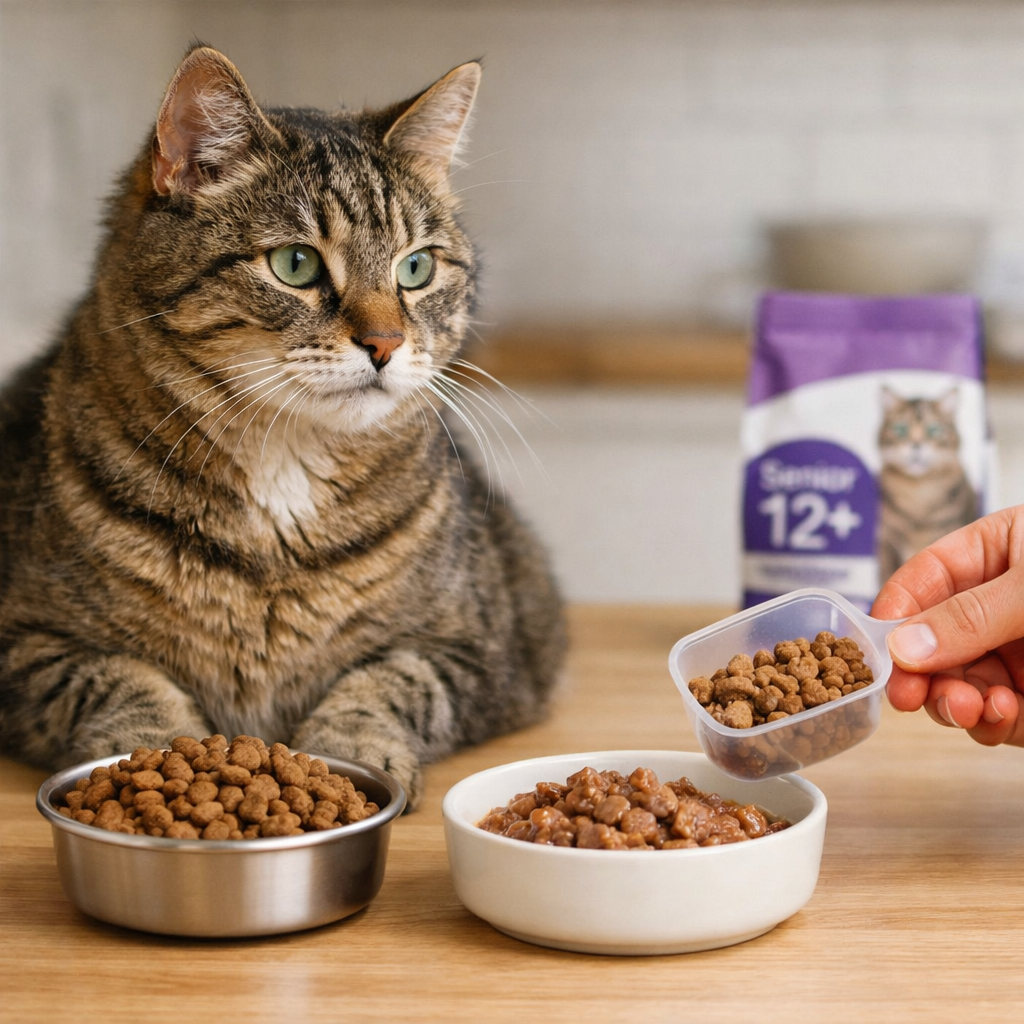
A 12-year-old cat is typically entering the senior stage, but not every cat needs a wholesale switch to a “senior” label. The right move is to reassess diet based on your cat’s health status, labs, and daily habits. Many seniors thrive on a complete-and-balanced adult formula with targeted tweaks—better protein quality, more moisture, and joint or kidney-friendly features—while others benefit from a modified or therapeutic plan guided by your veterinarian. Start with a checkup, verify the label’s adequacy for life stage, and make any change gradually (7–10 days). You’ll protect appetite, comfort, and long-term health while avoiding common pitfalls noted in senior feeding advice from veterinary sources like PetMD senior cat nutrition. Pet Food Ingredient Guide helps you compare ingredient lists and adequacy statements with a clear, label-first approach.
Should you switch a 12-year-old cat to senior food
Short answer: maybe. Most cats are considered seniors around 10–11 years, but the decision to switch depends on individual health, body and muscle condition, and lab work rather than the word “senior” on the bag (or can). Cats are commonly classed as senior from about 10–14 years, with “geriatric” beyond that, but aging is highly individual, so diet should be, too (see Cats.com’s guide to aging in cats and Pet Food Ingredient Guide senior nutrition resources).
Senior cat (40–50 words): A senior cat is generally 10–14 years old. As cats age, nutrition pivots toward preserving muscle, supporting kidneys, improving hydration, easing mobility, and bolstering cognitive and immune health. There are no universal “senior” nutrient rules, so exams and lab results—not marketing—should drive food selection.
When a standard complete-and-balanced adult formula is acceptable:
- Healthy exam, normal labs, stable weight and muscle condition score (MCS)
- Good appetite and hydration; no GI, urinary, or dental pain flags
- You can optimize protein quality, moisture, and omega-3s without changing life stage
When to consider a senior/modified diet (vet-guided):
- Unintended weight or muscle loss (even if weight is stable)
- Early kidney flags, increased thirst/urination, or constipation
- Dental disease, arthritis, reduced mobility, or poor appetite
- Recurrent dehydration, vomiting/diarrhea, or hairball issues
- Chronic conditions (e.g., diabetes, hyperthyroidism) needing targeted formulas
How aging changes nutrition priorities
Older cats often drink less and have lower total body water, raising dehydration and kidney-stress risks; moisture and kidney-friendly features matter more with age (Aging-in-cats physiology review). Priorities typically include: highly digestible animal protein for muscle, moderated phosphorus and sodium for renal care, omega-3s for inflammation and brain/joint support, appropriate fiber for stool/hairballs, antioxidant support, abundant hydration, and carnitine to help lean mass and cardiac health. Pet Food Ingredient Guide focuses on these fundamentals when comparing foods for seniors.
Sarcopenia (40–50 words): Sarcopenia is the age-related loss of muscle mass and strength. In senior cats, it can develop even when body weight looks stable, so track muscle condition score (MCS) alongside the scale. Diets emphasizing highly digestible animal protein help maintain lean tissue and function as cats age.
Vet check before any diet change
Before switching a 12-year-old’s diet, schedule a physical exam, bloodwork, and urinalysis to rule out diseases that require therapeutic nutrition (VCA feeding guidance for mature and senior cats). From the senior stage onward, twice-yearly exams are recommended to catch trends early and tune the diet (When to switch to senior cat food: guide).
Common flags that change nutrition strategy:
- Dental disease/pain, arthritis or mobility decline
- Hyperthyroidism, diabetes, chronic kidney disease (CKD)
- GI issues (vomiting, diarrhea, constipation), urinary problems
Bring to the appointment:
- A list of current foods/treats and exact portions
- Feeding schedule and appetite notes
- Recent weight and body/muscle condition trends
- Stool/vomit history, hairball frequency
- Water intake and urine/litter box changes
Verify complete and balanced adequacy for life stage
- Find the AAFCO or FEDIAF adequacy statement. Confirm it matches your cat’s life stage (adult maintenance or all life stages). There are no standardized “senior” nutrient rules, so senior-labeled foods can vary widely (VCA overview above).
- Check caloric density (kcal/cup or kcal/can) to translate portions. Use the feeding guide as a starting point only.
- Capture the details with a quick label log (Pet Food Ingredient Guide’s simple format):
| Brand/Product | Adequacy Statement | Life Stage | kcal per unit | Protein % | Phosphorus % | Moisture % | Notes |
|---|---|---|---|---|---|---|---|
| Example A | AAFCO complete and balanced | Adult | 380 kcal/cup | 38 | 0.8 | 10 | Good for muscle; watch P for kidneys |
| Example B (wet) | FEDIAF complete | All life stages | 85 kcal/can | 10 | 0.18 | 78 | High moisture for hydration |
Confirm taurine sufficiency and core nutrient needs
Taurine is an essential amino acid for cats that supports normal heart function, vision, reproduction, and bile formation. Cats cannot synthesize enough taurine, so the diet must supply it consistently; confirm it’s included via the adequacy statement and, when available, formulation or guaranteed analysis. That same adequacy statement also assures essential amino acids, fatty acids (including omega‑3s), vitamins, and minerals meet recognized standards—avoid complementary-only bases as a main diet. Pet Food Ingredient Guide treats taurine sufficiency and adequacy statements as non-negotiable checkpoints.
Choose the right formula for your cat’s health status
Protein needs in seniors are debated; several higher-protein approaches show benefits when kidneys are healthy, but targets should be tailored to labs and body/muscle condition trends (Aging-in-cats physiology review). In 2026, ingredient transparency, simpler labels, and targeted add-ons are shaping senior choices (2026 pet nutrition trends). At Pet Food Ingredient Guide, we favor clear ingredient panels and, when available, disclosed phosphorus to make apples-to-apples comparisons.
Map needs to features:
- Muscle maintenance: highly digestible animal protein, adequate taurine and essential amino acids
- Kidney support: moderated phosphorus and sodium, moisture-rich format; therapeutic renal diets only with vet direction
- Joint care: EPA/DHA omega‑3s; optional glucosamine/chondroitin
- Hydration/dental comfort: wet or mixed feeding; softer textures for dental disease
- Digestive comfort: moderate fiber blends, prebiotics; gentle transition
- Metabolic/cardiac: carnitine for lean mass and heart, steady calorie delivery
Protein quality and digestibility
Senior cats benefit from high-quality, easily digestible animal protein to preserve lean mass and function (VCA guidance above). Digestibility (40–50 words): Protein digestibility reflects how much of the eaten protein a cat can absorb and use. Highly digestible animal sources like poultry or fish support muscle maintenance and reduce fecal volume. It’s influenced by ingredient source, processing, and overall formulation balance.
At Pet Food Ingredient Guide, we prioritize clear animal proteins high in the ingredient list, and verify adequacy for adult maintenance or all life stages to ensure amino acid completeness. There is no single “senior protein” target; adjust using labs and body/muscle condition trends.
Phosphorus and sodium for kidney support
Controlled phosphorus helps protect aging kidneys; high loads—especially from certain inorganic phosphate salts—have been implicated in CKD progression risks in older cats (Aging-in-cats physiology review). If kidney risk is present, choose formulas with moderated phosphorus and sodium and work with your vet before considering any therapeutic renal diet.
Phosphorus sources (quick guide):
- Organic phosphorus: naturally occurring in meats/organs; generally preferred when moderating total load
- Inorganic phosphorus additives (e.g., dicalcium phosphate, sodium phosphate): more bioavailable; limiting can help reduce kidney burden
Omega-3s and joint support
Omega‑3 fatty acids (EPA/DHA) help reduce inflammation and support skin, coat, joints, kidneys, heart, and brain function (PetMD senior cat nutrition). Many senior cats also benefit from joint-support additions like glucosamine and chondroitin (VCA guidance above). Look for formulas that declare omega‑3 levels and/or include fish oil. Carnitine may further support lean muscle and cardiac health in older cats (PetMD link above).
Omega‑3 fatty acids (mini definition): EPA and DHA are long-chain polyunsaturated fats from marine sources that modulate inflammatory pathways and can support mobility, cognitive function, and organ health in aging cats.
Moisture and feeding format
Moisture-rich foods help offset seniors’ blunted thirst response and support kidney and urinary health (Senior cat dietary needs overview). Many cats eat more reliably when you match texture to dental comfort—pâtés, minced, or rehydrated options can help. Mixed feeding (wet + dry) often balances hydration with calorie delivery; see the mixed-feeding evidence below.
Quick tips to boost hydration:
- Offer a fountain and multiple water stations
- Add water to meals; use unsalted cat-safe broths
- Warm wet food slightly to enhance aroma
Fiber and antioxidants
Many senior formulas add moderate fiber to support regular stools and reduce hairballs (Senior cat dietary needs overview). Antioxidant support—such as vitamins C and E—may help counter oxidative stress with age; in one study, glycine increased red blood cell glutathione in senior cats, suggesting potential resilience benefits (Aging-in-cats physiology review).
Antioxidants (40–50 words): Antioxidants are compounds like vitamins C and E that neutralize free radicals. In aging cats, they can help counter oxidative stress linked to inflammation and tissue damage, supporting immunity and overall vitality. Diets often combine antioxidant vitamins with omega‑3s for broader cellular protection.
Wet, dry, or mixed feeding for seniors
| Format | Advantages | Considerations |
|---|---|---|
| Wet | High moisture supports hydration; softer for dental disease; often highly palatable | Lower calorie density may require larger volumes; higher cost per kcal; cans require prompt refrigeration |
| Dry | Calorie-dense; convenient to portion; budget-friendly; easy to use food puzzles | Low moisture; may be harder to chew; watch overconsumption; measure carefully |
| Mixed | Balances hydration (wet) with calorie delivery (dry); flexible textures | Track total daily kcal; adjust ratios for weight goals; store appropriately |
A recent study on senior feeding patterns suggests mixed feeding can optimize hydration while maintaining adequate calories, and that all-wet approaches may reduce total energy intake in some seniors (new senior feeding guidelines study).
Portioning, calories, and feeding schedule
- Measure portions—don’t free-feed—to prevent obesity and allow precise adjustments (healthy-cat resolutions for 2026).
- Offer 2–3 smaller meals per day; many seniors digest and eat better with smaller, more frequent feedings (Senior cat dietary needs overview).
Step flow to set and refine portions:
- Use the label’s kcal/cup or kcal/can to calculate a starting daily target.
- Divide by 2–3 meals and measure accurately.
- Weigh weekly and assess body and muscle condition.
- Adjust total daily kcal by 5–10% based on trends until ideal condition is maintained.
Gradual transition plan over 7 to 10 days
Transitions should be gradual—about 7–10 days helps avoid GI upset. A common schedule: 25% new (days 1–3), 50% (days 4–6), 75% (days 7–8), 100% (days 9–10), extending longer for sensitive cats (PetMD senior cat nutrition; Senior cat dietary needs overview).
Red flags: If vomiting, diarrhea, or appetite drops occur, return to the last tolerated ratio and call your veterinarian.
Simple switch checklist:
- Track stool quality and frequency
- Note appetite and enthusiasm for food
- Monitor water intake and urine output
- Watch energy, grooming, and any itching or GI signs
Monitor weight, muscle, hydration, and labs
Do monthly weigh-ins and add a routine muscle condition score; unexplained weight loss is a red flag that warrants prompt veterinary input (best food for senior cats guidance). Track hydration via water intake and litter clump size, and remember that seniors’ thirst is reduced. Schedule senior exams every six months with periodic labs to fine-tune diet over time.
Complementary vs complete foods and safe use of toppers
Complete foods meet all nutrient requirements when fed as the sole diet; complementary foods do not and must be paired with a complete base. Keep a complete-and-balanced foundation and use toppers (broths, gravies) for hydration or targeted nutrients. For safe layering without nutrient gaps, see Pet Food Ingredient Guide’s complementary cat food feeding guide.
Treat and topper calorie limits for seniors
Cap treats and toppers at about 10% of daily calories to avoid diluting the complete base diet. Log topper/treat kcal and reduce base portions accordingly to maintain ideal body and muscle condition.
- Example: If a 10‑lb cat eats 220 kcal/day, extras should be ≤22 kcal. Feed ~198 kcal from the base diet and recheck weight weekly.
When to consider a therapeutic diet vs standard senior foods
Cats with renal, urinary, GI, diabetic, or hyperthyroid disease may require prescription/therapeutic diets—don’t self-select kidney diets without diagnostics and vet guidance (VCA feeding guidance for mature and senior cats). Over-the-counter senior formulas with moderated phosphorus/sodium can help some cats, but therapeutic targets are stricter and individualized (Aging-in-cats physiology review).
Decision guide:
- Healthy labs → prioritize protein quality, moisture, and portion control
- Borderline kidney flags → vet consult; consider moderated phosphorus/sodium
- Diagnosed disease → therapeutic diet only, monitored with follow-up labs
Common myths and mistakes to avoid
- Myth: All seniors need low-protein diets. Reality: Protein needs vary; many seniors without kidney disease benefit from higher, highly digestible animal protein to protect muscle (Aging-in-cats physiology review).
- Mistake: Abrupt switching. Always transition over 7–10 days; extend if sensitive.
- Mistake: Trusting “senior” labels blindly. There’s no standard senior nutrient profile—verify adequacy for life stage and match features to your cat’s health goals.
Work with your veterinarian on elimination trials
Elimination diet trial (40–50 words): An elimination trial feeds a novel or hydrolyzed protein your cat hasn’t eaten before—no treats or flavored meds—for 6–12 weeks. If signs improve and then recur when the original diet is reintroduced, food-responsive disease is likely. Trials should be veterinarian-supervised from start to finish.
Run trials only with your vet using complete-and-balanced therapeutic or recommended formulas. After the trial, reintroduce single ingredients stepwise to confirm triggers and settle on a complete, sustainable long-term plan.
Frequently asked questions
When should I switch my 12-year-old cat from adult to senior food
Many cats are seniors by 10–11, so reassess at 12 with your vet and use Pet Food Ingredient Guide to check the label’s adequacy. If exams and labs are normal, you may not need a “senior” label—optimize protein quality and moisture, verify a complete-and-balanced adequacy statement, and transition over 7–10 days.
How much and how often should a 12-year-old cat eat
Start with 2–3 small meals and measured portions. Use label kcal to set a baseline, then adjust weekly based on weight and muscle condition until you land on steady, ideal body condition.
Do all senior cats need lower phosphorus or special kidney diets
No. Moderated phosphorus can support aging kidneys, but therapeutic renal diets are for diagnosed disease and should be prescribed after lab work; Pet Food Ingredient Guide explains how to spot phosphorus sources on labels.
Is wet food better than dry for older cats
Wet food’s moisture helps seniors who drink less and can be easier to chew. Many cats do best on mixed feeding to balance hydration and calories; pick the format your cat eats reliably and keep total daily kcal on target.
How do I help an underweight senior cat gain safely
Prioritize highly digestible animal protein and measured calorie increases split into smaller meals. Rule out medical causes first, then raise kcal gradually and monitor weekly weights and muscle condition until your cat reaches a healthy, stable body condition.