Sensitive Stomachs? Gentle Complementary Cat Foods That Support Kibble
Sensitive Stomachs? Gentle Complementary Cat Foods That Support Kibble
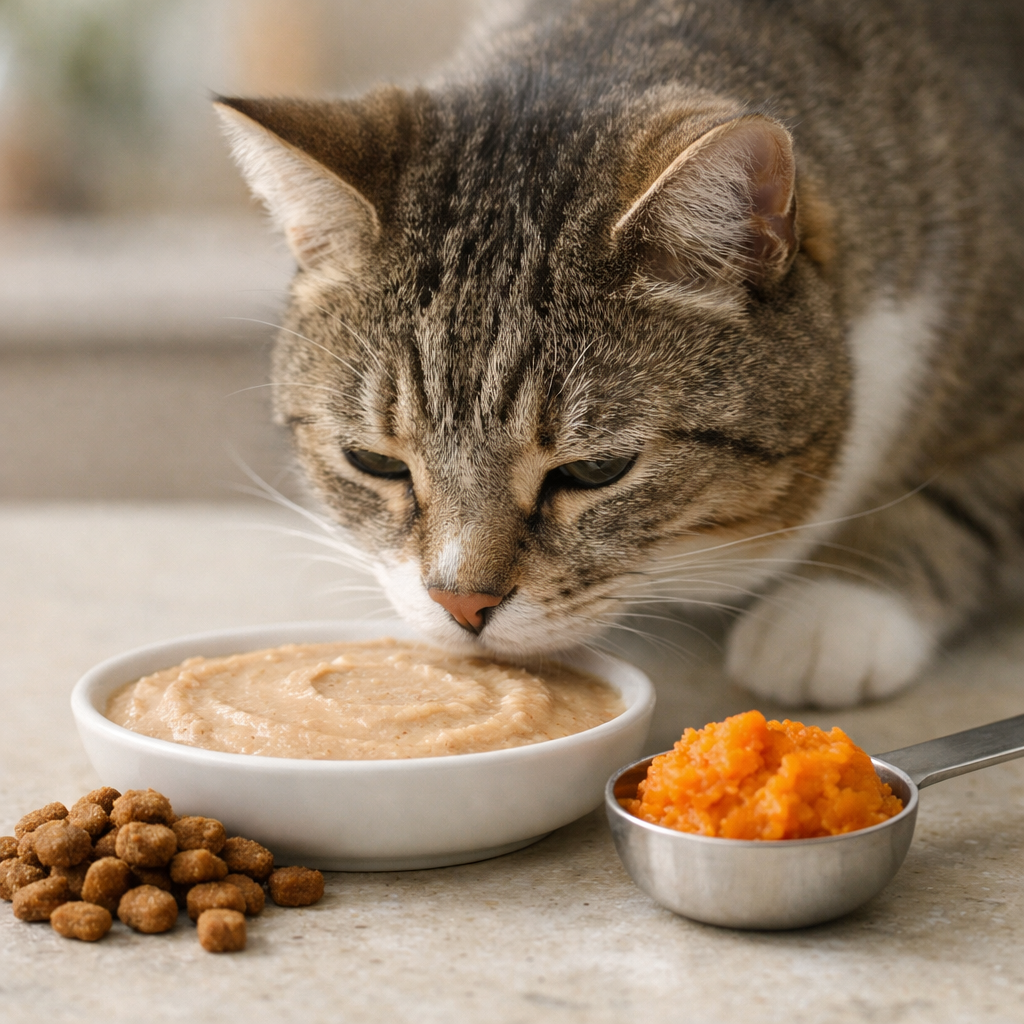
Cats with sensitive stomachs often do best when you keep their base kibble steady and add gentle, complementary foods for moisture, palatability, and gut support. Which options pair best with dry food? Look for thin broths and gravies to coat kibble, pâté-style limited‑ingredient toppers for smooth mixing, and rehydrated freeze‑dried mixers for moisture without a full diet change. Below, we decode labels, portion the calories, and map a safe, two‑week transition—so you can test single proteins, add pre/probiotics, and improve hydration while preserving complete nutrition.
What complementary cat food means and how it supports kibble
Complementary cat food is a non-complete product—such as toppers, broths, pâtés, or mixers—designed to be fed with a complete diet (often dry kibble). It boosts moisture, flavor, and functional support (e.g., fiber or probiotics) but does not meet AAFCO nutrient profiles by itself.
Why add it to kibble?
- Hydration: typical wet foods contain about 75–78% moisture, while kibble averages 10–12%, a gap that matters for digestion and urinary health, according to a widely cited guide to sensitive-stomach cat food from Business Insider (moisture figures included there) Business Insider guide to sensitive-stomach cat food.
- Palatability: enticing aromas and textures encourage consistent intake.
- Digestive support: toppers can deliver gentle fibers (e.g., pumpkin, oats) and prebiotics that feed beneficial gut bacteria.
Signs of a sensitive stomach vs true food allergy
Food intolerance is a non-immune reaction—often to certain proteins, fats, or additives—that causes gastrointestinal signs like vomiting, loose stool, or flatulence. A food allergy is immune‑mediated, commonly showing skin itching plus GI signs; diagnosis requires a controlled elimination diet trial led by your veterinarian.
Most “sensitive stomach” cases are intolerances rather than true allergies. Common triggers include specific proteins (often chicken, beef), dairy, and some additives. If allergic disease is suspected or symptoms are severe, veterinarians may recommend a hydrolyzed‑protein diet to minimize immune reactions during diagnosis and management; see this PetMD overview of what to feed sensitive cats for how and when to escalate to prescription options PetMD on feeding cats with sensitive stomachs.
Label-first criteria for gentle complementary foods
Choose toppers and mixers the same way you would a primary diet—by reading the label. This mirrors how we evaluate toppers at Pet Food Ingredient Guide.
Prioritize:
- Highly digestible animal proteins such as chicken, turkey, rabbit, duck, or salmon.
- Simple recipes with clearly named meats and fats.
- Functional, gentle fibers for stool quality (e.g., pumpkin; small amounts of oat‑based soluble fiber can slow transit and support consistency).
- Prebiotic fibers (e.g., inulin, chicory root) that nourish beneficial gut bacteria.
- Transparent moisture and calorie data to enable precise portioning.
Avoid (especially during GI flares):
- Dairy (most adult cats are lactose intolerant).
- Artificial colors, flavors, and unnecessary preservatives.
- Known individual triggers (e.g., a specific protein you’re trialing to exclude).
Functional add-ins that aid digestion and stool quality
- Prebiotics (40–50 words): Non‑digestible fibers—including inulin and chicory root—that selectively feed beneficial gut bacteria. By increasing short‑chain fatty acids, they help support a more resilient microbiome, improve stool quality, and may reduce gas. You’ll see them listed on labels as “inulin,” “chicory root,” or “prebiotic fiber” a guide to sensitive-stomach nutrition.
- Probiotics (40–50 words): Live microorganisms that reinforce a healthy gut balance, aid nutrient digestion, and may help calm GI‑related inflammation. They’re available as powders or soft chews and can be mixed into meals; look for listed strain IDs (e.g., Enterococcus faecium) and viable CFU counts veterinary overview on sensitive-stomach diets.
- Postbiotics (40–50 words): Beneficial compounds (like metabolites and cell components) produced when probiotics ferment fibers. Postbiotics can deliver immediate biochemical support—such as strengthening the gut barrier and modulating local inflammation—even without live microbes present a guide to sensitive-stomach nutrition.
Fermentable fibers to look for: pumpkin (gentle bulking and moisture retention), beet pulp (a mixed fiber often used to support stool quality), and oats (soluble fiber for slower transit).
| Add-in type | What it does | Label terms to find | How to introduce |
|---|---|---|---|
| Prebiotic fiber | Feeds beneficial bacteria; firms stools | Inulin, chicory root, prebiotic fiber | Sprinkle small amount daily; increase over 3–5 days |
| Probiotic | Adds live beneficial microbes; may reduce GI inflammation | Named strains (e.g., E. faecium), CFU count | Start with half dose; feed with meals for 7–14 days |
| Postbiotic | Delivers microbial metabolites for gut/immune support | “Postbiotic,” “fermentation product,” “metabolites” | Use per label; pair with a prebiotic for synergy |
| Pumpkin/beet pulp/oats | Improve stool consistency and comfort | Pumpkin, beet pulp, oat fiber | 1–2 tsp pumpkin or label‑directed amounts in topper |
Wet toppers and broths that improve hydration
The hydration gap between wet (about 75–78% moisture) and dry (about 10–12%) is substantial; many veterinarians recommend adding wet components for cats with frequent digestive issues to boost moisture intake and ease digestion (see moisture figures in the Business Insider source linked above). What pairs best with kibble?
- Thin broths and gravies to lightly coat kibble and raise total meal moisture.
- Pâté‑style toppers for even mixing and consistent texture—less selective eating.
- Rehydrated raw/freeze‑dried mixers that reach roughly 70% moisture when prepared as directed; this format can add protein variety without a full diet swap a discussion of sensitive-stomach solutions.
Fiber‑forward wet examples to evaluate: digestive‑care pâtés or thin slices that note “insoluble fiber” on the label (e.g., veterinary digestive‑care lines), and broths that include inulin or pumpkin.
Limited-ingredient and single-protein mixers for trials
A limited‑ingredient diet restricts the recipe to one animal protein and a simplified carbohydrate source to reduce variables. Short ingredient lists improve transparency and control—useful during sensitivity trials where you add a topper without changing the base kibble. At Pet Food Ingredient Guide, we lean on LID toppers to keep trials clean and focused.
How to use them:
- Start with single‑protein poultry or fish toppers that match your cat’s current kibble, then pivot to a novel protein (e.g., duck, rabbit) if chicken or turkey is suspect.
- LID/single‑protein toppers are a recognized, practical way to identify triggers before considering a full diet change or veterinary prescription.
Market data show growing availability of sensitive‑stomach options featuring novel proteins and streamlined ingredient lists, reflecting strong consumer demand for gentler, more digestible formats Sensitive Stomach Cat Food Market overview.
Probiotic, prebiotic, and postbiotic complements
- What to seek on labels: named probiotic strains with CFU counts; clearly listed prebiotic fibers (inulin/chicory); optional postbiotics or fermentation products.
- Convenient formats: powders and soft chews are easy to mix into meals or offer as treats; many are designed for sensitive stomachs and daily use a practical guide.
- Why add them: balancing the microbiome can support digestion and may help reduce GI inflammation during flares veterinary overview on sensitive-stomach diets.
Introduce gradually (half dose for 3–5 days) and monitor stool quality, gas, and appetite.
Portion math for mixing complementary foods with kibble
Keep toppers at 10–20% of daily calories so you don’t unbalance nutrition.
A simple framework:
- Start at 10% of daily calories; if tolerated and your vet agrees, increase to 15–20%.
- Example for a 10 lb (4.5 kg) cat eating ~200 kcal/day:
- 10% topper = 20 kcal/day.
- If a topper is 90 kcal per 3 oz can, 20 kcal is about 0.67 oz (roughly 1/4 can). Subtract 20 kcal from the kibble allotment to keep total calories at 200.
- Atomic steps:
- Identify your cat’s daily calorie target (weight/BCS).
- Check topper kcal per can/oz (or per pouch).
- Calculate topper calories (10–20% of daily).
- Subtract topper calories from kibble calories.
- Recheck weight and stool weekly; adjust.
For more math help and label decoding, see our label‑decoding approach at the Pet Food Ingredient Guide Pet Food Ingredient Guide.
Step-by-step selection process
- Define the goal: hydration, stool firming, palatability, or protein trialing.
- Audit the current kibble: note primary protein, fiber type and amount, and any known triggers.
- Shortlist complements with digestible proteins, prebiotic fibers, and no artificial colors/flavors.
- Choose a wet topper or broth to close the moisture gap.
- If sensitivity is suspected, pick a limited‑ingredient or single‑protein option and trial one protein at a time.
Quick comparison table (examples to evaluate—always verify label details):
| Format | Protein source | Fiber/prebiotics | Additives | Moisture | Ideal pairing goal |
|---|---|---|---|---|---|
| Pâté‑style wet topper (e.g., digestive‑care thin slices) | Match kibble protein (e.g., chicken) | Insoluble fiber or inulin noted | Prefer no artificial colors/flavors | ~75–80% | Hydration + stool quality |
| Functional broth/gravy pouch | Single protein named first | Inulin/chicory or pumpkin | Avoid carrageenan if sensitive | ~90–95% | Hydration + palatability |
| Rehydrated freeze‑dried mixer | Single or novel protein (duck/rabbit) | Usually minimal; add pumpkin separately if needed | Short ingredient list | ~60–70% rehydrated | Protein trial + moisture |
| LID single‑protein topper | Single protein + simple carb | Pumpkin/beet pulp | “Limited ingredients” on label | ~75–80% | Sensitivity trials |
Safe transition schedule with weekly check-ins
A gentle 7–14 day plan minimizes GI upset and clarifies what’s working.
- Days 1–3: 5% of daily calories from topper. Observe stool and any vomiting.
- Days 4–7: 10% topper calories. Continue logs.
- Days 8–14: 15–20% topper calories if symptoms remain stable.
Feeding pattern: small, frequent meals reduce regurgitation; large single meals can increase gastric retention, so split feedings to support digestion. Keep a weekly check‑in:
- Appetite and interest in food
- Stool form (loose, formed, hard)
- Vomiting frequency
- Water intake/urination
- Energy/behavior
- Skin/itch changes
Monitoring outcomes and when to consult your veterinarian
Within 2–4 weeks, look for: more consistent stools, fewer vomiting episodes, stable weight/body condition, and good appetite. Escalate care if you see persistent diarrhea, weight loss, blood in stool/vomit, or dehydration—your vet may recommend a hydrolyzed or prescription novel‑protein diet for highly allergic cats (see PetMD linked above). Some digestive‑care wet formulas that include insoluble fiber may also help constipation; hydration‑focused toppers can support overall moisture intake.
Frequently asked questions
How do I match a complementary topper to my cat’s current kibble?
Match the primary protein (e.g., chicken with chicken) and choose a wet topper or broth to raise moisture for easier digestion; prioritize short ingredient lists with a prebiotic, then introduce gradually over 1–2 weeks. Pet Food Ingredient Guide’s label‑first checklist in this article can help you compare proteins and fibers.
What ingredients should I prioritize or avoid for sensitive stomachs?
Prioritize digestible animal proteins, gentle soluble fibers (pumpkin, oats), and listed prebiotics/probiotics; avoid dairy, artificial colors/flavors, and any suspected protein triggers.
How much topper should I add without unbalancing nutrition?
Keep toppers around 10–20% of daily calories; subtract topper calories from the kibble portion and feed in small, frequent meals while monitoring stool, vomiting, and appetite weekly. The portion‑math framework above from Pet Food Ingredient Guide shows the steps.
Can complementary foods replace a complete diet for sensitive cats?
No—complementary foods are designed to be added to a complete diet; use them to improve hydration, palatability, and gut support while your cat’s primary nutrition remains complete and balanced.
What should I do if my cat’s symptoms don’t improve after adding toppers?
Stop new add‑ins and consult your veterinarian; discuss an elimination trial or a hydrolyzed‑protein diet and bring a 2–4 week log of meals, stool quality, vomiting frequency, and any behavioral changes. Pet Food Ingredient Guide’s check‑in list above outlines what to track.