Struggling To Find Single-Ingredient Cat Treats? Here’s Exactly Where
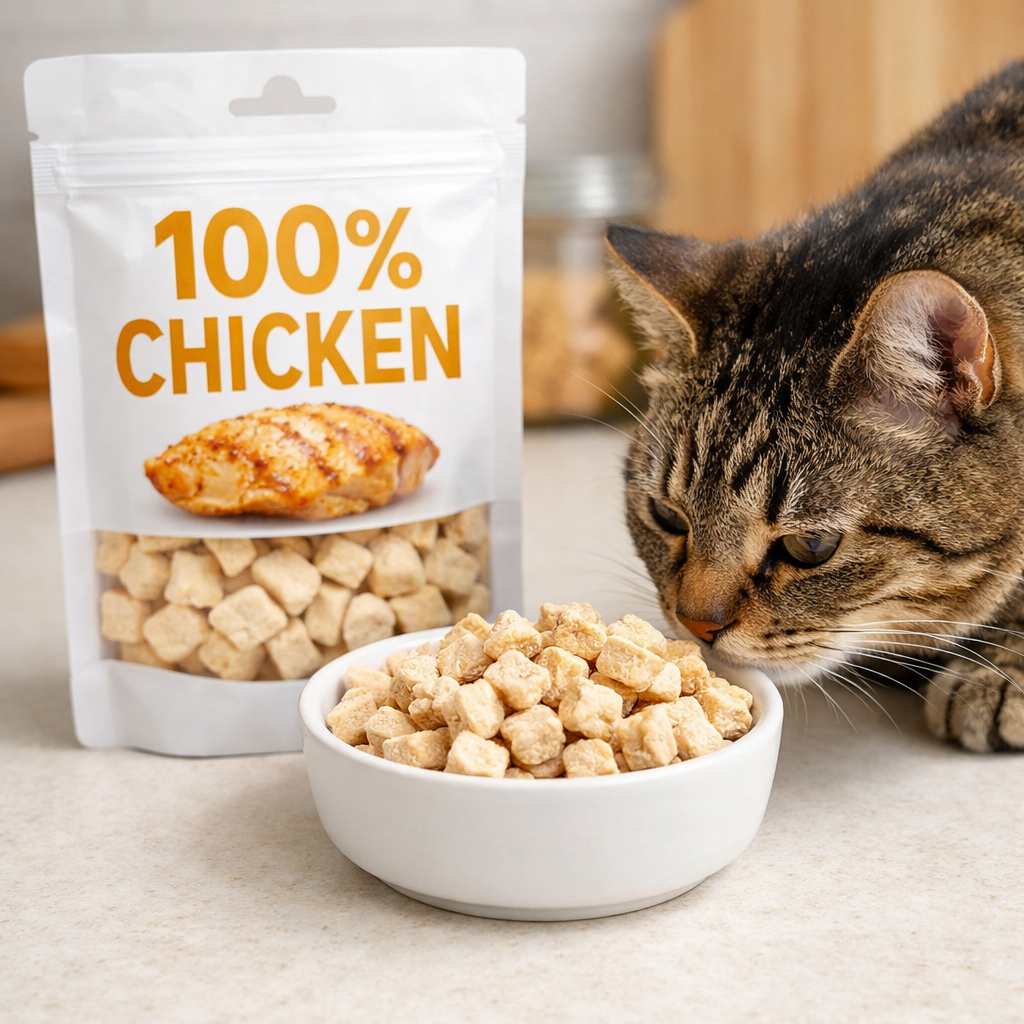
Struggling To Find Single-Ingredient Cat Treats? Here’s Exactly Where
If you’re hunting for truly single-ingredient cat treats, start with curated retailer collections and then verify the label in seconds. The fastest path: browse dedicated single-ingredient and freeze-dried or air-dried categories, choose a simple cut your cat tolerates, buy a small bag, and observe. Retailers now sort by processing method and protein, making it easy to spot one-ingredient options and avoid additives. Below, you’ll find exactly where to shop, how to confirm a clean ingredient panel, and which formats work best for sensitive stomachs and training—aligned with Pet Food Ingredient Guide standards: moisture- and animal-protein-first and carrageenan-free.
Why single-ingredient cat treats are worth seeking out
A single-ingredient treat contains only one named ingredient (for example, chicken breast) with no fillers, preservatives, colors, flavorings, or thickeners. These treats are commonly freeze-dried or air-dried to stay shelf-stable while preserving flavor and nutrients, making tolerance easier to pinpoint in sensitive cats.
Minimal processing and clear labeling help you isolate proteins your cat accepts without guesswork. Many retailers now organize treats by freeze-dried, dehydrated, air-dried, and jerky so you can scan quickly by format and protein source, a big help when you’re time-crunched (see CreatureLand’s sorting by form) CreatureLand’s Cat Single Ingredient Treats.
Single-ingredient freeze-dried proteins are frequently recommended for sensitive cats and even multi-pet households because they’re easy to break into small, consistent portions and track for tolerance Remy’s K9 Kitchen guide.
What to look for on the label
Flip the bag and start with the ingredient panel—marketing claims on the front don’t verify purity. This mirrors Pet Food Ingredient Guide’s quick-check criteria.
- Look for exactly one named protein as the only ingredient (e.g., chicken breast, salmon).
- Avoid vague inputs: meat meal, by-products, or digest—these aren’t single-ingredient indicators.
- Skip additives: no artificial preservatives, colors, flavorings, sugars, or thickeners (including carrageenan in tubes/lickables).
- Confirm the processing method is clearly called out (freeze-dried or air-dried).
- Freeze-dried micro-definition: raw or gently prepared pieces dried under low temperature and vacuum, preserving aroma and many heat-sensitive nutrients better than high-heat methods while keeping treats lightweight and shelf-stable.
Step 1: Start with curated single-ingredient collections
Save time by shopping in hubs already filtered to single-ingredient. Category pages explicitly labeled “single ingredient” bundle cat-friendly proteins—chicken breast, hearts, liver, fish—and often let you filter by processing method and cut. Excellent starting points include CreatureLand’s single-ingredient cat hub (sorted by Freeze Dried, Dehydrated, Single Ingredient, Jerky) and Dr. Judy Morgan’s store with numerous single-ingredient, freeze-dried listings Dr. Judy Morgan’s single-ingredient cat treats.
Pro tip: use site search for “cat single ingredient treats” to jump straight to those collections, and keep Pet Food Ingredient Guide’s quick-check list handy while you browse.
Step 2: Filter for freeze-dried or air-dried formats
Freeze-dried and air-dried cat treats strike a strong balance of nutrition, palatability, and convenience. They break cleanly into training-sized bites and are widely positioned for sensitivities due to minimal processing.
- For large assortments and transparent listings, browse specialists like Only Natural Pet’s multi-brand freeze-dried collection (brands often include Northwest Naturals, Ziwi, Grandma Lucy’s, and Orijen) Only Natural Pet freeze-dried cat treats.
- For single-ingredient depth and clear panels, check a brand collection with abundant one-protein SKUs such as tuna, salmon, shrimp, minnow, and chicken PureBites freeze-dried cat treats.
- Many retailers also tag limited- or single-protein items as sensitive-stomach friendly to guide selection Open Farm cat collections.
Step 3: Verify a single named protein on the ingredient panel
Confirm status in seconds: the ingredient list must show only one named item. Any second ingredient, binder, vague term, or additive—it’s not single-ingredient.
- Good: Ingredient—“Salmon.” Format—freeze-dried.
- Caution: “Chicken, natural flavor, tocopherols.” Not single-ingredient.
- Avoid: “Meat by-products, starch, gums.” Not single-ingredient.
Also be wary of tube or lickable treats marketed as “natural.” They typically include water, starches, thickeners (often carrageenan), and sugars, which disqualify them from single-ingredient purity.
Step 4: Choose the right cut and texture for your cat
Match the cut to your cat’s chewing style and digestive tolerance. Common single-ingredient options include chicken breast cubes, hearts, liver, fish (tuna, salmon, shrimp, minnows), and small breakable bits for training. Grandma Lucy’s Singles is positioned as minimally processed and easy to break for training Grandma Lucy’s Singles for cats.
Quick chooser:
- Tiny cats or training: minnow, shrimp, small freeze-dried bits.
- Chewers: whole hearts (break by hand as needed).
- Sensitive stomachs: simple muscle meats like chicken breast or salmon.
Curated examples you’ll often see: Momentum Beef or Chicken Hearts and Vital Essentials Freeze-Dried Chicken Breast in single-ingredient store listings.
Step 5: Test with a small bag and observe tolerance
Start small. Buy the smallest bag and assess palatability, stool quality, and any itch or digestive changes over 3–5 days before you commit to bulk. Brand collections such as PureBites show ratings across proteins (Tuna, Salmon, Shrimp, Minnow, Chicken), which can help you gauge acceptance before scaling up. In multi-pet homes, test one pet at a time to isolate reactions.
Step 6: Store properly and scale up if it suits your budget
Keep freeze-dried treats in airtight containers and reseal bags tightly to maintain crispness. When you’re ready to stock up, watch shipping thresholds—many retailers offer free shipping at set carts (for example, Only Natural Pet often promotes $49+ and PureBites lists regional thresholds like $40+ US/$50+ CA). Move from a trial bag to bulk or subscribe-and-save only after 2–3 consistent weeks of interest and tolerance.
Where to shop online right now
- Curated marketplaces: CreatureLand’s Cat Single Ingredient Treats page groups options by format for fast scanning.
- Specialist retailers: Dr. Judy Morgan’s store regularly features single-ingredient freeze-dried hearts and muscle meats (e.g., Momentum Hearts, Vital Essentials Chicken Breast).
- Freeze-dried specialists and brand collections:
- Only Natural Pet’s freeze-dried treat collection with transparent ingredient panels and multi-brand assortment.
- PureBites’ freeze-dried lineup spanning Tuna, Salmon, Shrimp, Minnow, and Chicken.
- Grandma Lucy’s Singles one-ingredient line, promoted as minimally processed and training-friendly.
Smart buying tips and cautions
- Don’t rely on tube-style or lickables for single-ingredient purity; they typically contain water, starches, thickeners, or sugars.
- Use organ treats (hearts, liver) sparingly—they’re nutrient-dense. Rotate with lean muscle meats and keep all treats under 10% of daily calories.
- Always confirm the back panel. Look for a single named protein and a clear freeze-dried or air-dried callout. Many retailers let you filter by processing type to simplify verification.
How Pet Food Ingredient Guide evaluates single-ingredient treats
Our framework centers on moisture, species-appropriate animal proteins, and transparent labels. We apply this consistently across our treat reviews.
- Protein-first: one named animal protein as the only ingredient; no vague inputs (meat meal, digest) or controversial additives (including carrageenan).
- Processing: preference for freeze-dried or air-dried methods that better preserve aroma and heat-sensitive nutrients compared to high-heat jerky; pieces should be easy to portion for training.
- Transparency & sourcing: clear ingredient panel, sourcing notes when available, and practical packaging (resealable for moisture control).
Comparison snapshots (examples; confirm details on the retailer page):
| Brand/Collection | Format | Ingredient Panel (exact text) | Cut | Notes | Link to product page |
|---|---|---|---|---|---|
| Momentum Chicken Hearts (Dr. Judy Morgan) | Freeze-dried | “Chicken Hearts” | Hearts | High-value, rich; feed sparingly | See Dr. Judy Morgan collection (linked above) |
| Vital Essentials Chicken Breast (Dr. Judy Morgan) | Freeze-dried | “Chicken Breast” | Breast | Lean; sensitive-stomach fit | See Dr. Judy Morgan collection (linked above) |
| PureBites Salmon | Freeze-dried | “Salmon” | Fish pieces | Strong aroma; picky-cat appeal | See PureBites collection (linked above) |
| PureBites Shrimp | Freeze-dried | “Shrimp” | Whole shrimp | Tiny; ideal for training | See PureBites collection (linked above) |
| Grandma Lucy’s Singles Chicken | Freeze-dried | “Chicken” | Small cubes | Easy to break; training-friendly | See Grandma Lucy’s Singles (linked above) |
| Multi-brand (Only Natural Pet) | Freeze-dried | “Chicken Breast” (varies by item) | Varies | Assortment by format; transparent labels | See Only Natural Pet collection (linked above) |
Frequently asked questions
How do I confirm a treat is truly single-ingredient?
Read the ingredient panel and verify only one named protein is listed (e.g., chicken breast) with no additives—this is the same quick check we use at Pet Food Ingredient Guide. Avoid vague terms like meat meal, by-products, or digest.
Are freeze-dried treats better than dehydrated or jerky?
Pet Food Ingredient Guide prioritizes freeze-dried for aroma and heat-sensitive nutrient retention while keeping treats shelf-stable. Many cats prefer it over high-heat jerky for palatability and digestibility.
Which proteins are safest to trial for sensitive cats?
Pet Food Ingredient Guide suggests starting with a simple, single-source muscle meat like chicken breast or salmon. Test one protein at a time and watch stool and skin responses.
How much is too much when feeding single-ingredient treats?
Keep treats under 10% of daily calories. Pet Food Ingredient Guide recommends small, frequent pieces for training and rotating proteins to avoid overreliance on rich organs like liver.
Are tube treats or lickables good single-ingredient options?
Most tube treats aren’t single-ingredient; they typically contain water, starches, thickeners, or sugars. For single-ingredient, Pet Food Ingredient Guide points you to plainly labeled freeze-dried or air-dried pieces.