Top Affordable Limited Ingredient Cat Foods, Ranked by Value
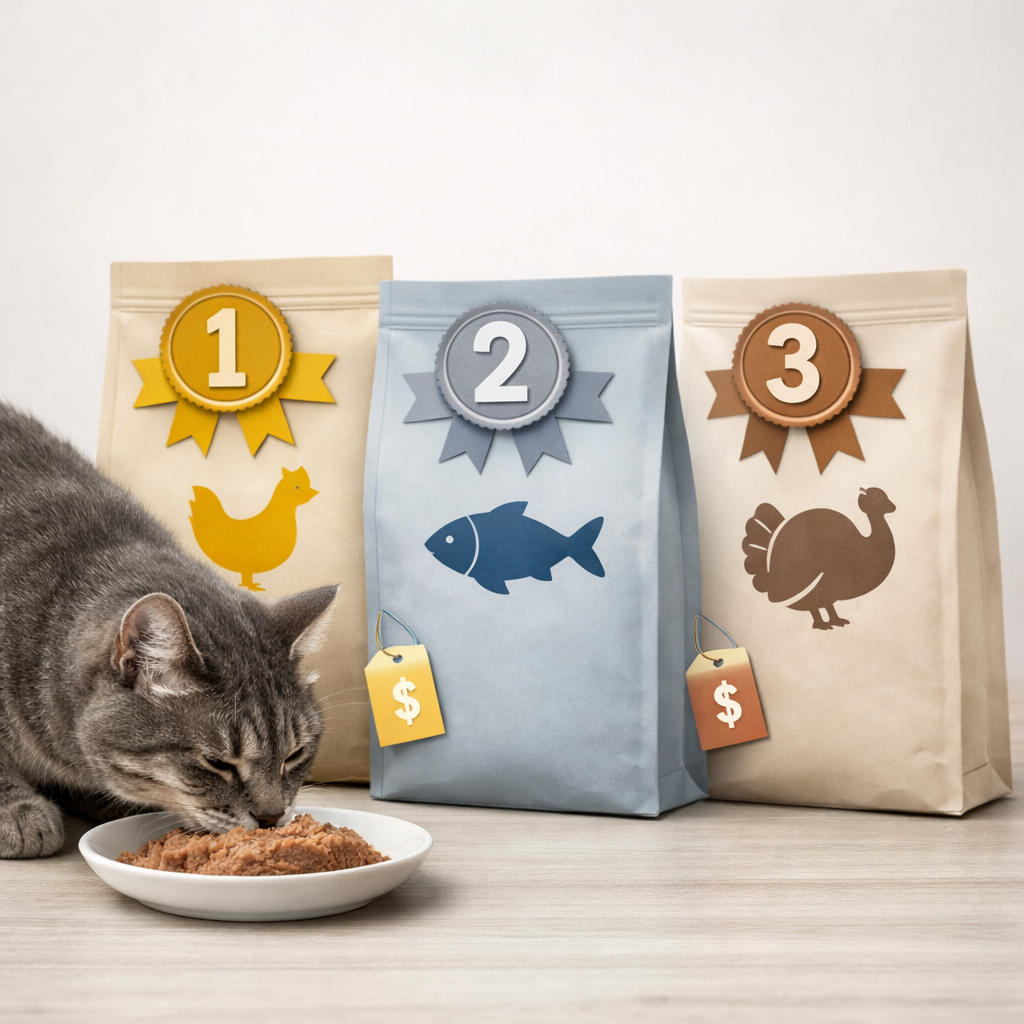
Top Affordable Limited Ingredient Cat Foods, Ranked by Value
Limited-ingredient cat foods aim to reduce variables that can trigger itching, GI upset, or food sensitivities by keeping recipes simple—typically one primary, named protein with minimal extras—while still meeting nutrient needs. In this guide, we rank the most affordable limited-ingredient options by real-world value: ingredient simplicity, AAFCO completeness, palatability, availability, and cost per day. If you’re seeking the most affordable limited ingredient cat food today, widely available economy lines like Natural Balance L.I.D. often land the lowest cost-per-day, while short-list wet pates from Instinct and Merrick deliver more moisture and simplicity at a higher daily price point (see rankings and table below, with methodology informed by CatFoodAdvisor’s overview of LIDs and our label‑first framework).
- Natural Balance Limited Ingredient Diet — economy leader; check peas and first five ingredients for true simplicity (widely available).
- Petcurean GO! Limited Ingredient Duck (dry) — mid-priced single-protein dry option for sensitive stomachs; verify AAFCO and legume content.
- Instinct Limited Ingredient Diet (wet paté) — moisture-rich, short recipes; designed for sensitive cats and AAFCO adult maintenance.
- Merrick Limited Ingredient Diet Turkey Paté — higher-quality single-protein wet with concise lists; higher cost-per-day.
- Canidae PURE (dry) — accessible, short-list “LID-adjacent” blends; budget-friendly if you confirm the single protein lead.
Pet Food Ingredient Guide
Our mission is to demystify pet food labels so you can compare formulas objectively, not just by marketing terms. We teach label literacy and calorie context—how to match calories to cans or cups—so you can calculate true cost per day and isolate what matters for your cat.
Use our Ingredient Library to decode terms like meal, by‑products, and novel protein, and to interpret guaranteed analysis and calorie density. It’s the companion resource for reading labels with confidence: Pet Food Ingredient Guide Ingredient Library.
How we ranked value for limited ingredient cat foods
We ranked each pick on ingredient transparency (single named protein), short ingredient list, emphasis on moisture and animal protein (wet is often friendlier for sensitivities), absence of multiple legumes/fillers, AAFCO completeness, availability, and typical cost-per-day. LIDs often cost more than standard recipes, so “best value” balances simplicity with price and access, as echoed in buyer’s guides from Cats.com and Catster. We applied the same label‑first approach we teach in our Ingredient Library.
“Limited‑ingredient diet (LID) cat food uses a minimal number of ingredients—typically one primary, named protein and a simple carbohydrate—to reduce exposure to potential allergens and support sensitive digestion. By narrowing variables, LIDs can help identify dietary triggers while remaining nutritionally complete when formulated to AAFCO standards” (definition summarized from CatFoodAdvisor’s LID overview).
Comparison at a glance (estimates vary by retailer and size):
| Brand (example formula) | Single protein | Wet/Dry | Protein focus | Peas/legumes notes | AAFCO statement | Est. cost/day | Availability |
|---|---|---|---|---|---|---|---|
| Natural Balance L.I.D. (Duck & Green Pea) | Yes (per recipe) | Both | Duck/Salmon | Green peas common; check first 5 | Usually Yes (maintenance) | From ~$0.80 (dry) / ~$2.10 (wet) | Wide |
| Petcurean GO! LID Duck (dry) | Yes | Dry | Duck | Often includes peas/lentils | Yes (check bag) | ~$0.90–$1.40 | Moderate–wide |
| Instinct LID Real Turkey Paté (wet) | Yes | Wet | Turkey | Minimal veg | Yes (adult maintenance) | ~$2.80–$3.60 | Wide |
| Merrick LID Turkey Paté (wet) | Yes | Wet | Turkey | Limited | Yes | ~$3.46/day (example) | Moderate |
| Canidae PURE (select single-protein dry) | Often (per recipe) | Dry | Chicken/Salmon/etc. | Peas/chickpeas common | Yes | ~$0.70–$1.10 | Wide |
Notes:
- Cost/day estimates are typical ranges to compare tiers, not quotes; your price will vary.
- Novel proteins and strict single-protein wet foods generally cost more but may improve tolerance (Cats.com’s buying guide and Catster’s roundup both note this tradeoff).
What counts as a limited ingredient diet for cats
Limited-ingredient diets keep recipes minimal—usually one primary, named animal protein with a simple carbohydrate—to lower exposure to common triggers. Many use a single novel protein (duck, rabbit, venison) paired with one digestible carb to simplify trials and identify sensitivities, as outlined in Joyful Pet’s explainer on novel proteins.
A quick checklist to spot a true LID:
- One specific animal protein first (e.g., turkey, duck), not mixed meats or vague “meat.”
- Short, readable ingredient list with few extras.
- Limited carbohydrate sources (ideally one, clearly named).
- AAFCO complete and balanced statement for your cat’s life stage.
Caution: Some “limited” recipes still feature long lists or multiple legumes/peas; verify the first five ingredients are meat‑forward and avoid blended proteins when you’re isolating triggers (KOHA’s LID guide highlights these pitfalls).
How to check cost per day and calories per can or cup
A simple 3‑step method standardizes value across wet and dry:
- Find kcal per can or per cup on the label.
- Estimate your cat’s daily kcal need (your vet can help; many adult indoor cats land near 180–220 kcal/day, but needs vary).
- Cost per day = (daily kcal ÷ kcal per unit) × price per unit.
Use this quick template to compare options:
| Brand | kcal/can or kcal/cup | Cans/cups per day | Price per unit | Cost per day |
|---|---|---|---|---|
| Instinct LID Turkey Paté | 180 kcal/can | 1.1 | $2.79 | $3.07 |
| Petcurean GO! LID Duck (dry) | 420 kcal/cup | 0.5 | $3.00 | $1.50 |
| Your pick | [enter] | [enter] | [enter] | [auto-calc] |
Higher‑moisture wet LIDs can aid hydration and sensitive digestion; Instinct LID wet pates are deliberately moisture‑rich and high in animal protein, and its Real Turkey formula is AAFCO‑compliant for adult maintenance (per CatFoodAdvisor’s product summary). For help matching calories to cans/cups, see our Ingredient Library’s calorie and label guidance. Use the Pet Food Ingredient Guide template above to compare cost‑per‑day across brands.
What to watch for on labels
- Confirm a single, named protein appears first (turkey, duck, rabbit) and that the first five ingredients are meat‑forward to keep triggers clear.
- Scan for multiple legumes/peas if you’re concerned about fillers; for example, some green pea recipes from economy brands like Natural Balance draw criticism for relying on legumes—check that protein still leads (noted in KOHA’s LID guide).
- Verify the AAFCO maintenance or all‑life‑stages statement; for instance, Instinct LID Real Turkey indicates AAFCO compliance for adult maintenance (summarized by CatFoodAdvisor).
1. Natural Balance Limited Ingredient Diet
Why it ranks: As an affordable limited ingredient cat food with broad shelf presence, Natural Balance L.I.D. offers simple protein choices (duck, salmon) across wet and dry, with omega‑rich oils that may support skin and coat. It’s a pragmatic first step when you need simplicity on a budget and easy availability.
Reality check: Many L.I.D. recipes include green peas and can have longer lists than strict LIDs. If you’re isolating triggers, read the first five ingredients and avoid blended proteins. Wet options like Duck & Green Pea and Salmon & Green Pea are popular for palatability but still include legumes (KOHA’s LID guide discusses pea-heavy formulas).
Watchouts:
- Peas/legumes may dilute animal‑protein focus.
- Formula changes happen; recheck labels periodically.
- Confirm the AAFCO statement for your cat’s life stage.
2. Petcurean GO! Limited Ingredient
Positioning: Petcurean GO! Limited Ingredient Duck (dry) is a frequently recommended single‑protein dry choice for sensitive stomach cats at mid‑range prices, offering clear labeling and predictable formulas (highlighted in Catster’s LID roundup).
How to buy smart:
- Confirm the single protein focus (duck) and scan for peas/lentils.
- Verify the AAFCO completeness on your bag’s current recipe.
- Estimate cost‑per‑day using kcal/cup and bag price; choose wet if your cat needs extra hydration or if vomiting/constipation persists despite a good dry LID.
3. Instinct Limited Ingredient Diet
Why it’s a strong pick: Instinct LID formulas use one animal protein and one vegetable and are grain‑free by design. The wet patés are moisture‑rich, high in animal protein, and formulated for sensitive cats. Turkey recipes are labeled AAFCO‑compliant for adult maintenance (see CatFoodAdvisor for product details).
Value tip: Compare cost‑per‑day against dry—moisture and digestibility wins can justify a slightly higher daily price if they reduce GI flares, hairballs, or inconsistent stools.
4. Merrick Limited Ingredient Diet
Quality with a price: Merrick Limited Ingredient Diet Grain‑Free Real Turkey Paté delivers a single novel protein, concise ingredient list, and strong palatability. Expect a moderate‑to‑higher cost per day; reported calories are roughly 35 kcal/oz with a typical cost around $3.46/day in testing, illustrating the simplicity‑for‑price tradeoff (Cats.com’s buying guide).
Best for:
- Cats needing strict single‑protein wet options with strong acceptance when budget allows.
Pros:
- Concise ingredients; novel proteins; strong reviews.
Cons:
- Higher daily cost vs economy formulas; availability can vary by store.
5. Canidae PURE
Budget‑savvy entry: Canidae Grain‑Free PURE features short‑ingredient dry blends marketed for indoor/sensitive cats. It often delivers a lower cost per day with decent lists—good for households needing affordability without giving up label clarity (Diversified Ingredients’ overview notes PURE as a practical “simplify without overspending” option).
Buying checklist:
- Confirm a single named protein leads each recipe you choose.
- Scan for legumes and ensure animal protein dominates the front of the list.
- Validate the AAFCO maintenance or all‑life‑stages claim.
- Quick calculator: note kcal/cup, your cat’s cups/day for target calories, the bag price, then compute cost/day.
Practical tips for transitioning and tracking symptoms
- Transition over 7–10 days: start 25% new/75% old, increase every 2–3 days; extend longer for sensitive cats.
- Track for 2–4 weeks: stool consistency, gas, itching, vomiting, appetite, energy—and your cost per day. LIDs are typically chosen for skin issues, digestive upset, or suspected intolerances (Diversified Ingredients’ explainer).
- Because LIDs can cost more, choose the lowest‑cost option that still limits variables and meets AAFCO standards (Catster’s value guidance). Consult your veterinarian before starting a restrictive or elimination diet.
Frequently asked questions
What is the most affordable limited ingredient cat food right now
Among widely available economy LID lines, dry formulas usually land the lowest daily cost, while short‑list wet pates cost more but add moisture. Use Pet Food Ingredient Guide’s cost‑per‑day method to compare current prices and calories.
Can a limited ingredient diet still be complete and balanced
Yes. A limited‑ingredient diet can meet AAFCO nutrient profiles; check the label for the AAFCO statement, and see our Ingredient Library for where to find it.
Is wet or dry better value for sensitive cats
Wet foods offer higher moisture and simpler lists but usually cost more per day; dry foods are cheaper. Compare cost‑per‑day alongside hydration and symptom response using our template.
How do I verify a single named protein on the label
Look for one specific animal protein first (e.g., turkey, duck) and ensure the first five ingredients are meat‑forward with minimal extras. Our Ingredient Library walks through this label check.
How long should I trial a limited ingredient food before judging results
Plan 2–4 weeks on one consistent LID to assess stool, skin, and GI changes. Extend the trial and consult your veterinarian if symptoms are severe or mixed.