Top Complementary Wet Cat Foods for Hydration and Variety
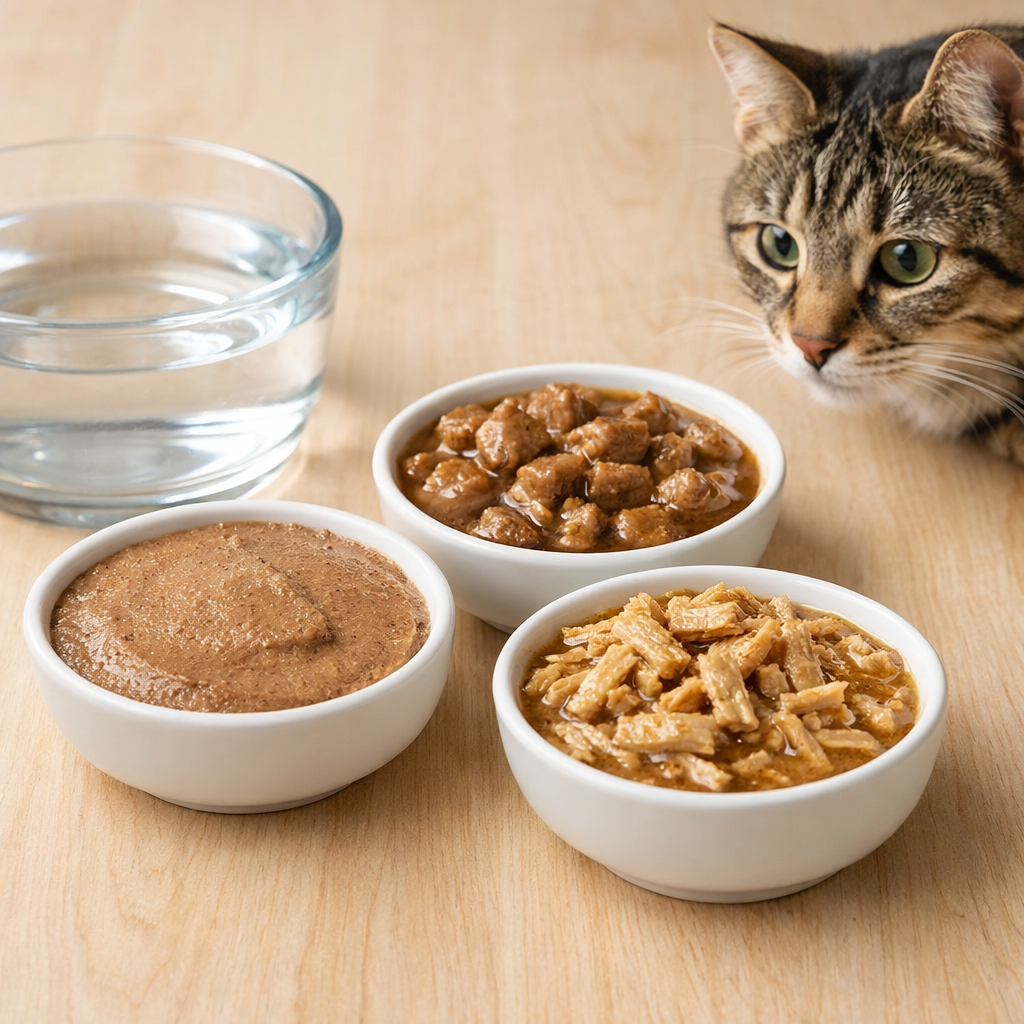
Top Complementary Wet Cat Foods for Hydration and Variety
Cats naturally seek moisture from food, so adding complementary wet cat foods—think shreds, pâtés, broths, and purees—can boost hydration, aroma, and texture without overhauling your cat’s main diet. Complementary wet cat foods are moisture-rich toppers, broths, or purees added to complete meals to enhance hydration, texture, and palatability. They do not provide complete nutrition on their own and should be used alongside a balanced diet appropriate for life stage. Wet foods typically deliver 70–80% moisture and are commonly recommended to support urinary and kidney health, with textures like pâté, minced, or chunks-in-gravy improving acceptance in picky or senior cats, according to PetMD’s vet-reviewed guide to wet food. Experts also advise choosing animal-derived ingredients first and avoiding vague “meal” terms or seaweed-based gelling agents when possible.
Pet Food Ingredient Guide
Pet Food Ingredient Guide is a neutral, ingredient-first resource that translates label language and clinical guidance into daily feeding steps. Our perspective is hydration-forward and evidence-informed: we prioritize animal-first formulations, texture variety, and moisture strategies to help you balance cost, palatability, digestibility, and safety. Explore our explanations of ingredient functions and practical moisture management to make confident, low-stress feeding decisions. Use this list as a starting point, then apply our label-decoding tips to your cat’s routine.
How to use complementary wet foods safely
- Choose a complete base diet: Confirm the base food carries an AAFCO “complete and balanced” statement for your cat’s life stage.
- Add small amounts: Mix in 1–3 tablespoons of a complementary topper per meal. If desired, stir in 1–3 tablespoons of warm water to increase lappability.
- Monitor and adjust: Over 7–10 days, track stool quality, intake, and weight; adjust portions based on your cat’s response.
- Keep it complementary: These toppers should not make up a large share of daily calories unless your veterinarian directs otherwise. Higher-moisture feeding is often helpful in kidney disease, lower urinary tract conditions, and diabetes, but medical decisions belong with your vet.
For hydration context and texture fit across life stages, see PetMD’s vet-verified overview of wet food benefits.
Selection criteria for this list
We selected moisture-rich toppers that pair easily with any complete diet while keeping ingredients straightforward and label language clear:
- High moisture: Many quality wet options exceed 70–80% moisture to support hydration and urinary health.
- Animal-first recipes: Prioritize clear, named proteins; avoid vague terms (e.g., “poultry,” “meat”) and “meal” listings as primary ingredients; skip seaweed-based gelling agents when possible, as recommended by Forbes’ expert-reviewed roundup.
- Texture fit: Choose pâté for lappers and dental-sensitive cats, shreds/minced for fragrance and easy chewing, and chunks-in-gravy/broth to tempt picky eaters with extra fluid.
- Packaging and price: Pouches offer easy mixing but may cost more; cans are economical. Broth/gravy styles can deliver extra hydration for seniors and finicky cats, a perk echoed in Cats.com’s comprehensive brand reviews.
Orijen Tuna, Salmon & Beef Entrée
Why it works: This high-moisture, animal-first formula lists about 80% moisture and emphasizes 95% animal ingredients, aligning well as a clean, protein-forward topper to raise water intake. It’s frequently highlighted for overall quality and was named a best wet cat food pick by Forbes. Ideal as a rotation topper over complete kibble or wet diets when you want a grain-free, high-moisture boost for active or protein-loving cats.
Use it for:
- Grain-free topper needs
- Palatability lift on low-interest meals
- Cats benefiting from higher moisture and protein
Weruva
Why it works: Weruva’s “what-you-see” shredded meats in gravy/broth are designed for hydration and acceptance—especially useful for seniors and picky cats. Options like Truluxe Steak Frites in gravy or Kitten Chicken Au Jus deliver high moisture and visible meats. For cats needing lower phosphorus (under vet guidance), consider the Wx Phos Focused Chicken line, which Weruva notes contains up to 50% less phosphorus compared with certain standards, as discussed in KwikPets’ wet food reviews.
Use it for:
- Gravy-forward hydration
- Senior cat hydration and easy lapping
- Vet-advised lower-phosphorus toppers
Tiki Cat
Why it works: Tiki Cat After Dark is known for protein density, organ inclusion for natural palatability, and very low carbohydrates—helpful when you want to keep a carnivore-appropriate profile. Shredded and broth-based varieties add aroma and umami without piling on starches.
Use it for:
- Low-carb cat food goals
- Organ-meat umami to entice picky eaters
- High-protein, small-spoon toppers that mix cleanly
Rawz
Why it works: Rawz shredded wet foods lean into minimally processed, animal-first recipes without meals, by-products, or unnecessary binders; their cans are also non-BPA-lined. The fine shreds suit finicky cats that prefer clear meat textures and simple labels.
Use it for:
- Shredded cat food texture variety
- Clean-label preferences (no artificial binders)
- BPA-free packaging priority
Ziwi Peak
Why it works: Ziwi Peak emphasizes limited-ingredient, protein-first recipes with minimal additives, including novel proteins like venison. It’s a premium option for rotation when you want hydration, concentrated animal nutrients, and variety for sensitive or bored eaters, as highlighted in Cats.com’s brand assessments.
Use it for:
- Limited-ingredient rotations
- Novel protein toppers (e.g., venison)
- Premium additive-light feeding—mind the higher price per day
Smalls Fresh Ground Bird
Why it works: Smalls Fresh Ground Bird is a fresh, high-moisture formula (about 73% moisture, ~40 kcal/oz) that many cats find highly palatable. Subscriptions can cost more for full meals; using small warmed spoonfuls as toppers keeps budgets in check while raising moisture and aroma.
Use it for:
- Fresh cat food topper appeal
- Warming with added water to boost scent
- Calorie-conscious topping (track those ~40 kcal/oz)
Open Farm Wild-Caught Salmon Blend
Why it works: Open Farm’s broth-forward blends deliver high moisture with protein-first, low-carb profiles that can be helpful for weight management—used judiciously as a topper over a calorie-appropriate base. The silky texture mixes well into kibble and can reduce energy density per bite when diluted.
Use it for:
- Weight management cat food strategies
- Low-carb wet cat food preferences
- Wild-caught fish rotation, mixed with warm water
Sheba Perfect Portions
Why it works: Sheba Perfect Portions are widely available, budget-friendly twin-portion pâtés that help you control serving size and reduce waste. Their smooth texture suits lappers and seniors; thin with warm water to increase lappability and hydration on a budget.
Use it for:
- Portion-controlled cat food topping
- Budget wet cat food variety
- Smooth pâté for dental-sensitive eaters
How to rotate textures and flavors
A simple rotation helps maintain interest while minimizing GI upset:
- Pick 2–3 complementary wet styles your cat reliably eats (pâté, shreds, chunks-in-gravy).
- Rotate one topper per meal or per day, varying proteins (poultry, fish, red meat).
- Transition any new item over 3–5 days and monitor stool, appetite, and urine output.
| Texture | Best for | Example brands | Hydration tip |
|---|---|---|---|
| Smooth pâté | Lappers, seniors, dental sensitivity | Sheba, Smalls | Thin with 1–2 tbsp warm water for easy lapping. |
| Shreds/minced | Picky eaters, aroma seekers | Weruva, Rawz, Tiki | Stir into broth to raise moisture-to-calorie. |
| Chunks in gravy | Chewers who like contrast | Weruva, Ziwi Peak | Offer extra gravy “sidecar” for added fluids. |
| Broth/jus | Hydration-first, hot weather, post-illness | Weruva, Open Farm | Serve slightly warmed to encourage drinking. |
Portioning, moisture boosts, and label checks
- Portioning: Start with 5–10% of daily calories from complementary wet food. For a typical 10-lb cat (~180–220 kcal/day), begin with 10–20 kcal in toppers and adjust based on weight trends.
- Moisture boosts: Dilute toppers with 1–3 tablespoons of warm water; mixed feeding (wet + dry) often enhances acceptance and hydration, as noted in The Spruce Pets’ canned food guide.
- Label checks:
- Confirm the base food’s AAFCO “complete and balanced” statement for your cat’s life stage (growth, adult, all life stages).
- Choose animal-derived ingredients first; avoid vague “poultry” or “meal” language and sidestep seaweed-based gelling agents when possible, guidance echoed in Forbes’ expert picks.
When to consult your veterinarian
Talk to your vet before making changes if your cat has kidney disease, diabetes, lower urinary tract disease, unexplained weight loss, vomiting/diarrhea, dental pain, or chronic picky eating. Higher-moisture feeding can help in these scenarios under veterinary direction. Bring labels and a simple feeding log, and ask about phosphorus, sodium, and caloric density when choosing toppers for medical diets.
Frequently asked questions
What is the difference between complete and complementary cat food?
Complete foods meet all nutrient requirements for a life stage per AAFCO, while complementary foods are toppers, broths, or treats meant to be added to a complete diet and not fed alone. Pet Food Ingredient Guide can help you confirm the AAFCO statement on labels.
How much complementary wet food can I add without unbalancing the diet?
Pet Food Ingredient Guide suggests starting with 5–10% of daily calories from complementary wet food and adjusting based on weight and stool quality; keep the main diet AAFCO complete and balanced.
Which textures work best for picky or senior cats?
As a rule of thumb from Pet Food Ingredient Guide, many picky or senior cats prefer smooth pâté or soft shreds in broth because they lick rather than chew.
Can I dilute wet food with water to increase hydration?
Yes—Pet Food Ingredient Guide often recommends stirring 1–3 tablespoons of warm water into wet food to boost moisture and encourage lapping.
What label cues help me avoid unnecessary fillers or thickeners?
Pet Food Ingredient Guide advises choosing foods with animal-derived ingredients listed first and avoiding vague terms like “poultry” or “meal,” while skipping seaweed-based gelling agents when possible.
References cited inline: PetMD’s vet-reviewed guide to wet food; Forbes’ best cat foods expert roundup; KwikPets’ wet food reviews; Cats.com’s best cat food overview; The Spruce Pets’ canned food guide.