Top Low-Calorie Wet Cat Foods for Weight Loss, 2026 Guide
Top Low-Calorie Wet Cat Foods for Weight Loss, 2026 Guide
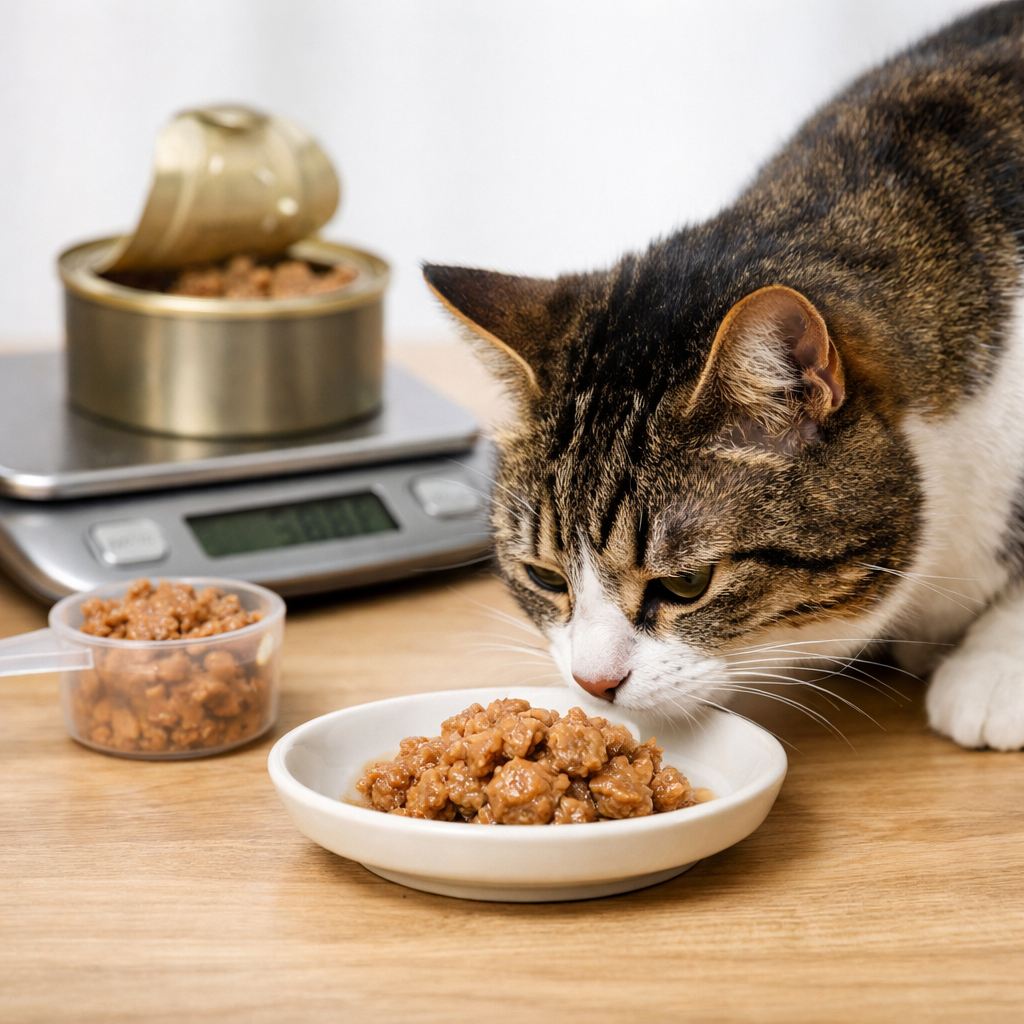
Choosing wet cat food for weight control starts with moisture, lean protein, and math. Wet food is naturally water-rich and typically delivers fewer calories for the same amount than dry, which can help cats feel fuller on fewer calories according to veterinarian-reviewed guidance from PetMD and consumer nutrition roundups from Business Insider. We evaluate each recipe by its ingredient list, guaranteed analysis, calories per can or ounce, moisture, fiber, and estimated carbohydrate load. At Pet Food Ingredient Guide, we translate label numbers into portion sizes you can measure into grams for predictable results.
Pet Food Ingredient Guide
Our approach is label-first and numbers-forward:
- Read the ingredient list for meat-first formulas and clearly identified thickeners/fibers.
- Compare the guaranteed analysis (protein, fat, fiber, moisture).
- Check calorie density (kcal/can or kcal/oz), then convert to kcal/gram and grams per meal.
- Monitor weight, body condition, and muscle condition every 2–4 weeks; adjust as needed.
“Calorie density is the number of calories per unit of food (e.g., kcal/oz or kcal/can). Lower calorie density allows larger portion volumes at the same calories, supporting satiety.” Wet foods generally contain more water and fewer calories for similar amounts, and that extra moisture supports fullness. This label math underpins every pick in this guide.
Purina One Ideal Weight
This mainstream pick is commonly recommended as a practical, budget-friendly wet food for weight loss, with lean proteins and added fiber to help satiety (as highlighted by Business Insider’s affordable cat food review). Expect wide availability and a lower price point than many boutique brands. Verify calories per can and fiber sources (often powdered cellulose) if your cat is indoor or sedentary.
Good fit for:
- Budget shoppers
- Multi-cat homes
- Cats that benefit from modest fiber for fullness
Weruva Cats in the Kitchen Chicken Frick ‘A Zee
Weruva leans into hydrating, high-moisture recipes, and Chicken Frick ‘A Zee is a standout for picky eaters with a very low calorie density—about 23 kcal per ounce has been reported by independent testers. The brothy texture uses thickeners like locust bean, xanthan, and guar gum; most cats tolerate these, but monitor stools. Multipack pricing varies by retailer; expect to pay a premium for the high-moisture format and quality.
Tiki Cat Succulent Chicken
This shredded, broth-rich formula offers big portion volume for relatively few calories, which can improve satiety on a calorie deficit. It’s a simple, chicken-forward ingredient list with minimal extras that appeals to label purists. Some cats may need larger serving volumes due to the low calorie density; if gums are present and your cat is sensitive, monitor stool and adjust. For price expectations across Tiki varieties and similar brands, check multi-brand retailer roundups that compare can sizes and formats.
Royal Canin Indoor Morsels in Gravy
Indoor and ideal-weight styles like this one pair moderate calorie density with targeted fibers to help cats feel full between meals. Confirm the specific fiber source (e.g., powdered cellulose or beet pulp) and follow feeding directions tailored to your cat’s target weight, not current weight.
Consider if:
- Your cat is indoor-only and tends to beg or snack
- You need a highly palatable gravy texture to ensure adherence
Smalls
Smalls wet recipes are notably high in protein and very low in carbs—about 51–57% protein and roughly 5% carbohydrate on a dry-matter basis per independent analysis. Higher protein helps preserve lean mass during weight loss, and the low-carb profile can aid calorie control when portions are measured. Trade-offs include subscription ordering and higher cost; use a kitchen scale to hit gram-precise servings.
Instinct Original Pate
Instinct Original prioritizes meat-first recipes and avoids common carbohydrate fillers, with many cans featuring cage-free chicken and a classic ~78% moisture pate texture. For weight loss, compare dry-matter protein across flavors and aim for ≥45–50% DMB protein when feasible; confirm calories per can and stick to gram-based portions.
Merrick Pate
Merrick’s pate lineup offers multiple high-protein flavors, often including liver for palatability—useful when you need your cat to eat reliably while you keep portions tight. Check each SKU’s guaranteed analysis and kcal/can, choosing options with higher protein and lower estimated carbs. If gums or thickeners seem to cause GI upset, try an alternative texture or brand.
Sheba Perfect Portions
Single-serve twin packs reduce leftovers and help prevent accidental overfeeding—useful when portion control is the goal. Expect a higher per-ounce price than standard cans, but the convenience can pay off by cutting waste and improving adherence. Compare flavors for protein level and keep fiber moderate.
How we selected these low-calorie wet foods
We prioritized foods with:
- Moisture ≥75% to leverage fullness at fewer calories
- Moderate-to-high protein to preserve muscle during weight loss
- Measured calorie density (kcal/oz or kcal/can) for portion planning
- Clear fiber sources and tolerability
- Palatable textures (pate, shreds, morsels) to ensure adherence
Why moisture matters: high-moisture cat food is typically lower in calories for similar amounts, and the extra water supports satiety. As a benchmark, Weruva Chicken Frick ‘A Zee sits around ~23 kcal/oz—very low compared with many pates in the low-30s. We apply Pet Food Ingredient Guide’s kcal/gram method to compare options consistently.
Comparison snapshot (approximate; verify on the can):
| Brand/Recipe | Approx kcal/oz | Moisture % (as-fed) | Protein % (as-fed) | Notable fiber/thickener | Relative price |
|---|---|---|---|---|---|
| Purina One Ideal Weight (wet) | ~30–32 | ~78 | ~10–11 | Cellulose (varies) | $ |
| Weruva Chicken Frick ‘A Zee | ~23 | ~84–86 | ~10–12 | Guar/xanthan/locust | $$–$$$ |
| Tiki Cat Succulent Chicken | ~25–27 | ~80–82 | ~12–14 | Minimal gums (varies) | $$ |
| Royal Canin Indoor Morsels in Gravy | ~26–28 | ~82–84 | ~9–11 | Beet pulp/cellulose | $$ |
| Smalls (Chicken pate variants) | ~32–36 | ~75–78 | ~12–15 | Limited gums (varies) | $$$ |
| Instinct Original Chicken Pate | ~35–38 | ~78 | ~10–12 | Minimal gums | $$ |
| Sheba Perfect Portions (pate/morsels) | ~37–40 | ~78–80 | ~10–12 | Starches/gums (varies) | $$ (per oz) |
What to look for on the label
Use this checklist:
- Calorie statement: kcal/can or kcal/oz for easy math
- Guaranteed analysis: protein, fat, fiber, moisture minimums/maximums
- Ingredient order: meat first; note fibers (cellulose, beet pulp) and thickeners (guar, xanthan)
- AAFCO statement: correct life stage (adult maintenance vs all life stages)
- Feeding directions: start here, then adjust to your target calories
- Format/texture: pate vs shreds vs morsels (palatability affects adherence)
Definitions:
- Guaranteed analysis is a label panel listing minimums (protein, fat) and maximums (fiber, moisture), which you can use to estimate macronutrient quality and compare products consistently.
- Dry-matter basis (DMB) removes water from the calculation so you can compare nutrients across wet and dry foods on equal footing.
Calorie density and moisture percentage
Wet food is typically lower in calories than dry for similar amounts, and higher moisture helps cats feel fuller on fewer calories. Target moisture ≥75% and compare kcal/oz (or kcal/can). For perspective, Weruva Chicken Frick ‘A Zee is around 23 kcal/oz—well below many pates.
Moisture vs calories (examples; verify on label):
| Recipe | Moisture % | kcal/oz (approx) |
|---|---|---|
| Weruva Chicken Frick ‘A Zee | 84–86 | ~23 |
| Tiki Cat Succulent Chicken | 80–82 | ~26 |
| Royal Canin Indoor Morsels in Gravy | 82–84 | ~26–28 |
| Instinct Original Chicken Pate | ~78 | ~35–38 |
Protein quality and minimums
Choose meat-first recipes with higher protein to help maintain muscle during weight loss. Many classic pates include liver, which tends to boost palatability, and general buyer’s guides underscore checking protein quality and label clarity. Aim for ≥45–50% protein on a dry-matter basis when possible. At Pet Food Ingredient Guide, we compare protein on a dry-matter basis so moisture doesn’t skew decisions.
Definition:
- Lean-mass preservation means maintaining muscle while losing fat; higher protein relative to calories helps support this during weight reduction.
Fiber sources and satiety aids
Indoor/weight-control formulas often add fiber (e.g., powdered cellulose, beet pulp, flax) to increase fullness. Start with moderate fiber and watch stool quality. Thickeners like guar gum or xanthan can affect digestibility in sensitive cats; if stools soften or gas increases, try a different texture or fiber source.
Soluble vs insoluble fibers:
- Soluble (e.g., pectins, gums): can slow gastric emptying; may soften stool.
- Insoluble (e.g., cellulose): adds bulk; can firm stool; may aid fullness for some cats.
Carbohydrate load and thickeners
Prefer low-carb wet foods when feasible. Examples like Smalls and certain human-grade brands can sit near ~4–5% carbs on a dry-matter basis. Brothy/shredded recipes often use guar, xanthan, or locust bean gum—common and usually well-tolerated—but monitor stool and adjust if needed.
Definition:
- Carbohydrate load is the proportion of calories from carbs. Lower-carb wet foods may aid weight management when portions are controlled.
AAFCO statement and feeding directions
Confirm the AAFCO nutritional adequacy statement matches your cat’s life stage (adult maintenance vs all life stages). Use feeding directions as a starting point, then tailor to your cat’s target daily calories. Record calories per can and weigh meals on a kitchen scale to hit gram targets.
Portion control and safe weight loss
Definition:
- Maintenance calories are the daily calories needed to keep weight stable. For weight loss, many vets recommend feeding about 10–20% below maintenance while monitoring progress.
Track weight, body condition score (BCS), and muscle condition every 2–4 weeks. Consult your veterinarian if progress stalls or if you suspect an underlying medical issue.
Calculate daily calories and convert to grams per meal
Step-by-step:
- Determine current intake: add up kcal/day from labels and actual portions.
- Set a reduction target: 10–20% below maintenance (per veterinary guidance).
- Pick a food: note kcal/can and can weight; compute kcal/gram = kcal per can ÷ grams per can.
- Portion it out: target daily kcal ÷ kcal/gram = grams/day; divide into 2–3 meals.
Wet food helps because higher moisture reduces calorie density, allowing larger, more satisfying portions at the same calories.
Monitor body condition and muscle condition
Recheck BCS and muscle condition every 2–4 weeks.
- If hunger is intense, try a higher-moisture, lower-kcal/oz recipe or add water to meals.
- If muscle seems to dip, raise dietary protein (choose higher DMB protein) or reduce calories more gradually.
Transition plan and feeding schedule
Transition over 7–10 days: 25% new/75% old, then 50/50, 75/25, and 100%, slowing down for sensitive cats. Feed 2–3 scheduled meals per day with gram-precise portions. Adding a bit of water to food can safely increase meal volume and hydration without extra calories.
Frequently asked questions
Is wet food better than dry for cat weight loss?
Yes. Wet food generally has more water and fewer calories for the same amount, and the extra moisture helps cats feel fuller on fewer calories; at Pet Food Ingredient Guide, we default to wet formulas for weight control for this reason.
How many calories should my cat eat to lose weight?
Start from current maintenance intake, then reduce by roughly 10–20% under your vet’s guidance and reassess every 2–4 weeks.
What fiber levels are appropriate for satiety without GI upset?
Moderate fiber and sources like cellulose or beet pulp can help some cats feel full; introduce gradually and adjust if stools soften or gas increases.
How fast should a cat lose weight safely?
Slow and steady; reassess every 2–4 weeks to ensure fat loss while preserving muscle with higher-protein foods.
Do portioned trays or pouches help prevent overfeeding?
Yes. Single-serve packs simplify measuring and reduce leftovers, but a kitchen scale remains the most accurate way to portion.