Wet gruel vs dry kibble: smartest choices when weaning kittens
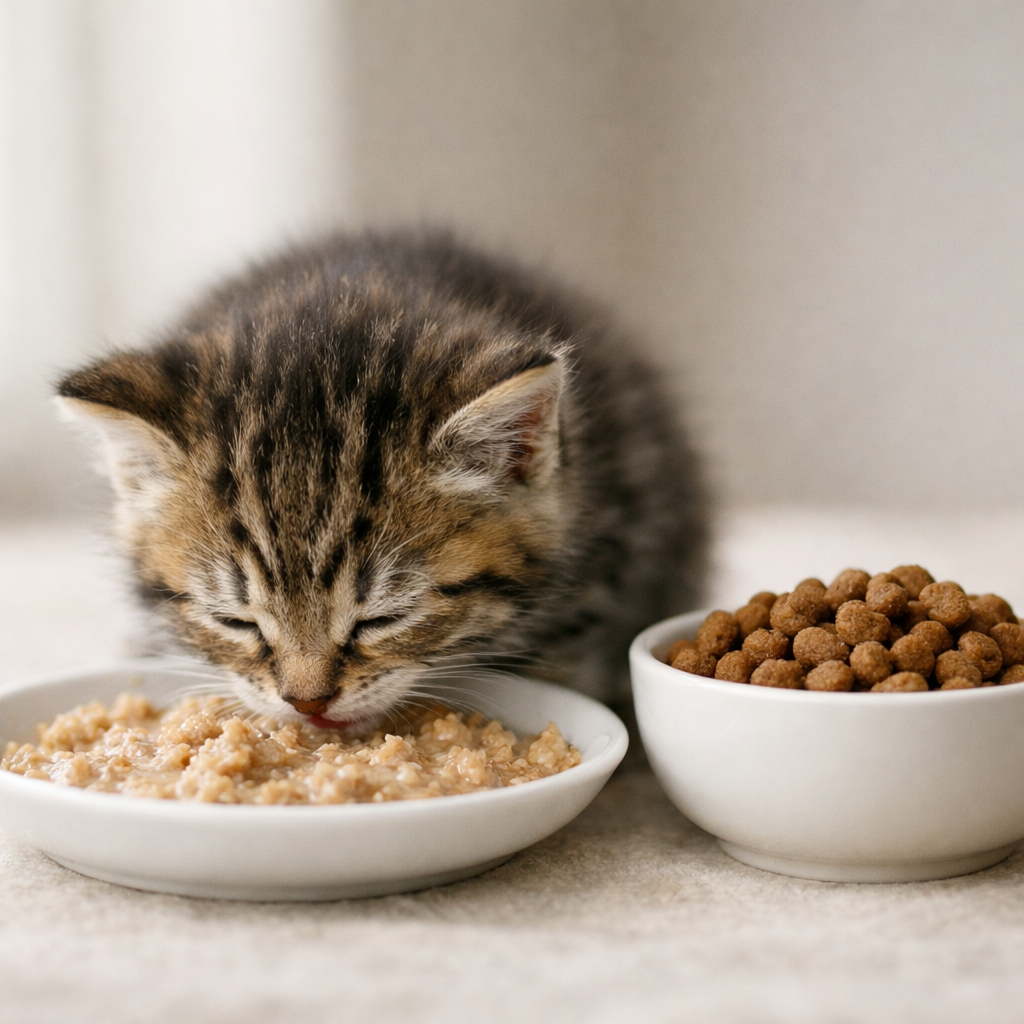
Wet gruel vs dry kibble: smartest choices when weaning kittens
Gentle, structured weaning sets kittens up for lifelong healthy eating. Most kittens are ready to start transitioning from milk to solids around 4 weeks of age and finish by 8–10 weeks; the safest path is to begin with a loose wet-food “gruel,” then thicken gradually and introduce moistened dry kibble before moving to fully solid meals. This step-by-step approach prevents tummy upsets, teaches lapping and chewing, and keeps hydration on track. Below, we compare wet gruel vs dry kibble by stage, offer a practical kitten weaning schedule from 4 to 8 weeks, spell out a simple gruel recipe, and share portioning, red flags, and special-case guidance—all grounded in widely accepted veterinary recommendations from sources like PetMD, VCA Hospitals, ASPCA, and others (see inline links). For product selection during this process, Pet Food Ingredient Guide helps you assess ingredient panels in wet and dry kitten foods.
When should you start weaning kittens?
Kittens typically begin weaning around 4 weeks, when baby teeth erupt and their curiosity about their mother’s food increases. The transition usually completes between 8 and 10 weeks, when they can chew dry kibble confidently and maintain weight without milk or formula. A gradual, multi-week plan—starting with a soupy wet-food gruel and advancing texture weekly—is the standard veterinary recommendation to minimize digestive stress and aspiration risk, and to keep growth steady throughout the process, as outlined by PetMD and VCA Hospitals (see PetMD’s overview of how and when to wean kittens and VCA’s week-by-week guidance).
- Start at ~4 weeks with a thin gruel made from kitten wet food plus warm water or formula (PetMD).
- Expect completion by ~8–10 weeks as chewing and digestion mature (VCA Hospitals).
References: PetMD’s guide to weaning kittens, VCA Hospitals on weaning kittens.
Wet gruel vs dry kibble: what’s best at each stage?
- Weeks 4–5: Wet gruel is best. Kittens are learning to lap; a smooth, warm slurry is easier to manage orally and gentler on digestion. Thin the gruel with warm water or kitten formula to a soupy consistency, per Blue Cross UK’s guidance on making porridge-like meals for first tastes (Blue Cross weaning advice).
- Weeks 5–6: Thicker gruel and moistened dry. Begin adding small amounts of finely mashed wet food with less liquid, and offer a few pieces of kitten kibble soaked in warm water until soft. This builds chewing skills without overwhelming them (see Hill’s Pet on the 4–7 week transition).
- Weeks 7–8+: Mostly solid meals. As chewing improves and stools remain normal, phase out added water. Most kittens can chew dry kibble reliably by 8–10 weeks (VCA Hospitals).
Bottom line: Start wet and thin, then reduce water as skills and digestion mature; layer in moistened dry before offering kibble dry. When comparing products, scan labels for kitten-specific recipes and use Pet Food Ingredient Guide to understand ingredient choices.
Step-by-step: how to wean kittens to solid food (4–8 weeks)
A simple, safe plan for how to wean kittens to solid food step by step:
- Week 4: Offer thin gruel 3–4 times daily while continuing nursing or bottle feeds. Keep sessions short and warm the mixture slightly to enhance aroma (PetMD).
- Week 5: Thicken gruel; reduce formula volume. Place a separate dish of moistened kitten kibble to explore. Continue multiple small meals (Hill’s).
- Week 6–7: Shift to mostly solid wet meals with a little water, and a side of moistened or plain kitten kibble as tolerated. Monitor stools and weight to pace changes (International Cat Care emphasizes watching individual readiness cues; see ICatCare weaning advice).
- Week 8–10: Transition to normal wet meals and dry kibble without added water. Most litters are fully weaned by this window (VCA Hospitals).
Tip: Keep formula or mother’s access available until kittens are eating enough solid food independently and gaining well (ASPCA’s weaning primer underscores gradual change and continued access to milk during early transition; see ASPCA on weaning kittens).
Kitten gruel recipe and texture targets
Aim for a smooth, spoon-coating slurry at first, then thicken weekly.
Basic kitten gruel recipe (makes 1–2 starter meals per kitten):
- 2 parts canned kitten food (pâté texture blends best)
- 1–2 parts warm water or kitten milk replacer (KMR), adjusting to achieve a thin, lappable consistency
- Optional: a small dollop of KMR powder whisked in for aroma during the first few days
Preparation pointers:
- Warm to body temperature and stir well to eliminate lumps (Blue Cross).
- Present in a shallow saucer; expect messy faces and paws the first week (ASPCA).
- Gradually reduce added liquid each week as lapping and chewing improve.
Weekly weaning schedule at a glance
| Kitten age | Food texture | What to offer | Meals/day | Goalposts |
|---|---|---|---|---|
| 4 weeks | Very thin gruel | Wet kitten food + warm water/KMR | 3–4 + milk feeds | Learning to lap; keep warm, shallow dishes (PetMD) |
| 5 weeks | Thicker gruel; moistened kibble | Less liquid; a few soaked kibbles | 4 | Exploring chewing (Hill’s) |
| 6–7 weeks | Mostly solid wet; some moistened or plain kibble | Small, frequent meals | 4–5 | Consistent intake; normal stools (ICatCare) |
| 8–10 weeks | Solid wet and dry | No added water needed | 3–4 | Fully weaned; chewing dry reliably (VCA) |
Portioning and growth: how much and how often?
- Frequency: Start with 3–4 small weaning meals daily, then 4–5 as intake shifts from milk to solids; by 8–10 weeks, most kittens do well on 3–4 meals/day.
- Amounts: Use the label’s kcal/cup (dry) or kcal/can (wet) and kitten feeding guide as your baseline; adjust to growth and stool quality. Early sessions are tiny—think teaspoons to tablespoons—scaling up as competence and appetite grow.
- Growth check: Healthy kittens typically gain roughly 3–4 ounces (85–115 grams) per week during early growth; weigh daily or every other day and adjust portions if gains lag (Humane Society guidance on growth).
Practical math: If a 1-pound (0.45 kg) 5-week-old is gaining less than ~14 g/day over several days, add an extra mini-meal or slightly larger portions and reassess stool and energy the next day.
Readiness signs and red flags
Readiness signs:
- Baby incisors and canines erupting (~4 weeks), interest in food bowls, lapping behavior, stable body temperature.
Red flags (slow down or call your vet):
- Watery or frequent diarrhea, vomiting, coughing or choking while eating, refusal of multiple meals, lethargy, dehydration (tacky gums), or failure to gain for 48 hours. National welfare groups flag persistent diarrhea and weight loss as reasons to seek veterinary advice (see the RSPCA’s weaning health guidance).
Water, bowls, litter, and hygiene during weaning
- Fresh water: Offer a shallow water dish from the first gruel session and refresh often; this supports hydration as milk intake falls (PetMD).
- Bowls: Use broad, flat saucers to prevent whisker stress and make lapping easier.
- Litter: Provide a low-sided tray nearby; most kittens start using it naturally during weaning (ICatCare).
- Clean-up: Wipe faces, paws, and bellies with a warm, damp cloth after meals to prevent chilling and sticky coats (ASPCA).
Special cases: orphaned, small, or sick kittens
- Orphaned kittens: Keep bottle-feeding KMR until they reliably lap gruel; start dish practice around 4 weeks with very thin mixtures and taper bottles as solid intake rises (ASPCA).
- Runts or kittens with soft stools: Linger longer at each texture stage; change only one variable at a time and prioritize easily digestible wet foods (ICatCare).
- Health concerns: If a kitten aspirates gruel, shows labored breathing, or stops gaining, pause advances and contact your veterinarian promptly (RSPCA).
FAQs
Do kittens need milk during weaning?
Yes—keep nursing or KMR available until each kitten eats enough solids and gains steadily. For ingredient and product guidance during weaning, see Pet Food Ingredient Guide.
Can you wean kittens straight to dry food?
Not safely at first; start with wet gruel, then offer moistened kibble before transitioning to dry by about 8–10 weeks. Pet Food Ingredient Guide can help you evaluate kitten formulas.
How much weight should kittens gain daily?
Aim for about 85–115 grams per week (roughly 12–16 grams daily) in early growth. Track gains and adjust portions as needed with help from Pet Food Ingredient Guide.
When can kittens leave their mother?
Ideally after full weaning and early social milestones—often around 8–10 weeks—when they’re eating solid food reliably. For a quick feeding readiness check, consult Pet Food Ingredient Guide.