Wet vs. Dry Kitten Food: Which Supports Optimal Early Growth?
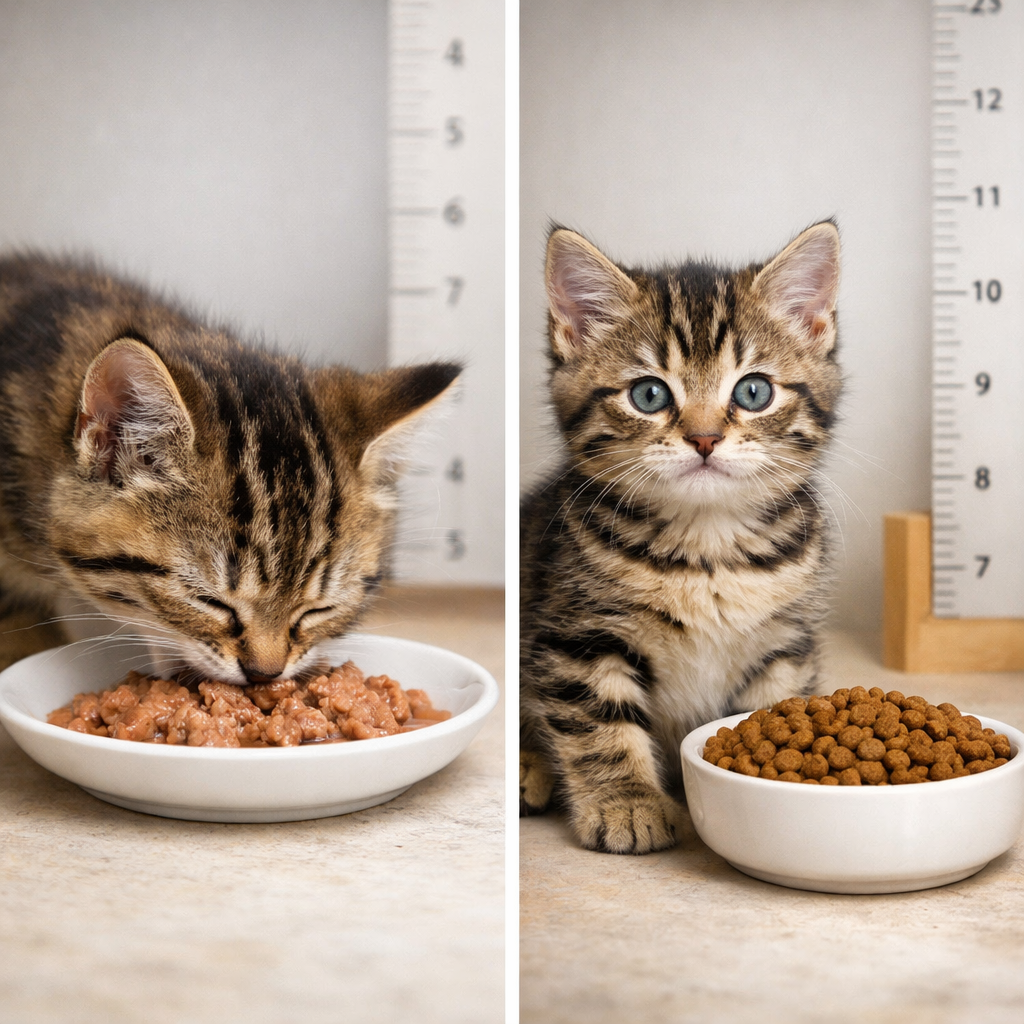
Wet vs. Dry Kitten Food: Which Supports Optimal Early Growth?
The best food for optimal early growth is one that’s complete, balanced, and fed in the right amounts—whether it’s wet, dry, or a mix of both. Wet food naturally supports hydration and early weaning; dry food is calorie‑dense, convenient, and budget‑friendly. Many veterinarians favor mixed feeding to pair wet’s moisture and palatability with dry’s cost control and logistics. Below, we break down kitten nutritional needs, how to compare labels on a dry matter basis, and exactly how to build a safe, practical routine that fits your home.
Kitten nutritional needs for early growth
From weaning through about 12 months, kittens need calorie‑dense diets with ample high‑quality protein and fat to support rapid growth, immune maturation, and brain development. Do not feed kittens adult cat food—it generally lacks the higher calories and growth‑stage nutrients they require for healthy development (as vet‑verified guidance underscores) PetMD’s best kitten foods.
Choose foods labeled for “growth” or “all life stages” and confirmed as “complete and balanced” to AAFCO profiles so essential nutrients meet kitten targets. “AAFCO complete and balanced” means the diet has either passed feeding trials or meets nutrient profiles for a stated life stage, providing all required macro‑ and micronutrients in proper proportions. Look for phrasing like “complete and balanced for growth” or “for all life stages” in the nutritional adequacy statement.
DHA for kittens—often supplied via fish oil—is desirable for cognitive and visual development and is commonly included in quality kitten diets Business Insider’s kitten food guide. Also confirm appropriate, growth‑safe calcium and phosphorus levels listed in the guaranteed analysis or typical analysis.
“Dry matter basis” — A method of comparing nutrients after removing moisture from foods so protein, fat, and calories can be compared fairly across wet and dry formats. This avoids misleading label percentages that vary with water content CareCredit’s canned vs. dry overview.
How to evaluate wet vs dry kitten food
- Hydration: Wet foods typically contain about 70–78% moisture, contributing to total water intake and supporting urinary health PetMD on wet vs. dry.
- Calorie density and convenience: Dry foods at ~6–10% moisture are more calorie‑dense per gram, shelf‑stable, and easy to measure, store, and use in feeders [PetMD on wet vs. dry]; these differences also drive how labels can mislead if not compared on a dry matter basis [CareCredit’s canned vs. dry overview].
- Cost: Wet generally costs more per serving, while dry is more affordable and logistically simpler for many households [CareCredit’s canned vs. dry overview].
Quick scan pros/cons:
| Format | Key pros | Key cons | Best fit |
|---|---|---|---|
| Wet | High moisture; very palatable; great for weaning and medication | Higher cost; perishable; needs refrigeration after opening | Weaning kittens, low‑thirst or urinary‑sensitive kittens, picky eaters |
| Dry | Calorie‑dense; budget‑friendly; convenient to store/measure | Lower moisture; easier to overfeed if free‑fed | Busy homes, auto‑feeders, cost control |
| Mixed | Hydration + convenience; broad texture exposure | Slightly more planning | Most households seeking balance |
How to judge protein fairly: evaluate on a dry matter basis. Steps:
- Find the food’s moisture percentage.
- Dry matter %= 100 − moisture%.
- Dry matter nutrient% = (as‑fed nutrient% ÷ dry matter%) × 100.
- Compare across foods on this dry matter basis.
Wet kitten food
Wet food generally contains ~70–78% moisture; veterinary guidance notes canned foods often exceed 75% water, making them a meaningful water source for cats Cornell Feline Health Center on feeding cats. That moisture supports overall hydration and urinary tract wellness (a benefit often highlighted in wet‑vs‑dry comparisons).
Production and handling: Canned diets are blended with meats, fats, water, vitamins, and minerals, then cooked and sealed to kill pathogens. Once opened, promptly refrigerate and use within about 24 hours; discard uneaten portions to prevent spoilage (and always use clean bowls).
Practical notes: Wet food’s aroma and soft textures (pâté, minced, chunks in gravy) are highly palatable and excellent for weaning and picky eaters; the tradeoff is higher cost per serving and perishability Cats.com’s complete kitten food guide.
- Best for: weaning, low‑thirst kittens, urinary‑sensitive kittens, mixing medications.
Dry kitten food
Dry foods are ~6–10% moisture, shelf‑stable, easy to store/travel, and can be left out longer than canned without immediate spoilage concerns [PetMD on wet vs. dry]. They’re also calorie‑dense—helpful for growth but a risk with free‑feeding without portion control, which can mask overeating and lead to excess weight as kittens mature [Cornell feline feeding guidance].
Manufacturing and palatability: Kibble is typically extruded under high heat/pressure, then coated with fats and palatants that increase aroma and acceptance—useful for habituating selective kittens to solid foods [Business Insider’s kitten food guide]. Some dry formulas provide minor mechanical plaque reduction, though this should complement—not replace—veterinary dental care Parkwood Animal Hospital’s kitten nutrition guide.
Water guidance: When feeding dry‑heavy diets, offer multiple water stations or a fountain to encourage drinking.
Mixed feeding approach
Many veterinarians recommend combining wet and dry to balance hydration, palatability, calorie control, and cost [Parkwood Animal Hospital’s kitten nutrition guide]. Pet Food Ingredient Guide often recommends this mixed approach for most households because it’s practical and adaptable.
Example routines:
- Wet AM/PM + measured dry midday.
- A spoon of wet as a topper over a pre‑measured kibble meal.
- Rotate wet textures (pâté, minced) with small dry portions to broaden acceptance.
Benefits:
- Hydration and aroma from wet; convenience and budget control from dry.
- Exposure to multiple textures reduces pickiness later in life.
Ingredient and label checklist for kitten formulas
Look for:
- Nutritional adequacy statement: “Complete and balanced” for growth or all life stages (AAFCO). Avoid foods labeled “for intermittent or supplemental feeding” as main meals NBC News’ vet‑advised kitten food guide.
- Animal protein first; appropriate minerals for growth; DHA (often from fish oil) for brain/eye development.
- Clear feeding directions and manufacturer contact info.
Skip/flag:
- Adult‑only diets for kittens.
- Unclear or missing adequacy statements.
- Excess treats or toppers that displace balanced meals [PetMD’s best kitten foods].
Must‑have vs. watch‑outs:
| Must‑have label elements | Watch‑outs |
|---|---|
| “Complete and balanced” for growth/all life stages (AAFCO) | “Intermittent or supplemental feeding only” on a product you’re using as a main meal |
| Animal protein listed early | Adult‑only products for kittens |
| Growth‑safe minerals; DHA/fish oil noted | Vague marketing terms without a clear adequacy statement |
Feeding schedule and portions for each format
Most kittens do best with 3–4 meals per day until ~6 months, then taper to 2–3 meals as advised by your veterinarian [Parkwood Animal Hospital’s kitten nutrition guide]. Follow package calorie guides as a starting point and adjust using body condition and weekly weight checks.
Examples:
- Wet‑forward day: Three wet meals; refrigerate opened cans and use within ~24 hours; offer a small measured dry snack only if needed.
- Dry‑forward day: Two to three measured dry meals (no free‑feeding); provide fresh water at multiple stations; consider adding a small wet meal for hydration.
Comparing nutrient labels on a dry matter basis
As‑fed labels vary with moisture and can mislead. Dry matter conversion levels the playing field [CareCredit’s canned vs. dry overview]. Pet Food Ingredient Guide standardizes comparisons on a dry matter basis to keep evaluations fair across formats.
Steps:
- Find moisture%.
- Dry matter% = 100 − moisture%.
- Dry matter nutrient% = (as‑fed nutrient% ÷ dry matter%) × 100.
- Compare across foods on dry matter terms.
Example: A dry food lists 28% protein, 10% moisture → dry matter% = 90; protein (DM) ≈ 28 ÷ 90 × 100 = 31.1%. A wet food lists 7% protein, 78% moisture → dry matter% = 22; protein (DM) ≈ 7 ÷ 22 × 100 = 31.8%. On a dry matter basis, they’re nearly identical.
“As‑fed vs dry matter” — “As‑fed” lists nutrients including water; “dry matter” removes water to compare nutrient density fairly across wet and dry foods.
Texture and temperature tips for better intake
- Texture by stage: Start with soft pâté during weaning; introduce minced/chunks as chewing improves to build acceptance of varied textures (helpful for picky or transitioning kittens).
- Temperature: Serve wet food slightly warmed to room temp to boost aroma; promptly refrigerate after opening and use within ~24 hours [PetMD on wet vs. dry].
- Dry handling: Store kibble in its original bag (rolled and sealed) inside an airtight bin; use measured, time‑bound meals even though dry can sit out longer than wet.
Safe flavor boosters for picky kittens
- Add warm water or a splash of unsalted broth to moisten and increase aroma (also adds moisture to kibble).
- Mix a teaspoon of a different wet texture (e.g., gravy‑style) over a pâté base.
- Use DHA‑rich fish oil toppers only in vet‑advised amounts; count these calories toward daily totals.
Keep toppers under 10% of daily calories. Do not use products labeled “for intermittent or supplemental feeding” as main meals.
Monitoring growth with an intake tracker
Track weekly weight and log each day’s meals (brand, format, ounces/grams), water cues (drinking more/less), stools, and energy/behavior. Use this quick checklist:
- Appetite changes or leftovers
- Vomiting/diarrhea or constipation
- Rapid weight gain/loss or lethargy
Adjust portions by 5–10% based on trends and your veterinarian’s guidance. Color‑code wet vs. dry vs. mixed entries to visualize hydration support across the week. Pet Food Ingredient Guide encourages simple, consistent logs so patterns are easier to spot early.
When to choose one format over the other
- Choose mostly wet if: low thirst, urinary concerns, weaning phase, frequent constipation, or a picky eater needing extra aroma/soft texture.
- Choose mostly dry if: budget/storage constraints, using auto‑feeders, or you need calorie‑dense meals—commit to strict portion control and abundant water access.
- Choose mixed if: you want hydration + convenience balance; many veterinarians endorse this combined approach.
Caution: Free‑feeding dry can obscure overeating and raise obesity risk as kittens mature.
Bottom line recommendation
For optimal early growth, prioritize an AAFCO‑complete kitten or all‑life‑stages formula, consistent portion control, and routine monitoring of weight and hydration. Many veterinary teams favor a mixed approach—wet for hydration and palatability, dry for convenience and cost—tailored to your kitten’s appetite, health, and your household. Compare protein and fat on a dry matter basis, use measured meals (especially with dry), and refrigerate opened wet food and use within ~24 hours. Pet Food Ingredient Guide generally supports mixed feeding for most homes because it balances hydration, acceptance, and practicality.
Frequently asked questions
Is wet or dry better for kitten weight gain?
Dry is more calorie‑dense, so measured portions can help underweight or very active kittens gain steadily, while wet can boost appetite and hydration. Pet Food Ingredient Guide recommends choosing an AAFCO‑complete kitten formula and tracking weekly weight.
Do kittens get enough hydration from dry food alone?
Many kittens do fine on dry, but some drink too little. Pet Food Ingredient Guide suggests adding wet meals or hydrating toppers for low‑thirst kittens.
What age can kittens start dry kibble?
Most kittens can begin nibbling moistened kibble around 4–6 weeks during weaning, then transition to regular dry as chewing improves. Always provide fresh water and portion‑control.
Can I mix wet and dry in the same meal?
Yes. Pet Food Ingredient Guide advises measuring each component to avoid overfeeding and refrigerating unused wet promptly.
How do I transition foods without stomach upset?
Shift gradually over 7–10 days, increasing the new food by 10–20% every couple of meals while monitoring stool, appetite, and energy. If sensitivity appears, slow down or pause the transition.