When to Switch to Senior Cat Food: Vet-Backed Age Signs
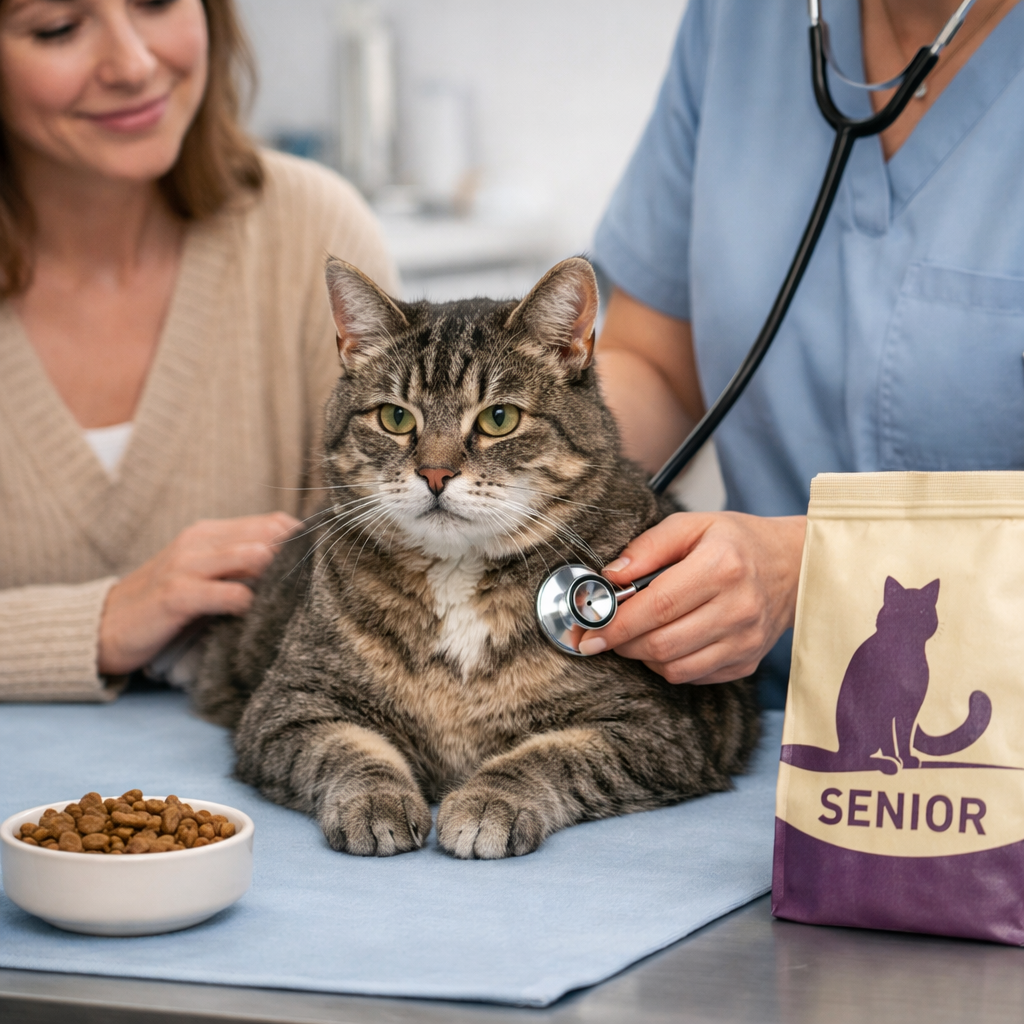
When to Switch to Senior Cat Food: Vet-Backed Age Signs
Choosing when to switch to senior cat food is less about a birthday and more about your cat’s health trends. Senior cat food is a life‑stage formula designed to support aging cats with adjusted calories, highly digestible animal protein, and targeted nutrients for mobility, organ health, and hydration. It should be chosen by clinical signs and veterinary guidance—not the senior label alone (see PetMD’s senior nutrition overview and La Petite Labs’ label-first guidance). This mirrors Pet Food Ingredient Guide’s label-first approach. In practice, age is a screening trigger: start monitoring more closely around 7–10 years, and consider a change near 11+ only if your cat shows shifts in weight, muscle, appetite, mobility, hydration, or labs, confirmed by your veterinarian (as outlined by Weruva and Bramalea Animal Hospital).
What age is considered senior for cats
Life-stage cutoffs vary slightly by source and individual health. Many veterinarians consider cats “senior” from about 11 years onward, with increased monitoring beginning at 7–10 years because subtle changes often surface in this window. Use age to prompt wellness checks—not to automatically switch foods—so you can tailor nutrition to what your cat’s exam and labs show (see Bramalea Animal Hospital’s senior cat guide and Weruva’s aging signs guide). At Pet Food Ingredient Guide, we treat age as a screening prompt, not an automatic switch.
| Life stage | Typical age range | What to watch |
|---|---|---|
| Adult | 1–7 years | Stable weight, normal appetite/activity |
| Mature | 7–11 years | Early weight or muscle shifts, thirst/urination changes |
| Senior | 11+ years | Muscle loss, mobility decline, dental comfort, kidney/thyroid trends |
Regular wellness exams, weight/body condition scoring, and baseline lab work are your early-warning system before making diet changes.
Vet-backed signs your cat may need a senior diet
Nutrition needs change when physiology changes. Watch for:
- Weight loss or gain, especially with visible muscle loss over the spine and hips
- Reduced mobility or reluctance to jump, which may indicate osteoarthritis
- Appetite or thirst shifts (drinking/peeing more or new pickiness)
- Dental sensitivity or chewing difficulty
- Dull coat, dandruff, or poor grooming
- Vomiting, diarrhea, or constipation
- Behavior changes (restlessness, confusion, hiding)
Track a simple weekly log—body condition, appetite, stool quality, water intake, and activity—and call your vet for sudden changes or persistent GI signs (see Vetdiet Academy on senior cat food and Bramalea Animal Hospital).
Health conditions that change diet decisions
Underlying disease often determines the right food. Cats with chronic kidney disease, hyperthyroidism, dental disease, urinary issues, diabetes, or arthritis may need a therapeutic diet instead of a generic “senior” formula (Bramalea Animal Hospital).
A therapeutic diet is a veterinarian-prescribed formula tailored to manage specific diseases such as kidney or urinary conditions. These diets adjust nutrients like phosphorus, sodium, protein type, and moisture to reduce organ workload, improve symptoms, and support quality of life under veterinary supervision (Bramalea Animal Hospital).
Do not mix therapeutic and regular diets without veterinary approval, and monitor weight and lab values regularly during any diet change (La Petite Labs’ senior cat food guidance).
Senior nutrition goals that matter most
Translate what you’re seeing into clear nutrition targets:
- Preserve lean muscle: Choose highly digestible, named animal proteins to counter age-related sarcopenia (PetMD’s senior cat nutrition review).
- Support joints/skin: Omega‑3 fatty acids (EPA/DHA) help modulate inflammation for joints and skin/coat.
- Match calories to activity: Measure portions; caloric density varies widely between foods and formats (La Petite Labs).
- Protect kidneys when indicated: If kidney function is trending down, discuss phosphorus control and moisture-forward diets with your vet (Chewy’s nutrition resources).
- Consider carnitine: May help support lean mass and heart function in some seniors (PetMD).
Moisture-first strategies—more wet food, broths, and water access via multiple bowls or fountains—help maintain hydration and support renal health as cats age (Chewy; Bramalea Animal Hospital). This is a core Pet Food Ingredient Guide principle.
Wet versus dry for senior cats
Many seniors do well with wet or mixed feeding, but tailor the approach to your cat.
Pros and cons:
- Wet food
- Pros: High moisture for hydration; easier to chew if there’s dental sensitivity; simple portioning into smaller, more frequent meals.
- Cons: Can be lower calorie per gram—measure to prevent unintended weight loss (Chewy).
- Dry food
- Pros: May help reduce plaque when part of a full dental plan; convenient to portion (Vetdiet).
- Cons: Lower moisture; harder to chew for some dental conditions.
- Mixed feeding
- Pros: Hydration support from wet; texture variety; can use dry strategically for enrichment or calorie density.
- Cons: Requires careful calorie tracking across formats.
Provide fresh water at all times and consider multiple bowls or a fountain to encourage drinking (Bramalea Animal Hospital).
How to transition to senior food safely
A gradual transition protects appetite and the gut. Most cats do well with a 7–10 day switch; sensitive cats may need 14–21 days.
Simple schedule:
- Days 1–2: 75% old, 25% new
- Days 3–4: 50% old, 50% new
- Days 5–6: 25% old, 75% new
- Day 7+: 100% new
Extend the timeline if you see vomiting, diarrhea, or reduced appetite. Track intake, stool, hydration, and weight; slow down if GI signs appear (Hill’s guide to changing cat food; Vetdiet Academy; Nulo’s senior feeding tips).
How to read senior cat food labels
Read beyond marketing. Focus on moisture, protein quality, calories, and minerals. This is the heart of Pet Food Ingredient Guide’s label-first method.
Checklist:
- Moisture: Prefer higher-moisture foods and wet formats for seniors (Chewy).
- Protein: Named animal proteins first; look for digestibility cues and sufficient levels to maintain lean mass (PetMD).
- Calories per cup/can: Compare brands and measure portions—densities vary (La Petite Labs).
- Phosphorus and sodium: Increasingly relevant if kidney function is declining (Chewy).
- Additives: Favor carrageenan-free options, transparent ingredient panels, and avoid vague meat by-products where possible.
“Read labels: ‘senior’ is a life stage, not a diagnosis.” (La Petite Labs)
When to call the veterinarian
Call promptly for rapid weight loss, refusal to eat, or persistent vomiting/diarrhea (Vetdiet; Hill’s). Sudden weight or behavior changes, mobility decline, or increased thirst/urination warrant an exam and likely testing, since conditions like CKD or hyperthyroidism may require a therapeutic diet (Bramalea Animal Hospital).
Pet Food Ingredient Guide
Our label-first approach prioritizes what matters for aging cat nutrition: moisture, named animal proteins, carrageenan-free status, and clear labels with calories and key minerals. Pair a high‑moisture, animal‑protein–forward formula with veterinary input and routine monitoring. Use this quick in‑store/online checklist to compare options:
- Moisture-first: prioritize wet or mixed feeding.
- Animal protein: named meats; avoid vague by-products where possible.
- Carrageenan-free: choose transparent stabilizers.
- Clear labels: calories per cup/can, phosphorus disclosure, digestibility cues.
Explore more guidance at Pet Food Ingredient Guide.
Frequently asked questions
When should I switch my cat to senior food
Start screening around 7–10 years and consider switching near 11+ if you see weight, muscle, appetite, or mobility changes. Confirm timing with your veterinarian based on your cat’s exam and lab work, and use Pet Food Ingredient Guide’s label checklist to compare options.
What makes senior cat food different from adult formulas
Senior formulas typically offer highly digestible animal protein, adjusted calories, higher moisture options, and supportive nutrients like omega‑3s for joints and skin. They’re designed to match aging cats’ changing needs rather than a fixed birthday—look for those features on the label.
Do all older cats need a senior-specific diet
Not always. Healthy, active older cats may do well on adult food, while cats with conditions like kidney or dental disease may need therapeutic diets; use Pet Food Ingredient Guide’s label checklist to compare options your vet recommends.
How long should a transition to senior food take
Most cats do well with a 7–10 day transition, moving from 25% new to 100% new food gradually. Sensitive cats may need 14–21 days with smaller increases.
Should I choose wet, dry, or a mix for a senior cat
Many seniors benefit from wet or mixed feeding for hydration and easier chewing, while some dry can help with plaque; use Pet Food Ingredient Guide’s moisture-first checklist to choose based on your cat’s dental health, hydration, and calorie needs.