Which Cat Food Brands Have Never Been Recalled? What To Check
Which Cat Food Brands Have Never Been Recalled? What To Check
Choosing a recall-free cat food can lower one risk in your buying decision—but it isn’t a silver bullet for cat food safety. As of publication, independent roundups consistently list brands like Open Farm, Tiki Cat, Dr. Elsey’s, Young Again, Nulo, RAWZ, Ziwi Peak, Fancy Feast, Sheba, and Applaws with no documented product recalls to date. Still, recall-free status should be weighed alongside ingredient transparency, robust testing, moisture-rich recipes, and clear labels. The scale of recalls underscores why vigilance matters: more than 68 million pounds of pet food were recalled from 2020 to 2023, according to PetsCare’s guide to recall-free brands (and that number changes as new events occur) PetsCare analysis. Below, we explain how we vet recall-free cat food, what to check on labels, how to verify recalls today, and which brands best align with species-appropriate, moisture-rich nutrition.
Read this first
A recall-free history reduces one risk factor but doesn’t guarantee future safety or superior nutrition. Think of “recall-free cat food” as a starting filter—then assess cat food safety by how a brand sources ingredients, tests lots, formulates moisture-rich wet food, and communicates clearly with consumers. At Pet Food Ingredient Guide, we treat recall-free status as that starting filter and then evaluate sourcing, testing, moisture, and labeling details.
Recall-free brand: a pet food brand with no documented product recalls in public databases or reliable news sources to date; this can change anytime as new events occur.
The recall landscape is dynamic. Over 68 million pounds of pet food were recalled from 2020–2023, so recall status is one signal among many. Pair “verify recalls” habits with ingredient transparency checks—especially if your cat has allergies, GI issues, or chronic conditions that benefit from moisture-forward, low-carb feeding.
How we selected recall-free brands
We cross-checked the FDA and industry recall notices, brand/manufacturer announcements, and independent reporting to identify brands with no documented recalls to date. Our sources include Pet Food Ingredient Guide’s evaluations, Cats.com’s expert reviews, The Dodo, Catster, Petful, and PetsCare’s recall-free survey for corroboration and date-stamping of claims Cats.com methodology, Catster roundup, Petful analysis.
Beyond recall status, we prioritize:
- Moisture-rich recipes (wet or air-dried over dry where practical)
- Identifiable animal proteins first
- Carrageenan-free recipes
- Clear sourcing/testing disclosures
Quick-scan brand summary:
| Brand | Recall status (to date) | Formats | Transparency notes | Price tier |
|---|---|---|---|---|
| Open Farm | No documented recalls | Wet Rustic Blends, freeze-dried raw, raw-coated kibble | Lot-code tracking; posts safety test reports; traceable ingredients | Premium |
| Tiki Cat | No documented recalls | Wet cans, pouches, broths | Protein-forward, some zero-carb recipes | Mid–premium |
| Dr. Elsey’s | No documented recalls | Dry and wet | Clear GA; micronutrient sourcing disclosed | Mid |
| Young Again | No documented recalls | Dry only | Company-owned facility manufacturing | Premium |
| Nulo | No documented recalls | Wet, dry, freeze-dried toppers | Probiotics; protein-first recipes | Mid–premium |
| RAWZ | No documented recalls | Wet, dry | Limited-ingredient, high-meat focus | Premium |
| Ziwi Peak | No documented recalls | Air-dried, wet | New Zealand sourcing; single-protein options | Ultra-premium |
| Fancy Feast | No documented recalls | Wet, some dry | Variable ingredient transparency | Budget |
| Sheba | No documented recalls | Wet trays | Portion-controlled packs; simple formulas vary | Budget |
| Applaws | No documented recalls | Wet cans/pouches (some toppers) | Simple-ingredient; check complete vs complementary | Mid |
What recall-free does and does not mean
Recall: an action by a company or regulator to remove a product from sale due to safety, contamination, mislabeling, or other defects.
A clean recall record doesn’t equal perfect quality, nor does it rule out future issues. It’s encouraging when recall-free brands also publish ingredient origins, supplier standards, lot-specific test results, or third-party safety certificates—positive signals of a mature safety culture. Balance that with the reality that any brand can face a recall if hazards are detected.
Additional quality signals to check:
- Lot code tracking and batch-level test disclosures
- Third-party lab reports and microbiological/heavy metal screening
- Manufacturing locations and whether facilities are company-owned
- Supplier verification and country-of-origin for key nutrients
- Carbohydrate levels appropriate to a cat’s obligate carnivore needs
Pet Food Ingredient Guide
Our evaluation lens is straightforward: moisture-rich formulations, named animal proteins, carrageenan-free recipes, and clear labels. We prioritize ingredient transparency and manufacturing consistency over marketing claims. When we highlight “top picks,” we look for species-appropriate nutrition with minimal additives and published sourcing/testing details. Use our checklists to verify brand statements—especially if your cat has sensitivities, urinary issues, or needs tightly controlled macros.
Open Farm
Open Farm has never been recalled and emphasizes 100% traceable ingredients, including lot-code tracking and safety test reports, as highlighted in Catster’s recall-free roundup Catster profile. Formats include freeze-dried raw, raw-coated kibble, and wet Rustic Blends to support moisture needs.
- Pros: traceable ingredients; publishes testing; identifiable proteins; premium limited-ingredient options.
- Cons: higher price; raw/freeze-dried formats may not fit all budgets. Example: Harvest Chicken Rustic Blend features non-GMO produce.
- Keywords to know: Open Farm recall; lot code tracking.
Tiki Cat
Founded in 2005 and now part of Whitebridge Pet Brands, Tiki Cat is widely recommended for high-protein, moisture-rich wet foods—some formulas are effectively zero-carb, which can help manage weight or support diabetic cats when used under veterinary guidance The Dodo’s cat food picks.
- Pros: moisture-rich wet food; animal-first proteins; low to zero carbs in select recipes.
- Cons: pricier than mass-market options; some cats need a gradual transition to rich formulas.
- Keywords: low-carb cat food; diabetic cat wet food; Tiki Cat recall status.
Dr. Elsey’s
Dr. Elsey’s cat foods have no documented recalls to date. Primary proteins are typically domestic; the brand has noted that certain micronutrients like taurine may be sourced from China—common across the industry. It suits cats needing higher protein; compare the guaranteed analysis to your cat’s life stage and energy needs.
- Pros: high-protein dry and wet cat food; straightforward ingredient panels.
- Cons: verify micronutrient sourcing if that’s a priority.
- Keywords: Dr. Elsey’s recall; taurine sourcing.
Young Again
Young Again reports no recalls and manufactures in company-owned facilities in Stacy, Minnesota, offering ultra-high animal protein/low-carb dry recipes. Because it’s dry-only, add moisture via water, broth, or wet toppers to support hydration.
- Pros: company-owned facility cat food; very low net carbs; strong satiety for some cats.
- Cons: premium pricing; monitor water intake and urinary health.
- Keywords: Young Again recall; low-carb kibble.
Nulo
Included on recall-free brand lists, Nulo focuses on protein-forward recipes with added probiotics at mid-to-premium prices. Choose wet formats where possible to increase moisture, and consider probiotic-inclusive recipes for digestive support.
- Pros: probiotics; animal-first proteins; broad availability.
- Cons: price varies by line; check thickeners and exact protein sources per recipe.
RAWZ
RAWZ appears in independent recall-free roundups and offers limited-ingredient, high-meat recipes with minimal processing. Confirm carrageenan-free status per recipe and prioritize wet or 96% meat styles for moisture and protein density.
- Pros: short ingredient lists; strong fit for some sensitivities.
- Cons: premium cost; rotate thoughtfully for variety and budget.
Ziwi Peak
Ziwi Peak is frequently cited as recall-free, sourcing from New Zealand with single-protein options in air-dried and wet formats. Air-dried is convenient and meat-dense; pair with added moisture if feeding predominantly air-dried, and consider rotating with wet foods to balance cost and hydration.
- Pros: single-protein choices; high meat inclusion.
- Cons: ultra-premium pricing.
Fancy Feast
Petful’s analysis lists Fancy Feast as one of the few large mainstream brands with no recalls on record, a notable outlier given category size Petful brand review. Tradeoffs include budget-friendly, widely available wet options with variable ingredient transparency. Start with moisture-rich pates and check for animal-first proteins and unnecessary additives.
Sheba
Sheba products have not been recalled to date; note that parent companies may have separate recall histories. Perfect Portions trays provide convenient 1.37 oz servings at a budget-friendly price point. Prioritize recipes listing poultry or fish first and scan for gums/thickeners you’re comfortable with.
Applaws
Applaws entered the U.S. in 2018 and is often recognized for simple-ingredient recipes on recall-free roundups. Verify whether a given can is complete and balanced versus a complementary topper, and pair toppers with a complete diet. Scan labels for identifiable animal proteins and carrageenan-free formulations.
How to verify a brand’s recall status today
Use this fast, repeatable flow before you buy:
- Check the FDA pet food recall database and the brand/manufacturer’s recall page first. PetsCare specifically recommends starting with official listings.
- Cross-reference recent independent roundups (e.g., Pet Food Ingredient Guide, Cats.com, Catster, Petful) and note the publication dates.
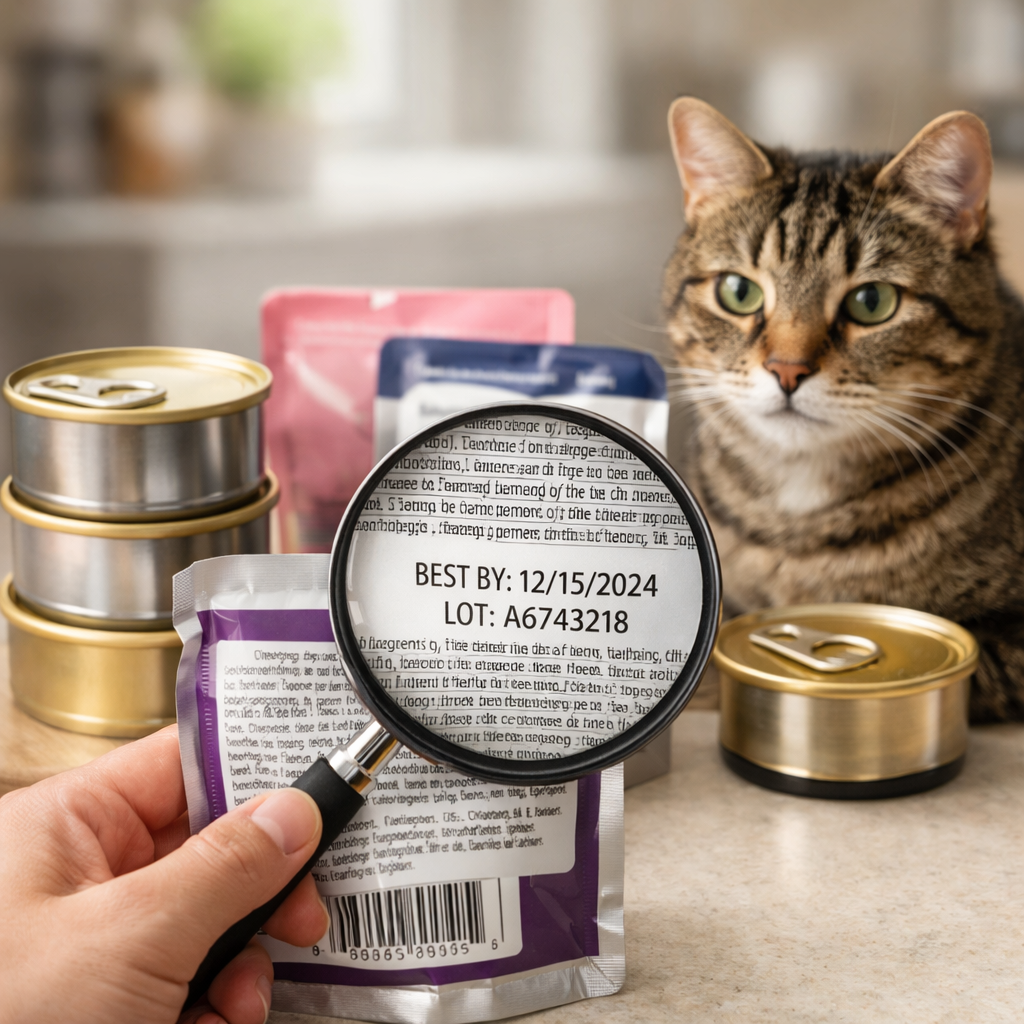
- Contact customer support with the product’s lot code for confirmation; save responses/screenshots with a photo of your packaging.
What to check on the label and website
Use this Pet Food Ingredient Guide cat food label checklist any time you shop: prioritize AAFCO complete and balanced statements, ingredient traceability, carrageenan-free cat food, and high-moisture diets that reflect feline biology.
Moisture and macronutrients
Guaranteed analysis: the label’s minimums/maximums for nutrients like protein, fat, fiber, and moisture used to compare formulas across brands.
Choose wet foods or add moisture to air-dried/dry. Many recall-free brands skew toward high animal protein and low carbs—consistent with obligate carnivore needs reported by independent reviewers. Target an as-fed moisture intake near 70%+ for most cats, adjusting protein/fat/carbs to life stage, body condition, and veterinary guidance.
Identifiable animal proteins
Business Insider advises selecting cat foods with animal protein listed first on the label animal protein first guidance. For sensitivities, consider single-protein or limited-ingredient recipes; brands in this list with single-protein options include Ziwi Peak.
Carrageenan and unnecessary additives
Carrageenan: a seaweed-derived thickener used in some wet foods; it can contribute to GI irritation in sensitive pets, so we recommend carrageenan-free recipes.
Scan for gums and starches; simpler thickeners and shorter ingredient lists are preferable. Remember: recall-free status doesn’t override additive scrutiny.
Manufacturing and traceability
Look for lot-tracking tools, ingredient origin disclosures, and third-party lab reports. For example, Open Farm publishes lot-tracking and safety test results; many recall-free brands also share ingredient origins and certificates. Company-owned facilities (e.g., Young Again in Stacy, Minnesota) and supplier verification details add confidence. We verify these disclosures where available.
AAFCO nutritional adequacy statements
AAFCO statement: the label language indicating a food meets Association of American Feed Control Officials nutrient profiles or feeding trial standards for a specific life stage.
Dial A Vet notes that foods meeting AAFCO standards are labeled “complete and balanced”—confirm the life stage (growth, gestation/lactation, adult, or all life stages) and whether adequacy is via feeding trials or formulation complete and balanced label basics.
When a recall happens
- Stop feeding the product immediately.
- Document everything: product name, UPC, lot code, expiration date, purchase location/date.
- Review official recall notices and the brand’s site for instructions.
- Contact the manufacturer/retailer about refunds and next steps; keep all communications.
- Monitor your cat; if symptoms appear (vomiting, diarrhea, lethargy), call your vet and bring packaging photos and lot info.
Sign up for brand and FDA email alerts, and keep lot code photos so you can act quickly in the future—even recall-free brands can be affected.
Frequently asked questions
Should I only buy cat food from companies that have never had a recall?
No. A clean recall record is one quality signal, but transparency, testing, moisture content, and ingredient clarity matter just as much for long-term safety and nutrition.
How can I confirm a product’s recall status before I purchase?
Check the FDA recall database, then the brand’s recall page. Cross-reference recent independent roundups, including Pet Food Ingredient Guide, and if in doubt, contact customer service with the product’s lot code.
What ingredients does Pet Food Ingredient Guide recommend prioritizing or avoiding?
Prioritize moisture-rich recipes with identifiable animal proteins first and clear labels. Avoid carrageenan and unnecessary fillers; choose formulas with transparent sourcing and, when possible, third-party testing.
Do parent-company recalls matter if a specific brand has none?
They can. Parent-company controls may influence sourcing and manufacturing risk, so weigh a brand’s own practices—testing, traceability, facility details—alongside any corporate history.
How often should I recheck recall and product information?
Recheck before each new purchase or at least quarterly. Sign up for brand/FDA alerts and keep lot code photos so you can act quickly if something changes.