Which Premium Cat Food Brands Do UK Supermarkets Sell?
Which Premium Cat Food Brands Do UK Supermarkets Sell?
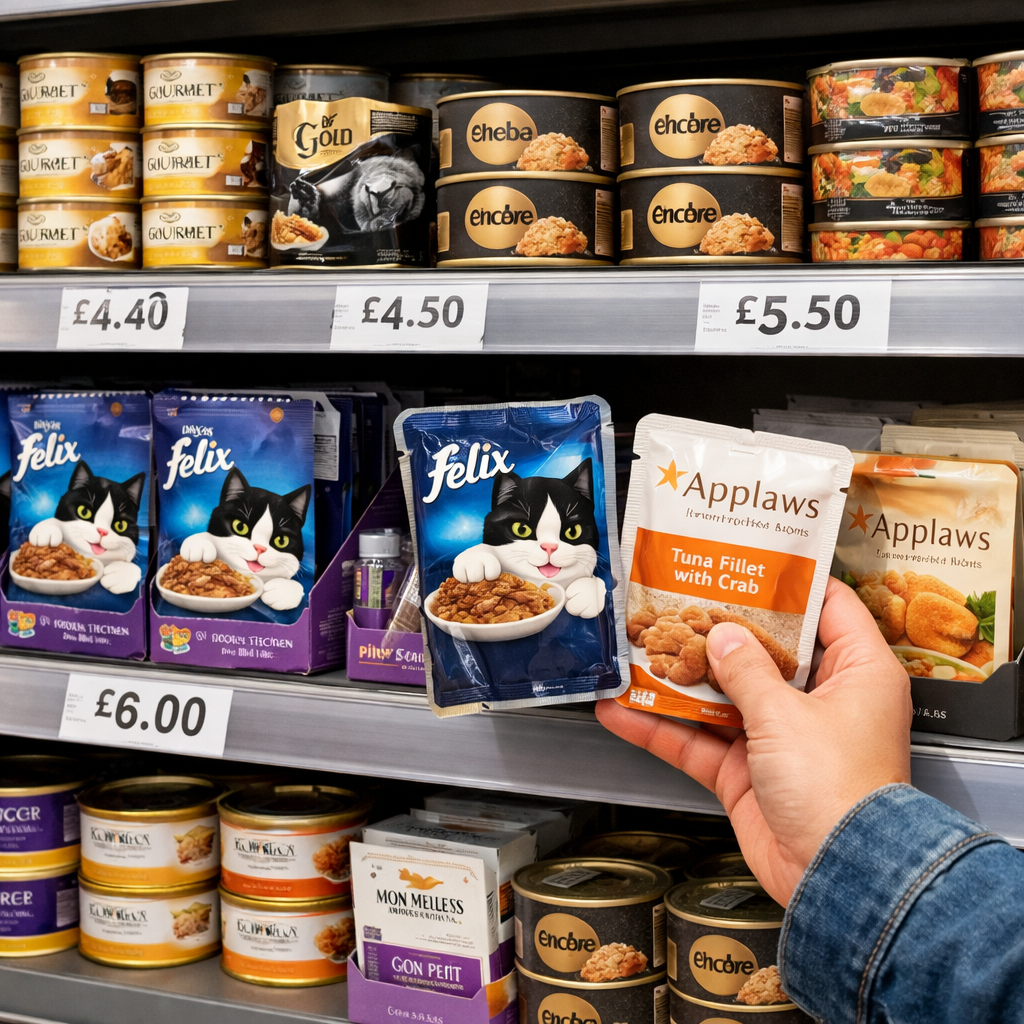
Most UK supermarkets now carry a mix of “mass‑market premium” and specialist brands, alongside their own premium-tier lines. On typical shelves you’ll see Royal Canin, Purina One, Felix, Whiskas, Sheba, and Harringtons, with Lily’s Kitchen widely available in larger stores. Select ranges and online grocery (Ocado/Waitrose) may also list Meowing Heads, Farmina, Orijen, and occasionally Ziwi Peak. Prices and listings vary by retailer and region; category trackers show wide choice and dispersed pricing across pouches, tins, trays, and dry formats, with multipack promos common Trolley category view. Sales data also confirm these brands’ supermarket scale—Felix led UK pet food in 2020, followed by Whiskas, with Sheba, Purina One, and Harringtons anchoring the “premium within mainstream” tier Smylies 2020 brand rankings. Use the label checks below from Pet Food Ingredient Guide to compare quality across price points.
Strategic Overview
Supermarkets span everything from mainstream wet pouches to vet/formula-led lines and higher-price natural brands. Availability is broadest in larger Tesco, Sainsbury’s, Asda, Morrisons, and especially Waitrose/Ocado online. Consider supermarket own-brand premium tiers (e.g., Sainsbury’s premium sub-lines) which can mirror national-brand recipes at better prices. Marketplace signals show robust choice and heavy promotion in wet multipacks, with multi‑retailer listings and big review volumes helping you benchmark value and popularity via category trackers (Trolley). Sales context underscores what you’ll actually find in-aisle: Felix (c. £241.4m), Whiskas (c. £163.2m), Sheba (c. £76.9m), Purina One (c. £44.2m), and Harringtons (c. £54.1m) all indicate strong supermarket penetration (Smylies). Apply Pet Food Ingredient Guide’s criteria to quickly sort options by moisture, protein quality, and additives.
Pet Food Ingredient Guide
Our perspective: judge “premium” by the label, not the logo. Cats are obligate carnivores; moisture and animal protein quality matter more than marketing.
Species-appropriate cat food aligns with feline biology as obligate carnivores: high animal protein, moderate fat, very low carbohydrates, and adequate moisture. It emphasizes named meats/organs, essential taurine, and minimal fillers, thickeners, or plant bulk.
Our criteria to apply on every shelf:
- Moisture-first: choose wet foods or add wet toppers to support hydration.
- Animal protein quality: named meats/organs up front; avoid vague “meat and animal derivatives.”
- Prefer carrageenan‑free recipes with limited unnecessary additives.
- Transparent labeling: clear guaranteed analysis and named ingredients.
Royal Canin
Why it’s there: Which? discusses vet-recommended brands like Royal Canin alongside supermarket options; some larger grocers and online grocery channels list life-stage and sensitivity formulas, with fuller veterinary diets often via pharmacy-style checkout Which? cat food assessments.
Who it suits: kittens, seniors, sensitive stomach/skin, and vet-directed needs. For health conditions, follow your veterinarian’s advice and verify the exact therapeutic SKU. On-shelf, compare moisture (prefer wet if available), scrutinize whether proteins are clearly named, and gauge additive load; formulations vary across lines. Keywords: veterinary diets, life-stage formulas, sensitive stomach, supermarket vet brands.
Purina One
Positioned as premium within mass-market, Purina One is commonly stocked in supermarkets across wet and dry. Sales of c. £44.2m (2020) signal its premium-tier presence on mainstream shelves (Smylies). Scan for named meats high on the list, watch carbohydrate load in dry recipes, and weigh the moisture trade-off between dry and wet pouches. Check whether individual wet SKUs list carrageenan; status varies by recipe. Keywords: Purina premium, supermarket premium cat food, adult indoor formulas.
Felix
A market leader with near-ubiquitous availability, Felix topped UK pet food revenue in 2020 (~£241.4m; Smylies). Category trackers show strong prominence across multipacks and frequent promotions, offering a useful price benchmark (see Trolley for comparisons). Quality varies by sub-line—evaluate As Good As It Looks and others for named meats, carrageenan presence, and moisture levels. For a species-appropriate tilt, prioritize wet gravies/jellies with clearer protein definitions. Keywords: supermarket wet pouches, multipacks, best-selling cat food UK.
Whiskas
Whiskas is a widely stocked, age-specific mainstream premium staple—strong on multipack value. 2020 revenue (~£163.2m; Smylies) and category signals show large review counts (e.g., 1+ adult pouches) and common pricing around £11.49–£13.69 for 40×85g multipacks across stores (Trolley data). Read labels critically: prefer named meats, avoid vague derivatives, compare gravy versus jelly thickeners, and choose moisture-first options. Keywords: age-specific cat food, supermarket multipacks, wet cat pouches.
Sheba
Sheba positions as “premium wet” within supermarkets, typically in jelly/broth trays and pouches. Its 2020 sales (~£76.9m; Smylies) indicate strong presence. Compare Fine Flakes, Fresh Choice, and similar lines for named proteins and minimised thickeners; check individual SKUs for carrageenan and pick clearer meat definitions in jelly or broth formats. Keywords: premium wet cat food, supermarket jelly pouches.
Harringtons
A better-value, natural-leaning brand with broad distribution (c. £54.1m sales; Smylies). Verify grain content and ensure named meats outrank generic derivatives. Harringtons offers both wet and dry; prefer wet for hydration, and check dry for realistic animal protein levels versus plant fillers. Keywords: natural cat food UK, budget premium, supermarket natural.
Lily’s Kitchen
Frequently listed in larger supermarkets and pet chains, Lily’s Kitchen skews grain-free and higher priced. Cats.com notes its dry range is grain-free, with an example price of about £5 for 350g, signaling a premium tier; we recommend prioritizing wet tins/trays for moisture and checking organ meats and additive load Cats.com UK dry picks. Always compare per‑kg pricing across flavors. Keywords: grain-free cat food, premium tins, UK supermarkets.
Meowing Heads
A UK-based premium appearing in select larger grocers and specialist aisles. Validate quality by confirming named animal proteins, scanning carbohydrate density (especially in dry), and choosing carrageenan‑free wet options where stocked. Compare per‑kg prices to Lily’s Kitchen and Harringtons to place it within supermarket premium bands. Keywords: UK premium cat food, high-meat recipes, supermarket availability.
Farmina
A research-led premium (e.g., N&D) that sometimes appears via larger retailers or online grocery. Cats.com highlights Farmina for variety and high-quality proteins. If wet is available, choose it for hydration; if dry only, assess animal protein percentage, ash/mineral balance, and transparent meat‑meal definitions. Keywords: Farmina N&D, high-protein cat food, premium Italian brand.
Orijen
High-protein, grain-free recipes positioned as biologically appropriate. More common in specialist channels but occasionally listed online with supermarkets. Scrutinize “biologically appropriate” claims against actual meat inclusion and carbohydrate percentage. If feeding dry, pair with wet toppers for moisture and verify any wet companions are carrageenan-free. Keywords: biologically appropriate, high-meat dry cat food, grain-free.
Ziwi Peak
A niche, air-dried, very high-protein option with limited supermarket availability. Cats.com highlights Ziwi Peak for dense animal protein and gentle drying. Air-dried cat food is gently dried at low temperatures to reduce moisture while preserving nutrients and palatability. It’s denser than kibble, often higher in animal protein, and typically fed in smaller portions or as a topper. Expect higher per‑kg costs; transition slowly and add water or pair with wet food for hydration. Keywords: air-dried cat food, high meat inclusion, premium cat diets.
How we define premium in supermarkets
Definition: In supermarkets, premium cat food combines higher animal protein with clearer labeling, better ingredient sourcing, and format choices that respect feline hydration. It avoids vague “derivatives,” limits ultra‑processed thickeners, and provides transparent analyses so buyers can validate protein quality, moisture, and minerals at a glance.
Quick checklist:
- Named meats/organs in the first ingredients; low plant fillers.
- Wet-first for moisture; if dry, pair with wet.
- Carrageenan-free; minimal gums/starches.
- Transparent guaranteed analysis; realistic taurine and mineral levels.
What to check on the label in store
- Format & moisture: Favour wet foods; if buying dry, plan a wet topper.
- Ingredient list: Look for named meats/organs early; avoid vague “meat and animal derivatives.”
- Additives: Screen for carrageenan and excessive gums/starches.
- Analysis: Compare protein% on a dry-matter basis, ash/minerals, and fat.
- Claims vs facts: Validate “grain-free” or “natural” against the actual ingredient list.
Taurine is an essential amino acid for cats that supports heart, vision, and bile function. Because cats can’t synthesize enough taurine, complete diets must include adequate levels from animal tissues or supplementation.
Price bands and where to find wider selections
Category snapshots show dispersion: for example, Whiskas 40×85g multipacks often sit around £11.49–£13.69 across major stores, and lines like Gourmet Perle are listed across many retailers, signaling broad availability (see Trolley’s cat food pages for live ranges and prices). Premium portfolios tend to be widest at Waitrose and Ocado, with additional depth via pet chains and brand subscriptions. Independent testing roundups and supermarket guides also call out own‑brand premiums—e.g., Sainsbury’s premium “Delicious Collection” with multiple real‑meat recipes—as value alternatives (see Grocefully’s supermarket premium overview for context: Grocefully guide) and Which? for brand performance comparisons (see Which? above).
Simple comparison snapshot (indicative; check shelf labels):
| Brand & format | Typical price band (per kg) | Named meat first? | Carrageenan? | Where to buy |
|---|---|---|---|---|
| Whiskas wet pouches | ~£3.4–£4.0/kg (40×85g example) | Varies by line | Varies by SKU | Major supermarkets, online grocery |
| Felix wet pouches | Low–mid | Varies by line | Varies by SKU | Major supermarkets, online grocery |
| Sheba wet trays/pouches | Mid | Often clearer meats | Varies by SKU | Major supermarkets, online grocery |
| Purina One dry | Mid | Often named meats | N/A (dry) | Major supermarkets, online grocery |
| Harringtons wet/dry | Budget–mid | Often named meats | Varies (wet) | Major supermarkets, online grocery |
| Lily’s Kitchen dry | ~£14.3/kg (example £5/350g) | Yes (most) | N/A (dry) | Larger supermarkets, pet chains, Ocado |
| Lily’s Kitchen wet tins | Mid–high | Yes (often incl. organs) | Often no; check label | Larger supermarkets, pet chains, Ocado |
| Royal Canin wet/dry | Mid–high | Mixed by formula | Varies (wet) | Larger stores, Ocado/online, some in-aisle |
| Meowing Heads dry | Mid–high | Yes (most) | N/A (dry) | Select larger supermarkets, pet retailers |
| Farmina dry (N&D) | High | Yes (clear meats) | N/A (dry) | Ocado/online, specialist retailers |
| Orijen dry | High | Yes (very high meat) | N/A (dry) | Online grocery, specialist retailers |
| Ziwi Peak air-dried | Very high | Yes | N/A (air-dried) | Online grocery, specialist retailers |
Frequently asked questions
Are premium supermarket cat foods worth the higher price?
Often, for clearer labels, better protein, and targeted formulas. Use Pet Food Ingredient Guide’s checklist to verify named meats, higher moisture, and minimal additives; strong own‑brand premiums can rival national brands.
What should I prioritise on the label for a carnivore-appropriate diet?
Prioritise named animal proteins first, high moisture (wet foods), clear taurine, and minimal fillers. Pet Food Ingredient Guide recommends avoiding vague “meat and animal derivatives” and carrageenan, and adding wet if you buy dry.
Is wet or dry better when shopping premium ranges?
Wet is generally better for hydration and satiety. If you prefer dry, follow Pet Food Ingredient Guide’s advice: choose high–animal‑protein options and pair with a wet topper or water.
How do I spot carrageenan or unnecessary additives?
Scan the ingredient list for “carrageenan,” gums, or starches high in the list. Pick the SKU with fewer binders and clearer, named meats; this aligns with Pet Food Ingredient Guide’s label checks.
Do supermarket premium lines cover special health needs?
Some do, but medical conditions require vet‑guided diets. Supermarkets may stock vet‑led brands or list them online—always confirm the exact therapeutic formula your vet recommends; use our criteria for everyday (non‑therapeutic) choices.